
Note
Do You Need ANMAT Approval for Peptides?
Research peptides enter Argentina as lab reference material, not as medicine, and that distinction changes the whole import process.
No. ANMAT regulates medicines for human and veterinary use, and a research peptide declared and identified as laboratory reference material — not as a drug, not as a therapeutic product — doesn't fall into that category. The process that does apply is a customs one: declaring the shipment accurately for what it actually is and what it's for. The confusion comes from merging two different questions: "is this a medicine?" and "can I bring a laboratory reagent into Argentina?" Those are two different procedures, handled by two different authorities.
What ANMAT regulates, and what it doesn't
ANMAT exists to control what gets used in people and animals: medicines, vaccines, medical devices, supplements. Its job is to verify that a product intended for human consumption or treatment is safe and effective for that purpose. A peptide sold as reference material for laboratory research — in vitro, with no human-use indication, no dosing, no prescription — doesn't enter the circuit ANMAT oversees, because it isn't declared or marketed as a medicine in the first place.
This isn't a grey area that PeptoClinic resolves with its own interpretation. It's the same distinction that separates the entire reference-material and reagent industry from the pharmaceutical industry: a vial of lyophilised peptide shipped with a purity data sheet to a lab or a researcher who wants to study it is not, at the customs level, the same thing as a box of tablets with a package insert and posology. PeptoClinic supplies research material strictly under that condition — Research Use Only (RUO) — and never as a therapeutic product. Nothing in the catalogue is approved for human or veterinary use, and no claim on this site has been evaluated by ANMAT, the FDA, or an equivalent authority.
So what process does apply?
The one that applies to any import: a customs declaration. When a shipment arrives in Argentina, the sender and the recipient need to be able to state precisely what's travelling. For laboratory material, that declaration includes the compound name, the quantity, and the condition of use: reference material for research, not fit for human or animal consumption.
PeptoClinic prepares that customs file for shipments going to destinations like Argentina: the documentation declares the contents as laboratory reference material, together with the corresponding purity report. That's a different thing entirely from requesting a drug import permit from ANMAT, which is the process a pharmaceutical company would have to follow if it were importing a finished medicine or an active ingredient destined to produce one.
The responsibility for declaring the shipment correctly — and for making sure whatever is done with it once it's in the country matches that declaration — sits with the researcher or the laboratory that receives it, not with a prior sign-off from ANMAT. If the real intent is to administer a peptide to a person, that changes the regulatory frame completely, and it's exactly the use this site doesn't cover or authorize.
What "laboratory material" means in practice
It isn't a euphemism. It's the way the product is manufactured, documented and shipped.
- Format. It arrives as a vial of lyophilised powder, not as a ready-to-inject solution and not as a tablet.
- Documentation. Every batch PeptoClinic publishes comes with a report from an external laboratory — Janoshik Analytical — analysing the compound's purity. The lowest purity published so far was 99.669% by HPLC; other batches reached 99.893%. That floor is the number worth looking at, not the best figure on the page — it's the real baseline, not a marketing ceiling.
- Diluents. When bacteriostatic water is needed to reconstitute material in the lab, it's USP grade.
- No usage guidance. No protocol, no dosing, no posology for people is provided, because that would turn the product into something PeptoClinic isn't authorized to supply.
To understand how to read that purity documentation — and how to tell a genuine report from an unsupported screenshot — see how PeptoClinic approaches quality control, which explains exactly what a certificate of analysis states and how to verify it against the laboratory that signed it.
Why this distinction matters to the person importing
Someone searching for an "ANMAT permit to import peptides" is almost always trying to figure out whether they can bring the product in without getting stuck at customs. The short answer is that there's no need to request a medicine import permit from ANMAT, because what's being imported isn't declared as a medicine. That doesn't mean there's no process at all — it means the process is a different one, and it depends on the shipment's declaration being accurate from the point of origin.
This is also why PeptoClinic doesn't promise delivery timelines or handle anything with ANMAT on a recipient's behalf: the customs file travelling with the shipment declares the real nature of the contents, and Argentine customs clears the entry on that basis, not on a prior authorization from the medicines regulator. The same logic applies to other research compounds, including retatrutide, MOTS-c, BPC-157 or GHK-Cu — each ships under the same reference-material declaration, with the matching purity report.
What this doesn't cover
None of the above applies if the intent is to administer the peptide to a person or an animal. In that case, the right question stops being "what import permit is required" and becomes "what regulatory authorization does this particular use require" — and that authorization, if one exists for a given compound, is a completely different procedure, under a different authority and a different framework. PeptoClinic doesn't take part in that conversation: the entire catalogue is supplied strictly and exclusively for in vitro laboratory research, and nothing on this site should be read as guidance for human or animal use.
The material is for laboratory research, not for human or veterinary use
Everything PeptoClinic supplies — including compounds such as retatrutide, BPC-157, MOTS-c or GHK-Cu — is intended strictly for laboratory research: in vitro studies and scientific reference work. None of these products is approved for consumption, administration, diagnosis or treatment in people or animals, and no claim on this site has been evaluated by ANMAT, the FDA or an equivalent body. No dosing guideline, route of administration or human-use protocol is provided or implied, because that isn't the purpose of this catalogue.
Frequently asked questions
Does ANMAT play any role in shipping research peptides to Argentina?
It doesn't intervene in the entry of material declared as a reagent or laboratory reference item, because its authority covers medicines and products intended for human or veterinary use — a category this material is not declared under.
What distinguishes a research peptide from a medicine, as far as customs is concerned?
The declaration and documentation attached to the shipment: a medicine is imported with a package insert, posology and a sanitary registration; a laboratory material is imported with a purity report and an explicit statement that it's for research use only.
Do I need to file anything before the shipment arrives?
The process isn't on the recipient's side requesting a prior permit from ANMAT — it's in making sure the customs declaration for the shipment is accurate from the point of origin. PeptoClinic prepares that file for shipments going to Argentina.
What documentation comes with each batch?
A purity report from an external laboratory, Janoshik Analytical, which analyses each batch by HPLC. You can read how to interpret that report on the [quality](/en/quality/) page.
Can I use these peptides on a person if the import process doesn't go through ANMAT?
No. The fact that entry doesn't require a medicine import permit doesn't change the product's status: it remains laboratory research material, not fit for human or veterinary use, and no guidance for that use is provided.
What happens if customs asks for more information about the shipment?
That's resolved by the same documentation that declares the contents as laboratory reference material along with its corresponding purity report — the one that travels with the package.
Does the shipment travel cold?
No. The material ships as lyophilised powder in a sealed vial, which is stable at room temperature for weeks and doesn't require a cold chain in transit. Cold only matters afterward, once the vial has been reconstituted in the lab — that's covered in detail on the [shipping](/en/shipping/) page.
Does PeptoClinic hold any ANMAT certification?
No. PeptoClinic doesn't claim any GMP, ISO, FDA, USP or ANMAT certification. What it provides is the purity report from the external laboratory that analysed each batch, and that's the only verification it offers. More on how the operation works is on the [about](/en/about/) page.
Compounds mentioned
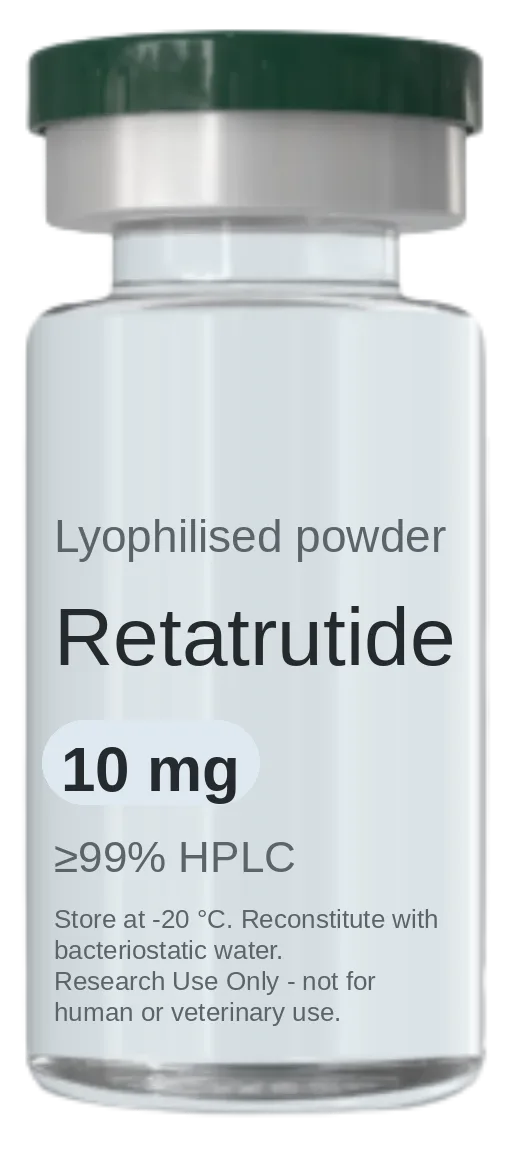
Retatrutide
Triple-agonist metabolic research peptide targeting GLP-1, GIP and glucagon receptors.
- Purity:
- ≥99% HPLC
- Sizes available:
- 10 mg
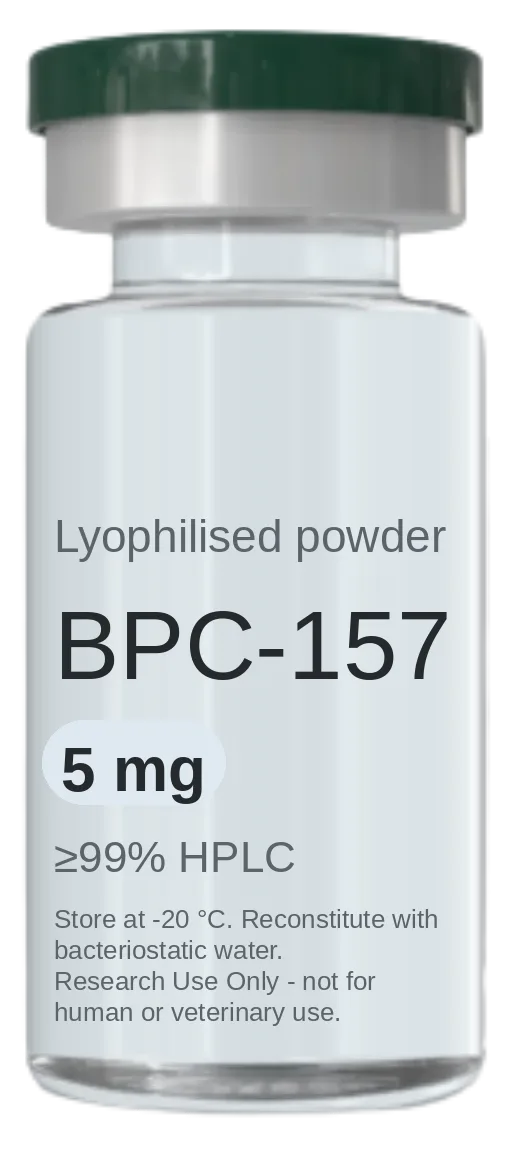
BPC-157 + TB-500
BPC-157 and TB-500 in a single vial — the pairing most studied together in tissue-repair research.
- Purity:
- ≥99% HPLC
- Sizes available:
- 5 mg + 5 mg
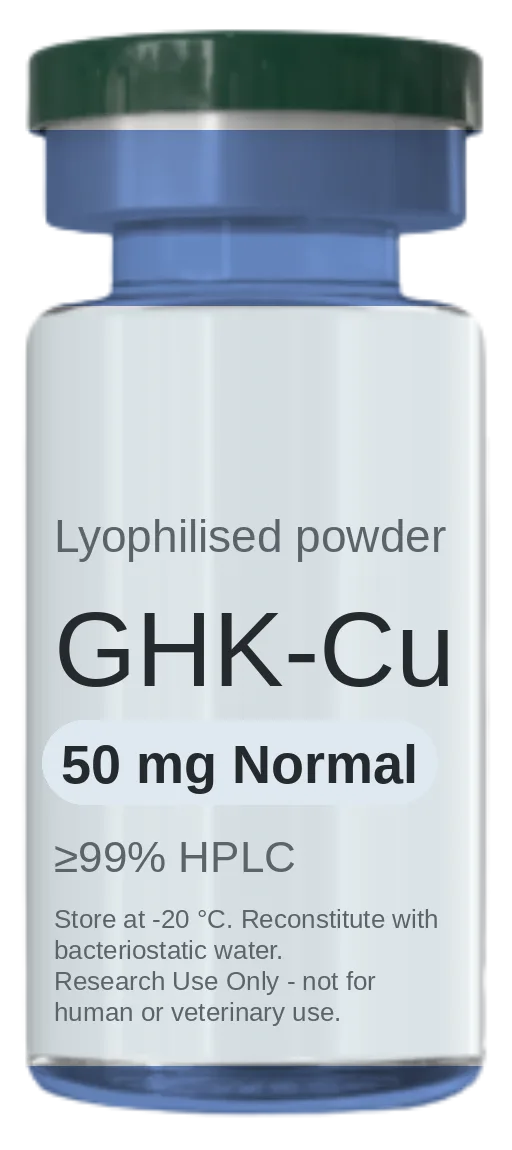
GHK-Cu (Copper Peptide)
Copper-binding tripeptide studied in extracellular matrix and dermal research models.
- Purity:
- ≥99% HPLC
- Sizes available:
- 50 mg Normal – 50 mg Plus
The consultation
One intake that settles goals, history and contraindications alongside compound, quantity, documentation and route — reviewed by a physician before anything ships.
More notes
-
No Batch Number on the Invoice: Customs
If a peptide shipment's invoice skips the batch number, Argentine customs can hold it and request supporting documents.
-
How to Verify a Janoshik COA
What to check on a Janoshik Analytical certificate to confirm a research peptide matches its stated batch.
-
Retatrutide vs. Tesamorelin: What's Different
Retatrutide and tesamorelin target different receptors and different research questions — here's what the documentation shows.