
Note
What Is the Isoelectric Point of a Peptide
The pI is the pH at which a peptide carries zero net charge. It governs solubility, stability, and the analytical methods used to verify identity.
The isoelectric point, abbreviated pI, is the pH at which a peptide carries a net electrical charge of zero. At that value, the sum of all positive charges in the molecule exactly equals the sum of all negative charges. It is a physicochemical property determined by amino acid composition, and it governs how the peptide behaves in aqueous solution.
Why peptides carry electrical charge
Peptides are chains of amino acids joined by peptide bonds. Several of those amino acids carry side chains that gain or lose protons depending on the pH of the surrounding medium. The alpha-amino group at the N-terminus, the alpha-carboxyl group at the C-terminus, and the ionizable side chains of residues such as arginine, lysine, histidine, aspartic acid, and glutamic acid are the principal contributors to the molecule's total charge.
At low pH, those groups tend to be protonated and the peptide accumulates positive charges. At high pH, the acidic groups donate protons and the molecule accumulates negative charges. Somewhere between those extremes, the two types of charge balance. That pH is the pI.
Each ionizable group has its own acid dissociation constant, expressed as a pKa. The C-terminal carboxyl group has a pKa of roughly 3.1. The N-terminal amino group sits near 8.0. Side chains span a range from about 3.9 for aspartic acid to 12.5 for arginine. The pI of a peptide is derived from the pKa values of all its ionizable groups taken together.
How the pI is calculated
For a peptide with no ionizable side chains, the calculation is direct: the pI is approximately the average of the C-terminal carboxyl pKa and the N-terminal amino group pKa. For peptides carrying ionizable residues in their side chains, every group must be included. They are ranked by pKa and the pH at which positive and negative charges balance is identified.
In practice, this estimation is handled with bioinformatics tools. The most widely used is ProtParam, available on the ExPASy server operated by the Swiss Institute of Bioinformatics (web.expasy.org/protparam). The amino acid sequence is entered in one-letter code and the server returns, among other parameters, the calculated pI. The result is a theoretical estimate based on tabulated pKa values. The actual pI in solution can differ slightly depending on temperature, buffer composition, and any post-translational or chemical modifications present.
Peptides in the PeptoClinic catalogue have theoretical pI values that vary with their composition. A peptide rich in arginine or lysine will have a high, basic pI. One with several glutamic or aspartic acid residues will have an acidic pI.
The pI and solubility in the laboratory
The most practical consequence of the pI for experimental work is its effect on solubility. Most peptides show minimum solubility when the pH of the medium approaches their pI. At that point, the net charge on each molecule is close to zero, electrostatic repulsion between molecules diminishes, and the tendency to aggregate and precipitate increases.
This has direct implications for researchers working with these compounds:
- A peptide with a basic pI, such as pI 9, typically dissolves more readily under slightly acidic or neutral conditions.
- A peptide with an acidic pI, such as pI 4, often responds better to slightly basic conditions.
- Attempting to dissolve a peptide at a pH equal to its pI may yield reduced solubility or visible aggregate formation.
Knowing the pI before preparing a buffer solution is useful information for designing experimental conditions. This consideration applies to short peptides and to larger ones alike.
The pI in analytical methods
The isoelectric point appears in several methods used to characterise and confirm the identity of a research peptide.
Isoelectric focusing (IEF): an electrophoretic technique that separates molecules by pI. In a stable pH gradient, each peptide migrates to the position where its net charge is zero and stops. Its position in the gel or capillary allows the experimental pI to be confirmed or estimated against the theoretical value.
Capillary isoelectric focusing (cIEF): the capillary-format variant offers higher resolution and lends itself to automation. The literature indexed in PubMed on cIEF in peptide analysis documents its use in analytical quality control, where the observed pI is compared against the theoretical value as a check on identity.
Ion-exchange chromatography: the charge a peptide carries at a given pH determines whether it is retained by an anionic or cationic resin. Knowing the pI allows chromatographic behaviour to be predicted and separation conditions to be designed accordingly.
ESI mass spectrometry: the charge-state distribution in an ESI spectrum depends in part on the pI and on ionisation conditions. Analysts interpreting multiply charged peptide spectra work with this relationship routinely.
These methods may appear in the analytical documentation shipped with a lot. The quality section of PeptoClinic holds Janoshik Analytical reports for available lots, with the methods and results for each analysis.
Differences across catalogue peptides
Not every peptide shares the same pI because amino acid composition varies widely.
Retatrutide is a 39-amino-acid peptide with several arginine residues in its sequence. Its calculated pI falls in the basic range. GHK-Cu is a tripeptide composed of glycine, histidine, and lysine; the complexed copper alters the charge properties relative to the free peptide, so the standard theoretical calculation serves only as an approximation. BPC-157, with 15 amino acids, has a composition that places its pI near neutral.
Researchers consult the pI when designing reconstitution conditions, storage buffers, or experimental protocols. It does not replace the certificate of analysis but complements what that document reports about the identity and purity of a lot.
For laboratory research only
All material supplied by PeptoClinic Research Supply is intended strictly for laboratory research (Research Use Only, RUO): in vitro and controlled experimental work.
None of these compounds is approved or indicated for human or veterinary consumption, diagnosis, or treatment. They are not medicines, not dietary supplements, and have not been evaluated by the FDA, ANMAT, or any equivalent authority. Requests for human-use protocols are not answered.
Information on quotation and documentation for international shipments is available on the shipping page.
Frequently asked questions
What does it mean for a peptide to have pI 5 versus pI 10?
A pI of 5 means the molecule carries zero net charge at pH 5, placing it in the acidic range. At physiological pH (7.4), that peptide would carry a negative charge. A pI of 10 is the opposite: the molecule is basic and would carry a positive charge at physiological pH. This difference affects solubility in different buffers and retention behaviour in ion-exchange chromatography.
Does the pI appear in a peptide's certificate of analysis?
It depends on the supplier and the analytical methods used. Many certificates from HPLC analysis report purity and molecular mass but do not include an experimentally determined pI. Some analytical laboratories add IEF or cIEF data when the client requests it. The theoretical pI can be calculated from the sequence using tools such as ExPASy ProtParam without needing it to appear on the certificate.
How does the pI affect the stability of a stored peptide?
Near the pI, the tendency to aggregate is greater, which can accelerate degradation in solution over time. Peptides stored as lyophilised powder avoid this variable while they remain dry. Once reconstituted, the pH of the chosen buffer can influence solution stability across the storage period.
Does the pI change if the peptide carries a chemical modification?
Yes. Modifications that alter ionizable groups or the net charge shift the pI relative to the unmodified peptide. PEGylation, N-terminal acetylation, C-terminal amidation, and metal conjugation are all examples of modifications that change the pI. For this reason, the standard theoretical calculation can be inaccurate when non-canonical modifications are present.
Can the pI of any peptide be calculated independently?
For peptides with a known sequence in one-letter code, ExPASy ProtParam calculates it at no cost. The result is a theoretical pI based on tabulated pKa values for the 20 standard amino acids. For peptides carrying non-standard modifications, the calculation requires parameters not available in conventional tables, and the result may diverge from the measured value.
What is net charge and how does it relate to the pI?
Net charge is the algebraic sum of all ionizable-group charges at a given pH. At pH equal to the pI, net charge is zero by definition. Below the pI, net charge is positive. Above it, net charge is negative. This relationship is exploited directly in isoelectric focusing: each molecule migrates through the pH gradient until it reaches the point where its charge cancels and it stops moving.
Is the pI of a peptide the same as an average of its amino acid pI values?
No. When amino acids form peptide bonds, the amino and carboxyl groups involved in those bonds are no longer available for ionization. The only free groups are those at the N-terminus, the C-terminus, and any ionizable side chains. The resulting pI is a property of the complete sequence and cannot be derived by summing or averaging the pI values of the individual free amino acids.
Why do some peptides precipitate when dissolved in plain water?
Plain water sits at approximately pH 7. If the peptide's pI is close to that value, solubility may be low. For peptides with an acidic or basic pI, the water pH is far from the pI and solubility tends to be higher. Adjusting the solvent pH is standard practice in research to work under conditions where the peptide's net charge promotes dispersion in solution rather than aggregation.
Compounds mentioned
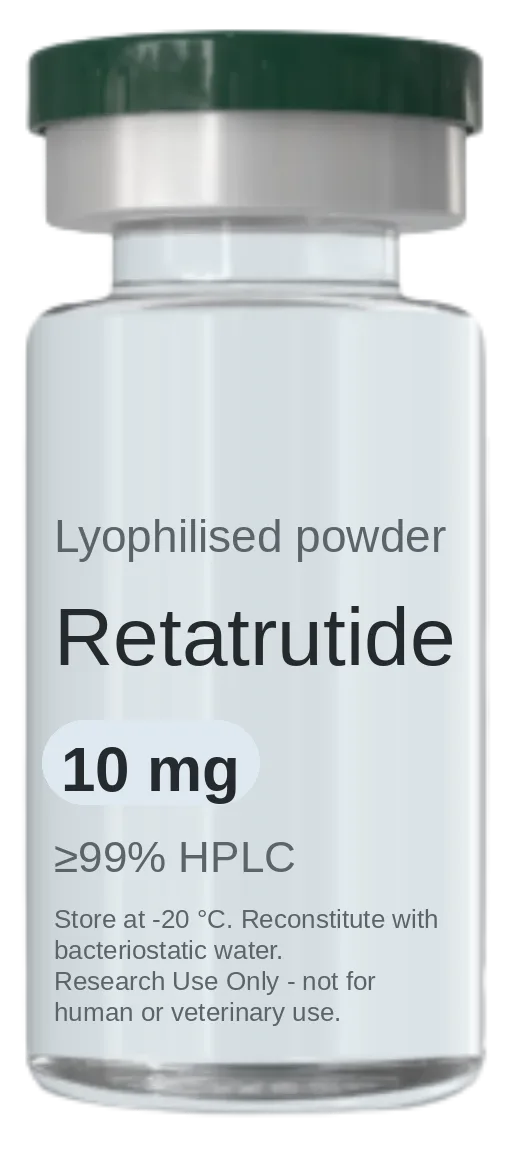
Retatrutide
Triple-agonist metabolic research peptide targeting GLP-1, GIP and glucagon receptors.
- Purity:
- ≥99% HPLC
- Sizes available:
- 10 mg
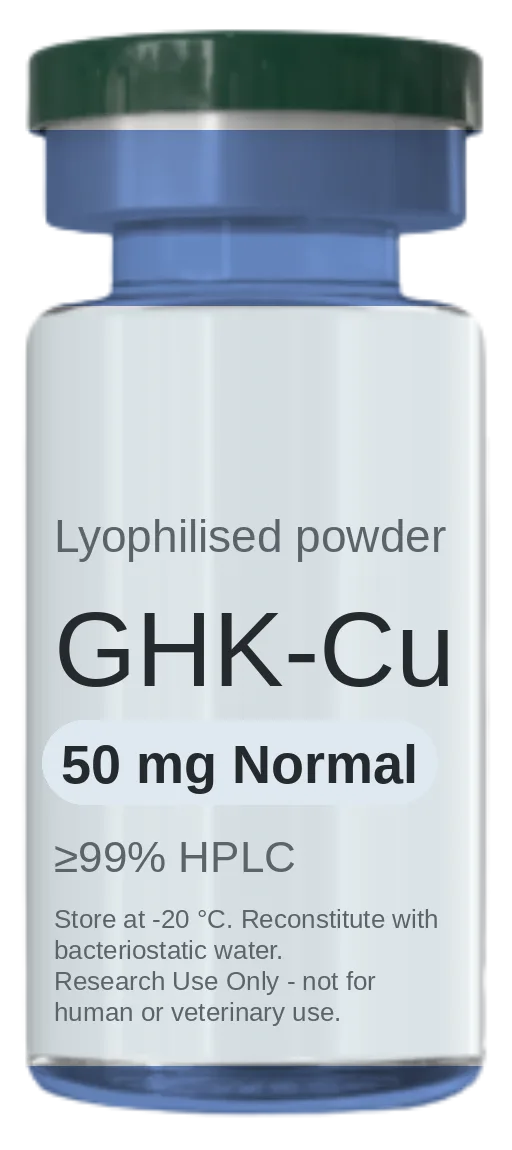
GHK-Cu (Copper Peptide)
Copper-binding tripeptide studied in extracellular matrix and dermal research models.
- Purity:
- ≥99% HPLC
- Sizes available:
- 50 mg Normal – 50 mg Plus
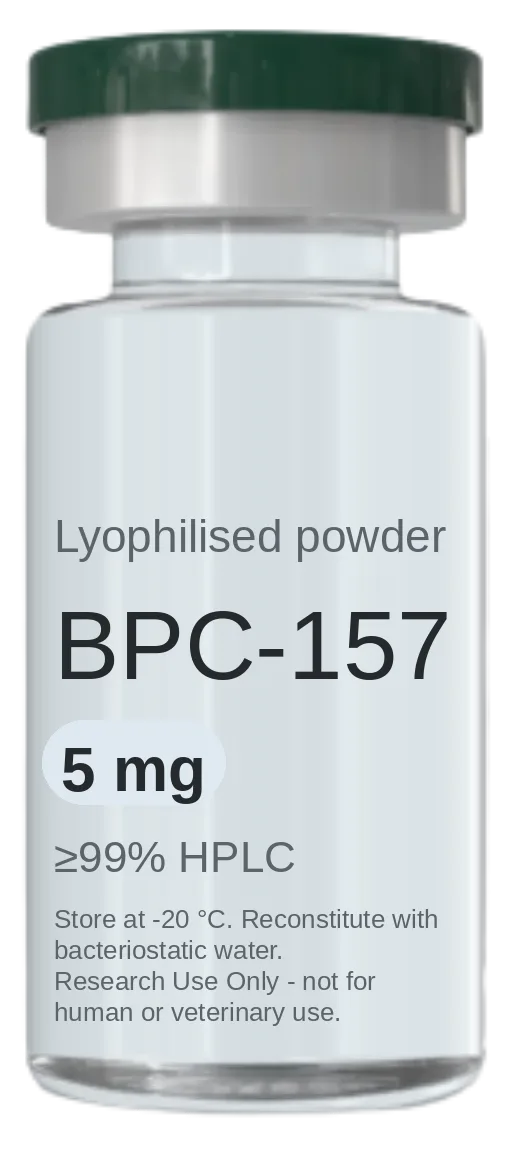
BPC-157 + TB-500
BPC-157 and TB-500 in a single vial — the pairing most studied together in tissue-repair research.
- Purity:
- ≥99% HPLC
- Sizes available:
- 5 mg + 5 mg
The consultation
One intake that settles goals, history and contraindications alongside compound, quantity, documentation and route — reviewed by a physician before anything ships.
More notes
-
Tesamorelin vs Sermorelin: The Difference
Tesamorelin and sermorelin are both GHRH analogs, but not the same molecule. Here's the structural difference and what the studies on each measure.
-
Peptide Supplier vs. Reseller: What Differs
The real difference is whether someone can name the lab that tested a batch and show the report — or only promise it's pure.
-
MOTS-c or NAD+: What's the Difference
MOTS-c and NAD+ are studied through different mitochondrial pathways; here's what each line of research actually measures.