
Note
Nationalizing Research Peptides in Argentina
A research peptide described as 'nationalized' in Argentina has completed customs clearance as laboratory reference material, documentation and all.
When a supplier says a research peptide is "nationalized" in Argentina, the term refers to completed customs clearance: a licensed customs broker filed the required paperwork with AFIP-DGA, applicable duties and taxes were paid, and the agency issued the release document that allows the goods to circulate within Argentina. For a research peptide, the operative detail is the tariff classification declared — laboratory reference material, not a drug, not a supplement.
What "nationalized" means under Argentine customs
Every item entering Argentina from abroad must pass through the Argentine Customs Service (Servicio Aduanero, operated by AFIP-DGA) before the recipient can take possession. "Nationalized" is the colloquial term for that clearance step: the moment the agency registers the import, applicable duties — import tariffs, VAT on imports, statistical fees — are paid, and the goods pass under local jurisdiction.
The process is handled by a licensed customs broker (despachante de aduana), who files a dossier describing what the shipment contains, its declared value, its origin, and the purpose of the import. The tariff position assigned to the goods determines both the applicable rate and what additional controls the agency requires.
For a research peptide, the applicable position is that of laboratory reference material. That is not a convenient workaround: it is the classification that covers compounds entering for in vitro use, analytical reference, and quality control in laboratory settings — not for human or veterinary consumption.
How laboratory reference material enters Argentina
Laboratory reference material is a recognized category within Argentine customs for reagents, analytical standards, and compounds used in analysis, calibration, and quality control. This classification does not require intervention by ANMAT — the agency that regulates medicines and supplements for human consumption — nor by SENASA for veterinary products. The competent authority is customs, and what it evaluates is whether the documentation supports what has been declared.
For each shipment dispatched to an Argentine destination, PeptoClinic prepares the import dossier under this classification. That dossier includes a commercial invoice with the exact technical description of the compound, the tariff position number, the certificate of analysis for the specific lot signed by the independent laboratory that carried out the testing, and a declaration of use as research material.
The lot arrives lyophilized, in a vial, with the cold-chain handling the compound specification requires. The local customs broker files the dossier, customs releases the shipment when the documents are in order, and the recipient collects.
What documentation travels with each lot
The traceability of a research peptide begins with the documents that accompany the shipment and ends with the ability to verify them independently:
- Certificate of Analysis (CoA) issued by the laboratory that performed the testing. For the lots PeptoClinic has published, that laboratory is Janoshik Analytical, based in the Czech Republic. The CoA specifies the compound, the lot number, the analytical method used (HPLC), the purity result, and the date of analysis.
- Commercial invoice with the technical description, tariff position, and declared value.
- Declaration of use stating that the material is for laboratory research and not for administration to humans or animals.
The difference between a verifiable CoA and a printed sheet without backing is the task number the laboratory assigns to the analysis. That number can be entered on the issuing laboratory's platform to retrieve the original signed report. If the number does not resolve to a verifiable document on an accessible platform, the certificate has no independent backing.
Published reports for PeptoClinic lots are available in the quality section.
Why the tariff classification matters
The same compound can enter Argentina under different tariff positions. Importing a research peptide as a pharmaceutical product or as a supplement — without the authorizations those categories require — constitutes a customs infraction, regardless of the actual end use of the material. Importing it as laboratory reference material, which is what it is when the declared purpose is in vitro research, is consistent with its nature and with the applicable legal framework.
That consistency is not a formality: it determines which regulatory authority has jurisdiction over the entry. For a correctly documented laboratory reagent, ANMAT has no role. The authority is customs, and what it reviews is whether the documentation supports the declaration and whether the quantity is reasonable for the stated use.
That is why the CoA must come from a real laboratory with online verification, why the compound description must be technically precise, and why the quantity must make sense for laboratory work. A 10 mg vial of a research peptide for in vitro use is consistent with a laboratory operation. Quantities that cannot be justified for that purpose raise questions the broker must be able to answer with documentation.
Retatrutide for consultation in Argentina and GHK-Cu for consultation in Argentina are two compounds PeptoClinic quotes with the import dossier prepared for this regime.
The declared purity and its role in customs clearance
A CoA is not only a marketing document — it is what backs the customs declaration of what the compound is. If the report states "retatrutide, 99.893% HPLC," that is what the broker declares. A discrepancy between the CoA and the commercial invoice is an inconsistency customs can flag.
That is why the purity figure in the dossier must match the report, and the report must be independently verifiable. A CoA with fabricated data is not careless marketing: it is a false declaration in a customs filing. PeptoClinic's convention is to cite the lowest purity across published lots — 99.669% for MOTS-c, analyzed by Janoshik Analytical on April 13, 2026 — because that figure does not become incorrect when new lots are published.
For laboratory research only
All material supplied by PeptoClinic is strictly for in vitro and laboratory research use only. It is not a medicine and not a supplement. It has not been evaluated or approved for human or veterinary administration by any regulatory authority — not ANMAT, not the FDA, not any equivalent body. PeptoClinic does not issue prescriptions, does not provide guidance on administration or protocols, and does not accept orders for any purpose other than laboratory research.
The laboratory reference material classification is not a procedural convenience: it is a declaration of purpose that the sender affirms with each shipment and that describes the only use for which this material is supplied.
Frequently asked questions
What does it mean when a supplier says a research peptide is "nationalized" in Argentina?
It means the shipment completed Argentine customs clearance. A licensed customs broker filed the required documentation with AFIP-DGA — commercial invoice, certificate of analysis, declaration of use — applicable duties were paid, and the agency issued the release document that allows the goods to circulate within Argentina. For a research peptide, that clearance is processed under the laboratory reference material tariff classification.
What tariff classification applies to a research peptide imported into Argentina?
Laboratory reference material. That classification covers reagents, analytical standards, and compounds used for in vitro research, calibration, and quality control. It does not require ANMAT or SENASA involvement because the declared use is the laboratory, not human or veterinary consumption. Importing under an incorrect position — for example, as a pharmaceutical without the required authorization — constitutes a customs infraction.
What documents are required to import a research peptide into Argentina?
The commercial invoice with the technical description and tariff position, the certificate of analysis for the specific lot issued by the independent laboratory that performed the testing, and a declaration of use as research material. PeptoClinic prepares this dossier for each shipment to Argentina.
How do I verify that a certificate of analysis is genuine and not a copy?
A traceable CoA carries a task number that can be entered on the issuing laboratory's platform to retrieve the original signed report. If that number does not resolve to a verifiable document on an accessible platform, the certificate has no independent backing. PeptoClinic's published lot reports are from Janoshik Analytical and carry task numbers verifiable on their platform.
Is importing a research peptide as laboratory reference material legal in Argentina?
Yes, provided the documentation is consistent with the declared use and the quantity is reasonable for in vitro research. What is not legal is importing under an incorrect classification or with documentation that does not support what is declared. The laboratory reference material regime exists precisely for this type of compound when the destination is research.
Does PeptoClinic prepare the import documentation for shipments to Argentina?
Yes. For each shipment to Argentina, PeptoClinic prepares the import documentation — commercial invoice, certificate of analysis, declaration of use — under the laboratory reference material classification. Contents are coordinated with the recipient before dispatch so the local customs broker has the documents they need.
Does laboratory reference material require ANMAT review to enter Argentina?
No, when imported as laboratory reference material. ANMAT regulates medicines and supplements for human consumption. A laboratory reagent falls outside its jurisdiction. What customs evaluates is whether the documentation is consistent with the declaration and whether the quantity is reasonable for the stated use.
How long does customs clearance take for a research peptide shipment?
Clearance time depends on which verification channel customs assigns to the shipment — green, orange, or red — and the agency's operational load at that time. PeptoClinic does not state delivery times because they are a variable of the customs process, not of the dispatch of the shipment itself.
Compounds mentioned
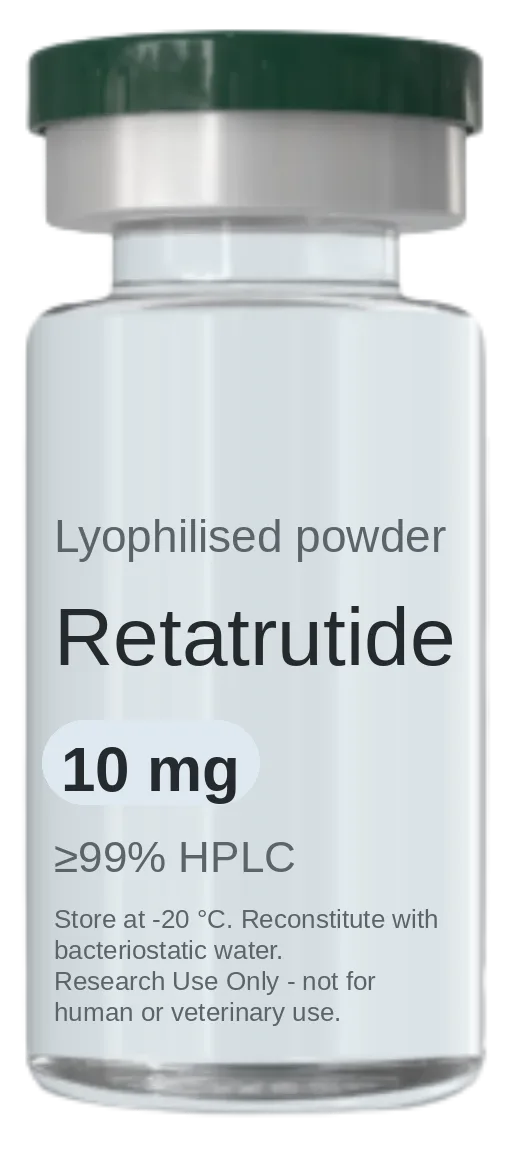
Retatrutide
Triple-agonist metabolic research peptide targeting GLP-1, GIP and glucagon receptors.
- Purity:
- ≥99% HPLC
- Sizes available:
- 10 mg
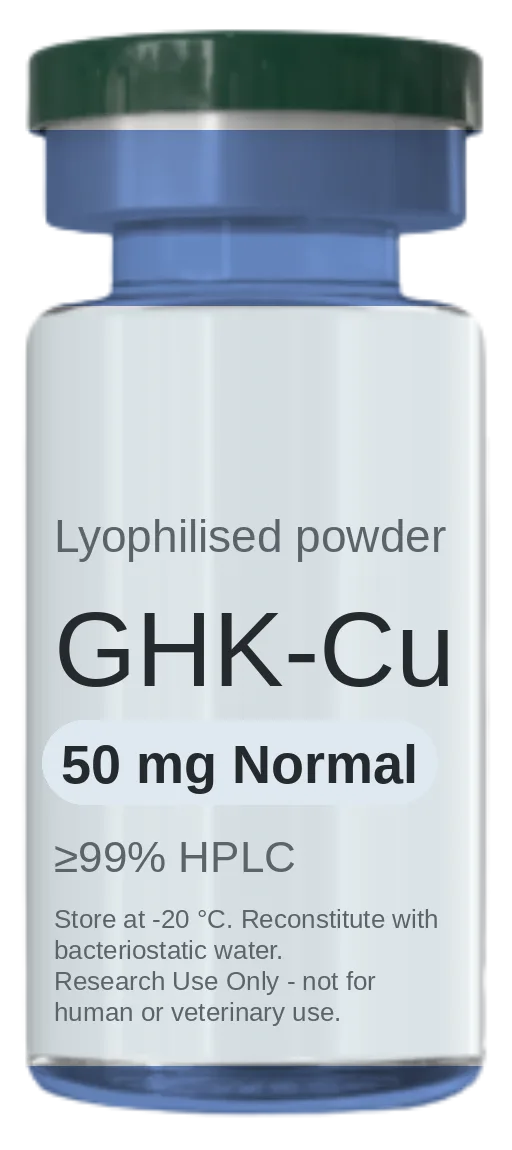
GHK-Cu (Copper Peptide)
Copper-binding tripeptide studied in extracellular matrix and dermal research models.
- Purity:
- ≥99% HPLC
- Sizes available:
- 50 mg Normal – 50 mg Plus
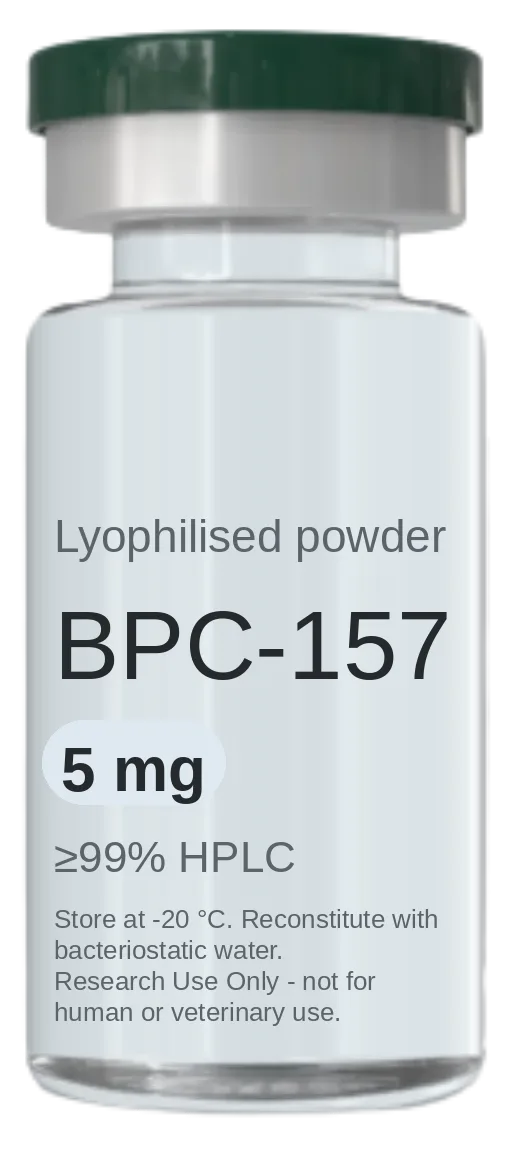
BPC-157 + TB-500
BPC-157 and TB-500 in a single vial — the pairing most studied together in tissue-repair research.
- Purity:
- ≥99% HPLC
- Sizes available:
- 5 mg + 5 mg
The consultation
One intake that settles goals, history and contraindications alongside compound, quantity, documentation and route — reviewed by a physician before anything ships.
More notes
-
Tesamorelin vs Sermorelin: The Difference
Tesamorelin and sermorelin are both GHRH analogs, but not the same molecule. Here's the structural difference and what the studies on each measure.
-
Peptide Supplier vs. Reseller: What Differs
The real difference is whether someone can name the lab that tested a batch and show the report — or only promise it's pure.
-
MOTS-c or NAD+: What's the Difference
MOTS-c and NAD+ are studied through different mitochondrial pathways; here's what each line of research actually measures.