
Note
Couriers for Research Peptides to Argentina
DHL Express, FedEx Express, and UPS ship research peptides into Argentina. The customs outcome depends on the documentation file, not the carrier.
Three international couriers have regular coverage for this type of shipment: DHL Express, FedEx Express, and UPS. All three transport lyophilised laboratory material to Argentina when the shipment is declared correctly as laboratory reference material. The choice of courier matters less than the documentation that accompanies the package.
DHL, FedEx, and UPS: carriers with established networks
DHL Express, FedEx Express, and UPS operate networks covering Argentina with entry through Ezeiza International Airport. All three have experience handling scientific material and accept laboratory cargo when the customs declaration is consistent with what the package contains.
DHL Express has the broadest presence for precision shipments from the United States and Europe into Latin America. FedEx Express operates life-sciences divisions with coverage from North American hubs. UPS covers the segment through its international priority freight network.
None of the three operates as a pharmaceutical distributor. The correct framing for research peptides is laboratory reference material or research-grade chemical reagent — never medication, never supplement. That distinction is what determines customs treatment once a package arrives at Ezeiza.
Specialised consolidation services that handle laboratory materials between the United States and Argentina also exist. For shipments combining multiple compounds or requiring particular handling conditions, these services can offer greater logistical flexibility than high-volume carriers. In every case the customs process is the same: what determines the outcome is the file, not the carrier.
The documentation that decides whether a shipment clears
AFIP, Argentina's customs authority, evaluates each shipment against its declared documentation. A package without the correct declaration can be held or reclassified regardless of which courier transported it.
The documents a research peptide shipment needs to enter Argentina correctly are:
- Commercial or proforma invoice with the exact compound name, lot number, quantity in milligrams, and an explicit declaration of research use.
- Certificate of Analysis (CoA) from an independent laboratory, with a verifiable task number. PeptoClinic publishes its reports on the quality page.
- Safety Data Sheet (SDS) for the compound, listing physicochemical properties and hazard classification.
- End-use declaration stating that the material is intended exclusively for laboratory research and not for human or veterinary use.
The customs classifier verifies the consistency of these four documents against each other. A CoA from Janoshik Analytical that lists the same lot number as the invoice, for a compound declared as laboratory reference material, forms an evidence chain without gaps. A package whose invoice reads "research peptide" but whose labelling suggests personal use is a contradiction that can stop the shipment.
How Argentina classifies peptides at customs
Argentina uses the Common Nomenclature of Mercosur (NCM) to classify imports. The tariff position depends on the chemical nature of the compound and on how its end use is declared.
Chemically synthesised peptides imported as reference substances or laboratory reagents receive different treatment from the rules governing registered medicines before ANMAT. A registered medicine requires sanitary registration prior to entry; a laboratory reference material does not, but it must be declared under the NCM position that corresponds to organic compounds for analytical or research use.
The most common error is declaring the material under a position that triggers pharmaceutical controls, or with a description vague enough that customs reclassifies it on its own terms. In both cases the result is a delay or a hold that requires additional documentation to resolve.
PeptoClinic prepares the import file for each shipment to Argentina with the classification that applies to laboratory reference material. Details of the process are on the shipping page.
Lyophilised powder and the cold chain
The physical format of the compound affects shipping logistics. A peptide in lyophilised powder form is significantly more stable in transit than a reconstituted solution. PeptoClinic supplies compounds in lyophilised powder vials, which reduces dependence on a strict cold chain during standard transit.
This does not mean lyophilised powder is insensitive to environmental conditions. Vials must be kept away from moisture and direct light. For transits involving uncontrolled ambient conditions or extended layovers, packaging with refrigerant gel remains standard practice in the sector.
International couriers offer special-handling categories for laboratory materials: temperature-controlled service, non-hazardous classification, and sealed secondary packaging. The shipper is responsible for specifying the required handling conditions at the time of dispatch, and that information must appear on the air waybill alongside the rest of the documentation.
What happens if customs holds the shipment
A hold is not uncommon for laboratory material shipments, particularly when documentation has inconsistencies or when the classifier does not recognise the compound. The standard procedure is for the recipient or a designated customs agent to submit supplementary documentation: the original CoA, the invoice, and the end-use declaration. In some cases a technical consultation with a professional registered before AFIP can move the process forward.
The difference between a shipment that clears promptly and one that sits in review is almost always in the original file, not in the subsequent appeal. A package that arrives with coherent documentation from the point of origin has the most direct path.
Compounds such as retatrutide and BPC-157 are supplied to Argentina with the import file prepared. For questions about the documentation applicable to a specific compound, contact PeptoClinic at [email protected] before the shipment leaves.
For laboratory research only
All material supplied by PeptoClinic is for exclusive use in in vitro and laboratory research. It is not a medicine, not a supplement, and not approved for human or veterinary use. No regulatory authority — ANMAT, the FDA, or any equivalent — has evaluated these compounds for therapeutic use in this context.
PeptoClinic is not a pharmacy, a clinic, or a source of guidance on dosing or administration. Enquiries about human-use protocols are not attended to. The applicable regulatory framing is that of reference material for research use.
Frequently asked questions
Can any international courier bring research peptides to Argentina?
In principle yes, but regular coverage with experience in laboratory materials belongs primarily to DHL Express, FedEx Express, and UPS. What determines the outcome is not the courier but the documentation: an invoice with a correct description, a CoA from an independent laboratory, and a declaration of research use.
What happens if a shipment is not correctly declared?
Customs can hold it for inspection, reclassify it under a more restrictive tariff position, or reject it at the border. Reclassification as a medicine activates ANMAT controls, which require prior sanitary registration for entry. A shipment declared from the origin as laboratory reference material avoids that path.
Do lyophilised peptides require a cold chain during transport?
Lyophilised powder is more stable than a reconstituted solution for transit. For most compounds, sealed packaging with basic protection against moisture and temperature is sufficient for standard transit. For extreme ambient conditions or extended transit times, refrigerated packaging remains the recommended practice in the sector.
What documents does Argentine customs require for this type of shipment?
The commercial invoice with the exact compound name and lot number, the Certificate of Analysis from an independent laboratory with a task number, the compound's Safety Data Sheet (SDS), and an end-use declaration specifying laboratory research. The consistency of all four documents is what determines the customs treatment.
What is the difference between importing as a medicine and importing as research material?
A medicine requires prior sanitary registration before ANMAT to enter the country. A laboratory reference material does not, but it must be classified under the correct NCM position for organic compounds intended for analytical use. The framing declared at the origin defines which of the two paths the package follows through customs.
Does PeptoClinic include customs documentation with each shipment?
Yes. Each shipment to Argentina includes the import file prepared so that the material enters as laboratory reference material. This comprises the lot CoA, the invoice with the exact compound description, and the end-use declaration for research.
Where can I verify the purity of the material before it arrives?
Each lot's Certificate of Analysis is issued by Janoshik Analytical. PeptoClinic publishes available reports on the [quality page](/en/quality/), with each lot's task number visible before the shipment leaves.
Does PeptoClinic ship research peptides throughout Argentina?
Yes. Compounds available for research with Argentine destinations are listed in the [Argentina section of the catalogue](/en/argentina/). To receive a quote, contact [email protected] with the compound name, quantity, and the research programme the material is intended for.
Compounds mentioned
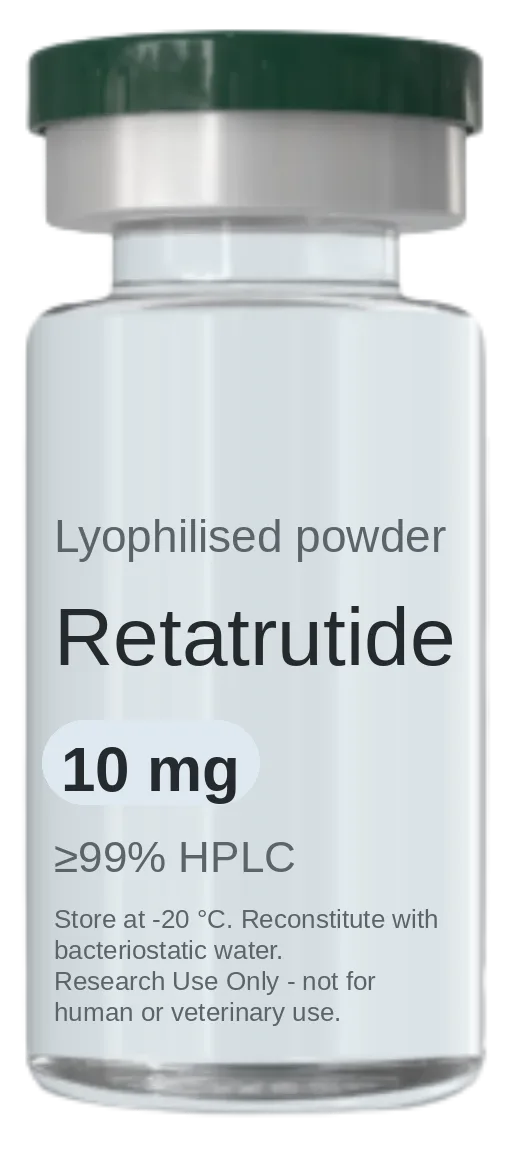
Retatrutide
Triple-agonist metabolic research peptide targeting GLP-1, GIP and glucagon receptors.
- Purity:
- ≥99% HPLC
- Sizes available:
- 10 mg
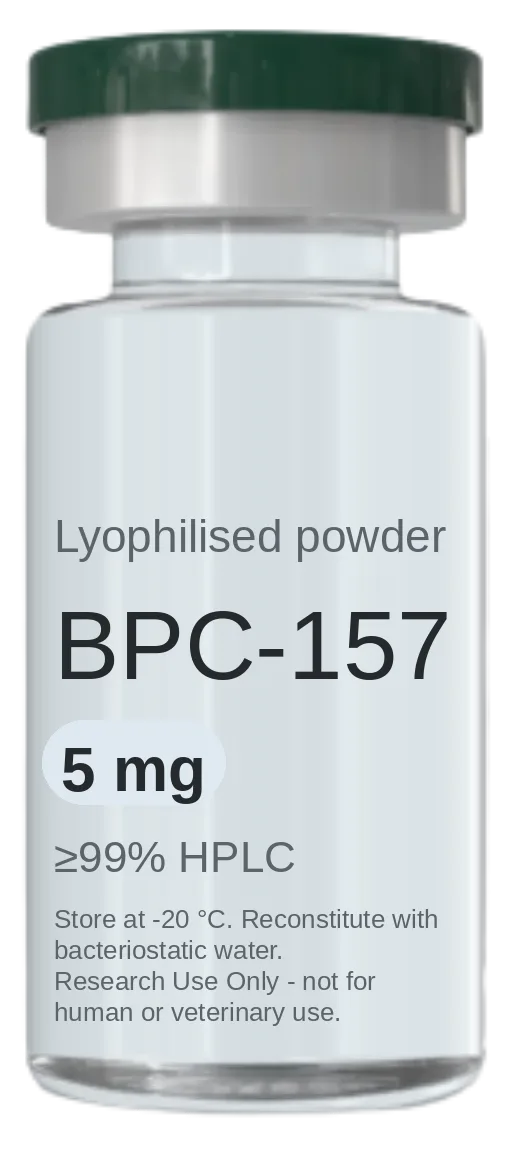
BPC-157 + TB-500
BPC-157 and TB-500 in a single vial — the pairing most studied together in tissue-repair research.
- Purity:
- ≥99% HPLC
- Sizes available:
- 5 mg + 5 mg
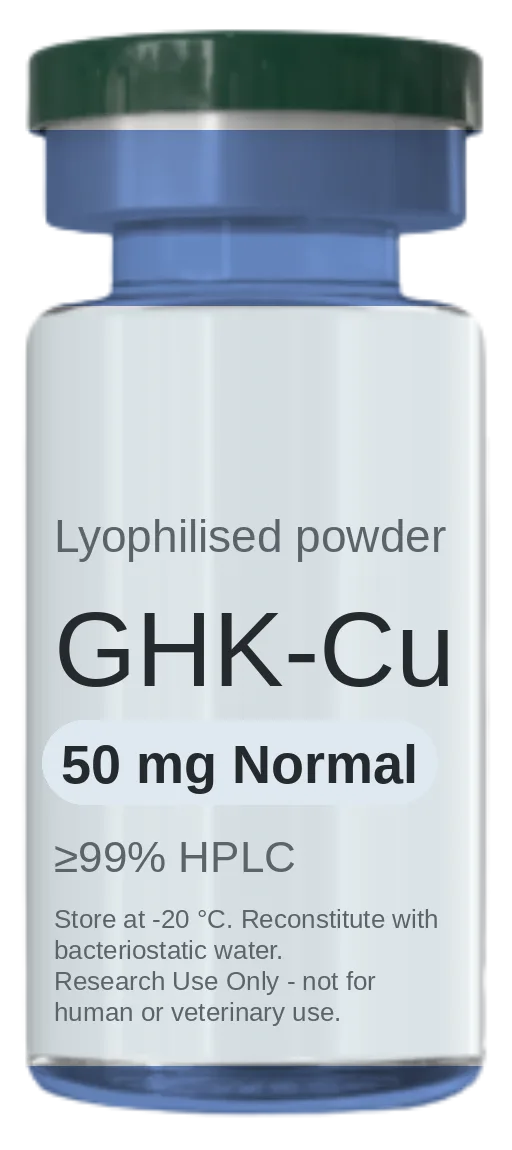
GHK-Cu (Copper Peptide)
Copper-binding tripeptide studied in extracellular matrix and dermal research models.
- Purity:
- ≥99% HPLC
- Sizes available:
- 50 mg Normal – 50 mg Plus
The consultation
One intake that settles goals, history and contraindications alongside compound, quantity, documentation and route — reviewed by a physician before anything ships.
More notes
-
Tesamorelin vs Sermorelin: The Difference
Tesamorelin and sermorelin are both GHRH analogs, but not the same molecule. Here's the structural difference and what the studies on each measure.
-
Peptide Supplier vs. Reseller: What Differs
The real difference is whether someone can name the lab that tested a batch and show the report — or only promise it's pure.
-
MOTS-c or NAD+: What's the Difference
MOTS-c and NAD+ are studied through different mitochondrial pathways; here's what each line of research actually measures.