
Note
Why the Same Peptide Gets Different Quotes
Purity, third-party lab reports, cold chain, and customs: why two quotes for the same research peptide rarely match.
Two quotes for the same research peptide land in the same inbox on the same day with a gap that no currency conversion explains. The difference is almost always a proxy for something concrete: a different purity specification, a different kind of certificate attached to the batch, or a cost that one supplier includes and the other quietly omits. Cold-chain packaging, independent laboratory analysis, and import documentation each carry a real price — one that shows up in the quote, or surfaces later.
Purity is the main driver
A research peptide can be quoted at 95% HPLC purity or at 99% HPLC purity. Both are "the same peptide" by name. The production cost is not the same, because moving a lot from 95% to 99% requires additional purification passes: more column time, lower yield per run, and a higher rate of batch rejection.
A supplier buying 95% starting material pays a different input cost than one buying 99% material. If the second supplier also sends each lot to an independent laboratory for a verified purity number, that cost adds again.
In the four lots published on PeptoClinic's quality page, all analysed by Janoshik Analytical on 13 April 2026, the lowest purity found across the four results was 99.669%. That figure is in the signed report, traceable by task number at the laboratory's own site. It is not a label claim — it is the result of an HPLC analysis run on a specific, identified lot.
The certificate of analysis is not a standard document
Any supplier can issue a certificate of analysis. The relevant question is who signed it and under what conditions.
A CoA issued internally by the same supplier selling the material is a self-reported claim. A CoA issued by an independent laboratory with a task number traces the result to a party that has no financial interest in the outcome. Both documents can look similar in a PDF, but they do not offer the same assurance.
The elements that make a CoA useful rather than decorative:
- The name and address of the analysing laboratory
- A task or report number that allows the result to be looked up directly at the laboratory's site
- The declared analytical method — HPLC, mass spectrometry, NMR
- A numerical purity result, not a binary pass/fail
When a supplier publishes a CoA without a task number and without an identifiable laboratory, the lower price often reflects exactly that: the absence of the analysis cost.
Declared content versus what is actually in the vial
A vial labelled 10 mg may contain 10 mg, 9.1 mg, or 11.96 mg. The difference between declared and actual content is not an implied tolerance — it is information a researcher needs to know what they received and to calculate amounts accordingly.
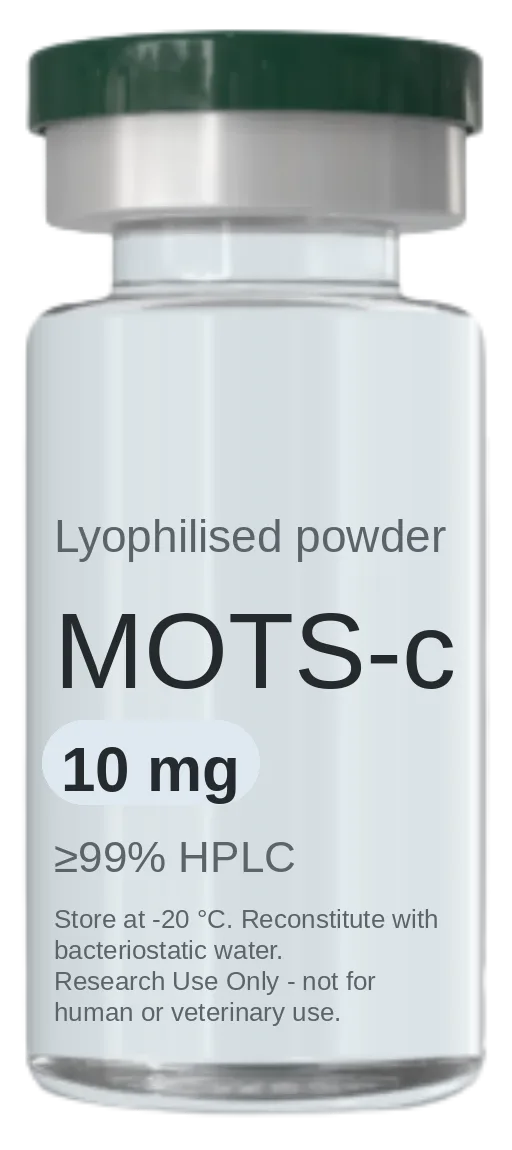
In task report 136921, Janoshik Analytical found 11.96 mg in a vial of retatrutide labelled as 10 mg. In task 136923, the same laboratory found 11.31 mg in a 10 mg vial of MOTS-c. That overfill is declared because the material is for laboratory research and the researcher needs the actual quantity on record.
A supplier absorbing overfill at its own cost has different input economics from one that hits the exact declared weight, and both differ from one that underfills and relies on the label as the only measure. None of those differences appear on the product line of the quote.
Cold chain adds to the price
Lyophilised peptides are stable at room temperature during short transits, but correct handling means refrigerated storage and thermally appropriate packaging for longer routes. That packaging has a direct cost.
A supplier shipping at ambient temperature without cold-chain packing can quote lower because that cost is not being absorbed. The gap in the final number reflects who is paying for cold chain and who is not.
For destinations such as Argentina, where material enters with specific import documentation prepared for laboratory reference material, cold-chain logistics integrate with the documentation process. A supplier without experience in that market may not price those elements into their quote because they are simply outside their standard operation.
Import documentation shows up in the quote
Argentina has an import process for laboratory reference material that is not the same as receiving a shipment from a domestic reagent supplier. The correct tariff code, the technical documentation customs requires, and prior experience with that process all carry a cost — one the supplier absorbs or passes on.
A supplier that has already resolved that process quotes with that work included. Details on destinations served and how the import process is handled are on PeptoClinic's shipping page.
A supplier that has not resolved it quotes a price that does not include resolving it. That cost appears later: in a customs process the buyer handles alone, or in a shipment held at the border.
Differences that do not appear in the number
Two quotes for BPC-157 can differ because:
- The base material was produced to different HPLC purity specifications
- One carries a third-party CoA with a verifiable task number and the other does not
- One includes import documentation prepared for the destination and the other does not
- Cold-chain packaging is absorbed in one quote and excluded from the other
- The lot number in one allows traceability to a signed external report and in the other it does not
When price is the only visible variable, none of those differences appear in the comparison. They appear after the material ships — or does not.
For laboratory research only
All material quoted by PeptoClinic is intended strictly for in vitro and laboratory research (Research Use Only). It is not approved for, intended for, or supplied for human or veterinary use. No regulatory authority — the FDA, ANMAT, or any equivalent — has evaluated this material for any therapeutic indication. Requests about dosing, protocols, or administration in people fall outside the scope of this consultancy.
Frequently asked questions
Does a lower price always mean lower quality?
Not necessarily, but it does mean something is being measured differently or omitted from the quote. A supplier with lower operating costs can deliver good material at a lower price. Without a third-party CoA carrying a verifiable task number, however, there is no way to know what is being purchased before it arrives.
How do I tell whether a certificate of analysis comes from a real laboratory?
A verifiable CoA carries the laboratory name and a task or report number that allows the result to be searched directly at the laboratory's own site. Janoshik Analytical makes results searchable by task number on their public site. If the document has no task number, or the laboratory has no site where the result can be confirmed, the document cannot be independently verified by a third party.
What is the difference between HPLC purity and the purity printed on the label?
The label claim is what the manufacturer states about its product category in general. HPLC purity is the result of a chromatographic analysis of a specific lot, run on a specific date, on a specific sample. The two numbers may or may not match. The one that matters for evaluating a batch is the one signed by the analysing laboratory for that lot — not the brand's general product assertion.
Why might the same peptide cost more for shipment to Argentina?
Destinations with a more specific import process carry additional documentation costs that experienced suppliers build into their quotes. The difference is not in the material price itself: it is in the work of importing correctly as laboratory reference material under the applicable legal framework. A supplier that has not done that work quotes a number that does not include doing it.
Are vials with overfill better or worse than those at exactly the declared weight?
They are neither better nor worse in terms of material quality. Overfill is a content figure the researcher needs in order to calculate correctly. What matters is that the actual content is declared in the CoA. A vial with no declared content figure — only the label weight — does not allow the researcher to know how much material is actually present.
How does cold-chain packaging affect the final quote?
Packaging with refrigerant gel or dry ice has a direct cost that a supplier may or may not include. For long transit routes, that cost is significant because cumulative thermal exposure can degrade lyophilised material in transit. A supplier that excludes it quotes lower, and that difference has consequences for the condition in which the material reaches the destination.
Does PeptoClinic publish its own lot analysis results?
Yes. The four analysed lots are published with task number, analysing laboratory, and numerical result on the [quality page](/en/quality/). Two of the four carry a direct verification link to the Janoshik Analytical site, where the result can be searched by task number.
What is the difference between RUO material and pharmaceutical material in terms of documentation?
Research-use-only peptides are synthesised to technical purity specifications but without the regulatory process required for pharmaceutical materials. The tariff code, import documentation, and legal framework differ from those that apply to registered medicines. What does not exist for RUO material is validation by a body such as ANMAT or the FDA — and that process is not part of the research supply chain.
Compounds mentioned
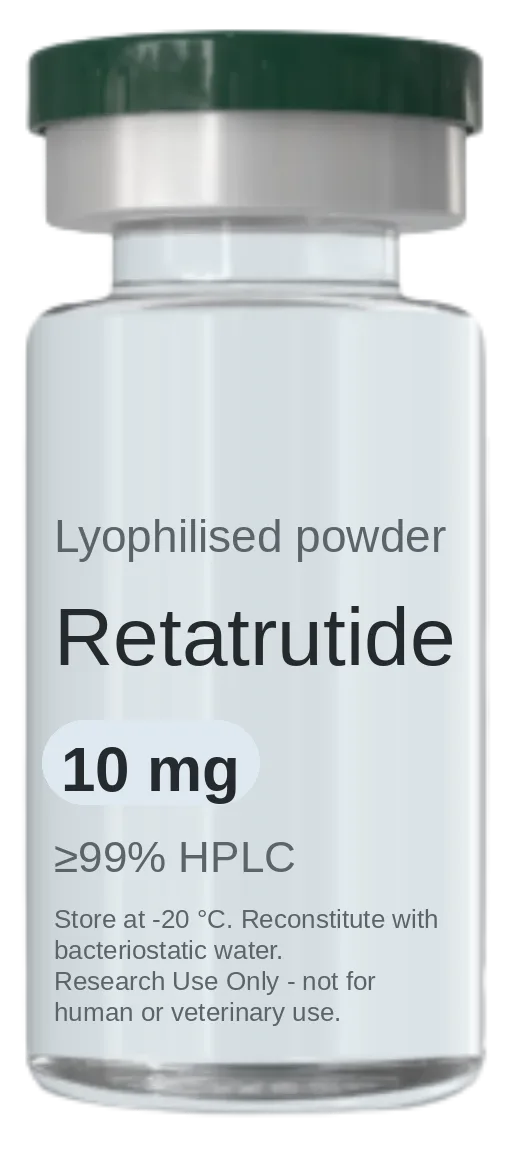
Retatrutide
Triple-agonist metabolic research peptide targeting GLP-1, GIP and glucagon receptors.
- Purity:
- ≥99% HPLC
- Sizes available:
- 10 mg
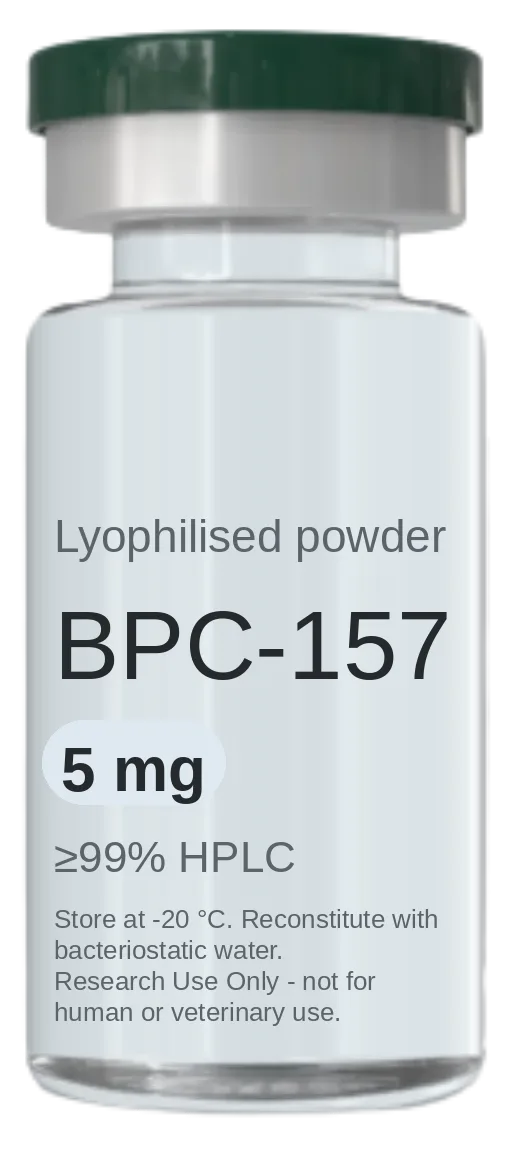
BPC-157 + TB-500
BPC-157 and TB-500 in a single vial — the pairing most studied together in tissue-repair research.
- Purity:
- ≥99% HPLC
- Sizes available:
- 5 mg + 5 mg
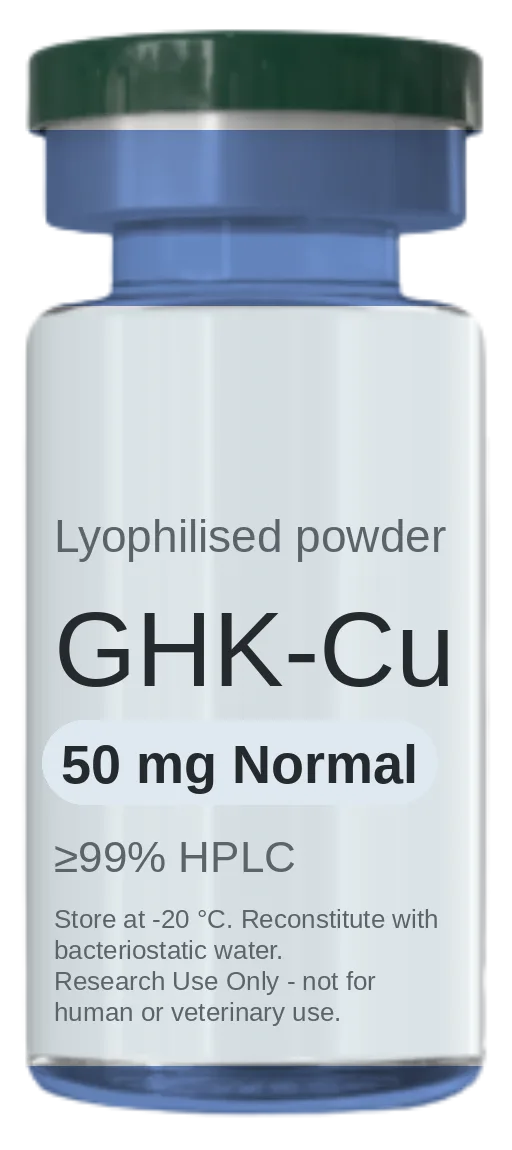
GHK-Cu (Copper Peptide)
Copper-binding tripeptide studied in extracellular matrix and dermal research models.
- Purity:
- ≥99% HPLC
- Sizes available:
- 50 mg Normal – 50 mg Plus
The consultation
One intake that settles goals, history and contraindications alongside compound, quantity, documentation and route — reviewed by a physician before anything ships.
More notes
-
Tesamorelin vs Sermorelin: The Difference
Tesamorelin and sermorelin are both GHRH analogs, but not the same molecule. Here's the structural difference and what the studies on each measure.
-
Peptide Supplier vs. Reseller: What Differs
The real difference is whether someone can name the lab that tested a batch and show the report — or only promise it's pure.
-
MOTS-c or NAD+: What's the Difference
MOTS-c and NAD+ are studied through different mitochondrial pathways; here's what each line of research actually measures.