
Note
What Adverse Effects Has Retatrutide Shown?
By the PeptoClinic editorial team · Medically reviewed by Dr. Emily Parker
What the NEJM and Lancet retatrutide trials reported about side effects, from GI symptoms to increased heart rate.
Retatrutide's clinical trials have reported mostly gastrointestinal side effects — nausea, vomiting, diarrhea and constipation — described as mild to moderate in severity and more frequent during dose escalation, according to the phase 2 obesity trial published by Jastreboff et al., NEJM 2023 and confirmed in the phase 3 trial by Jastreboff et al., NEJM 2026. Retatrutide is a triple agonist that activates the GLP-1, GIP and glucagon receptors, and that third receptor is what distinguishes its adverse-event pattern from single- or dual-receptor agonists already on the market.
What side effects showed up in the phase 2 trial?
The phase 2 trial from Jastreboff et al., NEJM 2023 tested retatrutide across a range of doses in adults with obesity. The most commonly reported adverse events were gastrointestinal — nausea, diarrhea, vomiting, constipation and reflux — and they followed a dose-dependent pattern: higher doses produced more events, concentrated in the initial escalation phase. Most of these episodes were classified as mild to moderate and tended to decrease over the course of treatment, a pattern already familiar from other GLP-1 agonists as the body adjusts to the drug. The trial also reported an increase in heart rate in the groups receiving higher doses, which the authors attributed to the glucagon component of the triple mechanism.
The batch of retatrutide used for laboratory analysis is covered on the retatrutide product page, where the purity reported by the testing laboratory is listed.
What changed in the phase 3 trial?
The phase 3 trial, also published by Jastreboff et al., NEJM 2026, enrolled a larger sample and followed participants for longer than the phase 2 trial. The adverse-event profile it reported was consistent with what the phase 2 trial had already shown: gastrointestinal symptoms predominated, incidence was highest during dose titration, and events tended to level off during the maintenance phase. No new or unexpected safety signals were described relative to phase 2 — a meaningful point, since a larger sample and longer follow-up are exactly what makes it possible to detect rare adverse events that a smaller phase 2 trial can miss.
What did the type 2 diabetes trial show?
Alongside the obesity studies, Rosenstock et al., Lancet 2023 evaluated retatrutide in adults with type 2 diabetes in a phase 2 trial. The adverse-event pattern was similar to the obesity trials — gastrointestinal, dose-dependent — with one additional consideration specific to this population: the risk of hypoglycemia, particularly relevant for participants who were also taking other glucose-lowering medications. That risk is a distinguishing factor between the diabetes trials and the obesity-only trials, where it does not apply the same way because most participants were not on other glucose-lowering drugs.
Were there cardiovascular or metabolic effects beyond the GI symptoms?
Beyond digestive discomfort, the finding that recurs across the obesity trials is an increase in heart rate associated with higher doses, described in both the phase 2 and the phase 3 trials of retatrutide. This is a known effect within the incretin-agonist class and prompted specific vital-sign monitoring during the trials. No clinically relevant signals of liver or kidney toxicity attributable to the drug have been reported in the studies published so far.
How many participants dropped out because of side effects?
In all three trials cited here, a share of participants discontinued treatment because of adverse events, most often gastrointestinal in origin and concentrated in the higher-dose groups. That dropout pattern — higher at higher doses, higher early in treatment — holds across the phase 2 obesity trial, the phase 3 trial and the type 2 diabetes trial, which suggests the drug's tolerability profile does not change substantially between populations or between phases of clinical development.
What is retatrutide's regulatory status today?
Retatrutide is not approved by the FDA. Based on the trials cited above, the molecule has completed phase 3 development for obesity, with those results already published by Jastreboff et al., NEJM 2026. Completing phase 3 is not the same as approval — it is the stage that, if the data hold up through the rest of the regulatory process, can lead to it.
PeptoClinic operates in the United States and supplies research-grade retatrutide with each batch analyzed by an outside laboratory, a process described on the quality page. A physician reviews each consultation before anything ships. The same batch-level documentation accompanies every market PeptoClinic serves, including the retatrutide page for Argentina, and current availability is listed on the pricing page.

Medical review
Dr. Emily Parker

Reviews every consultation as it comes in
Frequently asked questions
What was the most common side effect in the retatrutide trials?
Across every trial published so far — phase 2 and phase 3 in obesity, and phase 2 in type 2 diabetes — gastrointestinal adverse events (nausea, vomiting, diarrhea and constipation) were the most frequently reported, according to [Jastreboff et al., NEJM 2023](https://pubmed.ncbi.nlm.nih.gov/37366315/) and [Jastreboff et al., NEJM 2026](https://pubmed.ncbi.nlm.nih.gov/42814954/).
Were the side effects serious?
Most of the events reported in the trials were classified as mild to moderate. Frequency was higher in the higher-dose groups and during the initial dose-escalation phase, a pattern described in the trials cited above.
Did the safety profile get worse in the phase 3 trial compared to phase 2?
No. The phase 3 trial by [Jastreboff et al., NEJM 2026](https://pubmed.ncbi.nlm.nih.gov/42814954/), with a larger sample and longer follow-up, reported an adverse-event profile consistent with the phase 2 trial, with no new safety signals.
What happens to heart rate during retatrutide treatment?
The obesity trials reported an increase in heart rate associated with higher doses, an effect the authors attributed to the glucagon-receptor component of the drug's triple mechanism of action.
Is there a hypoglycemia risk with retatrutide?
Hypoglycemia risk shows up mainly in the type 2 diabetes trial by [Rosenstock et al., Lancet 2023](https://pubmed.ncbi.nlm.nih.gov/37385280/), particularly in participants combining retatrutide with other glucose-lowering medications. In the obesity trials, where most participants did not have diabetes, that specific risk is not described the same way.
Is retatrutide approved for clinical use in the United States?
No. Retatrutide is not approved by the [FDA](https://www.fda.gov/). Based on the trial record, the molecule has completed phase 3 development for obesity, with the results published by [Jastreboff et al., NEJM 2026](https://pubmed.ncbi.nlm.nih.gov/42814954/).
Does the triple-receptor mechanism explain the side-effect pattern?
Yes, in part. Retatrutide activates GLP-1, GIP and glucagon receptors, and the trials attribute the gastrointestinal pattern to the GLP-1/GIP components it shares with other incretin agonists, while the heart-rate increase is attributed specifically to the added glucagon-receptor activity.
How do I know a retatrutide batch has been verified?
Each batch of retatrutide that PeptoClinic supplies goes through independent laboratory analysis before it ships. The process is described on the [quality page](/en/quality/), and current availability is listed on the [pricing page](/en/pricing/).
Compounds mentioned
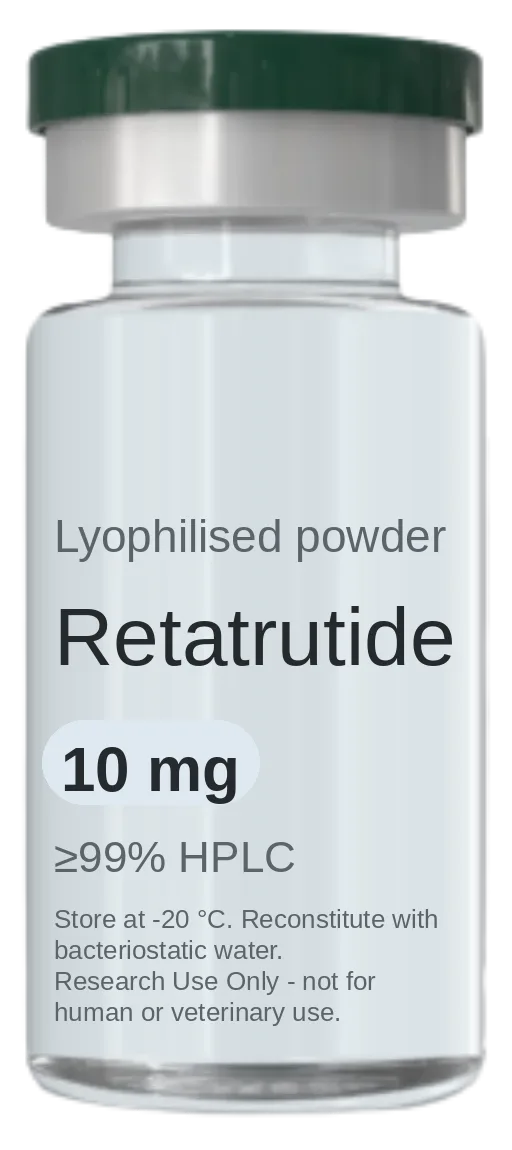
Retatrutide
Triple-agonist metabolic research peptide targeting GLP-1, GIP and glucagon receptors.
- Purity:
- ≥99% HPLC
- Sizes available:
- 10 mg
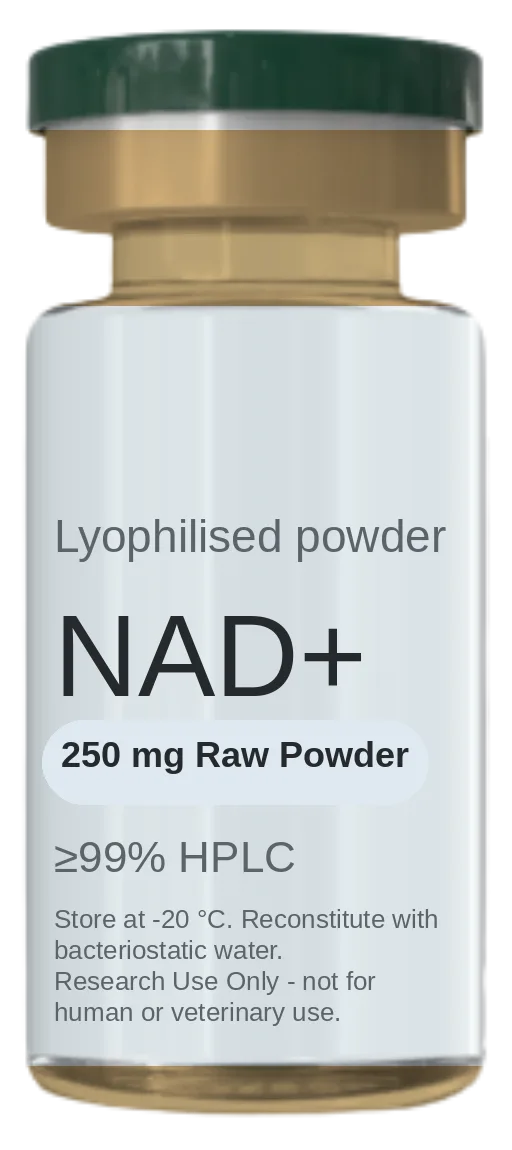
NAD+ (Nicotinamide Adenine Dinucleotide)
Essential redox cofactor central to cellular metabolism and sirtuin research.
- Purity:
- ≥99% HPLC
- Sizes available:
- 250 mg Raw Powder – 300 mg
The consultation
One intake that settles goals, history and contraindications alongside compound, quantity, documentation and route — reviewed by a physician before anything ships.
More notes
-
How Much Weight Did Retatrutide Trials Lose
The actual percentages reported in retatrutide's clinical trials, with sources and the compound's regulatory status in the US.
-
What Is MOTS-c and What Science Studies
A 16-amino-acid peptide encoded in mitochondrial DNA. Published research, Janoshik analysis, and where to find prices.
-
Retatrutide vs GHK-Cu: What's the Difference
Retatrutide and GHK-Cu are different molecules studied for different reasons. What each investigates, and what documentation backs a batch.
-
Peptide Hydrophobicity: What It Is and Why
Hydrophobicity determines how a peptide dissolves, elutes by RP-HPLC, and degrades in storage — a foundational property of any peptide.
-
Storing Retatrutide Before and After Mixing
How lyophilized retatrutide is stored before reconstitution, and what changes once it's dissolved in solution.