
Note
How Much Weight Did Retatrutide Trials Lose
By the PeptoClinic editorial team · Medically reviewed by Dr. Emily Parker
The actual percentages reported in retatrutide's clinical trials, with sources and the compound's regulatory status in the US.
In the phase 2 trial published in 2023, participants who received the highest dose of retatrutide lost an average of 24.2% of body weight at 48 weeks, compared with 2.1% in the placebo group (Jastreboff et al., NEJM 2023). That's the figure that circulates most often, but the trial tested four doses, and each one produced a different result.
How the trial was designed
Jastreboff et al. (NEJM, 2023) enrolled adults with overweight or obesity, without type 2 diabetes, randomized to 1 mg, 4 mg, 8 mg, or 12 mg of retatrutide weekly, or placebo, over 48 weeks. The design was randomized and double-blind: neither participants nor the staff recording outcomes knew which group received which dose until the study closed. That blinding is the standard mechanism for telling a real drug effect apart from chance variation.
Weight was measured on a calibrated scale at each study visit, not by self-report, and the analysis covered everyone assigned to a group (intention-to-treat), not just those who completed all 48 weeks without missing a visit. That distinction matters because an analysis that drops people who left the study tends to produce more favorable numbers than the drug actually delivered.
Results by dose group at 48 weeks:
| Weekly dose | Average weight loss |
|---|---|
| Placebo | 2.1% |
| 1 mg | 8.7% |
| 4 mg | 17.1% |
| 8 mg | 22.8% |
| 12 mg | 24.2% |
The gap between the lowest and highest dose is wide, and it's what drew attention to this trial in the first place: no other compound in clinical development had reported a percentage like that in a phase 2 study.
What "weight loss" actually measures in a trial
The reported number is the percentage change from each participant's baseline weight, averaged within each group. It says nothing about the composition of that change (water, fat mass, muscle mass) unless the trial measured that separately, and it doesn't predict what will happen to any one individual — it's a group average, with its own spread around that average.
What happened in the type 2 diabetes trial
Retatrutide was also evaluated in people with type 2 diabetes, a population where weight loss is historically harder to achieve with any metabolic treatment. In that 36-week trial, Rosenstock et al. (Lancet, 2023) reported a smaller weight reduction than the trial without diabetes — a pattern that commonly shows up when comparing a type 2 diabetes population against one without it. The study also tracked glycemic control, which isn't the focus here, but it explains why the compound continues to be evaluated in more than one clinical setting in parallel.
Why it's still in phase 3, and what that means
No phase 2 result by itself clears a compound for clinical use. The next step, phase 3, already has published results (Jastreboff et al., NEJM 2026), the stage a regulator reviews before deciding whether to approve a drug for general use. As of now, retatrutide is not approved by the FDA in the United States. The public registry of every trial — ongoing, completed, and planned — is available on ClinicalTrials.gov, with the full protocol of each study for anyone who wants to review it.
How it compares with already-approved agonists
Retatrutide acts on three different receptors — GLP-1, GIP, and the glucagon receptor — unlike already-approved molecules that act on one or two of those same receptors. That difference in mechanism is part of why the percentages reported in phase 2 came in higher than other agonists' own trials.
In the SURMOUNT-1 trial, with tirzepatide, the highest dose showed 20.9% average weight loss at 72 weeks (Jastreboff et al., NEJM 2022). In the STEP 1 trial, with semaglutide, the studied dose showed a smaller average weight loss at 68 weeks (Wilding et al., NEJM 2021). These are three separate trials with different durations and populations, so comparing the percentages from memory without looking at each design leads to rushed conclusions: a difference of 4 or 16 weeks in duration already shifts the point on the curve where the effect is being measured.
What these numbers do and don't mean
These figures come from peer-reviewed human clinical trials published in medical journals with an editorial process. They're not the result of anyone using the compound outside a controlled protocol with medical oversight, and they say nothing about what would happen outside that setting. The regulatory status hasn't changed because of these results: retatrutide remains unapproved by the FDA and is in phase 3 of clinical development.
The retatrutide material in PeptoClinic's catalogue was analyzed by Janoshik Analytical, with a purity of 99.893% on that lot's report. How to read that kind of report, and what to check before trusting any supplier, is covered on the quality page. Markets served and pricing by market are on the pricing page.

Medical review
Dr. Emily Parker

Reviews every consultation as it comes in
Frequently asked questions
How much weight did phase 2 retatrutide trial participants lose?
In the group that received the highest dose (12 mg weekly), average weight loss was 24.2% at 48 weeks, compared with 2.1% in the placebo group, according to [Jastreboff et al. (NEJM, 2023)](https://pubmed.ncbi.nlm.nih.gov/37366315/).
Did every participant lose the same amount?
No. The trial tested four different doses (1 mg, 4 mg, 8 mg, and 12 mg), and each produced a different average result: the higher the dose, the greater the average weight loss reported within that group.
Did the type 2 diabetes trial show the same numbers?
No. [Rosenstock et al. (Lancet, 2023)](https://pubmed.ncbi.nlm.nih.gov/37385280/) reported smaller weight loss in the type 2 diabetes group than in the non-diabetes group from the other trial, a pattern commonly seen when comparing both populations against metabolic treatments.
Is retatrutide approved for clinical use?
No. The FDA has not approved it. The compound is in phase 3 of clinical development, the stage preceding any eventual regulatory review, as listed on [ClinicalTrials.gov](https://clinicaltrials.gov/search?intr=retatrutide).
How does it compare with tirzepatide and semaglutide?
They're different molecules evaluated in different trials. In SURMOUNT-1, tirzepatide showed 20.9% weight loss at 72 weeks at its highest dose ([Jastreboff et al., NEJM 2022](https://pubmed.ncbi.nlm.nih.gov/35658024/)); in STEP 1, semaglutide showed a smaller weight loss at 68 weeks ([Wilding et al., NEJM 2021](https://pubmed.ncbi.nlm.nih.gov/33567185/)). The design, dose, and population of each study aren't interchangeable with one another.
Why does the trial measure weight with a scale instead of self-report?
Because self-reported body weight tends to underestimate the actual value, and because the trial needs an objective, repeatable measurement at every visit so the result is comparable across groups and across visits.
Where can I see the full design of retatrutide's trials?
In the public registry [ClinicalTrials.gov](https://clinicaltrials.gov/search?intr=retatrutide), which lists ongoing, completed, and planned trials, with their protocol, inclusion criteria, and results when available.
Does the retatrutide material PeptoClinic distributes have a purity report?
Yes. The lot was analyzed by Janoshik Analytical with a purity of 99.893%. The report and how to verify it are explained on the [quality page](/en/quality/).
Compounds mentioned
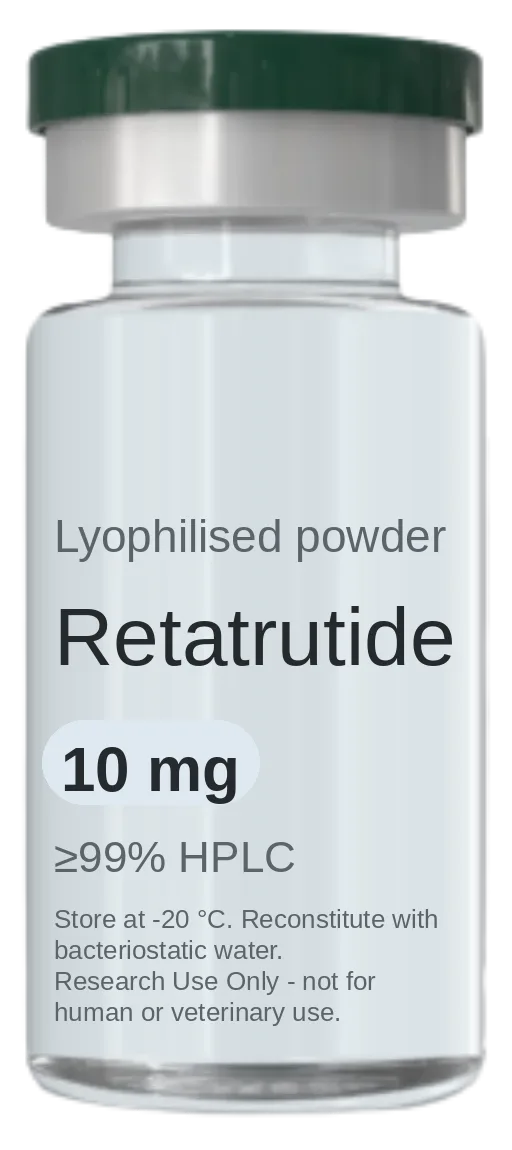
Retatrutide
Triple-agonist metabolic research peptide targeting GLP-1, GIP and glucagon receptors.
- Purity:
- ≥99% HPLC
- Sizes available:
- 10 mg
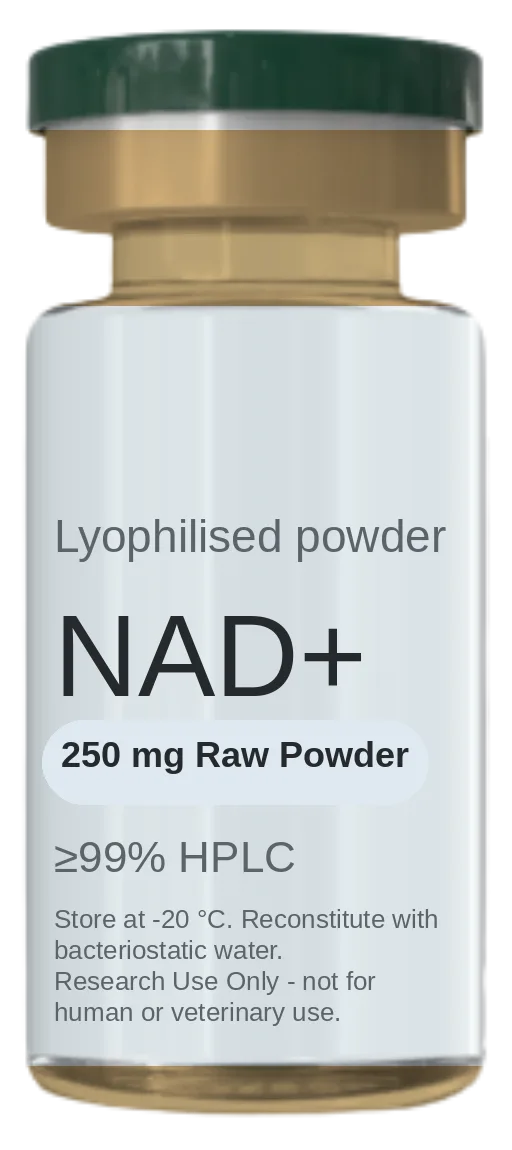
NAD+ (Nicotinamide Adenine Dinucleotide)
Essential redox cofactor central to cellular metabolism and sirtuin research.
- Purity:
- ≥99% HPLC
- Sizes available:
- 250 mg Raw Powder – 300 mg
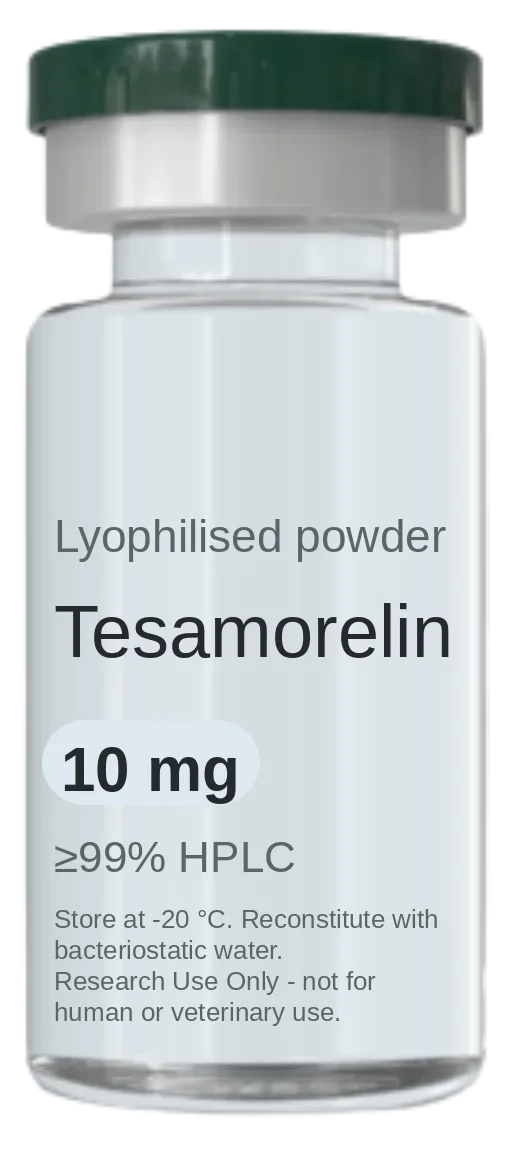
Tesamorelin
Stabilised GHRH(1-44) analogue studied in adipose tissue distribution research.
- Purity:
- ≥99% HPLC
- Sizes available:
- 10 mg – 20 mg
The consultation
One intake that settles goals, history and contraindications alongside compound, quantity, documentation and route — reviewed by a physician before anything ships.
More notes
-
Retatrutide or Semaglutide: Key Differences
Retatrutide is a triple GLP-1/GIP/glucagon agonist; semaglutide activates only GLP-1. How the published literature compares them.
-
Retatrutide: The Triple Agonist Explained
What retatrutide is, which receptors it activates, and why research literature calls it a triple GLP-1/GIP/glucagon agonist.
-
What Adverse Effects Has Retatrutide Shown?
What the NEJM and Lancet retatrutide trials reported about side effects, from GI symptoms to increased heart rate.
-
What Is MOTS-c and What Science Studies
A 16-amino-acid peptide encoded in mitochondrial DNA. Published research, Janoshik analysis, and where to find prices.
-
Retatrutide: Pills or Injectable Only?
Retatrutide exists only as an injectable — no pill form appears in published clinical trials or in PeptoClinic's catalog.