
Note
ANMAT Delay on Customs-Held Peptide
What happens if ANMAT delays its answer on a research peptide held at Argentine customs, and what you can do while you wait.
If ANMAT doesn't answer in time about a research peptide held at Argentine customs, the shipment does not clear itself: it stays in bonded storage until the agency rules, and administrative silence has a defined legal path — filing for pronto despacho — before the delay itself can be challenged. The cargo isn't lost or destroyed overnight, but a clock does start running, and it's worth knowing how it works.
Why a research peptide ends up in front of ANMAT
Argentine customs doesn't open every package to decide on its own whether what arrived is a medicine, a lab input or a cosmetic. When the declared description, the tariff classification or the stated contents resemble an active pharmaceutical ingredient, the system routes the case to a technical agency for an opinion before the clearance goes through. For compounds that show up in pharmacological databases — a peptide's name reads like a drug name even when it's declared as research material — that agency is ANMAT.
This doesn't depend on whether the shipment is legal. It depends on whether customs has doubts about the nature of the product. A batch of lyophilized peptide intended for laboratory use can land in the same review if the paperwork accompanying it doesn't make clear, from the first line, that it is not a medicine and is not intended for human or veterinary consumption.
What happens while the file is open
During the review, the merchandise stays in bonded storage waiting for ANMAT's technical report. There is no partial release and no routine "release under bond" for this kind of hold: clearance stays frozen until the agency rules, closes the inquiry, or customs decides to route the case a different way.
That wait produces two concrete costs regardless of the outcome: storage fees, which accrue daily, and time. Neither is recovered even if the final ruling turns out favorable.
Is there a legal deadline for ANMAT to respond?
There's no specific deadline set for this particular customs inquiry, but a general framework for administrative silence does apply to any national agency, ANMAT included, under Argentina's National Administrative Procedures Law. That law establishes that, absent a special deadline, the Administration generally should not take longer than sixty business days to rule on a specific request. Once that period lapses, the interested party can file a pronto despacho request, and only if another thirty business days pass without a response does the administrative silence that allows the delay to be challenged by other means actually take effect.
Running in parallel is the Customs Code, which sets general deadlines so that merchandise without a defined destination doesn't sit indefinitely in storage — different deadlines depending on the mode of entry (air, land or sea) — and once those lapse without the importer having been able to assign a destination to the cargo, the file can move toward abandoned-goods status. Reaching that point is neither automatic nor immediate, but it's the reason to act before time accumulates, not after.
What you can do if the silence drags on
The first thing is not to assume "no answer" means "it's a lost cause." The process has intermediate steps:
- Ask the customs broker who handled the operation for a status report on the file and, if applicable, have them file the pronto despacho request with ANMAT.
- Check whether the documentation that accompanied the shipment identifies the product as laboratory research material (Research Use Only) rather than as a medicine, with the batch's certificate of analysis attached. An ambiguous description on the invoice is, in practice, the most common reason an inquiry drags on longer than it needs to.
- If applicable, provide any supplementary documentation ANMAT may have requested and that could be stalling the file without the importer even knowing — sometimes the request for more information sits in a notification that doesn't get checked.
- Evaluate, with a broker or a lawyer specializing in customs law, whether it makes sense to file an appeal once administrative silence has been established, rather than continuing to wait with no fixed deadline.
PeptoClinic is not a customs broker and doesn't provide legal advice: when there's a hold, the right point of contact with ANMAT and customs is whoever handled the clearance. What the supplier can contribute is clear, consistent documentation from the point of origin, which is what reduces the odds of ending up in this situation in the first place.
How to lower the risk of a hold from the start
The best way to handle an ANMAT review is to never trigger one. That depends largely on how the shipment is documented:
- Invoice and packing list that describe the contents as laboratory research material, not with pharmaceutical-use terminology or brand-name drug references.
- A batch certificate of analysis (CoA) available to attach if customs or ANMAT asks for it. You can see how to read one on the quality page, where independent laboratory reports on analyzed batches are published.
- Consistency between the declared tariff classification and the actual nature of the product — something a broker experienced with laboratory-input imports handles better than a generalist.
The full catalogue of research peptides PeptoClinic quotes for Argentina is at the catalog, and the dispatch conditions — including the fact that the material ships lyophilized, with no cold chain — are detailed on the shipping page. For specific compounds with high search demand in the country, such as retatrutide in Argentina, BPC-157 in Argentina, MOTS-c in Argentina or tesamorelin in Argentina, those pages lay out what documentation ships with each batch and what the published lab analysis found.
The material is for research, not for human or veterinary use
Everything PeptoClinic supplies is strictly for laboratory research (Research Use Only). It is not a medicine, not a supplement, not approved for human or veterinary consumption, and none of its properties have been evaluated by ANMAT, the FDA or any equivalent regulatory body. This distinction is not a technicality: it's the basis for why a well-documented research peptide should not, in principle, require the same treatment as a medicine, and why a clear customs declaration to that effect is the first line of defense against an unnecessary review.
Frequently asked questions
¿Cuánto tiempo puede quedar retenido un péptido mientras ANMAT responde?
No hay un plazo fijo para esa consulta puntual, pero el marco general de procedimiento administrativo nacional prevé que, sin plazo especial, la respuesta no debería demorar más de sesenta días hábiles antes de habilitar un pedido de pronto despacho. En la práctica, cada expediente depende de la carga de trabajo del organismo y de si falta documentación por parte del importador.
¿Quién tiene que hacer el seguimiento del expediente, el importador o el proveedor?
El seguimiento ante ANMAT y la aduana lo hace el despachante de aduana designado para esa operación, que es quien tiene acceso al expediente y puede presentar escritos. El proveedor puede aportar documentación de respaldo, como el certificado de análisis del lote, pero no reemplaza la gestión del despachante.
¿Qué es el pronto despacho y cuándo conviene pedirlo?
Es una presentación formal para que el organismo responda a un trámite que ya superó el plazo general. Conviene evaluarlo con un despachante o abogado una vez que se cumplió el plazo de sesenta días hábiles sin respuesta, porque recién después de ese pedido empieza a correr el plazo que configura el silencio administrativo.
¿La mercadería se puede perder o destruir mientras se espera la respuesta?
No de forma inmediata. El Código Aduanero prevé plazos generales para definir el destino de una mercadería antes de que caiga en rezago, pero llegar a esa instancia supone que pasó un tiempo considerable sin que el importador haya actuado. Mantener el seguimiento activo con el despachante es lo que evita llegar a ese punto.
¿Por qué un péptido de investigación necesita intervención de ANMAT si no es un medicamento?
Porque la aduana deriva a consulta técnica cuando la descripción, el nombre o la posición arancelaria del producto se parecen a los de un principio activo farmacológico, más allá de que el uso declarado sea de laboratorio. La intervención busca confirmar esa clasificación, no asumir automáticamente que se trata de un medicamento.
¿Qué documentación ayuda a evitar que un envío quede en consulta?
Una factura que describa el contenido como material de investigación (Research Use Only), sin terminología de uso farmacéutico, y el certificado de análisis del lote disponible para adjuntar si lo piden. Esa combinación es la que más reduce las chances de que la aduana derive el caso a ANMAT.
¿PeptoClinic puede gestionar el trámite ante ANMAT en nombre del importador?
No. PeptoClinic suministra el material y su documentación de respaldo —factura, certificado de análisis—, pero la gestión aduanera y cualquier trámite ante ANMAT corresponde al despachante de aduana contratado para esa importación, que es quien tiene representación legal ante esos organismos.
¿Esto cambia según el péptido de que se trate?
El circuito administrativo es el mismo para cualquier compuesto que la aduana derive a consulta, pero la probabilidad de que eso ocurra varía según cuán reconocible sea el nombre del péptido en bases de datos farmacológicas. Los informes de laboratorio y la documentación de cada compuesto están publicados en la [quality page](/en/quality/) y en las páginas de catálogo de cada producto.
Compounds mentioned
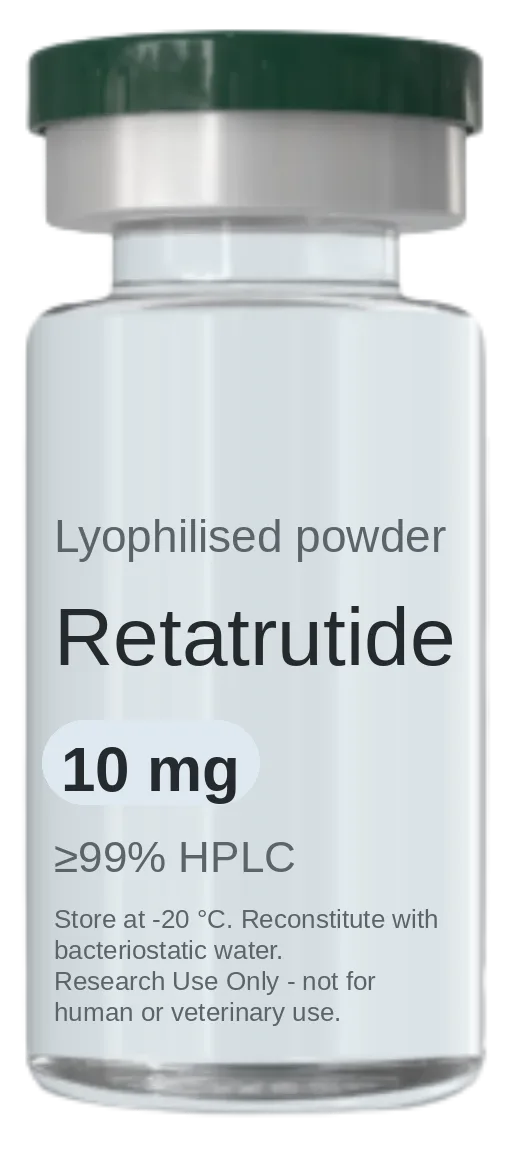
Retatrutide
Triple-agonist metabolic research peptide targeting GLP-1, GIP and glucagon receptors.
- Purity:
- ≥99% HPLC
- Sizes available:
- 10 mg
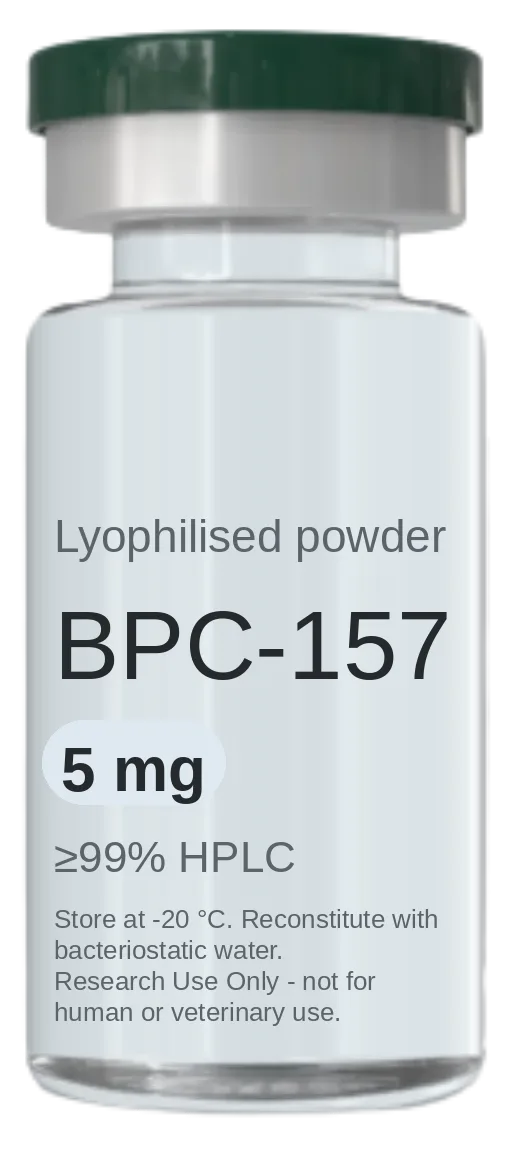
BPC-157 + TB-500
BPC-157 and TB-500 in a single vial — the pairing most studied together in tissue-repair research.
- Purity:
- ≥99% HPLC
- Sizes available:
- 5 mg + 5 mg
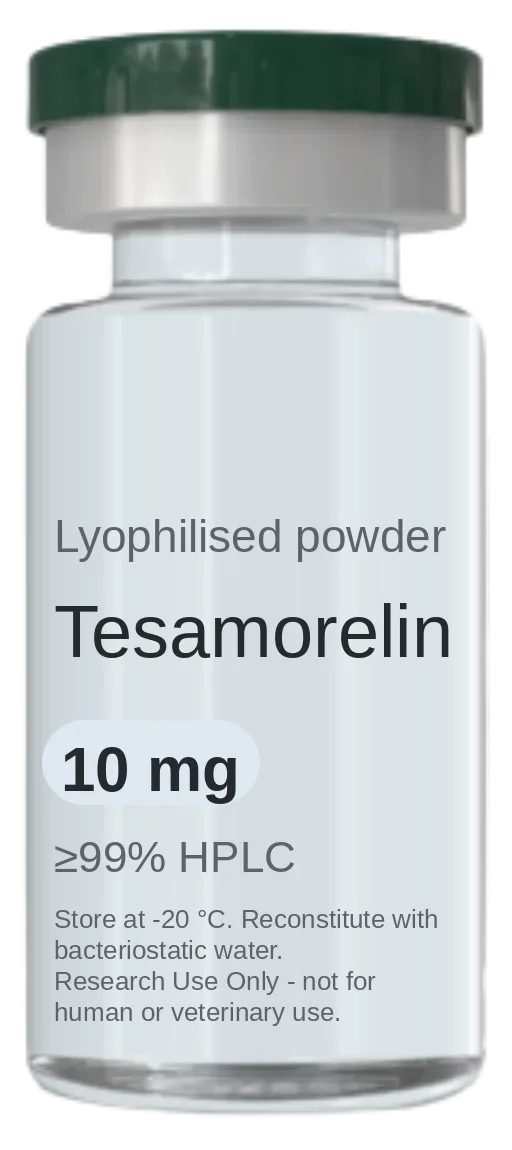
Tesamorelin
Stabilised GHRH(1-44) analogue studied in adipose tissue distribution research.
- Purity:
- ≥99% HPLC
- Sizes available:
- 10 mg – 20 mg
The consultation
One intake that settles goals, history and contraindications alongside compound, quantity, documentation and route — reviewed by a physician before anything ships.
More notes
-
Peptide Shipments to Argentina: Annual Limit
What Argentina's postal shipment regime says about how many research peptide packages you can receive per year.
-
Retatrutide vs Epithalon: Key Differences
Retatrutide and Epithalon are research peptides from different classes, studied in different fields. Here's how they differ.
-
No Tax Address on File: Argentine Customs
What Argentine customs does with a research peptide shipment when the recipient has no registered tax address.