
Note
USD Limit for Simplified Courier to Argentina
Argentina's simplified courier regime covers shipments up to USD 3,000 FOB; above that, formal customs clearance is required.
Argentina's simplified courier regime (the door-to-door clearance that OCA, Correo Argentino, DHL and FedEx use) covers shipments of up to USD 3,000 FOB value and 50 kg per package. Below that ceiling, customs releases the package through the paperwork the courier itself files; above it, the shipment falls out of the simplified track and needs a licensed customs broker and a formal import, the same as commercial cargo. A shipment of research peptides — a lyophilized vial holding a few milligrams, declared as laboratory reference material — sits far below that ceiling in declared value, so it normally clears under the simplified regime.
How the door-to-door regime works
The courier acts as the recipient's customs agent: it files the simplified declaration, calculates what's owed, and collects it on delivery (or deducts it from a payment already made, depending on the carrier). The recipient in Argentina is listed as the importer of record for that paperwork, even though they file nothing themselves. That's what distinguishes this regime from a general import: there's no broker, no case file in the María system, and release is measured in days, not weeks.
That mechanism has a value ceiling because customs designed it for personal purchases and small parcels, not commercial freight. Past the limit, the system assumes a larger-scale operation and requires the formal circuit instead.
The value brackets inside the regime
Within that USD 3,000 ceiling, the tax treatment isn't uniform — there are brackets depending on the declared value of the shipment.
- Up to USD 50: the historic allowance. A shipment at or below this value, one per recipient per month, clears with no duties or taxes.
- Between USD 50 and USD 400: pays a single flat rate (replacing the combined calculation of import duty, VAT and withholdings that used to apply to this bracket).
- Between USD 400 and USD 3,000: pays the full scheme — import duty based on the product's tariff classification, VAT, and whichever VAT and income-tax withholdings apply — though the clearance itself still runs through the courier's simplified track.
Customs updates these percentages and the exact cutoff of the middle bracket more often than the structural USD 3,000 ceiling. If you're about to receive a shipment and the declared value is close to one of these breakpoints, it's worth confirming the current rate directly with the courier before the package ships — they have the figure current to the day, and it's what they'll actually charge on delivery.
What happens above USD 3,000
Above that value, the package can't clear through the courier circuit. A formal import is required: a licensed customs broker, a detailed declaration, and the same taxes any registered importer would pay. In practice this rarely applies to a research peptide order: the volume of a laboratory shipment — a handful of lyophilized vials — stays well under the limit even for large orders, because what drives FOB value is the quantity of product, not the service around it.
What this means for a research peptide shipment
A vial of retatrutide, BPC-157, MOTS-c or GHK-Cu travels as sealed lyophilized powder, with no cold chain, because dry powder is stable at room temperature for weeks. That's one reason declared values on these shipments tend to run low against the USD 3,000 ceiling: there's no coolant, no thermal packaging, and the contents themselves — milligrams of material — don't push the value up. The full detail of how material is packaged and what documentation ships with it is on the shipping page.
What actually sets the declared value is the quantity of vials in the order, not a published catalogue price: each request is quoted according to what the research programme needs, and that quote is what determines which bracket the shipment falls into. That's also a case-by-case consultation, not a fixed figure that can be announced in advance.
The documentation that travels with the shipment
Every lot shipped to Argentina carries its documentation of origin — the sheet identifying the compound, the batch and the purity verified by the laboratory that analyzed it — declared for what it is: laboratory reference material for research, not a consumer product. That declaration is what the courier files alongside the FOB value to determine the applicable bracket. How to read that lab report, and what it means for purity to be verified by an independent third party, is explained on the quality page. The full catalogue of compounds quoted for the region is on the catalog page, and which countries in the region are covered — Argentina included — is detailed on the Argentina shipping page.
What this regime doesn't change
The value limit is a customs matter: it determines which clearance track a package uses to enter the country, not what the product is or what it's authorized for. The material PeptoClinic quotes is strictly for laboratory research (RUO, Research Use Only): it is not a medicine, not a supplement, not approved for human or veterinary consumption, and none of its claims have been evaluated by ANMAT, the FDA or any equivalent authority. Whether a shipment clears under the simplified courier regime has no bearing on that status, and does not turn it into an import of a therapeutic product.
Frequently asked questions
¿El límite de USD 3.000 es por paquete o por año?
Es por paquete, por envío individual. El régimen no tiene un tope anual acumulado de valor para los envíos que entran por courier puerta a puerta; lo que sí existía antes de la reforma de diciembre de 2024 era un tope de cinco envíos por año en el tramo intermedio, que la actualización eliminó.
¿Quién paga el arancel o el IVA del tramo que corresponda?
El destinatario en la Argentina, al momento de recibir el paquete. El courier lo calcula y lo cobra como parte de la entrega; no es algo que se tramite por separado ante la aduana.
¿Un envío de péptidos de investigación entra siempre en la franquicia de USD 50?
No necesariamente. Depende del valor declarado de ese envío puntual, que a su vez depende de la cantidad de viales cotizados. Un pedido chico puede caer en la franquicia; uno más grande puede caer en alguno de los tramos superiores, sin por eso superar el techo de USD 3.000 que permite usar el régimen courier.
¿Qué pasa si el valor declarado está mal y la aduana lo corrige?
La aduana puede reliquidar el tramo y el tributo correspondiente si el valor declarado no coincide con el real. Por eso la documentación que acompaña al envío —la ficha del lote y su valor— tiene que ser consistente con lo efectivamente despachado.
¿Este régimen aplica igual a Uruguay, Chile o el resto de la región?
No. Cada país tiene su propio régimen aduanero de envíos postales y courier, con sus propios techos de valor y tramos. Esta nota describe específicamente el régimen vigente en la Argentina.
¿Hace falta un despachante de aduana para un envío de péptidos que entra por este régimen?
No, mientras el valor FOB se mantenga por debajo de USD 3.000 y el peso por debajo de 50 kg. El courier hace el trámite simplificado como parte del servicio de entrega.
¿Estos montos y porcentajes pueden cambiar?
Sí. La aduana argentina ajustó estos tramos en diciembre de 2024 y puede volver a hacerlo. El techo estructural de USD 3.000 para el régimen courier es el valor más estable; los porcentajes de los tramos intermedios conviene confirmarlos con el courier al momento del envío.
¿El régimen simplificado implica algún tipo de aprobación sanitaria del producto?
No. El trámite aduanero clasifica el envío según su valor y su posición arancelaria; no evalúa ni aprueba el producto para uso humano o veterinario. El material que se despacha sigue siendo exclusivamente para investigación de laboratorio.
Compounds mentioned
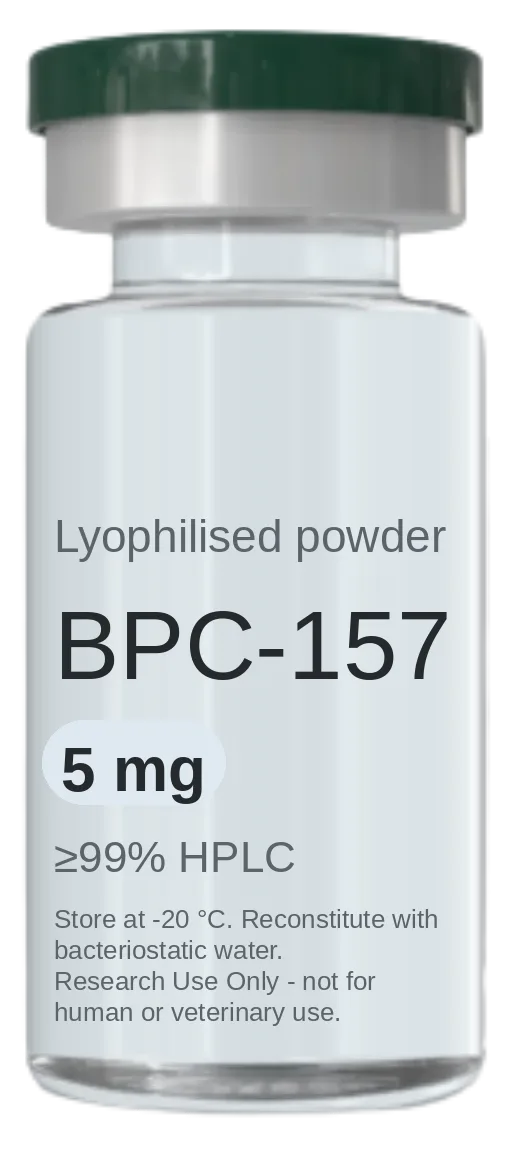
BPC-157 + TB-500
BPC-157 and TB-500 in a single vial — the pairing most studied together in tissue-repair research.
- Purity:
- ≥99% HPLC
- Sizes available:
- 5 mg + 5 mg
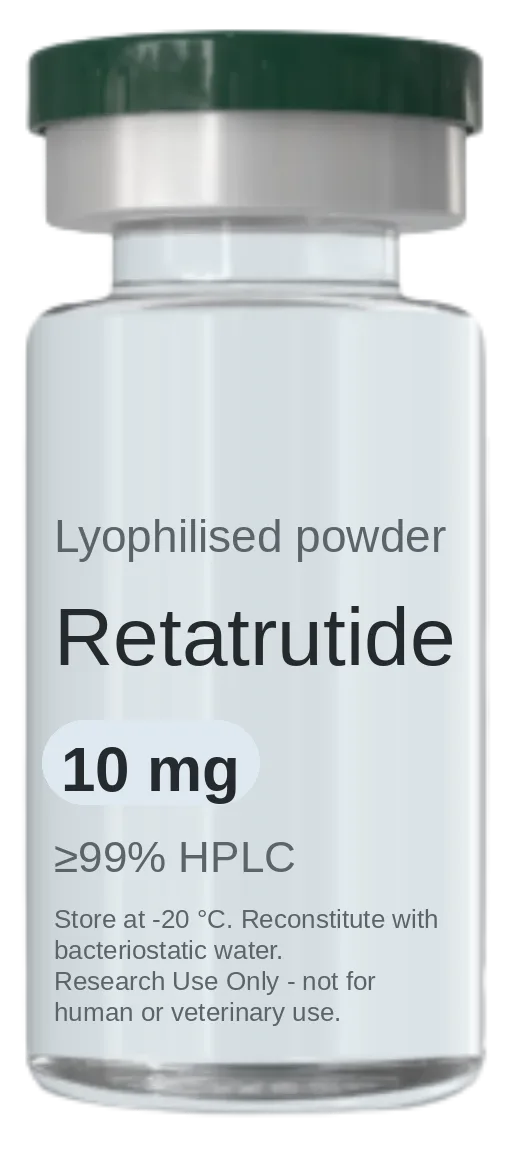
Retatrutide
Triple-agonist metabolic research peptide targeting GLP-1, GIP and glucagon receptors.
- Purity:
- ≥99% HPLC
- Sizes available:
- 10 mg
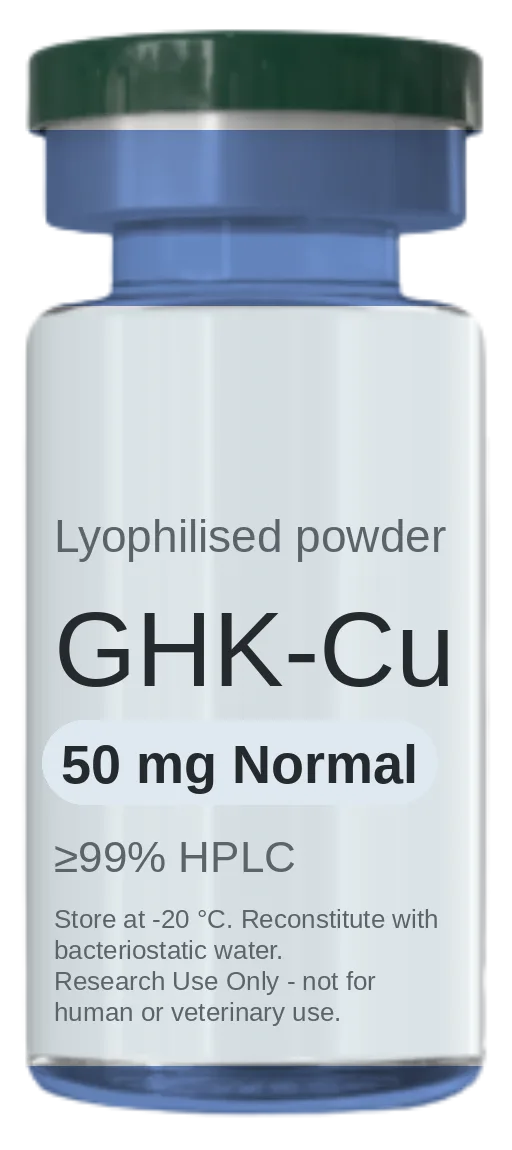
GHK-Cu (Copper Peptide)
Copper-binding tripeptide studied in extracellular matrix and dermal research models.
- Purity:
- ≥99% HPLC
- Sizes available:
- 50 mg Normal – 50 mg Plus
The consultation
One intake that settles goals, history and contraindications alongside compound, quantity, documentation and route — reviewed by a physician before anything ships.
More notes
-
Thymosin Alpha 1 vs BPC-157: Differences
Thymosin Alpha 1 and BPC-157 study different pathways — immune modulation vs tissue repair. RUO material with a verifiable COA.
-
Peptide Shipments to Argentina: Annual Limit
What Argentina's postal shipment regime says about how many research peptide packages you can receive per year.
-
Retatrutide vs Epithalon: Key Differences
Retatrutide and Epithalon are research peptides from different classes, studied in different fields. Here's how they differ.