
Note
CagriSema vs Retatrutide: What Differs
By the PeptoClinic editorial team · Medically reviewed by Dr. Emily Parker
CagriSema combines cagrilintide and semaglutide; retatrutide hits three receptors. Here is what the trials actually measured.
CagriSema and retatrutide are two different molecules built on two different mechanisms, tested in separate Phase 3 trial programs, and neither one is approved by the FDA as of this writing. CagriSema pairs cagrilintide, an amylin analog, with semaglutide, a GLP-1 receptor agonist. Retatrutide is a single molecule that activates three receptors at once — GLP-1, GIP, and glucagon. The question people ask next is which one produced bigger numbers in its trials, and the answer depends on which trial and which endpoint.
How the two compounds differ
| Aspect | CagriSema | Retatrutide |
|---|---|---|
| Composition | Cagrilintide (amylin analog) + semaglutide (GLP-1 agonist), co-formulated | Single molecule, triple agonist |
| Receptors targeted | Amylin receptor + GLP-1 receptor | GLP-1, GIP, and glucagon receptors |
| Developer | Novo Nordisk | Eli Lilly |
| Key trials | REDEFINE 1 and REDEFINE 2, both Phase 3 | Phase 2 obesity trial; Phase 3 trial reported 2026 |
| Population studied | Adults with overweight or obesity (REDEFINE 1); adults with overweight/obesity and type 2 diabetes (REDEFINE 2) | Adults with obesity (Phase 2); broader Phase 3 population |
| Development status | Phase 3, not approved by the FDA | Phase 3, not approved by the FDA |
| Registry | Search on ClinicalTrials.gov | Search on ClinicalTrials.gov |
What is CagriSema, mechanistically
CagriSema is not a new molecule in the way retatrutide is — it is a fixed-ratio combination of two existing mechanisms delivered in one injection. Cagrilintide mimics amylin, a hormone the pancreas releases alongside insulin that slows gastric emptying and contributes to satiety signaling. Semaglutide is the same GLP-1 receptor agonist marketed as Ozempic and Wegovy. The idea behind pairing them is that amylin and GLP-1 act on different, complementary pathways in the brain's appetite-regulation centers, so combining the two produces an effect larger than either alone.
That combination was tested in REDEFINE 1, a trial in adults with overweight or obesity without diabetes, and REDEFINE 2, a trial in adults with overweight or obesity and type 2 diabetes. Garvey et al., NEJM 2025 reported the REDEFINE 1 results, and Davies et al., NEJM 2025 reported REDEFINE 2. Both trials measured body weight change over roughly a year of treatment against placebo, in randomized, controlled designs.
What is retatrutide, mechanistically
Retatrutide takes a different approach: instead of combining two separate molecules, it is one peptide engineered to bind three receptors — GLP-1, GIP, and the glucagon receptor — on the theory that glucagon receptor activation adds an energy-expenditure component that GLP-1 and GIP alone don't provide. Jastreboff et al., NEJM 2023 reported the Phase 2 obesity trial results, and the compound moved into Phase 3, reported by Jastreboff et al., NEJM 2026. Retatrutide has also been studied in type 2 diabetes: Rosenstock et al., Lancet 2023 reported a Phase 2 trial in that population.
For comparison, Jastreboff et al., NEJM 2022 reported the SURMOUNT-1 trial of tirzepatide, the dual GLP-1/GIP agonist marketed as Mounjaro and Zepbound — a useful middle point between a dual agonist and retatrutide's triple-receptor design, and between tirzepatide and CagriSema's amylin/GLP-1 pairing.
Which trial measured what
It matters to be precise here, because these are not head-to-head trials against each other — CagriSema and retatrutide have never been tested in the same study, against the same placebo group, at the same time. REDEFINE 1 and REDEFINE 2 measured CagriSema against placebo in two distinct populations. The Phase 2 and Phase 3 retatrutide trials measured retatrutide against placebo, in trials run by a different sponsor on a different timeline. Any claim that one produced "more weight loss" than the other is a cross-trial comparison, not a controlled one, and the populations, durations, and background care in each trial differ enough that a direct ranking isn't something the literature supports.
Development status and the FDA
Neither molecule is approved by the FDA. CagriSema and retatrutide are both in Phase 3 development as of this writing, with trial results published but no regulatory approval granted to either. This differs from the related, already-approved drugs in the same drug class: semaglutide is approved by the FDA as Ozempic and Wegovy, and tirzepatide is approved by the FDA as Mounjaro and Zepbound, per Wilding et al., NEJM 2021 and the SURMOUNT-1 trial cited above. PeptoClinic's retatrutide is not Mounjaro, Zepbound, Ozempic, or Wegovy, and it is not approved by the FDA — it is the same molecule studied in the trials cited here, supplied as a vial. CagriSema is not currently part of PeptoClinic's catalog.
Where the two fit in the broader picture
Both molecules sit in the incretin-and-beyond category that started with GLP-1-only drugs and has expanded toward multi-receptor designs. PeptoClinic's catalog carries retatrutide, tirzepatide, and semaglutide, each reflecting a different receptor strategy within that same research area — a useful reference point for anyone trying to map how cagrilintide-based and triple-agonist approaches relate to the drugs already in pharmacies. Every vial PeptoClinic ships is analyzed by Janoshik Analytical, the same laboratory that produced the certificates covering the compounds in the catalog; current pricing lists what is in stock.

Medical review
Dr. Emily Parker

Reviews every consultation as it comes in
Frequently asked questions
Is CagriSema the same as semaglutide?
No. CagriSema contains semaglutide as one of its two components, paired with cagrilintide, an amylin analog. Semaglutide alone is the GLP-1 agonist marketed as Ozempic and Wegovy, both approved by the FDA, per [Wilding et al., NEJM 2021](https://pubmed.ncbi.nlm.nih.gov/33567185/). CagriSema is a combination product tested separately in the REDEFINE trials and is not itself an approved drug.
Does retatrutide have an amylin component?
No. Retatrutide's three receptor targets are GLP-1, GIP, and glucagon — it does not act on the amylin receptor the way cagrilintide does. The two compounds reach a similar broad goal, appetite and metabolic regulation, through different receptor combinations, as described in [Jastreboff et al., NEJM 2023](https://pubmed.ncbi.nlm.nih.gov/37366315/).
Have CagriSema and retatrutide been tested against each other directly?
No head-to-head trial comparing the two has been reported in the sources reviewed here. REDEFINE 1 and REDEFINE 2 tested CagriSema against placebo; the Phase 2 and Phase 3 retatrutide trials tested retatrutide against placebo. They were run by different sponsors, in different trial populations, at different times.
Is retatrutide approved by the FDA?
Not as of this writing. Retatrutide has completed Phase 2 trials, reported by [Jastreboff et al., NEJM 2023](https://pubmed.ncbi.nlm.nih.gov/37366315/), and Phase 3, reported by [Jastreboff et al., NEJM 2026](https://pubmed.ncbi.nlm.nih.gov/42814954/), but no FDA approval has been granted. PeptoClinic's retatrutide is the molecule studied in those trials, not an approved drug product.
What populations were studied in the REDEFINE trials?
REDEFINE 1 studied adults with overweight or obesity who did not have type 2 diabetes, reported by [Garvey et al., NEJM 2025](https://pubmed.ncbi.nlm.nih.gov/40544433/). REDEFINE 2 studied adults with overweight or obesity who also had type 2 diabetes, reported by [Davies et al., NEJM 2025](https://pubmed.ncbi.nlm.nih.gov/40544432/). The two populations are distinct, which is one more reason a direct comparison with retatrutide's trial population requires caution.
How does retatrutide compare to tirzepatide, the drug it's most often confused with?
Tirzepatide activates two receptors, GLP-1 and GIP, and is approved by the FDA as Mounjaro and Zepbound, with its pivotal trial reported by [Jastreboff et al., NEJM 2022](https://pubmed.ncbi.nlm.nih.gov/35658024/). Retatrutide adds a third target, the glucagon receptor, and remains unapproved. Both are studied in [PeptoClinic's catalog](/en/catalog/) as research compounds, distinct from the branded, approved drugs.
Where can I see what's currently in stock and what it costs?
[PeptoClinic's pricing page](/en/pricing/) lists what is currently available and at what price. CagriSema is not currently part of the catalog; retatrutide is.
Compounds mentioned
Retatrutide
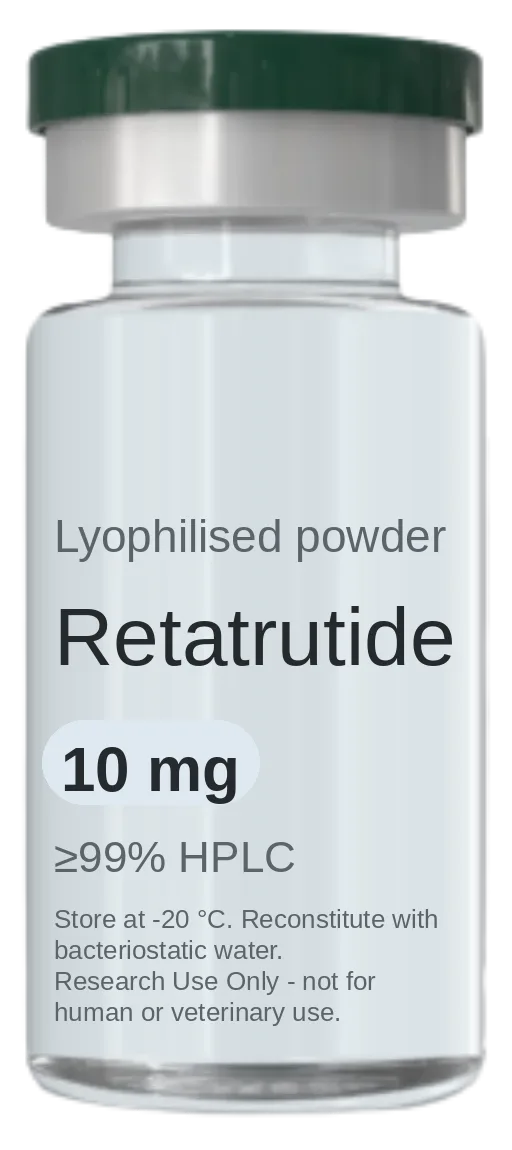
Triple-agonist metabolic research peptide targeting GLP-1, GIP and glucagon receptors.
- Purity:
- ≥99% HPLC
- Sizes available:
- 10 mg
Semaglutide
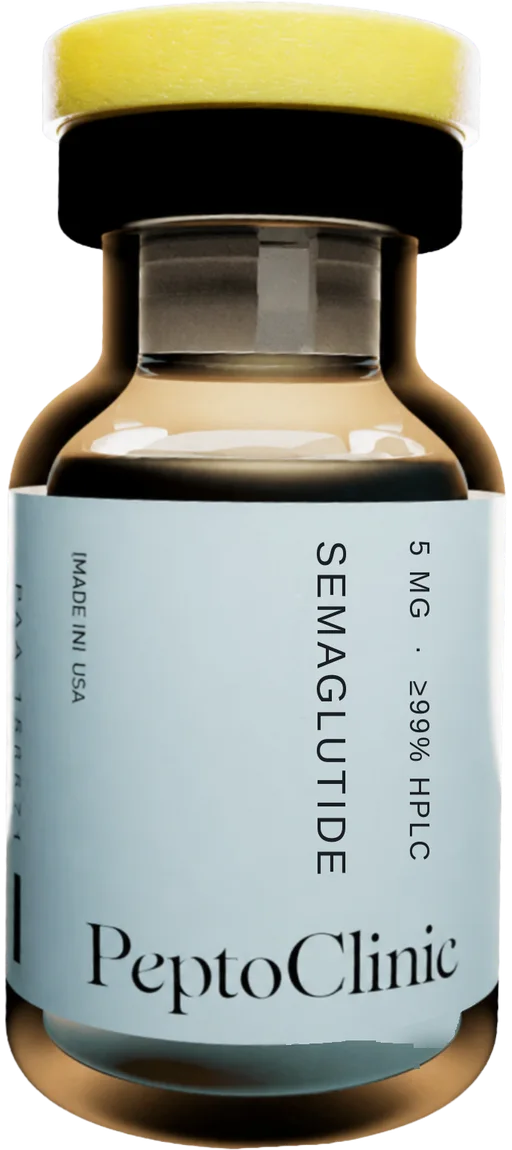
GLP-1 receptor agonist, the molecule in Ozempic and Wegovy.
- Purity:
- ≥99% HPLC
- Sizes available:
- 5 mg
Tirzepatide
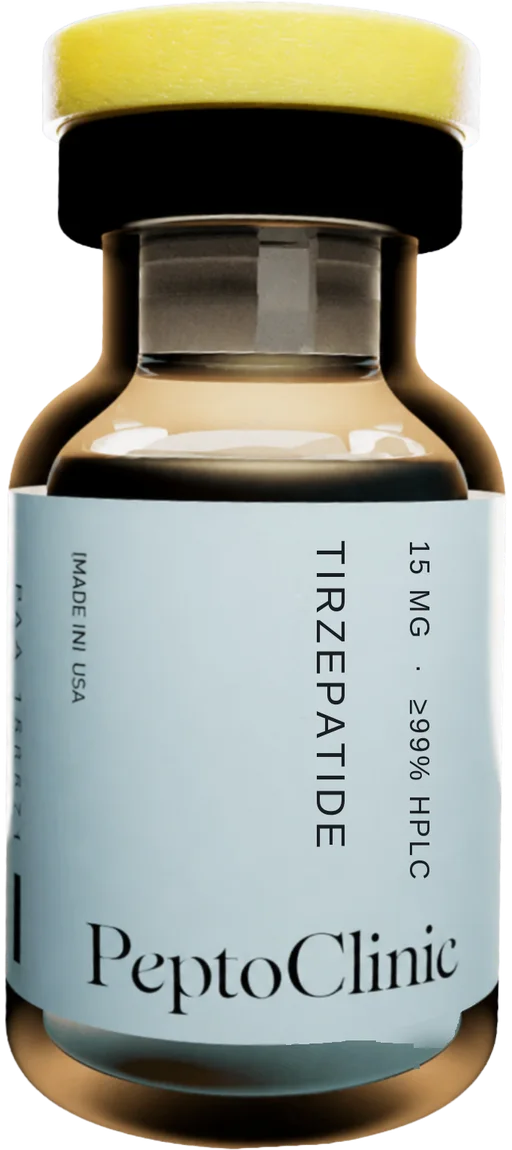
Dual GIP and GLP-1 receptor agonist, the molecule in Mounjaro and Zepbound.
- Purity:
- ≥99% HPLC
- Sizes available:
- 15 mg – 30 mg
The consultation
One intake that settles goals, history and contraindications alongside compound, quantity, documentation and route — reviewed by a physician before anything ships.
More notes
-
Retatrutide vs Wegovy: What's the Difference
Retatrutide is a phase 3 investigational triple agonist, while Wegovy's semaglutide has received FDA approval. Here's how they compare.
-
Retatrutide Phase 3 Trials: What We Know
What retatrutide's phase 2 and 3 trials showed, how it compares to tirzepatide and semaglutide, and where FDA approval stands today.
-
GLP-1 Agonist vs. Retatrutide Explained
A GLP-1 agonist activates one receptor; retatrutide activates three. Here's the mechanistic difference and its trial phase.
-
Cagrilintide vs Retatrutide: Differences
Cagrilintide targets amylin receptors; retatrutide activates GLP-1, GIP and glucagon. Neither is FDA-approved, and here's what each trial reported.
-
CagriSema vs Tirzepatide: Key Differences
CagriSema pairs cagrilintide with semaglutide; tirzepatide is a dual GIP/GLP-1 agonist. Compare mechanism, trials, and FDA status.