
Note
GLP-1 Agonist vs. Retatrutide Explained
By the PeptoClinic editorial team · Medically reviewed by Dr. Emily Parker
A GLP-1 agonist activates one receptor; retatrutide activates three. Here's the mechanistic difference and its trial phase.
A GLP-1 agonist is a molecule that binds to the GLP-1 receptor and mimics that hormone's natural signaling in the body. Retatrutide isn't a simple GLP-1 agonist: it's a triple agonist, meaning it activates that same receptor plus two more, GIP and glucagon, at the same time. The difference isn't about brand or potency — it's about how many distinct receptors the molecule engages.
What a GLP-1 receptor agonist is
GLP-1 is an incretin: a hormone the gut releases after eating that acts on several organs at once, including the pancreas, the stomach, and the brain. A GLP-1 agonist is a synthetic molecule built to bind that hormone's receptor and trigger the same signaling cascade. Semaglutide is the best-studied example of this class — it activates a single receptor, GLP-1 — and that single-receptor mechanism is what was investigated in Wilding et al., NEJM 2021 (STEP 1) in adults with overweight or obesity. Semaglutide, as a molecule, has been approved by the FDA under the brand names Ozempic, for type 2 diabetes, and Wegovy, for chronic weight management.
From there, research moved toward molecules that activate more than one receptor in a single peptide. Tirzepatide, a dual agonist of GLP-1 and GIP, was investigated in Jastreboff et al., NEJM 2022 (SURMOUNT-1); that molecule has since been approved by the FDA under the brand names Mounjaro and Zepbound. The next step up from dual agonism is triple agonism, and that's where retatrutide sits.
GLP-1 agonist vs. retatrutide, side by side
| Aspect | GLP-1 agonist (e.g., semaglutide) | Retatrutide |
|---|---|---|
| Receptors activated | GLP-1 only | GLP-1, GIP, and glucagon |
| Pharmacologic class | Single-receptor agonist | Triple agonist (triagonist) |
| Reference obesity trial | Wilding et al., NEJM 2021 (STEP 1) | Jastreboff et al., NEJM 2023, phase 2 |
| Dual-agonist comparator | — | Jastreboff et al., NEJM 2022 (SURMOUNT-1, tirzepatide) |
| Current clinical phase | Approved, as named brand products | Phase 3, Jastreboff et al., NEJM 2026 |
| FDA approval status | Semaglutide is approved as Ozempic and Wegovy; tirzepatide as Mounjaro and Zepbound | Not approved; under phase 3 investigation |
Why retatrutide adds GIP and glucagon
The GIP receptor (glucose-dependent insulinotropic polypeptide) is another gut-derived incretin, and the glucagon receptor regulates hepatic glucose release and energy expenditure. Adding activation of those two receptors to GLP-1, in the same molecule, is what the literature calls triple agonism, and it's the mechanism that sets retatrutide apart from a conventional GLP-1 agonist like semaglutide or from the dual agonist tirzepatide.
That molecular design was tested in the phase 2 trial led by Jastreboff et al. (NEJM, 2023) in adults with obesity. The study measured clinical endpoints in its own participants, including body weight, over the trial period. That is a statement about what the trial's participants experienced during that research, not about what would happen to someone using the material outside that context, and this is not a promise PeptoClinic makes about any product it supplies.
What's approved today, and what isn't
Semaglutide and tirzepatide, as molecules, are approved drugs in the United States — but under specific brand names, manufactured by specific companies, in specific formulations. The vial PeptoClinic supplies, whichever compound it contains, is not Ozempic, not Wegovy, not Mounjaro, and not Zepbound, and carries no FDA approval of its own.
Retatrutide has no approval anywhere, in any form. It is currently in phase 3 clinical development, according to the trial published in 2026 by Jastreboff et al. in NEJM. Being in phase 3 means retatrutide has already cleared earlier phases of preliminary safety and efficacy testing; it does not mean the molecule has been approved for medical use.
This distinction matters because the question behind this post — what a GLP-1 agonist is and how retatrutide differs from one — often gets tangled with a different question: whether either molecule "can already be bought as a drug." The honest answer is that semaglutide and tirzepatide can, under the brand names above, but PeptoClinic's material is not those drug products. Retatrutide can't, under any brand, because it hasn't finished the approval process.
From phase 2 to phase 3: what changed
The 2023 trial was phase 2: a smaller-scale study meant to explore dosing and safety in a limited group of participants. The work published in 2026 by Jastreboff et al. in NEJM is phase 3, the stage where a clinical trial runs on a larger population and is the step before any eventual approval submission to the FDA. That doesn't mean retatrutide is approved — it means it cleared the previous phase and is being evaluated in the next one, and that evaluation is not finished.
Checking a lab report before comparing batches
Two molecules with different mechanisms — a single agonist versus a triple one — can also carry very different purity reports between suppliers. Before comparing a GLP-1 agonist with a triagonist like retatrutide, it's worth checking first whether the supplier publishes the laboratory report for that specific batch, with the method used and the result obtained. That's the only way to know whether the material that arrives is the one the report describes, and it's the standard PeptoClinic documents on its quality page.
If the interest is in a dual-agonist molecule instead of a triple one, tirzepatide follows the two-receptor mechanism, GLP-1 and GIP, investigated in SURMOUNT-1. If the interest is in a different kind of combination, amylin plus GLP-1, that mechanism belongs to CagriSema, a molecule distinct from retatrutide even though the two are sometimes mentioned together as part of the same generation of obesity research.

Medical review
Dr. Emily Parker

Reviews every consultation as it comes in
Frequently asked questions
Do a GLP-1 agonist and a triple agonist do the same thing?
Not entirely. They share activation of the GLP-1 receptor, but a triple agonist like retatrutide adds activation of the GIP and glucagon receptors, which widens the number of metabolic pathways the molecule acts on compared to a single-receptor agonist.
Is retatrutide a type of semaglutide?
No. They are different molecules. Semaglutide is a single-receptor GLP-1 agonist; retatrutide is a distinct molecule designed as a triple agonist of GLP-1, GIP, and glucagon, investigated in its own trials such as [Jastreboff et al., 2023](https://pubmed.ncbi.nlm.nih.gov/37366315/).
Is retatrutide approved by the FDA?
No. Retatrutide is in phase 3 clinical development, according to the trial published in 2026. No compound PeptoClinic supplies carries FDA approval, including retatrutide.
If semaglutide and tirzepatide are approved, does that mean PeptoClinic's material is the same product?
No. Ozempic, Wegovy, Mounjaro, and Zepbound are specific drug products, manufactured and approved under those brand names by their makers. The vial PeptoClinic supplies is not any of those products, regardless of which molecule it contains, and has no approval of its own.
What's the difference between phase 2 and phase 3 of a trial?
Phase 2 evaluates dose and safety in a smaller group of participants; phase 3 expands that evaluation to a larger population and is the step before any eventual submission to a regulator. Retatrutide moved from phase 2, in [Jastreboff et al., 2023](https://pubmed.ncbi.nlm.nih.gov/37366315/), to phase 3, in [Jastreboff et al., 2026](https://pubmed.ncbi.nlm.nih.gov/42814954/).
Is there a dual agonist between single-receptor GLP-1 agonists and retatrutide's triple agonism?
Yes. Tirzepatide is a dual agonist of GLP-1 and GIP, investigated in [Jastreboff et al., 2022 (SURMOUNT-1)](https://pubmed.ncbi.nlm.nih.gov/35658024/) and later approved by the FDA as Mounjaro and Zepbound. It sits between semaglutide's single-receptor agonism and retatrutide's triple agonism.
Where can I see a batch's lab report?
PeptoClinic publishes laboratory reports for the batches it has analyzed on its [quality](/en/quality/) page, with the method used and the result obtained, so each batch can be checked independently rather than taken on faith.
Where can I find retatrutide and tirzepatide in the catalog?
Both appear in PeptoClinic's [catalog](/en/catalog/), alongside the rest of its compounds; whatever isn't listed there can be asked about directly.
Compounds mentioned
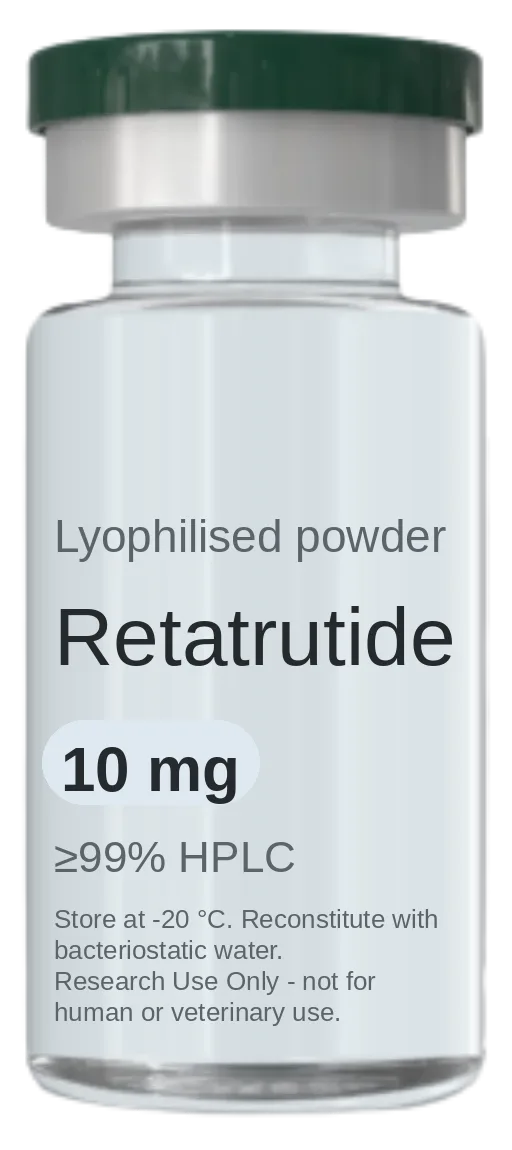
Retatrutide
Triple-agonist metabolic research peptide targeting GLP-1, GIP and glucagon receptors.
- Purity:
- ≥99% HPLC
- Sizes available:
- 10 mg
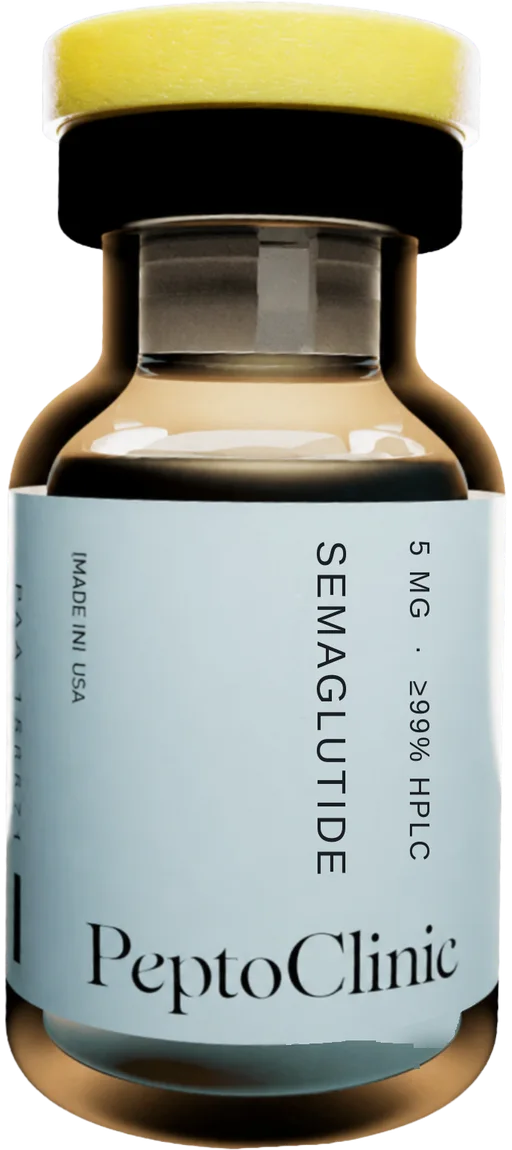
Semaglutide
GLP-1 receptor agonist, the molecule in Ozempic and Wegovy.
- Purity:
- ≥99% HPLC
- Sizes available:
- 5 mg
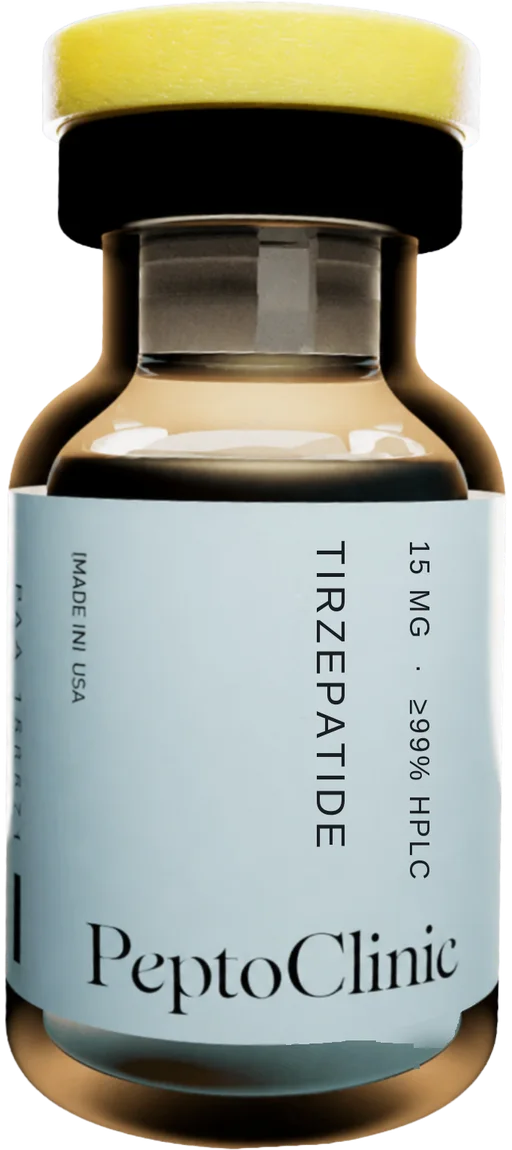
Tirzepatide
Dual GIP and GLP-1 receptor agonist, the molecule in Mounjaro and Zepbound.
- Purity:
- ≥99% HPLC
- Sizes available:
- 15 mg – 30 mg
The consultation
One intake that settles goals, history and contraindications alongside compound, quantity, documentation and route — reviewed by a physician before anything ships.
More notes
-
Retatrutide Phase 3 Trials: What We Know
What retatrutide's phase 2 and 3 trials showed, how it compares to tirzepatide and semaglutide, and where FDA approval stands today.
-
Retatrutide vs. Zepbound: Key Differences
Retatrutide and Zepbound are different molecules at different regulatory stages. Here's how they compare, with sources.
-
Cagrilintide vs Retatrutide: Differences
Cagrilintide targets amylin receptors; retatrutide activates GLP-1, GIP and glucagon. Neither is FDA-approved, and here's what each trial reported.
-
CagriSema vs Tirzepatide: Key Differences
CagriSema pairs cagrilintide with semaglutide; tirzepatide is a dual GIP/GLP-1 agonist. Compare mechanism, trials, and FDA status.
-
Compounded Semaglutide vs. Ozempic
Compounded semaglutide and Ozempic are not the same product. Here is how FDA approval, manufacturing, and oversight actually differ.