
Note
Retatrutide Phase 3 Trials: What We Know
By the PeptoClinic editorial team · Medically reviewed by Dr. Emily Parker
What retatrutide's phase 2 and 3 trials showed, how it compares to tirzepatide and semaglutide, and where FDA approval stands today.
Retatrutide completed a phase 3 trial in adults with obesity, published in 2026 in the New England Journal of Medicine by Jastreboff et al., after a phase 2 trial had already shown a dose-dependent reduction in body weight over 48 weeks. That is the headline: retatrutide has moved from an exploratory study into a larger, longer trial, the step the FDA requires before any approval decision is even on the table.
What Retatrutide Is and Why It Reached Phase 3
Retatrutide is a triple agonist: it acts on the GLP-1, GIP, and glucagon receptors at the same time, unlike semaglutide — the molecule behind Ozempic and Wegovy — which activates GLP-1 alone, or tirzepatide — the molecule behind Mounjaro and Zepbound — which combines GLP-1 and GIP. That third pathway, the glucagon receptor, is what sets the molecule apart and what investigators have been studying since phase 2 to see whether it adds a metabolic effect beyond what the two-receptor drugs already produce.
The compound is being developed by a private pharmaceutical company and moves through the same stages any new drug does in the United States: phase 1 for safety and dosing, phase 2 for preliminary efficacy, and phase 3 to confirm the effect in a larger population over a longer period. As of the most recent publication, retatrutide sits in phase 3.
| Aspect | Retatrutide | Tirzepatide / Semaglutide |
|---|---|---|
| Receptors activated | GLP-1, GIP, and glucagon (triple agonist) | Tirzepatide: GLP-1 and GIP. Semaglutide: GLP-1 only |
| Development phase for obesity | Phase 3 (Jastreboff et al., NEJM 2026) | Approved: tirzepatide in SURMOUNT-1; semaglutide in STEP 1 |
| FDA approval | None | Tirzepatide as Mounjaro and Zepbound; semaglutide as Ozempic and Wegovy, per the FDA's 2023 announcement |
| What the pivotal trials measured | Body weight change and metabolic markers in obesity (phase 2 and 3); glycemic control in type 2 diabetes (phase 2) | Body weight change (STEP 1, SURMOUNT-1) and glycemic control in type 2 diabetes |
What the Phase 2 Trials Showed First
The phase 2 trial in adults with obesity, published by Jastreboff et al. in NEJM (2023), followed participants for 48 weeks across several weekly doses of injectable retatrutide, compared against placebo. The trial tracked the change in body weight and a set of secondary metabolic markers over the course of treatment, and found a weight reduction that grew with the dose — the pattern that, in this kind of program, is what justifies moving to a phase 3 trial with more participants.
In parallel, Rosenstock et al. published in The Lancet (2023) a separate phase 2 trial in people with type 2 diabetes, evaluating retatrutide's effect on glycemic control in addition to body weight. These are two distinct populations — obesity without diabetes, and type 2 diabetes — and they should not be collapsed into one: each trial had a different primary endpoint.
What the Phase 3 Trial Specifically Evaluated
The phase 3 trial in obesity, reported by Jastreboff et al. in NEJM (2026), scaled up the phase 2 design to a larger sample and a longer follow-up, with the goal of confirming whether the dose-dependent effect seen earlier held in a more diverse population and over more time on the drug. That is exactly what a phase 3 trial is for: not to discover a new effect, but to stress-test the one already observed under conditions closer to real-world use, across more research sites and more variability between participants.
To follow the status of the different arms of this research program — including the ones still recruiting or in progress in other populations — the public reference registry is ClinicalTrials.gov, where every retatrutide trial is listed with its phase, design, and current recruitment status.
Molecule vs. Product: A Distinction Worth Keeping Straight
It is easy to read "not approved" and assume no drug in this class has reached the market, which is not the case. Tirzepatide and semaglutide, as molecules, are approved — under the brand names Mounjaro, Zepbound, Ozempic, and Wegovy — for type 2 diabetes and chronic weight management, as the SURMOUNT-1 and STEP 1 trials and the FDA's own approval announcement document. Retatrutide has not gone through that process. It is a molecule still in phase 3, with no branded product and no FDA decision attached to it yet. The FDA has separately warned about unapproved and compounded GLP-1 products sold for weight loss, which is a different issue from a molecule's trial phase but worth knowing if you are trying to make sense of what "approved" actually covers.
Where Things Stand for FDA Approval
No compound discussed in this post has been approved by the FDA. Reaching phase 3 means the pivotal trial has been reported, but an approval also requires the agency to review the full regulatory dossier, the manufacturing process, and long-term safety data before authorizing a branded drug for sale. Until that happens, retatrutide remains a molecule under investigation, not an approved medication for clinical use.
Finding Retatrutide Today
PeptoClinic supplies retatrutide as a lyophilized powder vial, with an independent laboratory report for every batch. Each report we publish comes from the same outside laboratory, Janoshik Analytical, which tests the purity of every batch — that is how a label gets verified, instead of taking a supplier's word for it. You can see how we read a certificate of analysis at /en/quality/, and pricing by market is published at /en/pricing/.

Medical review
Dr. Emily Parker

Reviews every consultation as it comes in
Frequently asked questions
Is retatrutide approved anywhere yet?
No. No regulatory body, including the FDA, has approved retatrutide to date. The compound is in phase 3 of clinical research according to [Jastreboff et al., NEJM 2026](https://pubmed.ncbi.nlm.nih.gov/42814954/).
What makes retatrutide different from tirzepatide?
Retatrutide activates three receptors — GLP-1, GIP, and glucagon — while tirzepatide activates two, GLP-1 and GIP. That third pathway is what the phase 2 and phase 3 trials have been studying to see whether it adds a metabolic effect, per the design described by [Jastreboff et al. (2023)](https://pubmed.ncbi.nlm.nih.gov/37366315/).
What did the retatrutide phase 3 trial measure?
The phase 3 trial in obesity, reported by [Jastreboff et al. (2026)](https://pubmed.ncbi.nlm.nih.gov/42814954/), measured the change in body weight and metabolic markers in a larger population followed for longer than the earlier phase 2 trial, to confirm whether the dose-dependent effect held up.
Is there a retatrutide trial for type 2 diabetes?
Yes. [Rosenstock et al., published in The Lancet (2023)](https://pubmed.ncbi.nlm.nih.gov/37385280/), ran a phase 2 trial in people with type 2 diabetes that evaluated glycemic control in addition to body weight, as a separate research arm from the obesity program.
Where can I check the current status of retatrutide trials?
The public reference registry is [ClinicalTrials.gov](https://clinicaltrials.gov/search?intr=retatrutide), which lists every retatrutide trial along with its phase, design, and whether it is still recruiting participants.
Is retatrutide the same as semaglutide or tirzepatide?
No. They are three distinct molecules acting on different combinations of receptors. Semaglutide and tirzepatide already have FDA-approved branded products for diabetes and weight management, while retatrutide is still in phase 3 with no equivalent approval anywhere.
What laboratory report backs the retatrutide PeptoClinic sells?
Every batch of retatrutide we distribute is tested at [Janoshik Analytical](https://janoshik.com/), an outside laboratory that publishes its own report for each batch. That report is what lets you verify a batch's purity independently, rather than taking an unsupported claim at face value.
Can I buy retatrutide in the United States?
PeptoClinic ships retatrutide within the United States along with the matching laboratory report. Pricing by market is published at [/en/pricing/](/en/pricing/), and the compound's own page, with its full profile, is at [/en/product/retatrutide/](/en/product/retatrutide/).
Compounds mentioned
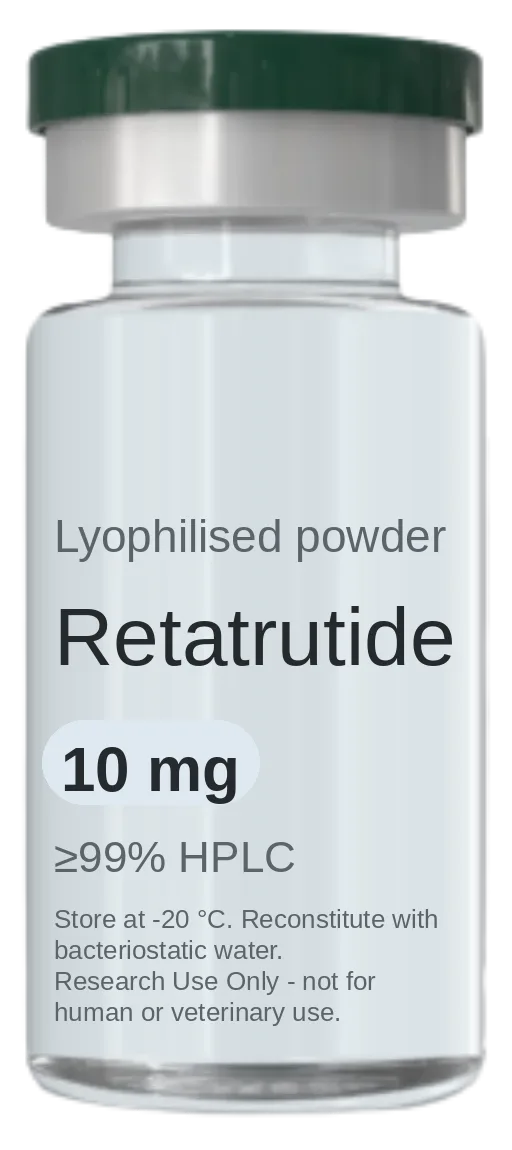
Retatrutide
Triple-agonist metabolic research peptide targeting GLP-1, GIP and glucagon receptors.
- Purity:
- ≥99% HPLC
- Sizes available:
- 10 mg
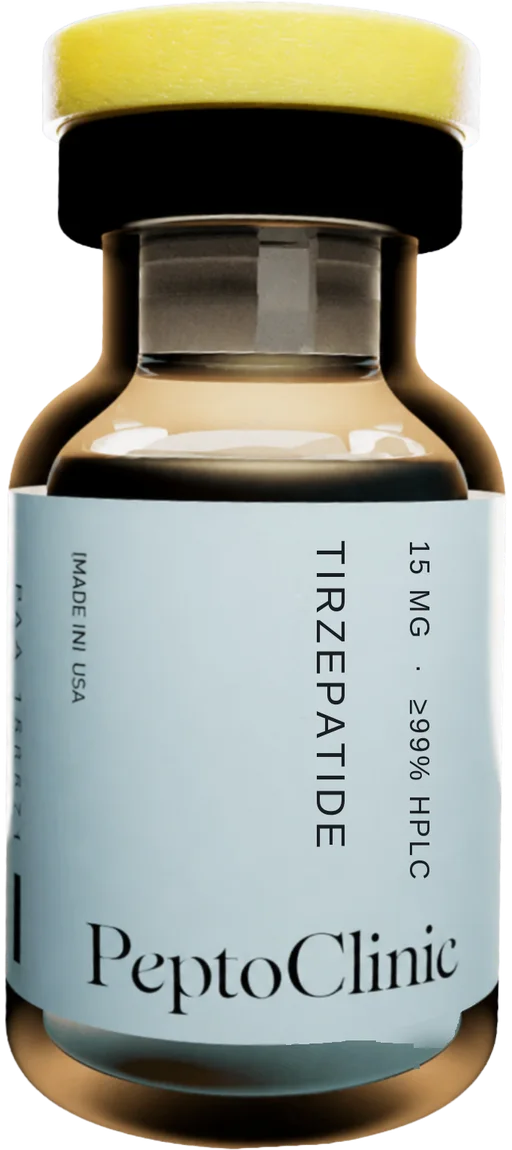
Tirzepatide
Dual GIP and GLP-1 receptor agonist, the molecule in Mounjaro and Zepbound.
- Purity:
- ≥99% HPLC
- Sizes available:
- 15 mg – 30 mg
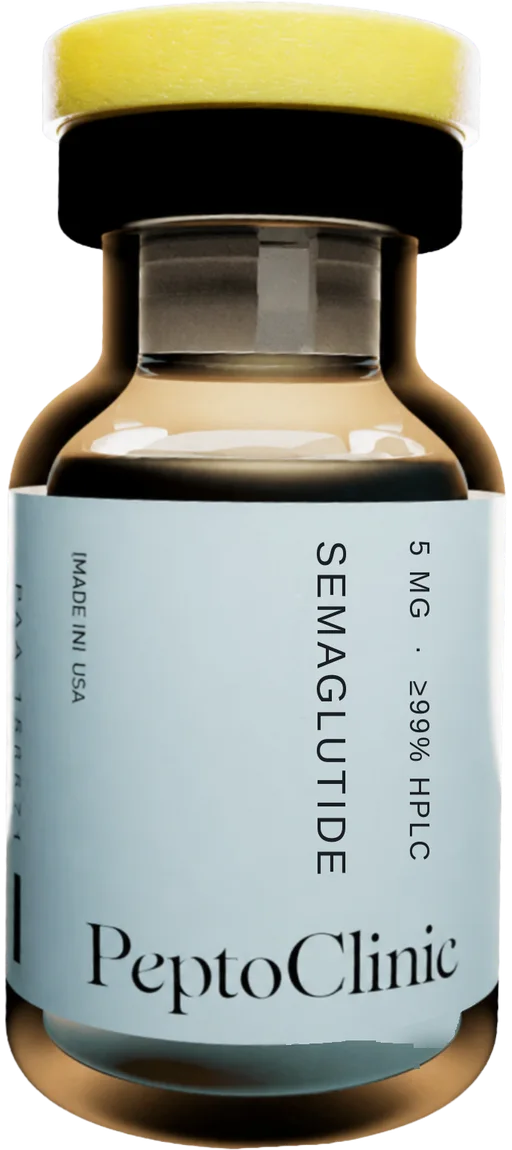
Semaglutide
GLP-1 receptor agonist, the molecule in Ozempic and Wegovy.
- Purity:
- ≥99% HPLC
- Sizes available:
- 5 mg
The consultation
One intake that settles goals, history and contraindications alongside compound, quantity, documentation and route — reviewed by a physician before anything ships.
More notes
-
Retatrutide vs. Zepbound: Key Differences
Retatrutide and Zepbound are different molecules at different regulatory stages. Here's how they compare, with sources.
-
Cagrilintide vs Retatrutide: Differences
Cagrilintide targets amylin receptors; retatrutide activates GLP-1, GIP and glucagon. Neither is FDA-approved, and here's what each trial reported.
-
CagriSema vs Tirzepatide: Key Differences
CagriSema pairs cagrilintide with semaglutide; tirzepatide is a dual GIP/GLP-1 agonist. Compare mechanism, trials, and FDA status.
-
Compounded Semaglutide vs. Ozempic
Compounded semaglutide and Ozempic are not the same product. Here is how FDA approval, manufacturing, and oversight actually differ.
-
What COA Ships with Retatrutide to Argentina
The Janoshik Analytical report that accompanies retatrutide shipped to Argentina: what it contains, how to read it, and how to verify it.