
Note
What Are Cell Signaling Peptides
Short amino acid chains that act as molecular messengers, binding to specific cell receptors to trigger or suppress biological responses.
Cell signaling peptides are short chains of amino acids that act as molecular messengers. A cell produces or receives them, they travel to target cells, and they bind to specific receptors to activate or inhibit biological responses. They are not building materials and not nutrients: they are chemical instructions that tell a cell what to do.
Peptide, protein, amino acid: the distinction that matters
An amino acid is the base unit. Two or more amino acids joined by a peptide bond form a peptide. The practical difference from proteins is size: by convention, peptides carry fewer than 50 amino acids, though that threshold is not fixed across all contexts in the research literature.
What is functionally meaningful is the difference in role. A complete protein can be enzymatic, structural, or transport-related. A signaling peptide has a small number of residues and a sequence optimized to recognize a specific receptor. That compactness has a direct consequence for laboratory work: signaling peptides can be synthesized with high chemical definition, and their identity can be verified by HPLC and mass spectrometry with a degree of precision that larger macromolecules do not permit.
How a peptide signal travels
The mechanism has three stages.
Secretion. The producing cell releases the peptide into the extracellular space or into systemic circulation. Endogenous peptides — those the organism produces naturally — are released in response to specific stimuli: tissue damage, metabolic changes, oxidative stress.
Transport and binding. The peptide travels to cells that express the corresponding receptor. Specificity is the defining characteristic: a peptide does not activate every receptor it encounters, only those whose molecular geometry matches its own. This structural complementarity is the basis of the lock-and-key concept in receptor pharmacology.
Transduction. On binding, the peptide triggers an intracellular cascade: it may activate G-proteins, modulate second messengers such as cyclic AMP, or initiate gene transcription pathways. The result is a change in the behavior of the receiving cell, which may last from seconds to hours.
Three families studied in the literature
Research on signaling peptides covers several functional families. Three appear in the PeptoClinic catalogue and are supported by publications indexed in peer-reviewed journals.
Peptides derived from endogenous sources
GHK-Cu is a tripeptide — glycine, histidine, lysine — conjugated with copper and detected naturally in human plasma, saliva, and urine. Its concentration decreases with age. Published research on PubMed concerning GHK-Cu and gene expression documents its role as a modulator of more than 4,000 human genes in cell cultures, including genes linked to collagen synthesis and antioxidant response. Research into its signaling mechanism remains active in in vitro and in vivo models.
Peptides derived from mitochondria
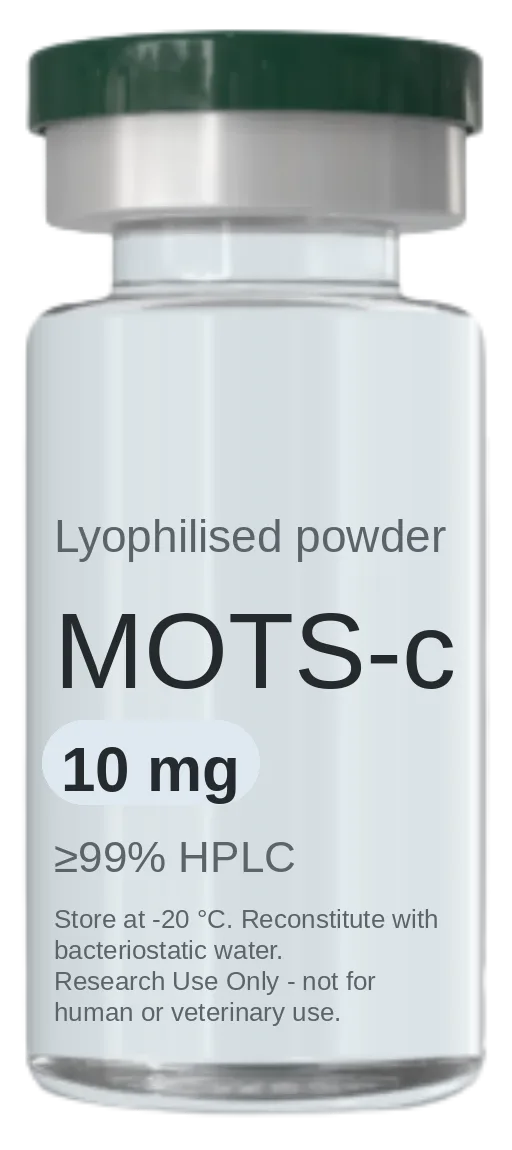
MOTS-c (Mitochondrial Open reading frame of the Twelve S rRNA type-c) is a 16-amino acid peptide encoded in mitochondrial DNA, not in nuclear DNA. Lee et al. described in *Cell Metabolism* in 2015 its role as a regulator of glucose and fatty acid metabolism in skeletal muscle of murine models. Its discovery opened a new functional category: mitochondria-derived peptides (MDPs) with systemic signaling activity. Until that point, signaling peptides were considered exclusively products of the nuclear genome. MOTS-c is available in the PeptoClinic research catalogue.
Synthetic peptides with documented signaling activity
BPC-157 is a synthetic pentadecapeptide derived from a sequence in gastric juice protein. Sikiric et al. published studies from the 1990s onward in animal models on its influence on angiogenesis and on the expression of growth factors including VEGF and EGFR. The research to date does not include controlled clinical trials in humans, and extrapolating results from animal models to human applications requires independent evidence that BPC-157 does not yet have.
Receptor specificity and why it matters in research
One point often missing from general descriptions: the effect of a signaling peptide depends on the density and distribution of its receptors across tissues. A peptide whose receptors are expressed only in certain tissues produces different consequences from one with ubiquitous receptors.
This tissue specificity is one of the arguments supporting the interest of basic research in these molecules. In principle, a signaling peptide allows cellular functions to be modulated with greater selectivity than many small-molecule compounds. Translating that principle into specific therapeutic applications requires clinical evidence, which varies significantly across compounds.
Retatrutide, for example, is a triple agonist of GLP-1, GIP, and glucagon receptors. The differential selectivity for each receptor, and the consequences of that selectivity in preclinical models and in phase 2 and phase 3 trials, are the subject of active investigation on this molecule.
Chemical verification: identity before activity
For a laboratory experiment to be reproducible, the compound used must have a defined and verifiable chemical identity. A sample with impurities introduces uncontrolled variables that can alter or invalidate results.
The standard PeptoClinic states is ≥99% by HPLC on research peptides. Janoshik Analytical reports available on the quality page document results by lot with task number, analysis date, and exact percentage. The Retatrutide lot report (task 136921, April 13, 2026) found 99.893% purity. The MOTS-c report (task 136923, same date) found 99.669%. The lowest purity figure across all four published PeptoClinic reports is 99.669%. The methodology and complete results are available in the quality section.
For laboratory research only
The material PeptoClinic supplies is classified exclusively as Research Use Only (RUO): for in vitro and laboratory research.
None of the compounds in the catalogue is a medicine, a supplement, or a food. None holds approval from ANMAT, the FDA, or any equivalent authority for human or veterinary use. PeptoClinic is not a pharmacy, a clinic, or a source of dosing or administration guidance. Requests for human-use protocols are not fulfilled.
This classification is not a formality. It defines the legal destination of the material and the contexts for which it is appropriate.
The available catalogue
Signaling compounds available for research include, among others, GHK-Cu, MOTS-c, BPC-157, Retatrutide, Selank, Semax, and Epitalon. Inquiries are handled by email at [email protected]. The full catalogue lists available compounds with their presentation specifications.
Frequently asked questions
What is the difference between a signaling peptide and a peptide hormone?
Peptide hormones are a subset of signaling peptides: a specific gland produces them, they are released into circulation, and they act on distant target organs. The signaling peptide category is broader and also includes peptides that act in the local space between cells (paracrine signaling) or on the same cell that secreted them (autocrine signaling), without necessarily circulating through the bloodstream.
Are all research peptides signaling peptides?
No. Many peptides are studied for their structural role — such as collagen fragments — or for their antimicrobial activity. Cellular signaling is a specific function, associated with peptides that interact with membrane or intracellular receptors to modulate biological responses. Not every small peptide fulfills that function.
What does it mean for a peptide to be endogenous?
It means the organism produces it naturally. GHK-Cu, for example, is detected in human plasma at concentrations that vary with age. Many research peptides are synthetic but replicate known endogenous sequences, which allows studying their mechanism of action under controlled laboratory conditions without depending on the amount produced physiologically.
Why does purity matter for a research peptide?
Because impurities introduce uncontrolled variables. If a sample contains 2% of unidentified compounds, any effect observed in the experiment may be attributable to those impurities rather than to the peptide being studied. A result built on impure material is neither reproducible nor publishable. The ≥99% by HPLC standard aims to minimize that source of experimental error.
What was significant about the discovery of MOTS-c?
It expanded the concept of signaling. Until 2015, signaling peptides were considered exclusively products of the nuclear genome. MOTS-c showed that mitochondria also encode peptide messengers with measurable metabolic effects in animal models, opening a new research category around mitochondria-derived peptides.
How is the identity of a research peptide verified?
The two standard techniques are HPLC and mass spectrometry. HPLC quantifies purity by separating the sample's components according to their retention time and comparing the area of each peak. Mass spectrometry confirms the molecular mass of the compound and identifies impurities with different masses. A certificate of analysis that does not specify the method and the numerical purity result does not allow verification of anything.
What is the difference between paracrine, autocrine, and endocrine signaling?
The difference is distance. Endocrine signaling: the peptide circulates through the bloodstream and acts on distant organs. Paracrine signaling: the peptide acts on neighboring cells, in the local tissue space. Autocrine signaling: the same cell that secretes the peptide expresses the receptor and responds to its own signal. Many research peptides can act through more than one of these pathways depending on the experimental context.
What destinations does PeptoClinic ship research material to?
PeptoClinic supplies research peptides to Argentina, the United States, Uruguay, Chile, Paraguay, Bolivia, Peru, Brazil, Mexico, and Colombia. Material is quoted individually by inquiry to [email protected], with customs documentation prepared for each destination based on its classification as laboratory reference material.
Compounds mentioned
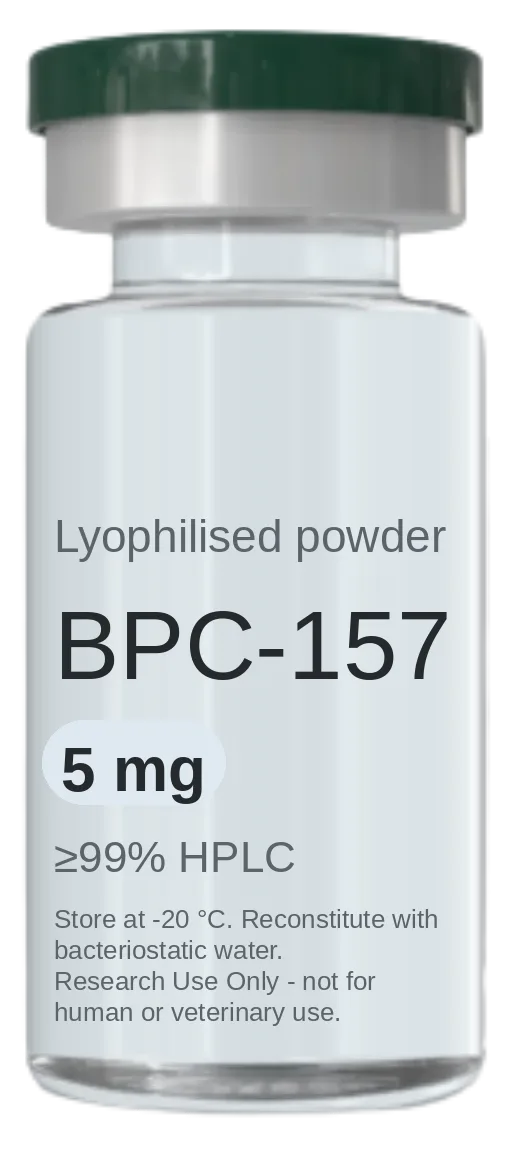
BPC-157 + TB-500
BPC-157 and TB-500 in a single vial — the pairing most studied together in tissue-repair research.
- Purity:
- ≥99% HPLC
- Sizes available:
- 5 mg + 5 mg
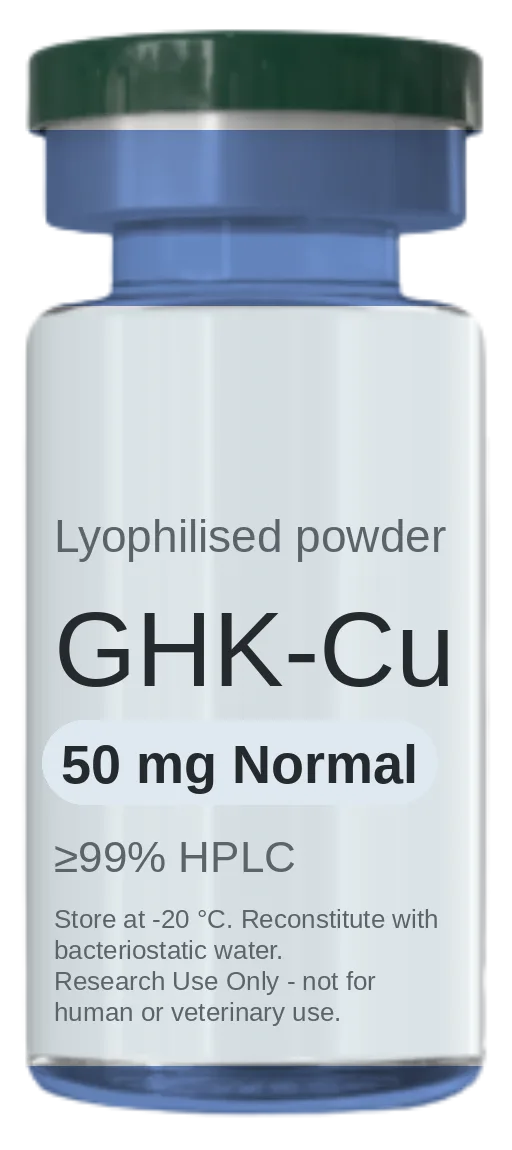
GHK-Cu (Copper Peptide)
Copper-binding tripeptide studied in extracellular matrix and dermal research models.
- Purity:
- ≥99% HPLC
- Sizes available:
- 50 mg Normal – 50 mg Plus
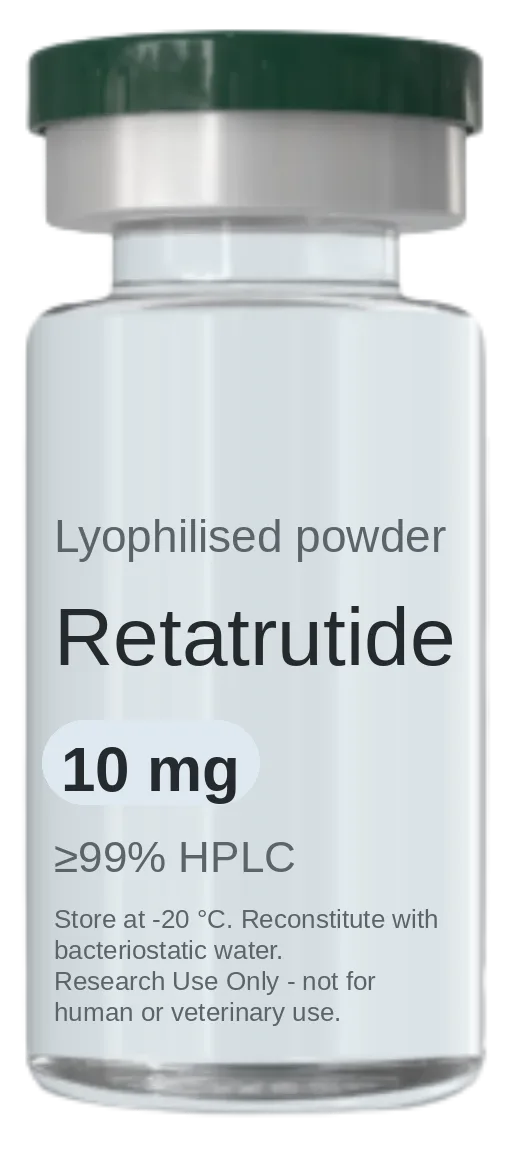
Retatrutide
Triple-agonist metabolic research peptide targeting GLP-1, GIP and glucagon receptors.
- Purity:
- ≥99% HPLC
- Sizes available:
- 10 mg
The consultation
One intake that settles goals, history and contraindications alongside compound, quantity, documentation and route — reviewed by a physician before anything ships.
More notes
-
Retatrutide vs. Tirzepatide: Differences
Retatrutide adds a third receptor that tirzepatide doesn't activate — here's how the two differ in structure, mechanism, and published research.
-
NAD+ vs Selank: What's the Difference?
NAD+ is a cellular coenzyme; Selank is a synthetic peptide derived from tuftsin. Structure, mechanism, and what each one is studied for.
-
Peptide Customs Clearance Cost in Argentina
What determines customs clearance cost for a research peptide shipment to Argentina, and what documentation PeptoClinic prepares for it.