
Note
Certificate of Free Sale for Peptides?
A certificate of free sale doesn't apply to RUO peptides — what Argentine customs actually asks for, and why it's different.
No. The certificate of free sale (CLV, *certificado de libre venta*) that ANMAT requires is a document for medicines, cosmetics, food and medical devices sold for consumption or therapeutic use in people or animals. A research peptide labeled and declared as RUO material (Research Use Only) doesn't fall into that category, because it isn't imported as a pharmaceutical product and isn't sold as one. What the shipment's paperwork does need is to correctly describe what the product is, what it's declared as, and what analytical documentation travels with it.
What the certificate of free sale actually is
A CLV is a document issued by the health authority of the country of origin (or by ANMAT, when the process runs the other way) certifying that a product — a medicine, a cosmetic, a supplement, a packaged food — is authorized to be sold freely in that market. It exists because those products come into direct contact with the human body or are consumed, and the regulatory system needs assurance that the product already passed a sanitary review somewhere before it circulates in another country.
It's the same paperwork required for an imported cream, a vitamin supplement, or an over-the-counter medicine. None of those three describes what a research peptide is: a lyophilized compound in a sealed vial, declared and sold for laboratory use, not for consumption.
Why it doesn't apply to research peptides
The underlying question a CLV answers is "is this product approved for someone to consume?" An RUO peptide isn't seeking that approval, because it isn't marketed for that purpose. PeptoClinic supplies research peptides to Argentina as laboratory reference material, with the customs file prepared in those terms — not as a pharmaceutical product, not as a supplement, not as a cosmetic.
That distinction isn't a technicality invented to dodge paperwork — it's an accurate description of the product. A lyophilized vial with less than a milligram of content has no consumer packaging, no package insert, no dosing instructions, and isn't labeled for that kind of use. Declaring it as what it is — research material — is what's correct, and it's a different situation from declaring a registered medicine without its CLV, which would genuinely be a problem.
What documentation actually travels with the shipment
What an importer needs for a shipment of research material to clear without surprises isn't a CLV — it's that the invoice, the tariff classification, and the certificate of analysis all match each other.
- Certificate of analysis (CoA) for the batch, issued by a third-party laboratory. This is the document that states what's in the vial and at what purity — the quality page explains how to read one and what to check in the lab's signature.
- Commercial invoice describing the product as research material (research reagent), with quantity and declared value.
- Correct tariff classification for the item, which in practice determines what controls Argentine customs applies to the package.
That set of three documents is what supports a correctly declared import. None of them is a CLV, and requiring one for this kind of merchandise would mean demanding a document that belongs to a different product category.
What Argentine customs actually checks
The Dirección General de Aduanas operates under Administración Federal de Ingresos Públicos (AFIP), which sets the tariff codes and import regimes based on what the merchandise is, not on how someone intends to use it after it crosses the border. The check runs on what the documentation states: if the invoice and the CoA describe a laboratory reagent in milligram quantities, that's the criterion applied — not the criterion for a commercial batch of a medicine.
This is why the answer to "do I need a CLV?" depends on how the shipment is declared, and why consistency between invoice, classification, and certificate of analysis matters more than any additional seal.
ANMAT's role here
Administración Nacional de Medicamentos, Alimentos y Tecnología Médica (ANMAT) is the authority that requires the CLV, and it requires it specifically for products that will be sold as medicines, cosmetics, or food in the Argentine market. ANMAT doesn't evaluate or approve laboratory research material, because that material doesn't enter its sanitary registration process: it isn't sold in pharmacies, it carries no package insert, and it isn't marketed for human or animal consumption.
Nothing in this article implies that ANMAT has evaluated, approved, or certified peptides imported as RUO material. It hasn't, because that category of product doesn't fall under its process.
The material is for research, not consumption
Everything shipped under this description is strictly Research Use Only (RUO): for laboratory use, in vitro studies, and preclinical research. It is not a medicine, not a supplement, and it is not approved for human or veterinary consumption, diagnosis, or treatment. None of its properties have been evaluated by ANMAT, the FDA, or any equivalent authority. This is the underlying reason the CLV doesn't apply: that certificate answers whether something can be consumed, and this material is not declared, labeled, or imported for that purpose.
Common compounds and their documentation
Compounds like retatrutide, BPC-157, and MOTS-c reach the country under the same logic: lyophilized material, in a vial, with its own certificate of analysis and an invoice describing its use as laboratory reference material. Each compound carries its own data sheet and its own analyzed batch — there's no generic CLV covering "peptides" as a category, because the category itself doesn't fit the regime that certificate regulates.
To see how a full shipment to Argentine destinations is assembled, the Argentina page lists the available compounds and the documentation criteria used for each.
What happens if a shipment is declared incorrectly
The real risk isn't the absence of a CLV — it's a declaration that doesn't match the package's actual contents. If the invoice describes something different from what's inside, or if the declared quantity doesn't match the vial, that's when a customs problem arises, regardless of which certificates are attached. Avoiding it is straightforward: the paperwork has to tell the truth about what's traveling. The shipping page details how each batch is packaged and what accompanies it before dispatch.
Laboratory research only — not for human or veterinary use
Everything discussed here concerns import documentation for material that ships strictly for laboratory research. It is not approved, and is not intended, for human or veterinary consumption, diagnosis, or treatment of any kind.
Frequently asked questions
Is a certificate of free sale required for any import from the United States?
Not for any import — it's required for products marketed as medicines, cosmetics, food, or consumer medical devices. A laboratory reagent declared as such doesn't fall under that regime.
Who decides whether a product needs a CLV — customs or ANMAT?
ANMAT defines which product categories require a CLV (medicines, cosmetics, food, medical devices). Customs, through AFIP, applies that classification when processing the shipment based on the description declared on the invoice.
What replaces the CLV for an import of research peptides?
Nothing "replaces" the CLV, because it isn't the process that applies to this category. What supports the import is consistency between the commercial invoice, the tariff classification, and the batch's certificate of analysis.
Does the certificate of analysis (CoA) serve a similar function to the CLV?
No, it isn't equivalent and doesn't serve the same legal function. The CoA certifies the composition and purity of a specific batch, issued by a third-party laboratory. The CLV certifies that a product is authorized for sale to the public in a country. They're different documents answering different questions.
Is declaring a peptide as "research material" a way of avoiding customs controls?
No, it's the accurate description of the product. The shipment still goes through customs controls like any import — what changes is which regime applies, because the merchandise isn't a medicine or a consumer product.
Does this apply the same way to every compound in the catalogue?
Yes, every compound is declared under the same criterion: research material, not a consumer product. Each compound has its own certificate of analysis and its own data sheet, but the import category is the same across all of them.
What if a supplier offers to "handle the CLV" for research peptides?
That's a red flag, not a legitimate service — it would mean processing a certificate for a product category (a consumer medicine) that doesn't correspond to the material actually being shipped, which misaligns the paperwork with the real contents of the shipment.
Does this information apply to countries other than Argentina?
Not necessarily. Each country has its own health authority and its own customs classification criteria. What's described here applies specifically to ANMAT and AFIP's regime for Argentina.
Compounds mentioned
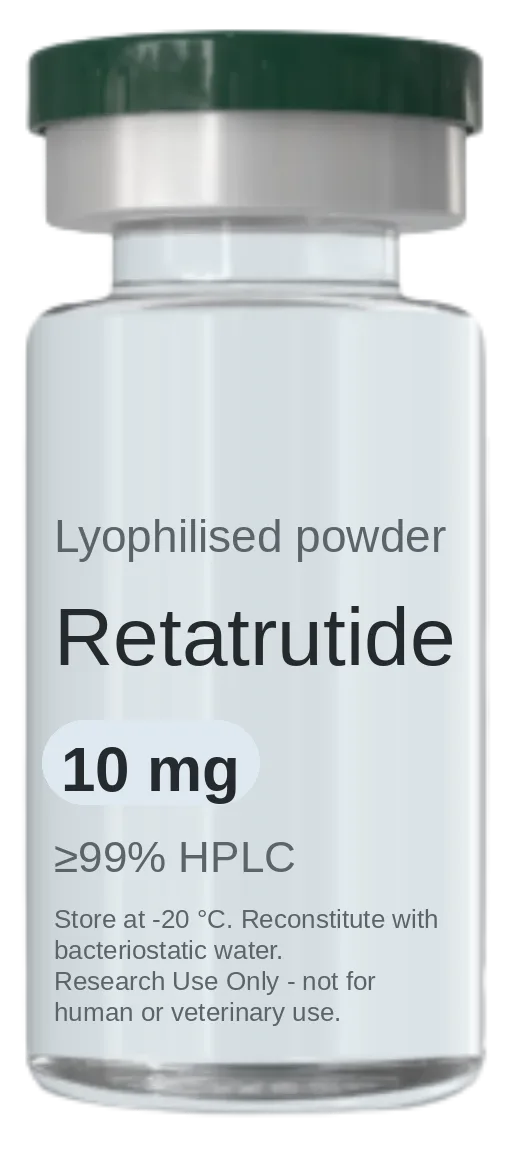
Retatrutide
Triple-agonist metabolic research peptide targeting GLP-1, GIP and glucagon receptors.
- Purity:
- ≥99% HPLC
- Sizes available:
- 10 mg
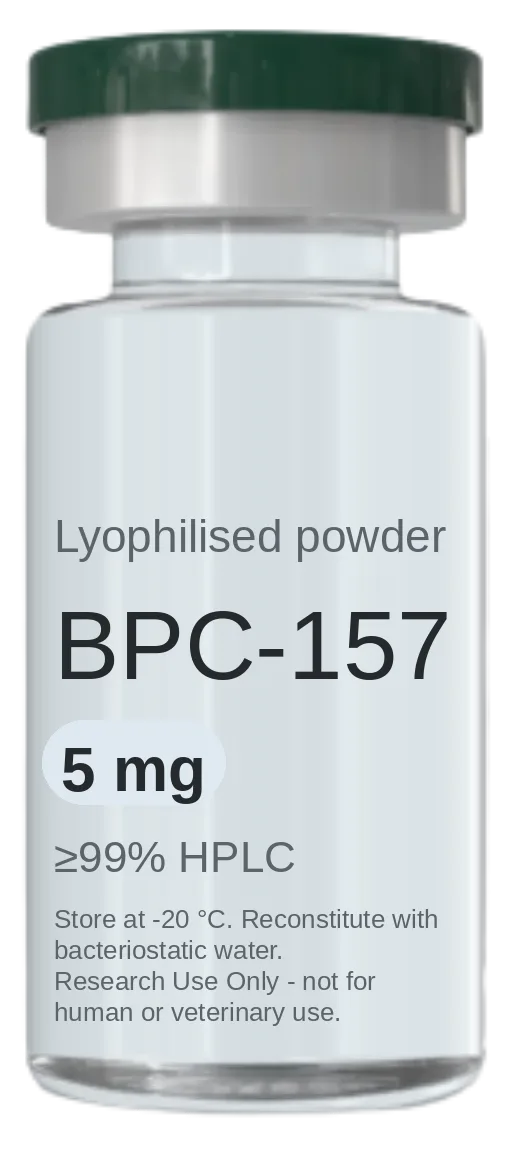
BPC-157 + TB-500
BPC-157 and TB-500 in a single vial — the pairing most studied together in tissue-repair research.
- Purity:
- ≥99% HPLC
- Sizes available:
- 5 mg + 5 mg
The consultation
One intake that settles goals, history and contraindications alongside compound, quantity, documentation and route — reviewed by a physician before anything ships.
More notes
-
Temporary Import Regime & Peptides
Temporary import covers goods that leave the country again; a research peptide shipment stays and gets used up.
-
Retatrutide vs GHK-Cu: What's the Difference
Retatrutide and GHK-Cu are different molecules studied for different reasons. Here's what each investigates and what documentation backs a batch.
-
Invoiced vs. Unbilled Peptide Suppliers
What changes when a research peptide supplier invoices the transaction versus one that takes payment and leaves no paper trail.