
Note
Certificate of Origin to Import Peptides?
Do you need a certificate of origin to import research peptides into Argentina? What customs actually asks for, and what document matters.
No. For the large majority of research peptide shipments to Argentina, customs does not ask for a certificate of origin in the classic sense — the document used to claim preferential tariffs under a trade agreement. What it asks for is an accurate declaration of the contents: what the product is, where it was made, what it's worth, and what it's for. The country of manufacture is already stated on the commercial invoice that travels with the package, and that covers the overwhelming majority of cases. A formal certificate of origin, legalized by a chamber of commerce, is a procedure built for volume commercial operations claiming a specific tariff treaty — not for a small shipment of laboratory reference material.
That said, the real question behind the search — what paperwork gets this through without a hassle — has a more useful answer than yes or no, and it comes down to understanding what job each document does.
Certificate of origin vs. certificate of analysis: not the same document
These are two different papers answering two different questions, and confusing them is the most common mistake a first-time importer makes.
- A certificate of origin states which country the goods shipped from. It matters for tariffs and trade agreements between countries. It says nothing about what's in the vial or how pure it is.
- A certificate of analysis (COA) states what a specific lot contains: the compound, the purity percentage measured by HPLC, and who ran the measurement. It's a laboratory document, not a customs one.
For research peptides, the COA is the document that actually matters — both for knowing what you're receiving and for accompanying the shipment with something that explains what the contents are. PeptoClinic publishes the lab reports for its lots on the quality page: the four reports available were analyzed by Janoshik Analytical on April 13, 2026, and the lowest purity published among those lots is 99.669% (MOTS-c, task 136923). That's the number to look at, not the best case.
What customs actually asks for
What an international shipment of research material into Argentina actually requires, whether by courier or postal service, is:
- A commercial invoice with product description, quantity, declared value, and country of origin.
- A customs declaration that correctly classifies the goods as laboratory reference material, not a medicine or a supplement.
- A certificate of analysis for the lot, which travels with the shipment and answers up front the question of what arrived.
A legalized certificate of origin only comes into play when the importer needs to claim a tariff preference under a treaty — something that applies to larger-scale commercial operations — or when a particular courier requests it as part of its own internal process, which varies by carrier and by the declared value of the shipment. That variation is real: two different couriers can ask for different paperwork for the same kind of package. So when in doubt, the right move is to ask the courier or the customs broker handling that specific shipment, not to assume one rule covers every case.
Declaring the product as what it is
The point that isn't negotiable, and that avoids 90% of customs problems, is classification: the shipment has to be declared as what it is, laboratory research material, not as a medicine, a dietary supplement, or a cosmetic. Misdeclaring a product's category — even out of haste or by copying a generic template — is what triggers delays, requests for additional documentation, or outright rejection of the package. A clean declaration, consistent with the invoice and with the certificate of analysis that accompanies the lot, is what makes the review go fast.
This also answers the question underneath the search: none of this changes the fact that the material is supplied strictly for laboratory research — RUO, Research Use Only — in vitro use and laboratory studies. It is not a medicine or a supplement, it is not approved for human or veterinary consumption, it is not intended for diagnosis or treatment, and none of these statements has been evaluated by ANMAT, the FDA, or an equivalent body. The paperwork that prepares a shipment to Argentina exists precisely to keep that classification clear on paper, not to work around it.
What PeptoClinic prepares for each shipment
When a researcher in Argentina requests a quote, the technical review includes the customs file: compound, purity specification, quantity, and dispatch route, with the certificate of analysis for the relevant lot attached. That's what travels with the package, alongside the commercial invoice that states the shipment's country of origin. A researcher doesn't need to arrange a certificate of origin on their own for that file to exist — it's prepared as part of the quote.
The full catalogue, with its nineteen available compounds and the format they ship in — vial, lyophilized powder — is on the catalog page. Material travels lyophilized and at room temperature, with no cold chain: cold only becomes relevant after reconstitution, a detail worth knowing before coordinating arrival. Packaging and dispatch details are on the shipping page.
Compounds with a dedicated page for Argentina include retatrutide, BPC-157, MOTS-c, and GHK-Cu: each details what the published literature has found on the compound and what lot documentation accompanies shipments to this specific destination.
When a separate certificate of origin does make sense
There's one case where it's worth requesting explicitly: when an Argentine customs broker, based on the specific tariff classification assigned to the shipment, asks for it as an additional requirement to release the package. This isn't a fixed or universal rule — it depends on the tariff code, the declared value, and the broker's judgment at that moment — which is why it doesn't make sense to arrange one preemptively before anyone has asked for it. A certificate of origin legalized by a chamber of commerce costs money and time, and getting ahead of it without need doesn't speed anything up — it just adds a paper to a folder.
If a broker does request one for a particular shipment, the origin data is already sitting on the commercial invoice that travels with the package, and the formal certificate can be arranged from there if the case calls for it.
Laboratory research use only
Everything above applies to material supplied strictly for research use (RUO): laboratory use, in vitro, on cell lines, or in preclinical studies. It is not intended for human or veterinary consumption, it does not replace medical consultation of any kind, and nothing on this page should be read as guidance for use in people. Anyone looking for that kind of guidance won't find it here, because it isn't the kind of information this operation provides.
More context on the operation and its scope is on the about page.
Frequently asked questions
Is a certificate of origin the same as a commercial invoice?
No. The commercial invoice states the value, quantity, and country of origin of the goods, and it's mandatory on any international shipment. A certificate of origin is a separate, legalized document used mainly to access preferential tariffs under a specific trade treaty.
What happens if my shipment arrives without a certificate of origin?
In most cases, nothing — it isn't a standard requirement for this kind of material. If a particular broker asks for it because of the shipment's tariff classification, it can be arranged at that point using the data already on the invoice.
Does the certificate of analysis replace the certificate of origin?
No, they do different jobs. The certificate of analysis (COA) describes what a lot contains and its purity as measured by HPLC; the certificate of origin describes which country the goods shipped from. For research material, the COA is the document that answers the question that matters most: what actually arrived.
Can research peptides be imported into Argentina?
Yes, Argentina is one of the destinations research material is shipped to, declared and documented as what it is: laboratory reference material, not a medicine.
Who decides which documents travel with a given shipment?
It varies by courier and by the tariff classification an Argentine customs broker assigns. That's why it's worth confirming with that party directly when there's a specific question about a specific shipment.
Does the material travel cold from the United States?
No. It travels lyophilized, as a powder, inside a sealed vial with desiccant, at room temperature. Cold chain only becomes relevant after reconstitution, not during transport.
Where can I see the actual purity of a lot before requesting a quote?
On the [quality page](/en/quality/), where the Janoshik Analytical lab reports are published, with the task number and the measured result for each lot analyzed.
Is this material for personal use?
No. It's supplied strictly for laboratory research (RUO), not for human or veterinary consumption, and it does not replace any medical guidance.
Compounds mentioned
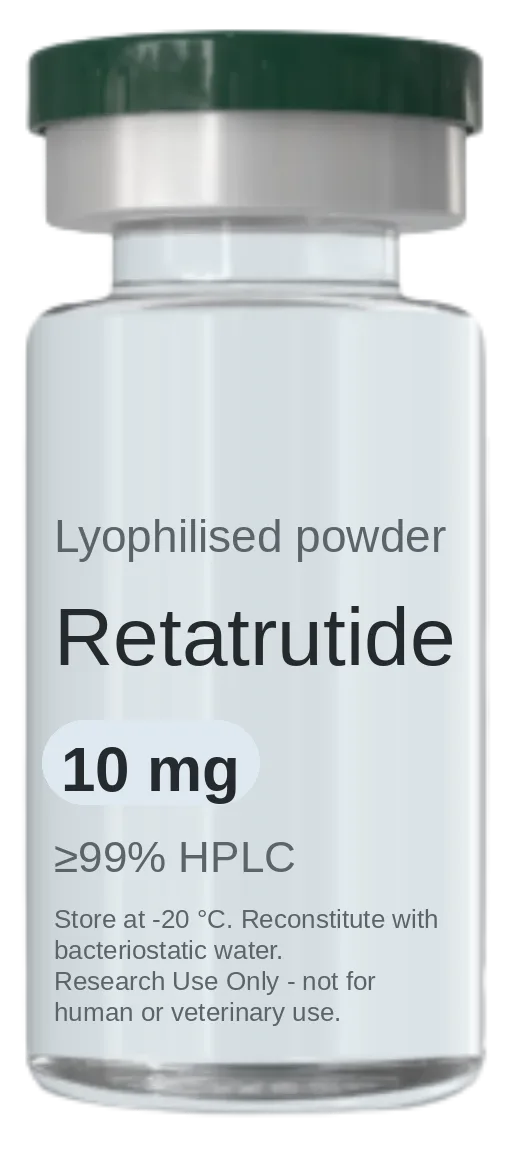
Retatrutide
Triple-agonist metabolic research peptide targeting GLP-1, GIP and glucagon receptors.
- Purity:
- ≥99% HPLC
- Sizes available:
- 10 mg
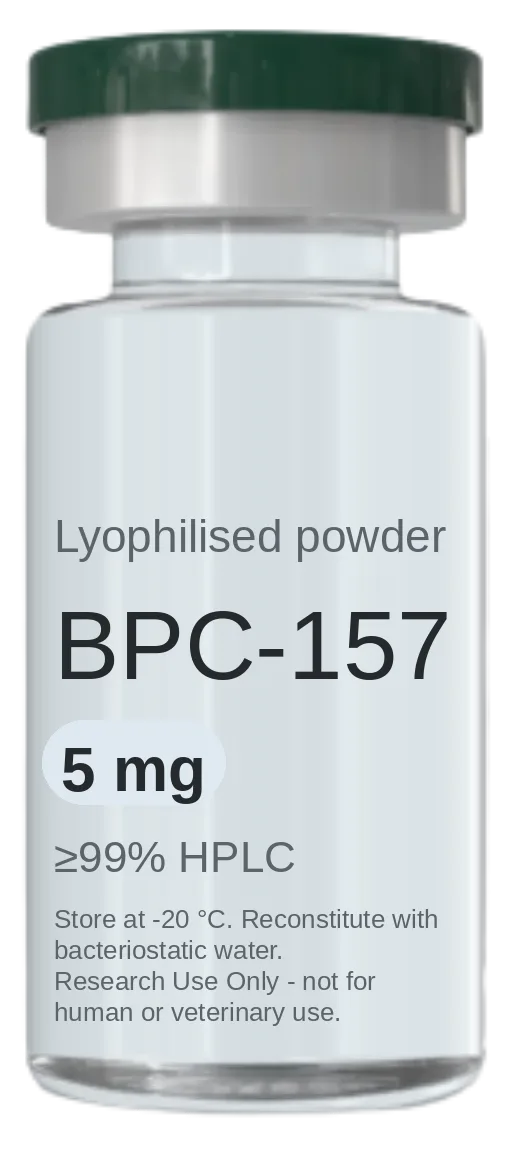
BPC-157 + TB-500
BPC-157 and TB-500 in a single vial — the pairing most studied together in tissue-repair research.
- Purity:
- ≥99% HPLC
- Sizes available:
- 5 mg + 5 mg
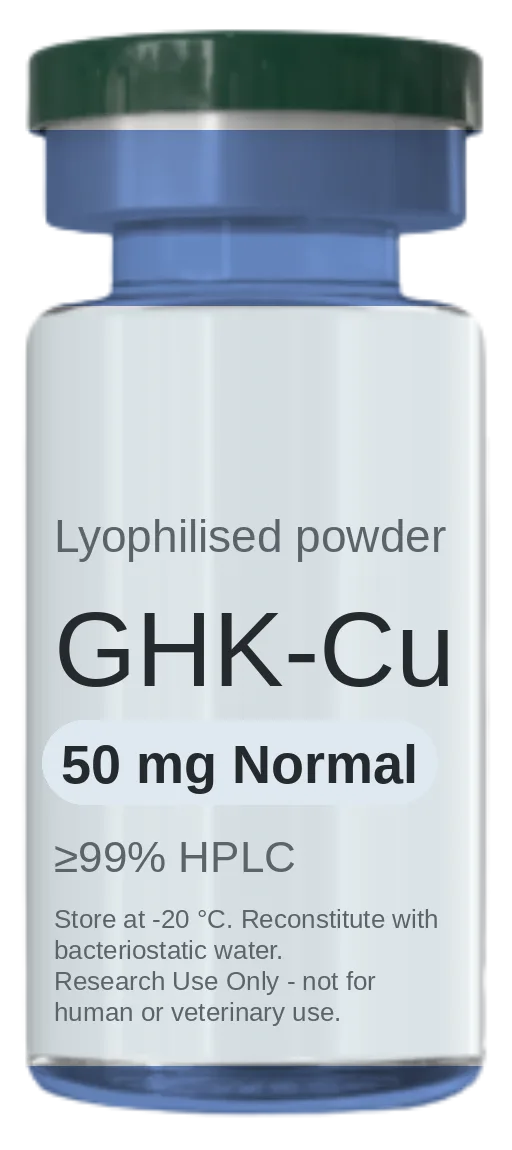
GHK-Cu (Copper Peptide)
Copper-binding tripeptide studied in extracellular matrix and dermal research models.
- Purity:
- ≥99% HPLC
- Sizes available:
- 50 mg Normal – 50 mg Plus
The consultation
One intake that settles goals, history and contraindications alongside compound, quantity, documentation and route — reviewed by a physician before anything ships.
More notes
-
Peptide Invoice: What Argentine Customs Wants
What a research peptide invoice needs so Argentine customs releases the shipment instead of holding it in bonded storage.
-
Hexarelin vs CJC-1295: The Differences
Hexarelin is a ghrelin-mimetic GHRP; CJC-1295 is a GHRH analog. What separates the two mechanisms and their documentation.
-
Thymosin Alpha 1 vs Selank: How They Differ
Thymosin Alpha 1 and Selank sit in different research families—one studied in immunomodulation, the other in the anxiolytic-cognitive axis.