
Note
Cold Chain in Peptide Shipping
Why a lyophilized peptide travels at room temperature rather than in a cold chain, and when cold does matter.
The short answer is that a lyophilized peptide does not travel in a cold chain, and does not need one: as dry, sealed powder it stays stable at room temperature for weeks. Cold chain is a requirement of solution-phase material, which behaves differently. What does determine the condition a lot arrives in is the vial seal, moisture and time — and in an international shipment, the most unpredictable segment is not the flight but the hold at customs.
PeptoClinic supplies research peptides in lyophilized vial format, with per-lot documentation from Janoshik Analytical. This post describes what that means for temperature: from vial sealing at origin through verification at the receiving laboratory.
Why temperature matters for peptides
Peptides are chains of amino acids joined by peptide bonds. Those bonds are susceptible to hydrolysis — chemical cleavage by water — and to oxidation. Both reactions are temperature-sensitive: higher heat combined with longer exposure accelerates degradation. The result is not a vial with reduced content. It is a vial containing molecular fragments that are no longer the original compound and are therefore not suitable for research.
Thermal degradation does not require extreme conditions. Some peptides begin showing degradation products at sustained exposure above 25 °C. The rate depends on the amino acid sequence, on whether the molecule contains particularly sensitive structures such as disulfide bonds, and on the residual moisture level in the powder.
Lyophilized versus solution: two different requirements
A peptide in aqueous solution is vulnerable from the moment of reconstitution. Water activates every degradation pathway simultaneously — hydrolysis, oxidation, aggregation — and the useful life of the material is measured in hours or days. Shipping it requires unbroken active cold-chain at −20 °C or below.
A lyophilized peptide is a different situation. The freeze-drying process removes water under vacuum, leaving residual moisture typically below 1 %. Without free water, most degradation reactions stop. The material tolerates the ambient temperature of transit — on the order of 2 °C to 25 °C — for weeks and without significant purity loss, provided the vial is correctly sealed. The precise range varies by compound. That is why shipments leave without refrigerant: adding a gel pack to a powder that already tolerates ambient conditions changes nothing, and the gel is spent within hours of leaving.
PeptoClinic ships exclusively in lyophilized format. That extends the stability window during transport and means a customs delay does not ruin the lot: there is no cold chain to break, because there is no cold chain.
What happens during shipping
Vial sealing
The starting point is the simplest and the most critical: the vial must be sealed with a crimp cap at low residual humidity. A vial that loses its seal during transport — from vibration, extreme temperature, or a manufacturing defect — absorbs ambient moisture and begins degrading regardless of how well temperature was controlled throughout the journey.
Packaging
The package carries no insulation and no refrigerant, because lyophilized powder needs neither: the range a normal shipment passes through — cold aircraft hold, warm ground depot, ambient-temperature delivery vehicle — sits inside what the material tolerates.
What it does carry is what protects against the real risk, which is moisture: the sealed vial travels in a barrier bag with desiccant, inside a discreet box that survives handling and keeps the contents away from light. A gel pack in that box would be a passenger with no job: spent in hours, and it changes nothing.
Moisture, not temperature
The indicator that matters for a lyophilized compound is not thermal. A vial that loses its seal absorbs ambient moisture and begins degrading even if the temperature was perfect the whole way; a sealed vial that spent two weeks at 25 °C arrives as it left. That is why the check on arrival looks at the seal and the appearance of the cake, not at a temperature record.
The riskiest segment: customs
The most unpredictable segment of a shipment to Argentina is the customs hold. A package entering through Ezeiza can clear in hours or remain held for several days because of an inspection, a documentation issue, or a tariff classification that requires clarification.
Documentation is the variable the supplier can control. PeptoClinic prepares the dispatch so that the material enters as laboratory reference material — the correct classification for research compounds — rather than as a medicine or supplement. That distinction directly affects hold time: medicines require authorizations this material does not have and is not intended to have, and they are routed through slower verification channels.
A correctly classified lot with complete documentation flows through dispatch paths that a mislabeled lot cannot access. And lyophilized material survives that wait without drama, precisely because it does not depend on a coolant with an expiry.
How PeptoClinic handles Argentine shipments — including import documentation — is described on the Argentina shipping page.
What to check when the package reaches the laboratory
Vial integrity
Before using the material, confirm that the crimp cap is intact and shows no signs of decompression or physical damage. Well-preserved lyophilized powder has a uniform appearance — white or slightly off-white depending on the compound — with no moist patches and no cake collapse. A vial that arrived with a compromised seal cannot be taken as intact.
Certificate of analysis verification
Every PeptoClinic lot ships with a certificate of analysis from Janoshik Analytical — the third-party laboratory that performed the HPLC analysis. The certificate states the measured purity, the vial content, and a task number that allows direct verification of the report with the laboratory.
Published lots carry purities between 99.669 % and 99.893 %, all analyzed on April 13, 2026. The relevant figure for evaluating the integrity of a received lot is the purity of the specific lot that arrived, not a general average. Laboratories with recharacterization capability can run their own analysis on receipt — that as-of measurement is the definitive confirmation that the material arrived intact.
Published lot reports are available in the quality section.
For laboratory research only
The material PeptoClinic supplies is intended strictly for in vitro and laboratory research. It is not a medicine, not a supplement, and has not been evaluated by the FDA, ANMAT, or any equivalent regulatory authority for use in humans or animals.
PeptoClinic is not a pharmacy, not a clinic, and does not issue or require prescriptions. Inquiries about administration protocols, dosing, or cycling in people are outside the scope of this supply and are not answered.
That restriction is not a generic legal disclaimer: it defines what this material is and what it is for. The care taken over packaging exists to preserve the chemical integrity of a compound that will be analyzed or used in a controlled research environment.
The full catalogue of research peptides available for quotation is at /en/catalog/.
Frequently asked questions
Do lyophilized peptides need to arrive frozen?
No. Correctly sealed lyophilized material tolerates the ambient temperature of transit — on the order of 2 °C to 25 °C — for weeks and without significant degradation, unlike solution-phase material, which does require an unbroken cold chain at −20 °C. The precise range depends on the compound. PeptoClinic supplies material exclusively in lyophilized format because it provides the widest stability window for international transport.
What happens if the package is held at customs for several days?
Nothing that compromises the lot: lyophilized powder tolerates weeks at room temperature, and since the shipment does not depend on a coolant running out, a few days on hold change nothing. Correct documentation — classifying the material as laboratory reference material rather than as a medicine — still reduces hold time significantly. PeptoClinic prepares that documentation as part of the quotation process.
How do I know the material arrived in good condition?
There is no cold chain to check: what you look at is the vial. The crimp cap must be intact and the cake uniform, with no damp patches and no collapse. The certificate of analysis for the lot is the other available tool. If the receiving laboratory can recharacterize the lot, that as-of analysis is the definitive confirmation of material integrity.
Why does PeptoClinic not ship peptides in solution?
Solution-phase material requires unbroken cold-chain at −20 °C throughout transit — including the customs segment, where hold time is unpredictable. Lyophilized format offers a significantly wider stability window and is the standard format for international transport of research compounds.
What documentation ships with an order?
Every shipment includes the Janoshik Analytical certificate of analysis for the lot, import documentation for classification as laboratory reference material, and package traceability information. That documentation is part of the quotation. Details are on [the shipping page](/en/shipping/).
Once at the laboratory, how should the material be stored?
Recommended storage conditions for lyophilized peptides at the destination are generally −20 °C or −80 °C for long-term storage. Stability at room temperature or under refrigeration is lower and varies by compound. Storage conditions at the receiving laboratory are the responsibility of the investigator.
Does a thermal excursion during shipping invalidate the certificate of analysis?
The certificate of analysis reflects purity at the time of analysis — April 13, 2026 for the published lots. If the material experienced a significant thermal excursion during transit, purity at the time of use may be lower. The CoA is a documented starting point, not a guarantee that is independent of the thermal history following analysis. Laboratories that require certified purity at the time of use run their own recharacterization on receipt.
Can I request a quote for a shipment to Argentina?
Argentina is one of the destinations for which PeptoClinic quotes research peptides. Material enters classified as laboratory reference material. Inquiries can be initiated from [the Argentina page](/en/argentina/) or by writing directly to [email protected].
Compounds mentioned
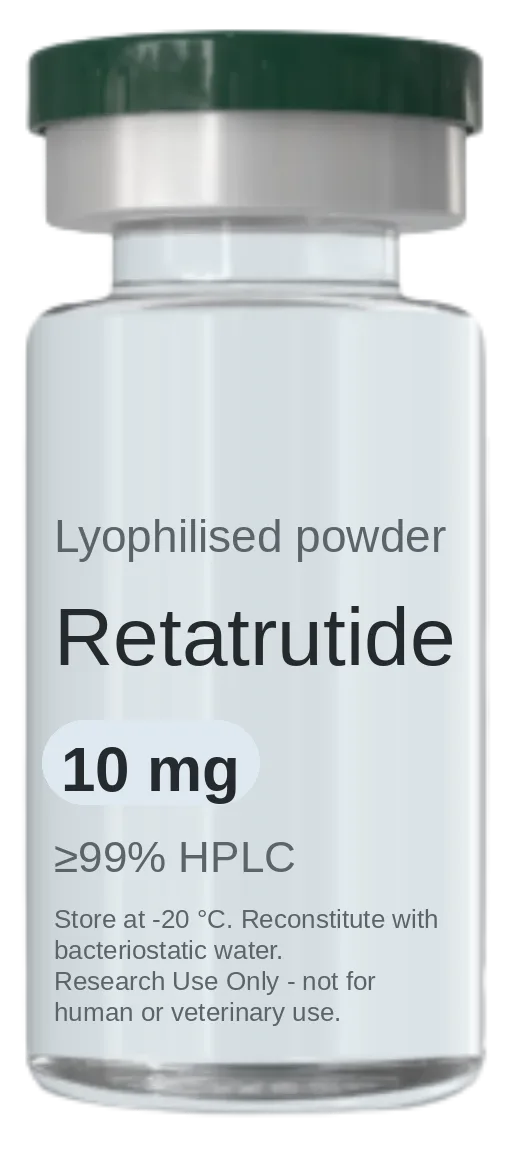
Retatrutide
Triple-agonist metabolic research peptide targeting GLP-1, GIP and glucagon receptors.
- Purity:
- ≥99% HPLC
- Sizes available:
- 10 mg
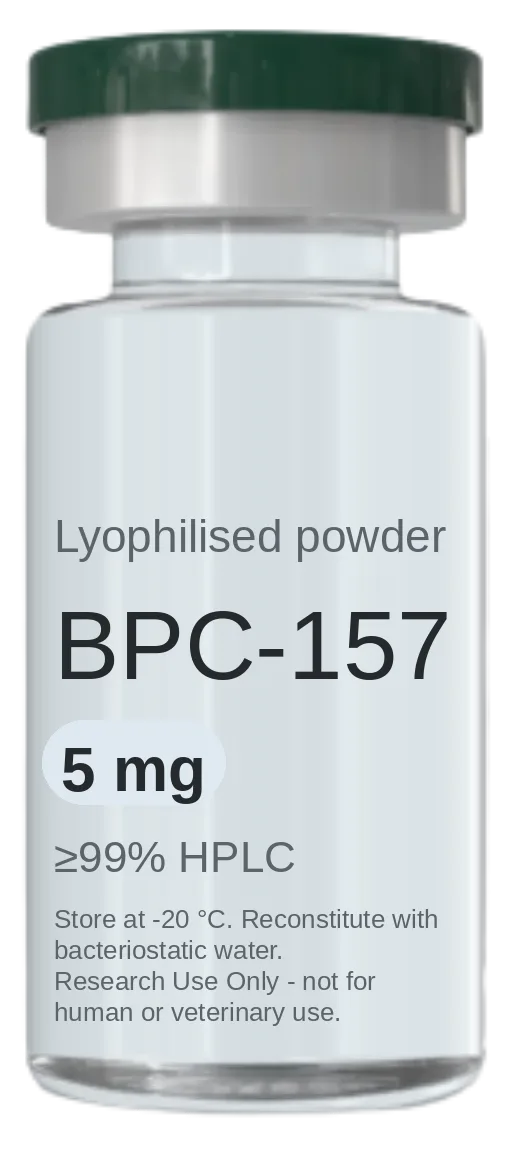
BPC-157 + TB-500
BPC-157 and TB-500 in a single vial — the pairing most studied together in tissue-repair research.
- Purity:
- ≥99% HPLC
- Sizes available:
- 5 mg + 5 mg
The consultation
One intake that settles goals, history and contraindications alongside compound, quantity, documentation and route — reviewed by a physician before anything ships.
More notes
-
Temporary Import Regime & Peptides
Temporary import covers goods that leave the country again; a research peptide shipment stays and gets used up.
-
Retatrutide vs GHK-Cu: What's the Difference
Retatrutide and GHK-Cu are different molecules studied for different reasons. Here's what each investigates and what documentation backs a batch.
-
Invoiced vs. Unbilled Peptide Suppliers
What changes when a research peptide supplier invoices the transaction versus one that takes payment and leaves no paper trail.