
Note
Declared Weight vs. Actual Weight in a Peptide
A vial labeled 10 mg may contain 11.96 mg. Three technical reasons that explain the gap and how to read them in a certificate of analysis.
A vial labeled 10 mg can contain 11.96 mg without anything having gone wrong. That specific figure comes from the Janoshik Analytical report for retatrutide lot 136921, analyzed April 13, 2026. Three independent factors explain the gap: the counterion salt that travels with the peptide through purification, the moisture the lyophilized powder absorbs from the air, and the intentional surplus a manufacturer builds in to guarantee the declared minimum. All three appear in the certificate of analysis. None of them is unique to any one compound.
The counterion salt: mass that comes with the peptide
Every synthetic peptide exits synthesis bound to a counterion compound. The most common is trifluoroacetate (TFA), which attaches during reverse-phase HPLC purification. Some manufacturers run an additional ion-exchange step to replace TFA with acetate, which is lighter and less reactive for certain research applications.
TFA adds mass to the final powder without being part of the peptide chain. A vial labeled 10 mg may hold 10 mg of the peptide plus a fraction of TFA that also registers on the scale. How much TFA that fraction represents depends on the chain length of the peptide and the number of amine groups available — those are the binding sites.
There is a second layer of ambiguity: some manufacturers label the free peptide weight; others label the full salt weight, meaning peptide plus counterion together. Without the certificate of analysis, there is no way to know which convention the label follows.
A certificate that includes mass spectrometry identity testing confirms the molecular weight of the main chromatographic peak against the theoretical value for the free peptide, regardless of what counterion is present. That is the only direct evidence that the identity is correct and that the molecular weight matches what was declared. The methodology is discussed in the research literature accessible through PubMed for readers who want the analytical detail.
Moisture: the water a lyophilized powder absorbs
Lyophilized peptides are hygroscopic. The powder absorbs ambient water vapor faster than it appears: a lot that leaves the lyophilizer nearly dry can accumulate several percentage points of mass within minutes if the vial is opened under normal temperature and humidity conditions.
That moisture adds weight but is not peptide. If the manufacturer weighed the powder without controlling ambient humidity, some of what the scale registered was already water. If the analytical laboratory dried the sample before analysis — as is standard in Karl Fischer titration or in some HPLC protocols — the water content is subtracted and the reported purity reflects the dry compound.
The consequence is that the content documented in the certificate can be higher or lower than the label weight depending on when and under what conditions each weighing was performed. There is no single answer that applies across lots or suppliers. Reading the certificate for the specific lot is the only way to get a specific answer.
Manufacturing surplus: evidence that the process is working
The third factor runs in the opposite direction. A manufacturer who wants to guarantee the declared minimum in every vial has to fill with margin, because synthesis, purification, lyophilization, and sealing all carry their own losses at each stage.
The Janoshik Analytical certificate for retatrutide lot 136921 found 11.96 mg in a vial with a 10 mg label and a purity of 99.893%. The surplus is not an irregularity — it is evidence that the lot exceeds the declared minimum with room to spare. A vial that measures exactly 10.00 mg on the analytical balance may indicate that process losses pushed the content to the specification limit, with no margin for variation remaining.
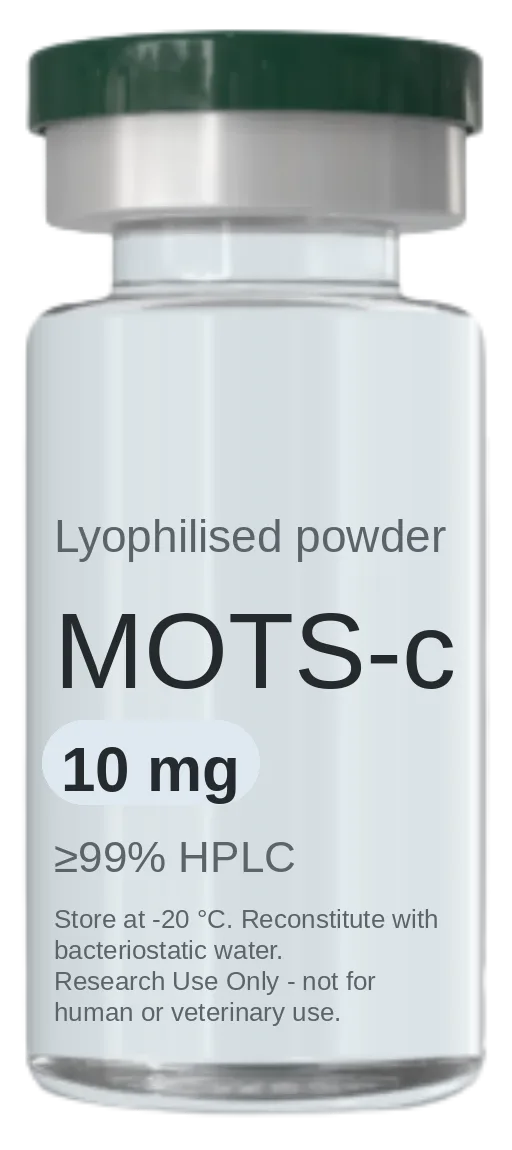
Lot 136923 of MOTS-c from the same analysis returned 11.31 mg at a purity of 99.669%. Both certificates, along with those for GHK-Cu and BPC-157 + TB-500, are available on the PeptoClinic quality page.
What to look for in a certificate of analysis
A certificate that answers the label-versus-content question needs four elements.
HPLC purity: the proportion of the main peak over the total chromatogram area. It states what fraction of the powder is the target compound, not what the vial weighs in total.
Mass spectrometry identity: confirms that the molecular weight of the main peak matches the declared peptide. Without this, a high purity figure may be accurate but refer to a different compound.
Label weight: the number the manufacturer declared. It is the baseline for comparison.
Content found: the mass the independent laboratory measured. This is the figure that may differ from the label weight, and it is the one that matters for calculating solution concentration in experimental work.
When the content exceeds the declared amount, the lot has surplus. When it falls short, how much matters. A difference within the analytical method's normal variation is unremarkable. A larger shortfall without explanation in the report is a signal worth raising with the supplier before the lot is used.
Each listing in the PeptoClinic catalog indicates what lot documentation ships with each order.
For laboratory research only
The peptides supplied by PeptoClinic are intended exclusively for in vitro laboratory research. They are not medicines. They are not approved by the FDA, ANMAT, or any equivalent regulatory authority for use in humans or animals. PeptoClinic does not supply administration protocols, dosing guidance, or clinical use instructions. Requests about use in people are outside what PeptoClinic can address.
In in vitro research, the difference between label weight and actual content is a functional variable, not a label curiosity. The concentration of a solution depends directly on the exact amount of compound that goes into it. A discrepancy of plus or minus fifteen percent in the starting weight propagates into the concentration and can make two experiments using the same lot incomparable. That is why the content documented by the laboratory is an input to experimental design, not a secondary piece of information.
Details about the documentation that ships with each order are on the PeptoClinic Argentina page.
Frequently asked questions
Is a gap between label weight and actual content a sign of fraud?
Not necessarily. The three most common causes — salt form, moisture, and manufacturing surplus — are technically expected variations in lyophilized peptides. What distinguishes a reliable supplier is whether the difference is documented in a certificate from a laboratory that is independent of the manufacturer. Without the certificate, the difference is a warning. With the certificate, it is information.
What is TFA and why does it affect weight?
TFA is trifluoroacetate, the most common counterion in peptides purified by reverse-phase HPLC. It binds to the peptide during purification and adds mass to the final powder. Its proportion relative to the peptide varies with chain length and the number of available amine groups. Some manufacturers run an ion-exchange step to replace TFA with acetate, which is lighter. The certificate of analysis should specify what salt form the lot carries.
Does the label weight refer to the free peptide or to the salt?
It depends on the manufacturer. Some declare the free peptide weight; others declare the full salt weight, meaning peptide plus counterion. This ambiguity is one reason the certificate of analysis is necessary: the laboratory measures content under defined conditions and documents it, independent of how the manufacturer labeled the vial.
Which laboratory analyzed PeptoClinic's lots?
The published lots were analyzed by [Janoshik Analytical](https://www.janoshik.com). The reports cover lot 136921 of retatrutide (99.893%), lot 136923 of MOTS-c (99.669%), and lots 204977 and 204975 of GHK-Cu and BPC-157 + TB-500. All four reports are available on the [quality page](/en/quality/).
Why is manufacturing surplus expected rather than an irregularity?
Because every stage of the process — synthesis, purification, lyophilization, filling, sealing — carries its own losses. A manufacturer who wants to guarantee the declared minimum has to start with more material than the label states. The surplus remaining in the vial after those losses is evidence that the process reached its target. A lot without surplus may have arrived right at the specification edge or below it.
Do all suppliers publish the actual content found in the vial?
No. Many publish only the purity percentage, which is a different figure: it states what fraction of the analyzed material is the target compound, but not how much compound is in the vial. Knowing the actual content requires a certificate that includes the weight found by the laboratory, not only the relative purity. A purity percentage without the total analyzed weight does not allow the quantity of compound to be calculated.
Is there a maximum acceptable difference between label weight and actual content?
There is no published universal standard for research peptides comparable to what pharmacopeias set for medicines. What matters is that the certificate declares both figures and that the laboratory is independent of the manufacturer. A surplus of 10 to 20 percent is common in the sector. A shortfall of more than a few percentage points deserves an explanation in the report, or a direct conversation with the supplier, before the lot is put into use.
Why does moisture matter if the vial is sealed?
The critical window is weighing and filling, not storage after sealing. If the powder absorbed moisture between lyophilization and the filling station, or if the manufacturer's weighing environment was not humidity-controlled, the registered mass already included water at the moment the label was assigned. A sealed vial preserves whatever state the powder was in when sealed. That is why the analytical certificate — produced under defined conditions after the fact — can document a different number than the label carries.
Compounds mentioned
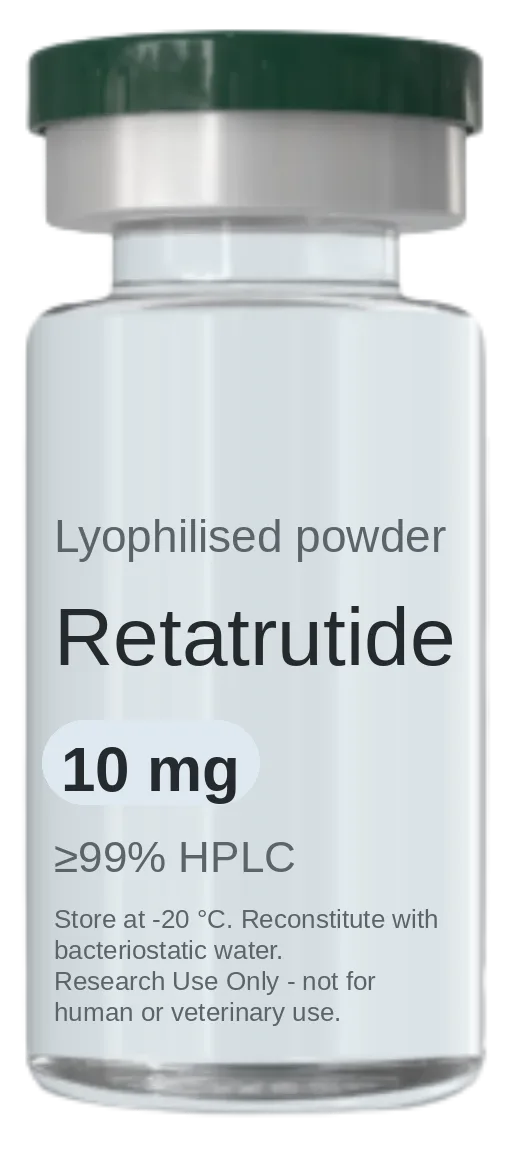
Retatrutide
Triple-agonist metabolic research peptide targeting GLP-1, GIP and glucagon receptors.
- Purity:
- ≥99% HPLC
- Sizes available:
- 10 mg
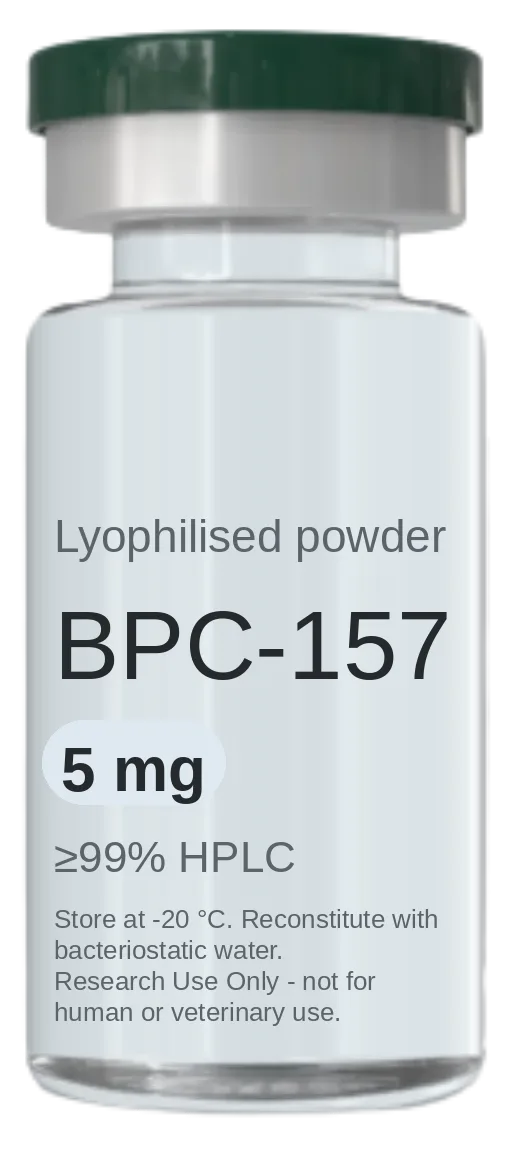
BPC-157 + TB-500
BPC-157 and TB-500 in a single vial — the pairing most studied together in tissue-repair research.
- Purity:
- ≥99% HPLC
- Sizes available:
- 5 mg + 5 mg
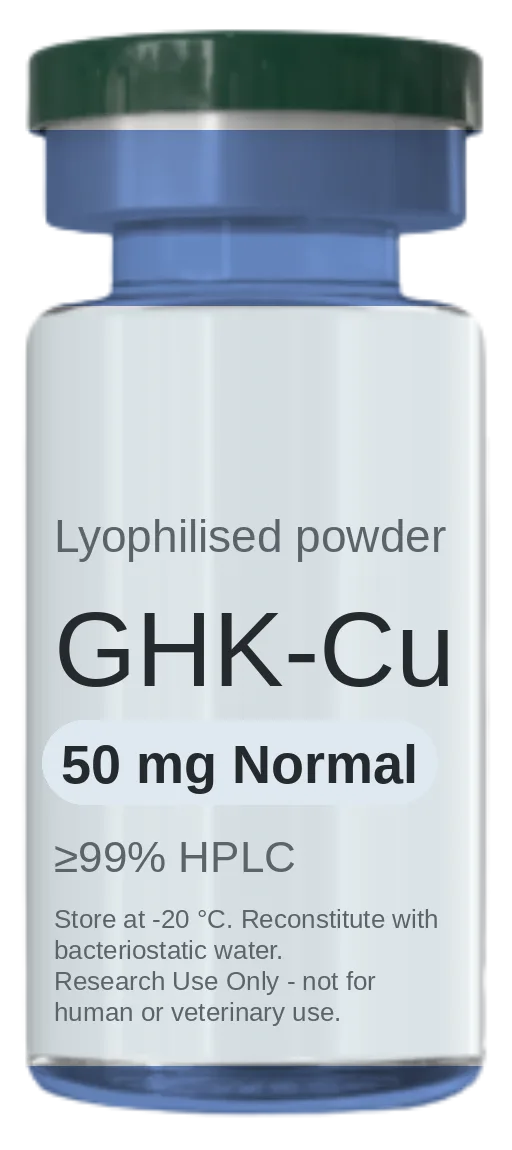
GHK-Cu (Copper Peptide)
Copper-binding tripeptide studied in extracellular matrix and dermal research models.
- Purity:
- ≥99% HPLC
- Sizes available:
- 50 mg Normal – 50 mg Plus
The consultation
One intake that settles goals, history and contraindications alongside compound, quantity, documentation and route — reviewed by a physician before anything ships.
More notes
-
No Certificate of Analysis, No Peptides
What it means when a research peptide supplier can't produce the batch-specific certificate of analysis, and why that gap alone is disqualifying.
-
Bonded Warehouse Deadline Before Abandonment
Argentine customs gives importers roughly 90 days to clear research peptides from bonded storage before the lot is declared abandoned.
-
What Is Argentina's Statistics Fee?
Argentina's statistics fee adds to the cost of importing a research peptide: what it taxes, how it's calculated, and what paperwork matters.