
Note
How Argentina Notifies a Customs Delay
How Argentine customs delays are communicated to the importer of a research peptide shipment, who contacts you, and what gets requested.
When a shipment is held up in Argentine customs, the notice does not come from customs directly to the importer. It comes from the courier or the customs broker handling the clearance, because that is the party with the account on the customs system and the registered contact for the recipient. For research peptides entering under the postal or courier regime, that notice usually arrives as an email or SMS from the carrier (OCA, UPS, FedEx, DHL, Correo Argentino), not as an official notification from AFIP to the end recipient.
Who finds out about the delay first
The customs system assigns every shipment to an inspection channel the moment the cargo enters the country. The courier or broker sees that assignment first — the importer does not. The information only moves down the chain afterward:
- Green channel: the shipment clears without any documentary or physical review. There is no delay to report.
- Orange channel: the paperwork gets reviewed — invoice, description of the goods, sender and recipient details — without opening the package.
- Red channel: the paperwork is reviewed and the physical contents are checked against what was declared.
A shipment that lands in the red or orange channel is the one that generates a delay notice. The courier sees the status change on the system, identifies that the parcel needs something more — an invoice detail, a clarification about the contents, an extra document — and only then reaches out to the recipient.
What the notice actually says
The message that reaches the importer rarely spells out "red channel" or "orange channel" — those are internal terms used by the customs system. What typically shows up instead is:
- A tracking number with a status like "under review" or "pending documentation."
- A specific request: a commercial invoice, a more precise description of the contents, or a clarification of the declared use of the goods.
- In some cases, a request for the recipient to appear in person with identification if the process requires it.
For shipments of research peptides, the most common thing customs asks for when reviewing the paperwork is consistency between the invoice and the declared contents: the shipment needs to be described as what it is — laboratory reference material for research — and that description has to match the invoice and any analysis report traveling with the parcel. That's why the quality documentation that ships with every lot matters as much as the packaging itself. An invoice that says one thing and contents that look like another is the single most common reason a shipment gets stuck in review.
"Delayed" is not the same as "held"
The two get confused, and that leads to the wrong conclusions about what's actually happening:
- Delayed means the shipment is under review and will, at some point, continue on its way, whether or not an extra document is requested along the way. This is the most common status for shipments assigned to the orange or red channel.
- Held, or under a formal inspection, means customs found something that requires a formal resolution: a mismatch between what was declared and what was verified, a restriction on the category of goods, or missing documentation that a quick email won't fix.
Most delayed shipments clear once the recipient or the courier provides the missing detail or document. A formal hold is a different process, with its own file, and at that point the notice is no longer an email from the courier — it's a formal communication from the agency.
What the importer can ask for while waiting
The importer has no direct access to customs' internal system, but can still:
- Ask the courier for the tracking number and the exact status recorded by the system.
- Confirm with whoever shipped the parcel that the invoice and the description of the contents match what's actually inside.
- Ask explicitly whether the documentation request is tied to the orange channel (paperwork only) or the red channel (paperwork plus physical inspection), since the second one takes longer to resolve.
For shipments bound for Argentina, the import file is prepared from the start to describe the contents as laboratory reference material, which is the category that applies to research peptides. That consistency between invoice, description, and documentation is what lowers the odds that an assigned channel turns into a request for clarification.
What if the notice never arrives
If a reasonable amount of time has passed with no communication from the courier and no change in the tracking status, the right move is to contact the carrier's customer service directly with the tracking number in hand. Courier systems don't always generate a proactive email alert — sometimes the status changes on the system but the automated notice fails or lands in a spam folder. Asking about the current status of the parcel, instead of waiting for a notice that may have already been sent and never arrived, usually resolves the uncertainty faster than waiting it out.
Research material, not for human or veterinary use
Everything quoted on this site is reference material supplied strictly for laboratory research (Research Use Only), intended for in vitro and laboratory study. It is not a medicine, a supplement, or a food. None of these substances is approved for human or veterinary consumption, diagnosis, or treatment, and no claim about them has been evaluated by the FDA, ANMAT, or any equivalent authority. The import documentation accompanying every shipment to Argentina reflects exactly that category — laboratory reference material, nothing more.
Why documentation prepared in advance reduces friction at customs
A shipment that arrives with a clear invoice, a consistent description of the contents, and an available analysis report has fewer reasons for its assigned channel to turn into a request for clarification. The Janoshik Analytical report on each lot describes exactly what the vial contains and at what purity, and it's the same document that serves as a reference if customs asks for more detail on the declared contents. This applies to any compound in the catalog, but it matters most for high-demand compounds like retatrutide or combinations like BPC-157, where the description of the contents needs to be precise to avoid any ambiguity about what's actually in the vial.
The shipment itself travels as lyophilized powder in a sealed vial, with no cold chain — a detail that also simplifies the courier logistics, since there are no temperature restrictions adding another variable to the review. More detail on how it's packaged and what paperwork travels with it is on the shipping page.
Frequently asked questions
Does Argentine customs notify the recipient directly when a shipment is delayed?
Not directly. The notice travels through the courier or broker handling the shipment, since that party has access to the status assigned by the customs system and the recipient's registered contact information.
How long can a shipment stay delayed under review?
It varies depending on the assigned channel and how quickly any requested documentation gets resolved, if any is requested at all. There's no fixed timeframe: a shipment in the orange channel that only needs an invoice detail confirmed resolves differently than one in the red channel with a physical inspection pending.
What does it mean when a shipment lands in the red channel?
It means the customs system assigned that shipment to both documentary review and physical verification of the contents against what was declared on the invoice, instead of letting it pass without inspection.
What documentation does customs typically request for a shipment of research peptides?
Customs typically asks that the commercial invoice and the description of the contents be consistent with each other and reflect that the shipment is laboratory reference material for research, which is the category that applies to this type of compound.
Is a "delayed" shipment the same as a "held" shipment?
No. Delayed describes a shipment under review that will, at some point, continue on its way. Held implies a formal inspection has been opened, with its own process and resolution, which is different from a simple request for documentation.
What can I do if I never received any notice about my shipment?
Contact the courier directly with the tracking number and ask about the current status. Automated email notices don't always arrive, and the status can change on the system without a visible notification ever reaching the recipient.
Does the certificate of analysis for a lot help resolve a customs delay?
It can be useful as a reference if customs asks for more detail on what the vial contains, since it describes the compound and the purity found by the laboratory that performed the analysis. It doesn't replace the commercial invoice, but it supports the declared description.
Are shipments to Argentina prepared differently to clear customs faster?
The import file is prepared from the start to describe the contents as laboratory reference material, which is the category that applies to research peptides. That consistency between what's declared and the documentation helps avoid requests for clarification, although the inspection channel itself is assigned by the customs system and can't be chosen in advance.
Compounds mentioned
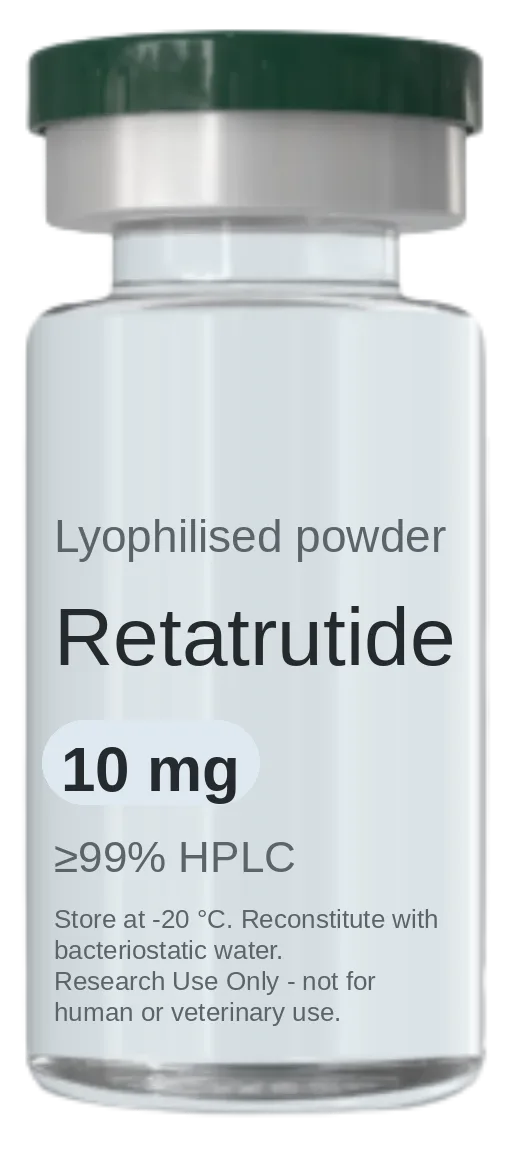
Retatrutide
Triple-agonist metabolic research peptide targeting GLP-1, GIP and glucagon receptors.
- Purity:
- ≥99% HPLC
- Sizes available:
- 10 mg
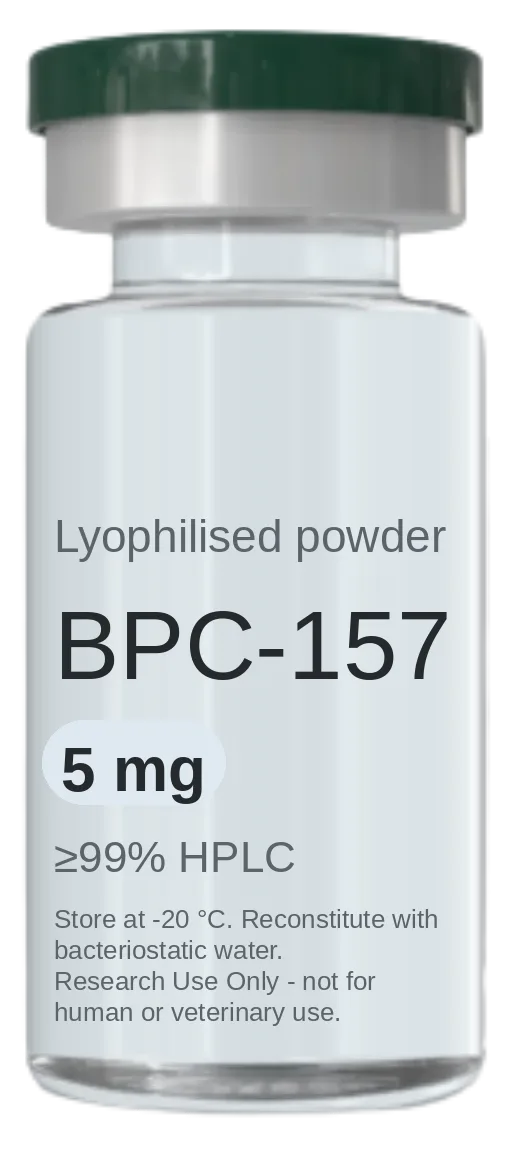
BPC-157 + TB-500
BPC-157 and TB-500 in a single vial — the pairing most studied together in tissue-repair research.
- Purity:
- ≥99% HPLC
- Sizes available:
- 5 mg + 5 mg
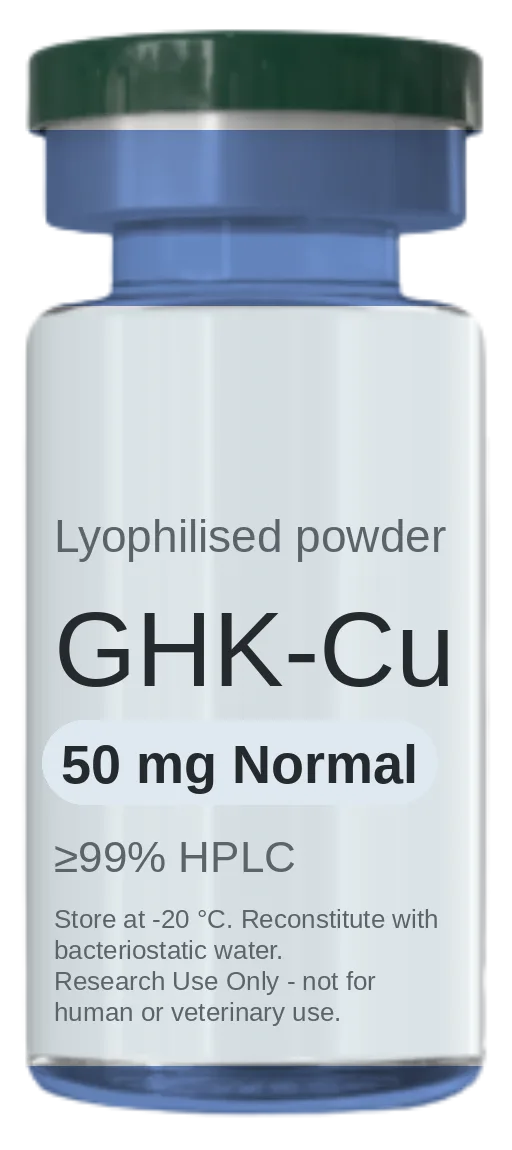
GHK-Cu (Copper Peptide)
Copper-binding tripeptide studied in extracellular matrix and dermal research models.
- Purity:
- ≥99% HPLC
- Sizes available:
- 50 mg Normal – 50 mg Plus
The consultation
One intake that settles goals, history and contraindications alongside compound, quantity, documentation and route — reviewed by a physician before anything ships.
More notes
-
Retatrutide vs. Tirzepatide: Differences
Retatrutide adds a third receptor that tirzepatide doesn't activate — here's how the two differ in structure, mechanism, and published research.
-
NAD+ vs Selank: What's the Difference?
NAD+ is a cellular coenzyme; Selank is a synthetic peptide derived from tuftsin. Structure, mechanism, and what each one is studied for.
-
Peptide Customs Clearance Cost in Argentina
What determines customs clearance cost for a research peptide shipment to Argentina, and what documentation PeptoClinic prepares for it.