
Note
Do You Need a CUIT to Receive Peptides?
In Argentina, a DNI is enough to receive research peptides by courier; a CUIT only applies to commercial importers.
No, you don't need a CUIT to receive a shipment of research peptides in Argentina if you're receiving it as an individual, in your own name. A DNI is enough for the large majority of shipments that arrive door-to-door by courier. The CUIT requirement applies to a different situation: when the recipient is a legal entity — a laboratory, a company, a monotributista importing under their registered activity — rather than a researcher or private individual receiving material under their own name.
It's worth separating two numbers that get confused constantly, because Argentine customs treats them differently.
DNI, CUIT and CUIL are not the same thing
The DNI is the national identity document. The CUIT (Clave Única de Identificación Tributaria) is the tax ID that AFIP, Argentina's federal tax authority, assigns to anyone registered as a taxpayer — a company, a monotributista, a responsable inscripto. The CUIL is the equivalent for salaried employees. None of the three replaces the other two, and a private individual who has never registered as a taxpayer neither has nor needs their own CUIT for something as simple as receiving a package.
When a shipment enters the country under the courier regime — the channel used by FedEx, DHL, UPS and the rest of the door-to-door parcel companies for small volumes, which is how research material moves — customs needs to identify the recipient with a tax key. If that person has neither a CUIT nor a CUIL, the system generates a key tied to their DNI at the moment of clearance. That's an administrative step the courier handles, not a procedure the recipient has to complete beforehand at AFIP.
When a CUIT actually becomes necessary
The CUIT becomes necessary in a handful of concrete situations, and they all share one thing: the recipient stops being a person receiving material in their own name and becomes a commercial operation.
- The recipient is a company, a corporation or any registered legal entity.
- The shipment is addressed to a monotributista or responsable inscripto who invoices that activity.
- The volume or frequency of shipments leads customs or the courier to treat it as recurring commercial importation rather than a one-off shipment.
- The recipient chooses to invoice the purchase to their own registered activity — a laboratory, for example, that wants the expense documented in its accounting.
Outside those cases, a researcher, a university lecturer or anyone receiving research material under their own private name does not need to arrange a CUIT for the package to arrive.
What PeptoClinic prepares for clearance
Every quote for a destination in Argentina includes the customs paperwork prepared so the shipment clears as laboratory reference material: the documentation accompanying the lot describes the contents in those terms, not as a consumer product. That's what the courier presents at clearance, and it's independent of whether the recipient has a CUIT — that paperwork identifies the contents of the package, not the person receiving it.
Before coordinating a shipment, PeptoClinic's technical team reviews with the recipient the details the courier will need: full name, DNI, address and, if it applies for whatever reason, a CUIT. That conversation happens by contacting the team when requesting a quote, not through a generic form.
What to expect from the courier at your address
Each courier company has its own procedure and its own forms, and these can vary depending on the declared value of the shipment and the compound in question. What stays constant is this: an individual is normally asked for a DNI, not a CUIT. Some couriers also ask for a CUIL if the person has one, because it simplifies data entry on their end, but it isn't a strict requirement — absent a CUIT or CUIL, the DNI identifies the person just the same.
If a shipment is held up at customs over a missing piece of information, the courier contacts the recipient directly, since they're the party of record on the clearance. It's worth having the DNI on hand and, if the courier asks, confirming the exact address where delivery will be coordinated.
What to check on each lot before receiving it
Every compound in the catalog ships with the documentation that corresponds to that lot, including the laboratory report when one has been published. Before coordinating a shipment, it's worth checking the quality page, where PeptoClinic publishes the Janoshik Analytical reports for analyzed lots — the way to confirm what's in a vial before it arrives, independent of any customs procedure. Courier details, timelines and served destinations are on the shipping page.
Compounds like retatrutide, BPC-157, GHK-Cu or MOTS-c each have their own page with clearance details for Argentine destinations — worth checking if the compound you're about to request is one of these.
Research material, not for human or veterinary use
Everything PeptoClinic quotes is supplied strictly for research use (Research Use Only): in vitro and laboratory research. No product in the catalog is a medicine, a supplement or a food, and none is approved or intended for human or veterinary consumption, nor for the diagnosis or treatment of any condition. No statement on this site has been evaluated by ANMAT, the FDA or any equivalent authority. The customs documentation accompanying each shipment describes the contents in those terms, which is also why the CUIT isn't part of the process unless the recipient is themselves a commercial importer.
Frequently asked questions
Does a DNI work for a shipment of any value?
The identification requirement (DNI, CUIT or CUIL) is set by the courier based on its own procedure and the declared value of the package, not a fixed amount that applies uniformly. What stays constant is that identification for an individual runs through the DNI, and a CUIT only comes into play if the operation is carried out under a legal entity or a registered activity.
What if I have a CUIL but not a CUIT?
The CUIL identifies a person to customs the same way a CUIT does when the recipient is a private individual. If the courier asks for it, the CUIL is enough; if you have neither, a key tied to your DNI is generated at the moment of clearance.
Do I need to be registered with AFIP to receive a shipment in my name?
No. Being registered with AFIP — holding a CUIT as a monotributista or responsable inscripto — is only necessary if you're going to invoice that purchase to your registered activity. A private individual receiving research material under their own name needs no prior registration.
Does PeptoClinic ask for a CUIT when quoting a shipment to Argentina?
The technical team asks for the details the courier will need for clearance: name, DNI and address always, and a CUIT only if the recipient is a company or is invoicing the purchase to a registered activity.
Is the process different if the recipient is a university or a laboratory?
Yes. When the recipient is an institution, the clearance is identified with that institution's CUIT, not the DNI of the person coordinating receipt. It's worth clarifying this when requesting the quote so the customs paperwork is prepared with those details from the start.
What documentation accompanies the lot besides the customs paperwork?
When a compound has a published laboratory report, that report — with the purity percentage found by Janoshik Analytical — is available on the [quality page](/en/quality/), independent of the customs documentation the courier handles.
Is this process the same for every compound in the catalog?
Yes. The identification the courier requires (DNI, CUIT or CUIL) depends on who's receiving the shipment, not on the compound. What changes from one compound to another is the technical documentation for that lot, not the identification requirement at clearance.
Can I ask about this before requesting a quote?
Yes, it's part of the technical conversation that shapes every quote for a destination in Argentina. Contact details are on the [company page](/en/about/).
Compounds mentioned
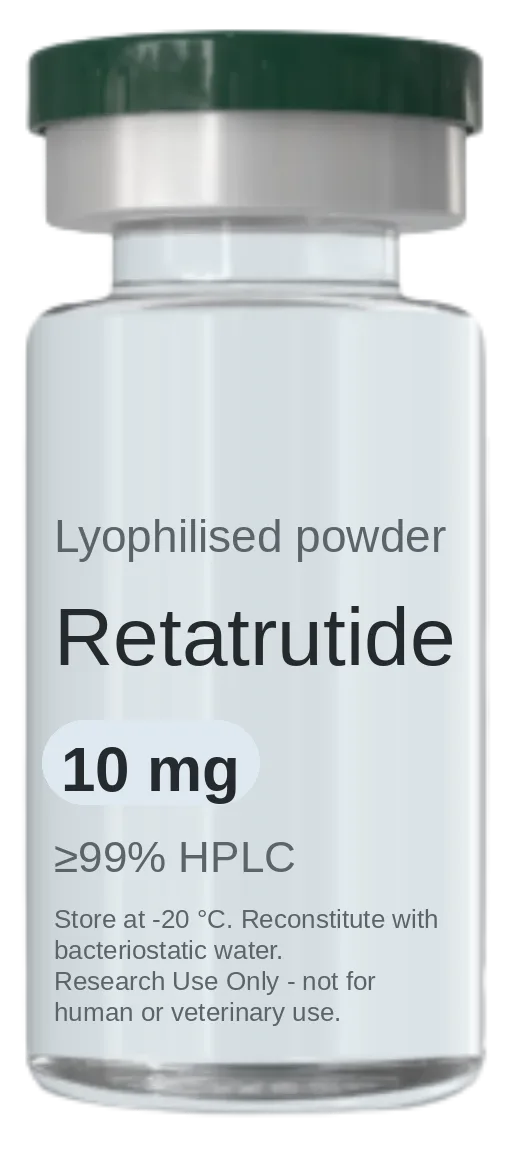
Retatrutide
Triple-agonist metabolic research peptide targeting GLP-1, GIP and glucagon receptors.
- Purity:
- ≥99% HPLC
- Sizes available:
- 10 mg
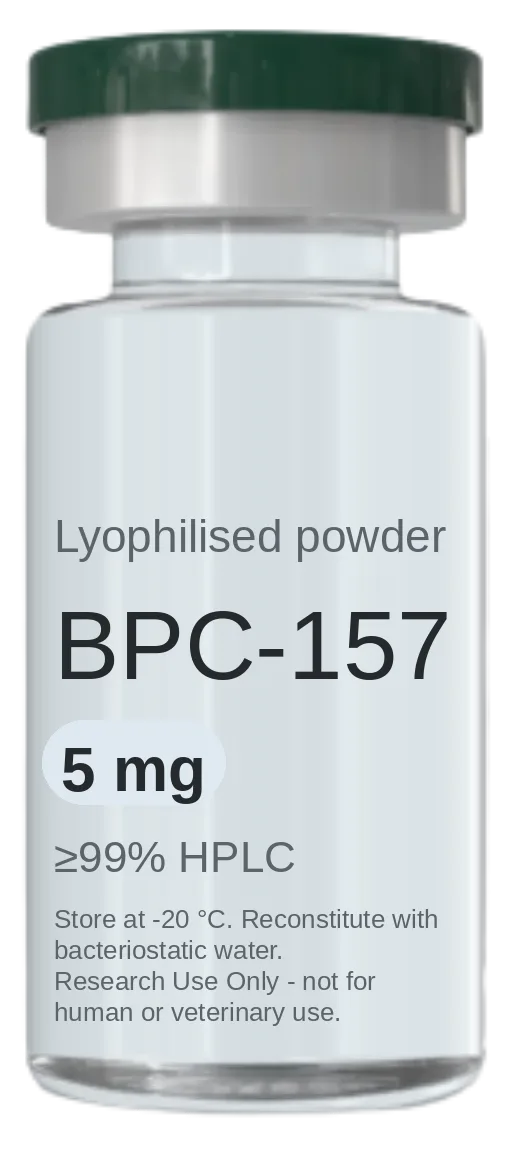
BPC-157 + TB-500
BPC-157 and TB-500 in a single vial — the pairing most studied together in tissue-repair research.
- Purity:
- ≥99% HPLC
- Sizes available:
- 5 mg + 5 mg
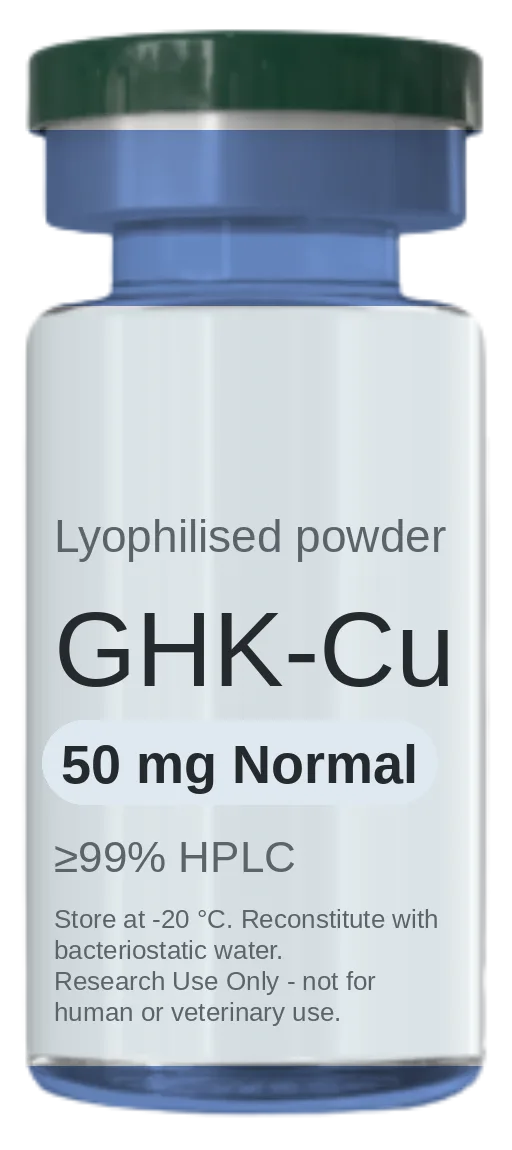
GHK-Cu (Copper Peptide)
Copper-binding tripeptide studied in extracellular matrix and dermal research models.
- Purity:
- ≥99% HPLC
- Sizes available:
- 50 mg Normal – 50 mg Plus
The consultation
One intake that settles goals, history and contraindications alongside compound, quantity, documentation and route — reviewed by a physician before anything ships.
More notes
-
Temporary Import Regime & Peptides
Temporary import covers goods that leave the country again; a research peptide shipment stays and gets used up.
-
Retatrutide vs GHK-Cu: What's the Difference
Retatrutide and GHK-Cu are different molecules studied for different reasons. Here's what each investigates and what documentation backs a batch.
-
Invoiced vs. Unbilled Peptide Suppliers
What changes when a research peptide supplier invoices the transaction versus one that takes payment and leaves no paper trail.