
Note
Do You Apostille a Certificate of Analysis?
No — a lab's certificate of analysis isn't a public document, so it doesn't get apostilled to import a research peptide into Argentina.
No. In the overwhelming majority of cases, a certificate of analysis (CoA) for a research peptide does not need to be apostilled to import it into Argentina. An apostille legalizes public documents — birth certificates, powers of attorney, court rulings, degrees — issued by a government body. A certificate of analysis is issued by a private laboratory about a specific batch of product. It isn't a government act, so it doesn't fall into the category of document the 1961 Hague Convention regulates in the first place.
It's worth understanding why, because conflating "foreign document in another language" with "document that needs an apostille" wastes time and, occasionally, money on paperwork that was never required.
What an apostille actually does
An apostille is the certification that replaces the old chain of consular legalizations, so a public document issued in one country is recognized as valid in another — as long as both countries are party to the Hague Convention. Argentina has been a member since 1987. The apostille itself is issued by the competent authority in the country of origin — in the United States, depending on the state, that's usually the Secretary of State's office or an authorized notary — and it applies to documents that already have public standing: a birth record, a degree issued by a state university, a court judgment.
A certificate of analysis from a quality-control laboratory doesn't fit that category. It's a private technical report: it describes the method the lab used (HPLC, mass spectrometry, whatever applies), what it found, and the margin of error. It isn't an act of a public authority, it doesn't take the form of a notarial document, and no Argentine agency asks for it apostilled — because there's nothing to legalize in that sense. What matters is whether the data is accurate, not whether the paper is authentic before a state.
So what does customs actually ask for?
What actually accompanies a shipment like this, and what a customs broker or the customs system reviews, is a different set of documents:
- The commercial invoice, describing the contents and declared value.
- The packing list, itemizing what's in the box.
- The certificate of analysis as supporting technical documentation, attached to record what the material is and what purity the lab reported.
- Labeling on the container stating the material is for laboratory research use only.
None of those items need an apostille. What can be requested, depending on the case, is a translation if the document is in English and a specific procedure calls for Spanish — and that's handled by a certified public translator, a completely different process from an apostille, and not always mandatory for supporting commercial documentation.
What actually matters: whether the certificate is genuine
Here's the point that carries more real weight than any legalization: an apostilled certificate of analysis that's fake is still fake. What protects an importer isn't a consular stamp — it's the ability to check the data against the laboratory that issued it.
The catalog includes reports from Janoshik Analytical, an independent laboratory, with concrete results: the batch of Retatrutide tested came back at 99.893% purity, and the MOTS-c batch came back at 99.669%. That second figure is the lowest purity across the reports published so far, and it's the one worth looking at before assuming "everything comes out equally pure" — purity is measured batch by batch, not a fixed property of the compound.
How to read one of these reports — what method it cites, what the area-percentage figure means, where the batch number sits — is covered in more detail on the quality page. That's the reading that replaces any legalization process: a stamped piece of paper says nothing about what's in the vial; a lab report with an identifiable, verifiable batch number does.
What ships: what to expect from the package
Material ships as lyophilized powder in a sealed vial, with desiccant and protected from light. It does not travel in a cold chain: lyophilized powder is stable at room temperature for weeks, so the box carries no coolant packs and no dry ice. Cold only becomes relevant later, once the contents have been reconstituted for lab work — and that's a stage well after import, and it changes nothing about what's required to bring the material into the country. Packaging and transit details are on the shipping page.
Argentina as a destination, with the file already prepared
Argentina is one of the destinations material is quoted to, alongside the United States, Uruguay, Chile, Paraguay, Bolivia, Peru, Brazil, Mexico and Colombia. The import file is prepared case by case so the material enters identified as what it is: laboratory reference material. The technical inquiry is handled individually — the compound, quantity and destination are described, and documentation is prepared from there — so if there's a specific question about a particular compound, the path is a quote request, not an apostille beforehand. You can browse what's available in the catalog or go directly to the Argentina page to see compounds with country-specific information.
This material is for laboratory research, not human use
Everything quoted is strictly Research Use Only (RUO): in vitro and laboratory studies. It is not a medicine, a supplement, or a food. It is not approved and is not intended for human or veterinary consumption, diagnosis or treatment, and no regulatory body — in Argentina or elsewhere — has evaluated any claims that may appear about the compound in the scientific literature. No prescription is issued or required.
Frequently asked questions
What if the certificate of analysis is in English?
If a specific procedure requires the documentation in Spanish, the path is a translation by a certified public translator, not an apostille. They're two separate processes: an apostille legalizes public documents for use before another state, and a certified translation resolves the language issue. In most cases, an English-language CoA is accepted as supporting technical documentation without either step.
Does Argentine customs require the laboratory to be registered in the country?
There's no registry of foreign analytical laboratories that customs consults before accepting a certificate as supporting documentation. What does matter is that the report is verifiable: that it carries a batch number and, ideally, a way to confirm the result with the laboratory that issued it.
Does a notarized certificate of analysis replace an apostilled one?
They aren't interchangeable, and neither one is required. A notary can certify that a copy matches the original, but that doesn't turn a private lab report into a public document requiring an apostille. For importing research material, neither step is a standard requirement.
What's the difference between apostilling and legalizing at a consulate?
They're two routes to the same goal — giving a public document validity outside its country of origin — used depending on whether the destination country is party to the Hague Convention. Argentina is, so when something does need to be legalized, an apostille is enough and a consulate isn't required. But again: a laboratory certificate of analysis isn't the type of document this applies to.
How do I know if the laboratory that ran the analysis is reliable?
Check whether the report carries an identifiable batch number, whether it details the method used, and whether there's a way to contact or verify with the laboratory. The [quality page](/en/quality/) explains what to look for in a real report, with examples of published reports from Janoshik Analytical.
Is the purity reported on a certificate always the same for a given compound?
No. Purity is measured per batch, and it varies from one batch to the next of the same compound. That's why it's worth checking the specific batch number on the certificate rather than assuming a result published at some point applies to whatever unit arrives later.
Does the material arrive refrigerated?
No. It arrives as lyophilized powder in a sealed vial with desiccant, stable at room temperature, with no cold chain involved. Packaging details are on the [shipping page](/en/shipping/).
Can I request a compound's certificate of analysis before deciding anything?
Yes, the technical inquiry is the step that comes before any quote: you can ask about a specific compound, including its batch documentation, before settling on quantity or destination.
Compounds mentioned
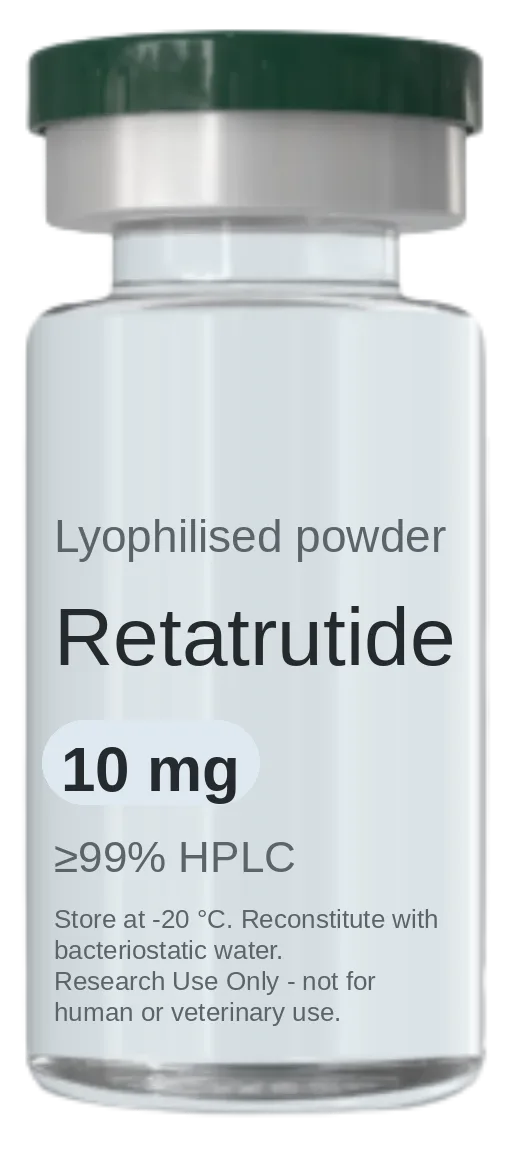
Retatrutide
Triple-agonist metabolic research peptide targeting GLP-1, GIP and glucagon receptors.
- Purity:
- ≥99% HPLC
- Sizes available:
- 10 mg
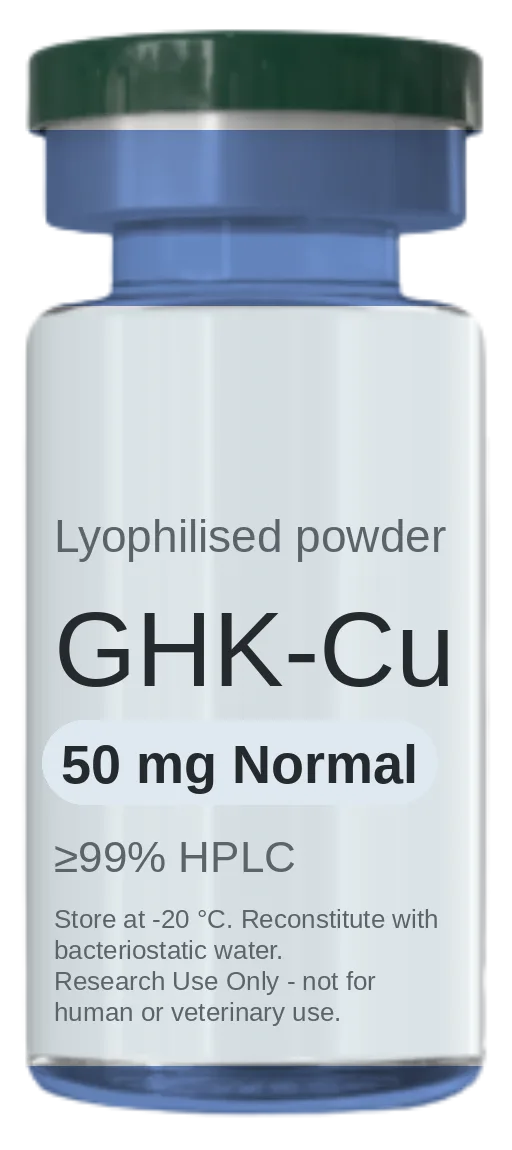
GHK-Cu (Copper Peptide)
Copper-binding tripeptide studied in extracellular matrix and dermal research models.
- Purity:
- ≥99% HPLC
- Sizes available:
- 50 mg Normal – 50 mg Plus
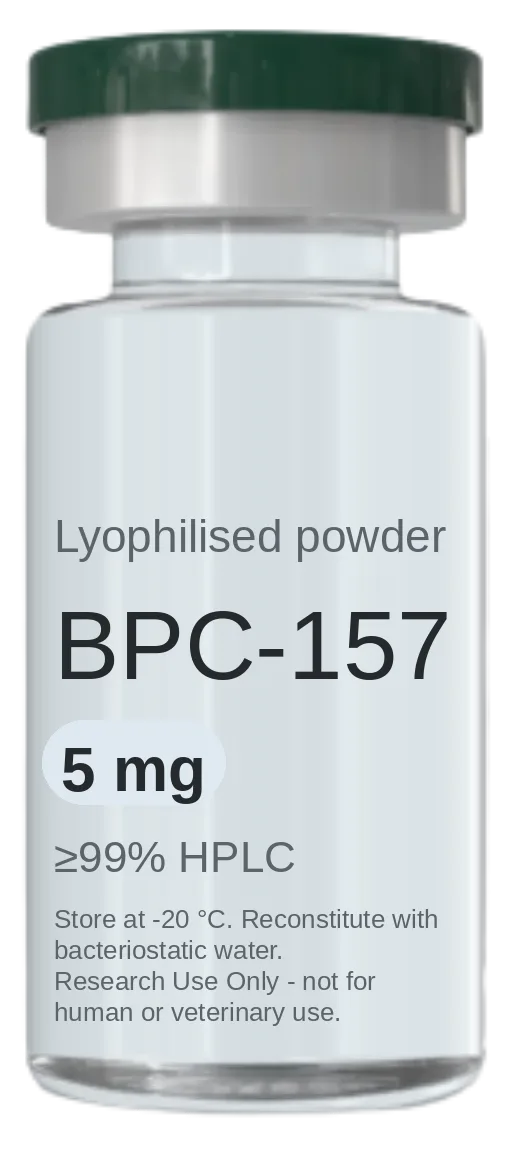
BPC-157 + TB-500
BPC-157 and TB-500 in a single vial — the pairing most studied together in tissue-repair research.
- Purity:
- ≥99% HPLC
- Sizes available:
- 5 mg + 5 mg
The consultation
One intake that settles goals, history and contraindications alongside compound, quantity, documentation and route — reviewed by a physician before anything ships.
More notes
-
Temporary Import Regime & Peptides
Temporary import covers goods that leave the country again; a research peptide shipment stays and gets used up.
-
Retatrutide vs GHK-Cu: What's the Difference
Retatrutide and GHK-Cu are different molecules studied for different reasons. Here's what each investigates and what documentation backs a batch.
-
Invoiced vs. Unbilled Peptide Suppliers
What changes when a research peptide supplier invoices the transaction versus one that takes payment and leaves no paper trail.