
Note
Compounded Semaglutide vs. Ozempic
By the PeptoClinic editorial team · Medically reviewed by Dr. Emily Parker
Compounded semaglutide and Ozempic are not the same product. Here is how FDA approval, manufacturing, and oversight actually differ.
Compounded semaglutide and Ozempic both contain the peptide semaglutide, but they are not the same product: Ozempic is a brand-name drug manufactured by Novo Nordisk and approved by the FDA for type 2 diabetes, while compounded semaglutide is prepared by a pharmacy from bulk active ingredient and has not gone through that approval process. The distinction matters because FDA approval is not a label — it is a specific regulatory finding about a specific manufactured product, and that finding does not transfer to a different formulation made somewhere else.
Side-by-side
| Ozempic | Compounded semaglutide | |
|---|---|---|
| Manufacturer | Novo Nordisk | A compounding pharmacy, from bulk semaglutide |
| FDA status | Approved brand-name drug | Not an FDA-approved drug product |
| Approved use | Type 2 diabetes (Wegovy, the same molecule, is approved for chronic weight management) | No approved use — not evaluated by the FDA as a finished drug |
| Trial data behind the molecule | Semaglutide's weight-related effects were studied in the STEP 1 trial, a randomized trial in adults with overweight or obesity (Wilding et al., NEJM 2021) | Compounded formulations were not the product tested in that trial |
| Manufacturing oversight | Subject to the FDA's drug manufacturing framework | The FDA has stated it cannot verify the safety, effectiveness, or quality of compounded GLP-1 products |
| Formulation | Fixed, as approved | Can vary by pharmacy — concentration and added ingredients are not standardized across compounders |
What the FDA's approval of Ozempic actually covers
The FDA's approval of Ozempic is specific: a particular formulation of semaglutide, manufactured under a particular process, indicated for type 2 diabetes. Semaglutide's chronic weight management indication is approved under the brand name Wegovy, not Ozempic — both are Novo Nordisk products, but they are evaluated and labeled for different uses. When a compounding pharmacy prepares semaglutide from bulk powder, the resulting product has not been through that review. It may use the same peptide sequence, but "same molecule" and "same approved drug" are different claims, and the FDA has been explicit that it does not stand behind compounded versions the way it stands behind the approved brand.
Why compounded semaglutide exists at all
Compounding pharmacies are permitted, under specific federal rules, to prepare a drug from bulk active ingredient when a commercially available product is in shortage or when a prescriber needs a formulation that isn't otherwise sold. That is the legal basis for compounded semaglutide's existence — it is not a parallel approval track, and it does not carry the same inspection and batch-testing requirements that apply to Novo Nordisk's manufacturing. The FDA's page on GLP-1 drugs used for weight loss lays out its specific concerns with this category: inconsistent potency, unverified sterility, and products that combine semaglutide with other ingredients the agency has not evaluated in that combination.
A third category: semaglutide as catalogued material
PeptoClinic's semaglutide is a third thing again — it is neither the approved Ozempic/Wegovy formulation nor a pharmacy's compounded preparation. It is catalogued material, reviewed by a physician as part of a consultation before anything ships, and it is not presented as, and is not, an approved drug. PeptoClinic holds no FDA approval for any compound in its catalogue, semaglutide included, and makes no claim that its material is equivalent to Ozempic or Wegovy. What PeptoClinic does state plainly: the purity standard claimed across its catalogue is ≥99% by HPLC, detailed on the quality page, and current pricing for everything in the catalogue is published on the pricing page rather than quoted case by case.
Where this leaves a reader comparing the two
If the question is "which one has gone through the FDA's review for safety and effectiveness," the answer is Ozempic — that review is what the approval represents, and it is specific to Novo Nordisk's manufactured product. If the question is "is compounded semaglutide the same thing with a different label," the honest answer from the regulator is no: the FDA has not evaluated compounded versions as finished drug products, and it has said so directly. Material ordered through a catalogue like PeptoClinic's falls under neither heading — it is not the approved brand, and it is not a pharmacy's compounded preparation of it. Orders to U.S. addresses are handled as described on the shipping page.

Medical review
Dr. Emily Parker

Reviews every consultation as it comes in
Frequently asked questions
Is compounded semaglutide the same drug as Ozempic?
They contain the same peptide, semaglutide, but compounded versions are prepared by a pharmacy from bulk ingredient and have not been through the FDA's review of Novo Nordisk's manufactured product. The agency treats them as distinct, and has stated it cannot verify the safety or quality of the compounded versions the way it can for the approved brand.
Why do compounding pharmacies make semaglutide at all?
Compounding is permitted under specific federal rules, most commonly invoked when a commercially manufactured drug is in shortage or a prescriber needs a formulation that isn't otherwise available. It is a narrow legal exception, not a second approval pathway, and it does not carry the same manufacturing oversight that applies to an FDA-approved product.
Has the FDA approved compounded semaglutide?
No. The FDA has approved specific Novo Nordisk products — Ozempic for type 2 diabetes and Wegovy for chronic weight management — and has separately stated its concerns about unapproved and compounded GLP-1 products, including inconsistent potency and unverified sterility.
What does Ozempic's FDA approval actually cover?
It covers a specific formulation, manufactured by Novo Nordisk under the FDA's inspection and quality framework, indicated for type 2 diabetes. The weight-management indication for the same molecule is approved separately, under the brand name Wegovy.
Is semaglutide sold as catalogued material the same as compounded semaglutide?
No. Compounded semaglutide is prepared by a pharmacy under compounding rules for a specific patient's prescription. Catalogued material, such as what PeptoClinic lists, is a different category again — it is not presented as an approved drug and is not a pharmacy's compounded preparation of one.
Does PeptoClinic claim its semaglutide is FDA approved?
No. PeptoClinic holds no FDA approval, registration, or GMP certification for any compound in its catalogue, and makes no claim that its material is equivalent to an approved drug product.
What did the STEP 1 trial actually measure?
STEP 1 was a randomized trial of semaglutide in adults with overweight or obesity, reported by [Wilding et al. in the New England Journal of Medicine in 2021](https://pubmed.ncbi.nlm.nih.gov/33567185/). It evaluated the approved formulation of the molecule, not a compounded or catalogued version of it.
Where can I check PeptoClinic's purity standard and pricing for semaglutide?
The purity standard claimed across the catalogue — ≥99% by HPLC — is described on the [quality page](/en/quality/), and current pricing for every compound, including semaglutide, is published on the [pricing page](/en/pricing/).
Compounds mentioned
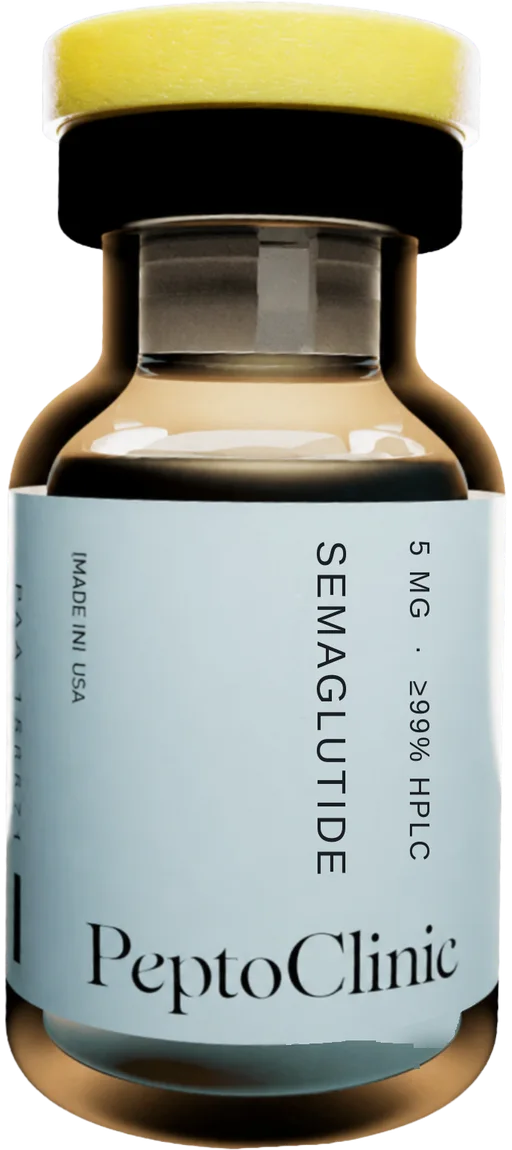
Semaglutide
GLP-1 receptor agonist, the molecule in Ozempic and Wegovy.
- Purity:
- ≥99% HPLC
- Sizes available:
- 5 mg
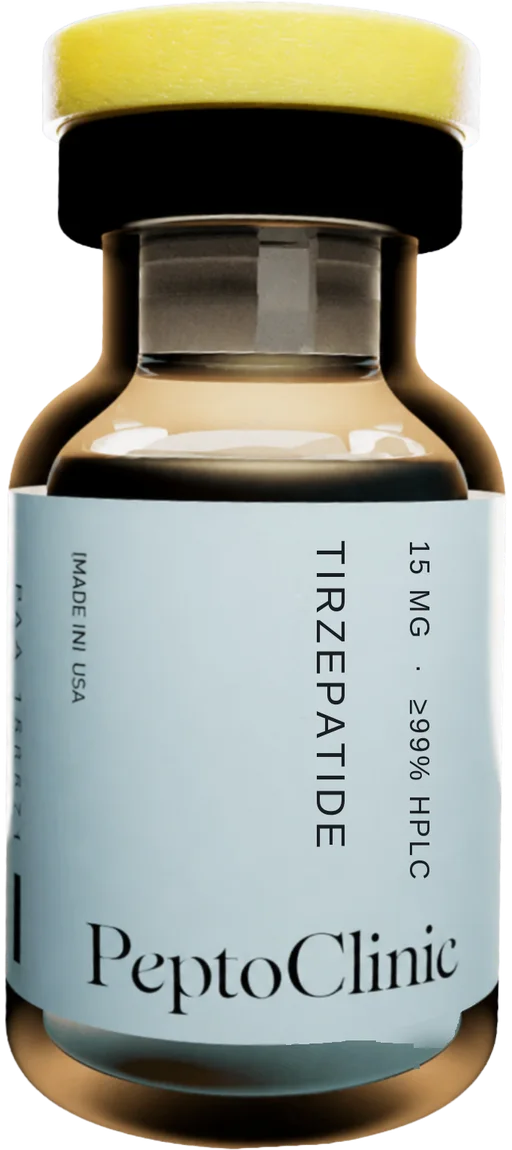
Tirzepatide
Dual GIP and GLP-1 receptor agonist, the molecule in Mounjaro and Zepbound.
- Purity:
- ≥99% HPLC
- Sizes available:
- 15 mg – 30 mg
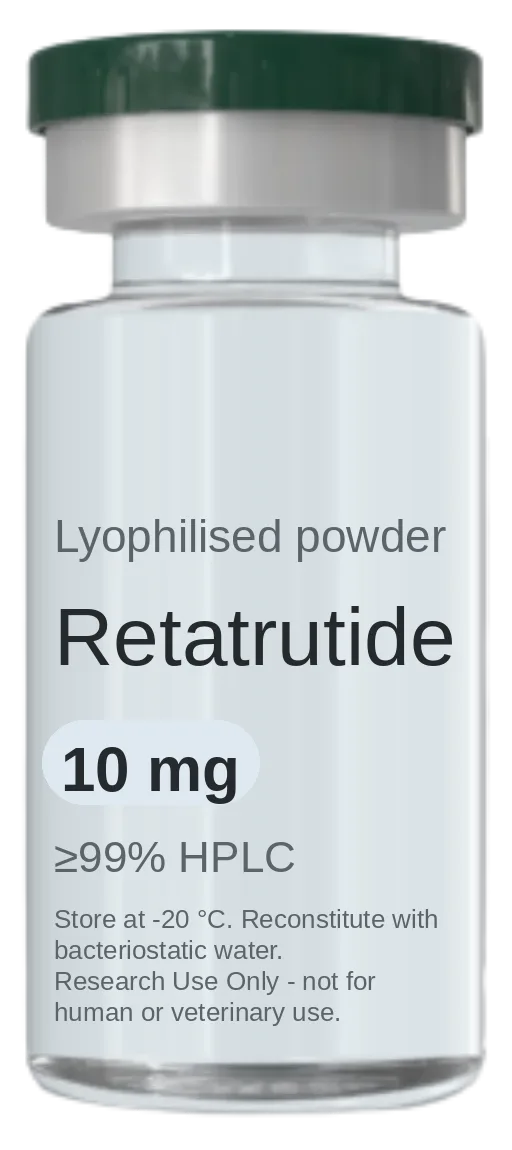
Retatrutide
Triple-agonist metabolic research peptide targeting GLP-1, GIP and glucagon receptors.
- Purity:
- ≥99% HPLC
- Sizes available:
- 10 mg
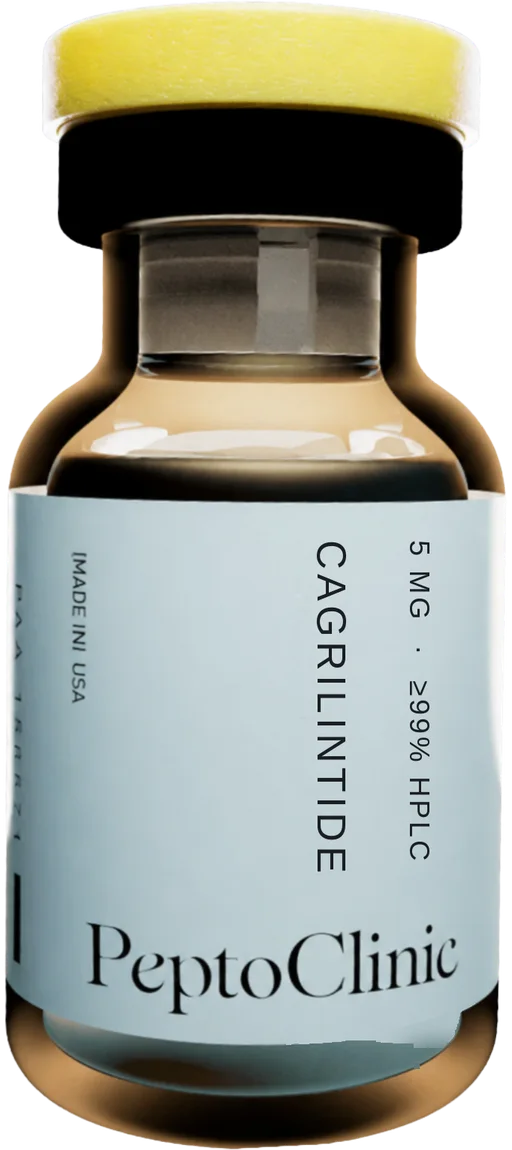
Cagrilintide
Long-acting amylin analogue, the cagrilintide half of CagriSema.
- Purity:
- ≥99% HPLC
- Sizes available:
- 5 mg
The consultation
One intake that settles goals, history and contraindications alongside compound, quantity, documentation and route — reviewed by a physician before anything ships.
More notes
-
Retatrutide vs. Zepbound: Key Differences
Retatrutide and Zepbound are different molecules at different regulatory stages. Here's how they compare, with sources.
-
CagriSema vs Tirzepatide: Key Differences
CagriSema pairs cagrilintide with semaglutide; tirzepatide is a dual GIP/GLP-1 agonist. Compare mechanism, trials, and FDA status.
-
Retatrutide Phase 3 Trials: What We Know
What retatrutide's phase 2 and 3 trials showed, how it compares to tirzepatide and semaglutide, and where FDA approval stands today.
-
Cagrilintide vs Retatrutide: Differences
Cagrilintide targets amylin receptors; retatrutide activates GLP-1, GIP and glucagon. Neither is FDA-approved, and here's what each trial reported.
-
Retatrutide or Semaglutide: Key Differences
Retatrutide is a triple GLP-1/GIP/glucagon agonist; semaglutide activates only GLP-1. How the published literature compares them.