
Note
How Lyophilized Peptides Are Packaged to Ship
A lyophilized peptide ships in five layers: borosilicate vial, inert gas, desiccant, aluminum foil barrier, and verifiable customs documentation.
A lyophilized peptide ships inside five interdependent layers: the primary container, an inert atmosphere sealed within it, a desiccant, a laminated foil moisture barrier, and the customs documentation that classifies the material under international trade law. Each layer addresses a specific degradation vector. When any one fails, what arrives at the laboratory is not the compound described in the certificate of analysis.
The primary container: vial, stopper, and crimp cap
The peptide travels inside a borosilicate glass vial. Borosilicate has a low thermal expansion coefficient and does not react with the contents — unlike soda-lime glass, which can leach alkali ions into the material. The stopper is halobutyl or bromobutyl rubber: it does not release plasticizers, and its water vapor permeability is lower than that of general-purpose elastomers.
The aluminum crimp cap is pressed mechanically over the vial neck, forming a permanent seal. A correctly crimped vial cannot be opened without visibly deforming that cap. When a vial arrives with a bent, scratched, or reseated cap, the seal integrity cannot be assumed.
The powder inside is typically white or off-white and occupies a fraction of the vial volume. Visible browning, yellowing, or aggregate formation are degradation signals, not cosmetic variation.
The internal atmosphere: inert gas before sealing
Before crimping, the headspace of the vial is displaced with an inert gas, typically argon or nitrogen. This step eliminates oxygen, which degrades peptides that contain cysteine, methionine, or thiol groups. Oxidative degradation can reduce compound purity without producing any visible change at the exterior of the vial.
Some manufacturers seal under partial vacuum rather than inert gas. Both approaches prevent oxidation. The practical difference is that a partial vacuum provides an additional visual indicator: the stopper sits slightly concave while internal pressure is lower than external pressure. A convex stopper on a vacuum-sealed vial signals that the seal has been compromised.
Desiccant and moisture barrier
Lyophilization removes the bulk of the water, but operations performed after the drying cycle — including the crimping step itself — expose the product to ambient humidity for seconds. This is why post-lyophilization handling takes place in chambers with controlled relative humidity, typically below 20%.
For shipping, the sealed vial is placed inside a laminated aluminum foil pouch — also called a Mylar or foil bag — together with a desiccant sachet, typically silica gel or 4 Å molecular sieves. The pouch is heat-sealed. This layer isolates the vial from the humidity swings that occur in aircraft cargo holds and customs warehouses, where temperature can cycle between −20 °C and 40 °C within a few hours.
A correctly heat-sealed foil pouch has no wrinkling at the seal line, its corners lie flat, and the desiccant sachet can be felt shifting inside when the pouch is gently moved. If the desiccant carries a color indicator — most shift from blue to pink as they saturate — the condition of the barrier can be assessed without opening it.
Mechanical protection: foam insert and outer box
The sealed pouch sits inside a molded polyethylene or polyurethane foam insert shaped to the vial diameter. The purpose is to prevent microfractures in the glass from sustained vibration — a real risk in air freight, where cargo travels on pallets that oscillate continuously for hours. A vial with a microfracture can look intact and still have lost its seal.
The foam insert goes inside a double-wall corrugated cardboard box. The corners of that box should show no crushing or moisture marks when the shipment arrives.
PeptoClinic's shipping page specifies temperature conditions for each served destination and available packaging configurations by compound.
Customs documentation: what crosses the border
A research peptide crossing an international border requires specific documentation. Without it, the shipment is held or destroyed regardless of product quality.
Standard documentation includes:
- Commercial invoice with the compound's technical description, harmonized tariff code (HS code), declared value, and declared use as laboratory reference material.
- Certificate of Analysis (CoA) for the specific lot, issued by the analytical laboratory that performed the purity test. The CoA must name the laboratory, the task or batch number, the method — HPLC is the standard for peptide purity — and the numerical result. PeptoClinic's reports come from Janoshik Analytical, with a task number that can be verified through the laboratory's online portal.
- Safety Data Sheet (SDS) for the compound, which customs personnel may require to classify the material.
- Research Use Only declaration specifying that the material is strictly for in vitro laboratory research, not for any human or veterinary application.
The RUO declaration is not bureaucratic padding. It is the document that places the shipment within a specific regulatory framework — not as a medicine, supplement, or consumer product, but as a technical input for research. An error in that declaration can reclassify the shipment and change its import requirements entirely.
PeptoClinic's Argentina page details the customs documentation prepared for shipments to that destination.
Lyophilized versus solution format: why it matters for transit
A lyophilized peptide and the same compound in aqueous solution are not equivalent for international shipping. The lyophilized format has minimal water activity, which slows the hydrolytic reactions that degrade the peptide chain. It tolerates the temperatures of normal air freight without meaningful purity loss over the duration of a shipment.
The same compound in solution requires continuous cold chain, is sensitive to freeze-thaw cycling, and has a considerably shorter shelf life. For transit from the origin facility to the receiving laboratory, the lyophilized format preserves compound integrity better than any solution-based alternative.
PeptoClinic's catalogue lists compounds available in lyophilized powder format.
Inspecting the packaging when a shipment arrives
A technically informed receiver inspects the packaging before opening anything. The points to check, in order:
- Outer box: no crushed corners, no visible moisture marks.
- Foam insert: not displaced inside the box.
- Foil pouch: sealed and unpunctured.
- Desiccant sachet: no color change if it carries an indicator.
- Aluminum crimp cap: no deformation.
- Stopper: flat or slightly concave, not convex.
If any of these points is not met, the correct response is to photograph the condition before disturbing anything, then notify the supplier. Opening the pouch without that photographic record complicates any subsequent claim.
Material for laboratory research only
All material supplied by PeptoClinic Research Supply is intended strictly for laboratory research (Research Use Only). It is not approved or cleared for human use, veterinary use, diagnostic use, or therapeutic use. No regulatory authority has evaluated these compounds for any of those purposes. This material is not a medicine, not a supplement, not a consumer product, and does not replace or require a prescription.
The packaging, documentation, and customs declaration reflect that framework. A shipment documented as research material operates under different regulatory requirements than a shipment documented as a health product.
PeptoClinic's quality page describes the documentation framework that accompanies each lot.
Frequently asked questions
Why must the vial be borosilicate glass and not plastic?
Borosilicate glass does not release plasticizers or organic compounds into the contents, unlike most polymers. It also has lower water vapor permeability than polypropylene or polyethylene. For research peptides, borosilicate is the industry standard precisely because it introduces the fewest contamination variables of any available container material.
How long can a lyophilized peptide remain in transit without degrading?
A lyophilized peptide correctly sealed in a borosilicate vial under inert atmosphere tolerates international air transit without meaningful purity loss over the duration of a shipment. Substantial degradation within that window would indicate a vial with a seal defect or a compromised moisture barrier — not a consequence of normal air freight temperatures.
What does a CoA need to say to be useful?
The certificate of analysis must name the laboratory, the task or analysis identifier, the method — HPLC is the standard for peptide purity — the analysis date, and a numerical result. A CoA that states a purity figure without a task number and without a named laboratory is not independently verifiable. The distinguishing element between a verifiable CoA and a decorative one is that task number, which allows the result to be looked up on the laboratory's portal.
Is the foil barrier necessary if the vial is already sealed?
Yes. The rubber stopper has a finite water vapor permeability — low, but not zero. Over months of storage, that permeability allows humidity to accumulate inside the vial. The foil barrier with desiccant reduces the water activity in the space immediately surrounding the vial and protects against the extreme humidity cycling that occurs in cargo holds and customs warehouses. It is an additional layer over the seal, not a redundant one.
What does the HS code do in the customs declaration?
The harmonized tariff code classifies the material within the international nomenclature system and determines applicable duties, restrictions, and the inspection channel. A research peptide classified incorrectly — as a finished pharmaceutical product instead of a laboratory reagent, for example — can be held until the classification is corrected, or destroyed outright. Assigning the correct code is the supplier's responsibility, based on the actual nature of the material.
Do lyophilized peptides require cold chain during shipment?
In most cases, no — not during transit. The water activity of a lyophilized compound is low enough that air freight temperatures do not cause degradation over the duration of an international shipment. Cold chain becomes relevant for long-term storage once the material reaches the laboratory, and it is essential for peptides in solution, which behave entirely differently from lyophilized material.
What does a saturated desiccant sachet indicate when a shipment arrives?
A saturated desiccant indicates that the foil barrier was exposed to ambient humidity at some point during transit. This does not necessarily mean the peptide degraded — the desiccant may have absorbed humidity before it reached the stopper — but it does mean the packaging conditions were not maintained as intended. The correct response is to photograph the state before opening anything and notify the supplier with those images.
How do I confirm the peptide that arrived matches the CoA?
The CoA is issued for a specific lot, and the lot number appears on the vial label. Matching the label lot number against the CoA is the first verification. The next step is confirming that the CoA is independently verifiable through the analytical laboratory's portal — a task number that can be searched on the laboratory's website. If the laboratory has no public verification portal, there is no way to confirm the analysis exists independently of the document that shipped with the order.
Compounds mentioned
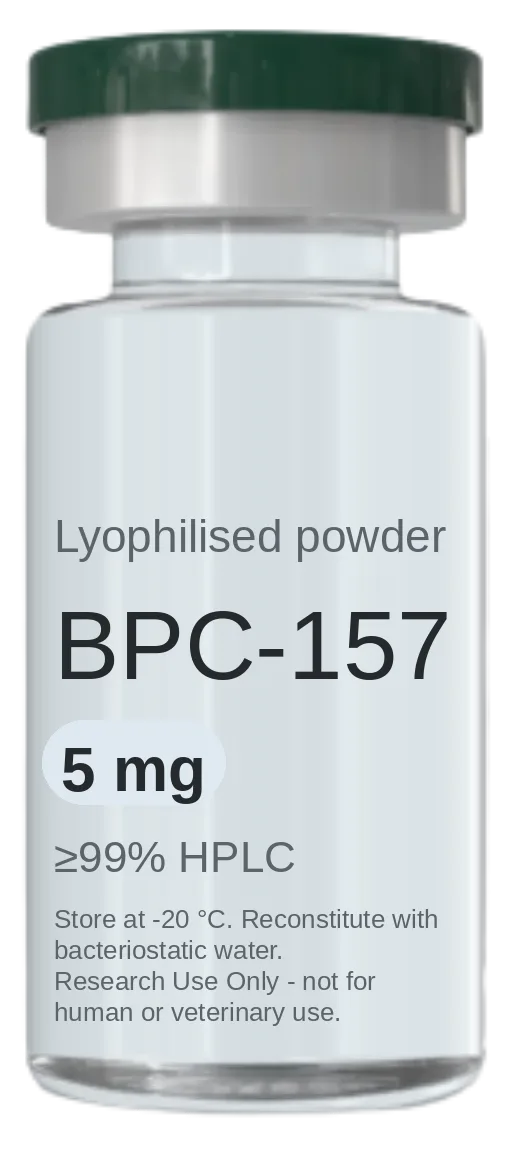
BPC-157 + TB-500
BPC-157 and TB-500 in a single vial — the pairing most studied together in tissue-repair research.
- Purity:
- ≥99% HPLC
- Sizes available:
- 5 mg + 5 mg
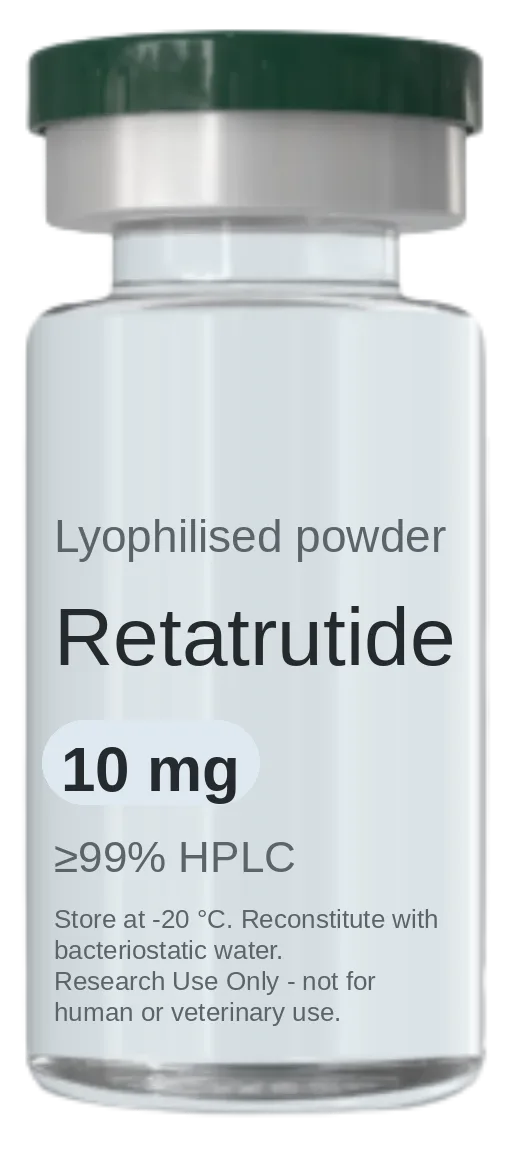
Retatrutide
Triple-agonist metabolic research peptide targeting GLP-1, GIP and glucagon receptors.
- Purity:
- ≥99% HPLC
- Sizes available:
- 10 mg
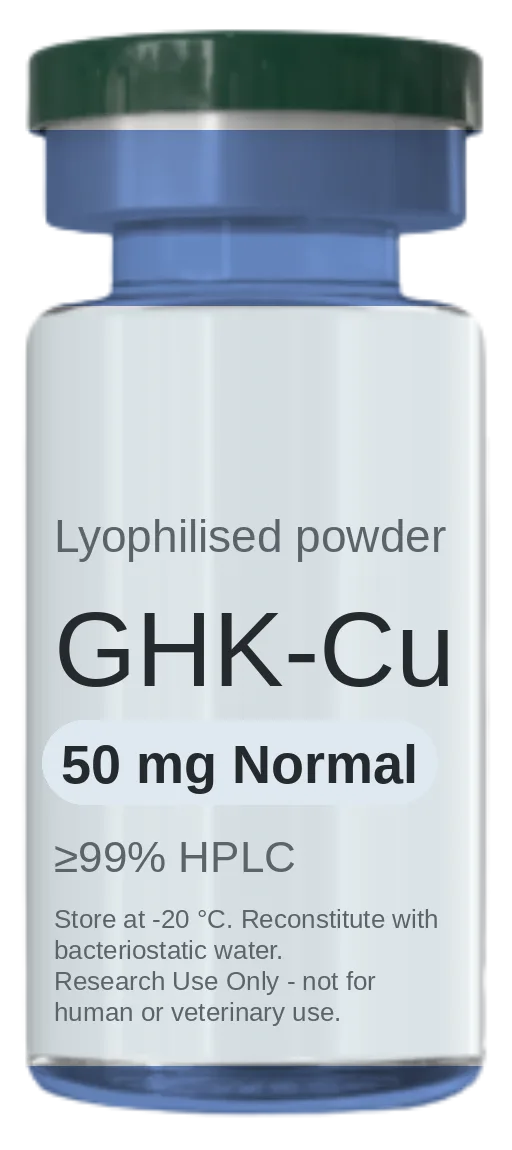
GHK-Cu (Copper Peptide)
Copper-binding tripeptide studied in extracellular matrix and dermal research models.
- Purity:
- ≥99% HPLC
- Sizes available:
- 50 mg Normal – 50 mg Plus
The consultation
One intake that settles goals, history and contraindications alongside compound, quantity, documentation and route — reviewed by a physician before anything ships.
More notes
-
No Certificate of Analysis, No Peptides
What it means when a research peptide supplier can't produce the batch-specific certificate of analysis, and why that gap alone is disqualifying.
-
Bonded Warehouse Deadline Before Abandonment
Argentine customs gives importers roughly 90 days to clear research peptides from bonded storage before the lot is declared abandoned.
-
What Is Argentina's Statistics Fee?
Argentina's statistics fee adds to the cost of importing a research peptide: what it taxes, how it's calculated, and what paperwork matters.