
Note
Research Reagents You Can Import to Argentina
Which RUO peptides and reagents can enter Argentina without ANMAT registration, and what documentation customs requires for each shipment.
Research reagents labeled For Research Use Only (RUO) and destined exclusively for laboratory work can be imported into Argentina without prior authorization or registration with ANMAT. The agency regulates medicines, foods, cosmetics, and in vitro diagnostic reagents for clinical use; the category of research reagent — material that is not administered to humans or animals — falls outside its jurisdiction.
Why the category matters
Argentina's Law 16.463, the framework statute on medicines, defines its scope as covering "drugs, chemical products, reagents and pharmaceutical forms used in human and veterinary medicine." The operative phrase is "used in": it is the declared use, not the molecule, that determines whether a material falls under ANMAT's authority.
A synthetic peptide purchased by a university laboratory to study its activity on cellular receptors in in vitro culture carries no therapeutic indication and no dosing schedule. There is no patient. ANMAT has no jurisdiction over it because it is not being used in human or veterinary medicine.
The same distinction applies to peptides that today's scientific literature is actively investigating: Retatrutide, BPC-157, MOTS-c, GHK-Cu, and others. When these compounds enter Argentina with an RUO label and research documentation, customs classifies them as laboratory reagents, not as medicines.
What can be imported under this category
The framework admits chemically synthesized compounds intended for laboratory research: peptides, modified amino acids, hormone analogues, organic compounds with biological activity under study. The conditions are that the material is correctly characterized and labeled, carries no declaration of human or veterinary use, and is supported by the corresponding documentation.
Not covered by this category: in vitro diagnostic reagents destined for clinical laboratories to diagnose patients — those have their own authorization regime under ANMAT. Also excluded: complex biological materials such as living organisms, tissue derivatives, and genetic material, which may require SENASA involvement. Synthetic peptides in lyophilized vials are organic compounds; SENASA does not intervene in those shipments.
The documentation customs requires
The criterion customs applies is not what molecule the contents are, but what the accompanying documentation declares them to be. A package without a research-use declaration, without a certificate of analysis, and without RUO labeling has no defined category: it cannot enter as a medicine (no ANMAT registration), and it lacks documentation to enter as a reagent.
The minimum documentation for a research-reagent shipment to Argentina includes:
- Commercial invoice with the technical description of the compound and the statement "For Research Use Only — Not for Human or Animal Use"
- Certificate of analysis issued by an independent analytical laboratory, with lot number, method used, and purity result
- Safety data sheet (SDS) for the compound
- Importer's declaration of research destination
With that set of documents, the material enters under the tariff heading for organic compounds or synthetic peptides, without ANMAT involvement.
The certificate of analysis as the central document
The certificate of analysis (CoA) identifies the compound with technical precision: molecule name, formula, molecular weight, purity measured by the appropriate method (typically HPLC), lot number, and issuing laboratory. It is the document that converts a white powder into a verifiable chemical identity.
A certificate with a task number published by the issuing laboratory on its own site is more robust than one that cannot be independently consulted. Janoshik Analytical, based in Europe, publishes its analyses in verifiable form. Task 136921 determined that a lot of Retatrutide contained 99.893% purity by HPLC. Task 136923 found 99.669% in a lot of MOTS-c. Both analyses were conducted on April 13, 2026.
A certificate without a verifiable task number is a sheet with figures: there is no way to determine whether it comes from a real analysis or a template. The presence of the number and the ability to consult it on the laboratory's site is what gives the document its value, both for research work and before customs.
PeptoClinic's quality page explains each field of a certificate of analysis and what questions to ask a supplier before ordering.
The limit: what does require ANMAT authorization
The limit lies in the use. Any material that is declared, dispensed, or administered to persons requires ANMAT registration without exception. A peptide active ingredient sold to pharmacies or used in a clinic must appear in the VADEMECUM. An in vitro diagnostic reagent used in a clinical laboratory to diagnose patients also requires authorization, under ANMAT's IVD regime.
That boundary is not ambiguous: if the material goes to persons, ANMAT is involved. If the material goes to a laboratory for in vitro research, it is not. What changes is not the molecule; it is the declared use and the actual recipient.
ANMAT's official site publishes the lists of products with active registration and the applicable regulations for each category. Law 16.463 and its regulatory decree 9763/64 are available at InfoLeg, Argentina's national legislation server.
Material exclusively for laboratory research
The entire PeptoClinic catalogue is supplied strictly for laboratory research and in vitro use. The compounds are not approved or evaluated by ANMAT, the FDA, or any health authority for use in humans or animals. They are not medicines, not supplements, and not foods.
PeptoClinic does not provide guidance on administration to persons, does not write or review protocols for human use, and does not handle requests that involve consumption by individuals. The destination of all material is laboratory work exclusively.
How to request a quote for shipments to Argentina
PeptoClinic quotes shipments to Argentina with the import file prepared for each lot. Every order carries a Janoshik Analytical certificate of analysis with a verifiable task number, RUO labeling on the vial and outer packaging, and a commercial invoice with the technical description of the compound.
The process is not an online purchase: the researcher describes the compound, the quantity, and the purpose of the research, and the technical team returns a written quote, normally within one business day. The channel is [email protected].
Frequently asked questions
Does a synthetic peptide need ANMAT registration to enter Argentina?
No, if it enters labeled as RUO material destined for laboratory research. ANMAT regulates medicines, IVD reagents for clinical use, and other products with therapeutic or diagnostic purpose for persons. A synthetic peptide for laboratory work falls outside that scope.
What documents must the package carry to clear customs?
The minimum documentation includes a commercial invoice with the RUO statement and the technical description of the compound, a certificate of analysis with a lot number and purity result issued by an independent laboratory, and a safety data sheet (SDS). PeptoClinic prepares that file for every shipment to Argentina.
Does SENASA have any authority over synthetic peptides?
No. SENASA regulates living organisms, animal tissue derivatives, and genetic material. Synthetic peptides are chemically synthesized organic compounds, not organisms or biological extracts, and do not require SENASA authorization to enter the country.
What happens if customs holds the shipment?
The most common cause of detention is incomplete documentation or an ambiguous use declaration. A package without a certificate of analysis, without RUO labeling, or with an insufficient description on the invoice can be held while additional information is requested. Correct documentation from the point of origin prevents that.
How do I know the certificate of analysis is real and not a template?
A verifiable CoA carries a task or lot number that can be consulted on the issuing laboratory's site. The four lots published by PeptoClinic correspond to Janoshik Analytical analyses with verifiable task numbers. If a supplier cannot provide a task number that leads to a published result, the certificate is not independently verifiable. More on reading a CoA on [the quality page](/en/quality/).
Can all peptides be imported as research reagents?
Chemically synthesized peptides with RUO labeling and complete documentation enter without difficulty. Complex biological materials, compounds subject to special controls such as precursors of scheduled substances, or any material declared for use in persons are governed by different frameworks and may require additional procedures or specific authorization.
Does PeptoClinic ship to Argentina with the customs file included?
Yes. PeptoClinic quotes shipments to destinations in Argentina with the import file prepared for each lot. Material arrives in sealed lyophilized vials, the form that tolerates ambient transit.
What is the first step to get a quote?
Describe the compound, the approximate quantity, and the purpose of the research to [email protected]. The written quote is normally returned within one business day.
Compounds mentioned
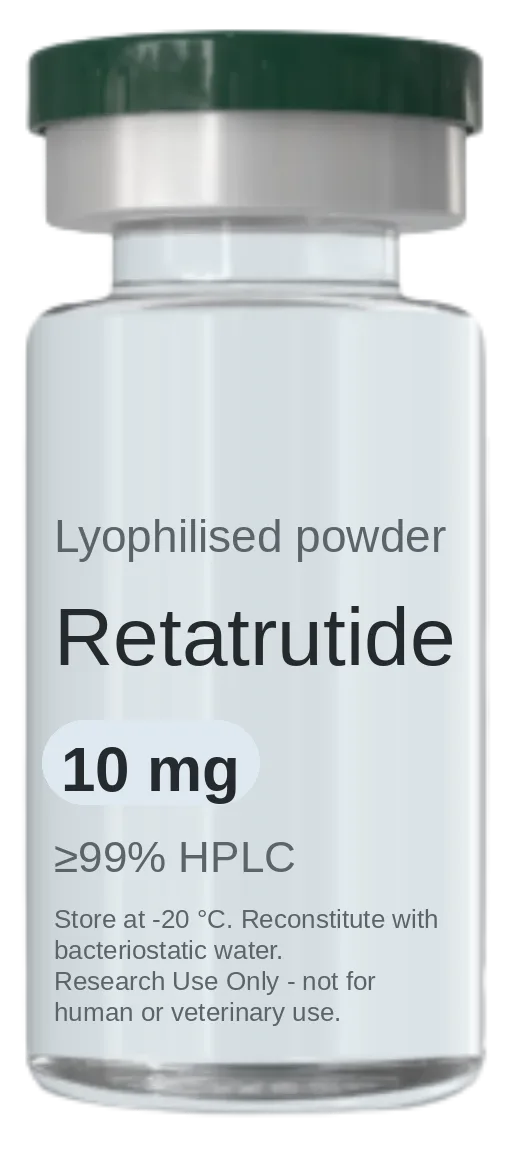
Retatrutide
Triple-agonist metabolic research peptide targeting GLP-1, GIP and glucagon receptors.
- Purity:
- ≥99% HPLC
- Sizes available:
- 10 mg
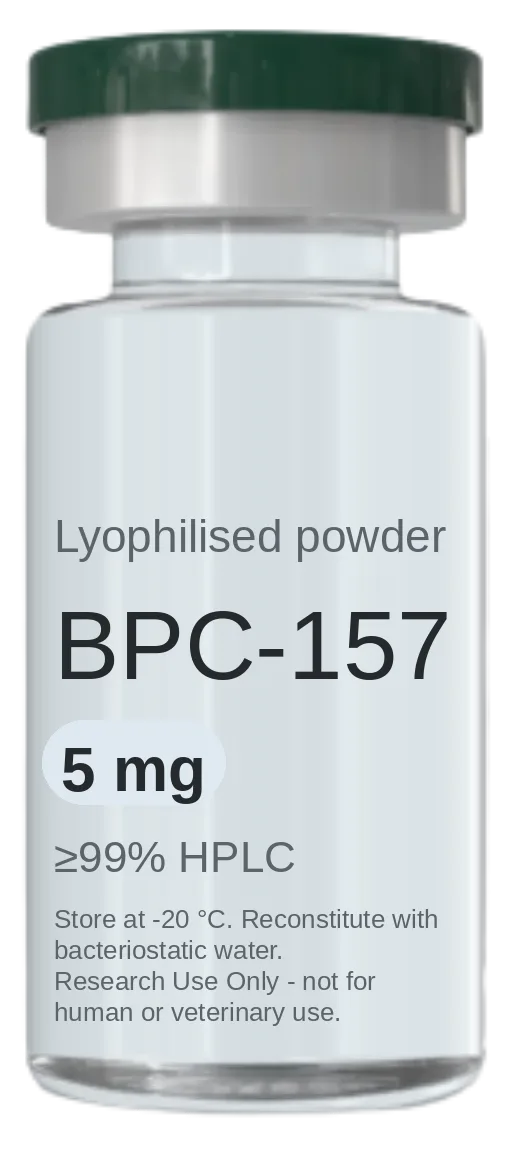
BPC-157 + TB-500
BPC-157 and TB-500 in a single vial — the pairing most studied together in tissue-repair research.
- Purity:
- ≥99% HPLC
- Sizes available:
- 5 mg + 5 mg
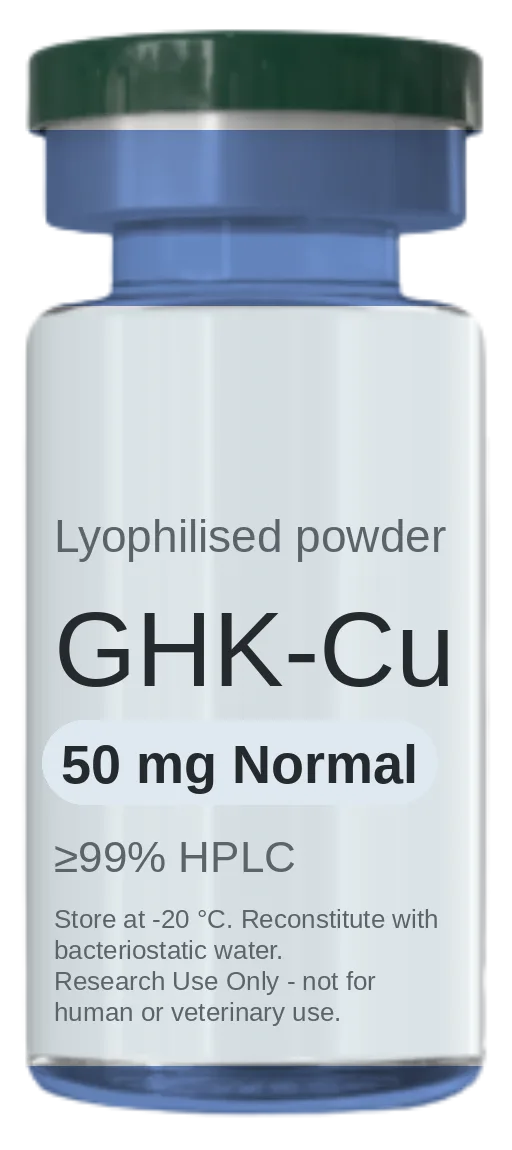
GHK-Cu (Copper Peptide)
Copper-binding tripeptide studied in extracellular matrix and dermal research models.
- Purity:
- ≥99% HPLC
- Sizes available:
- 50 mg Normal – 50 mg Plus
The consultation
One intake that settles goals, history and contraindications alongside compound, quantity, documentation and route — reviewed by a physician before anything ships.
More notes
-
Bonded Warehouse Deadline Before Abandonment
Argentine customs gives importers roughly 90 days to clear research peptides from bonded storage before the lot is declared abandoned.
-
What Is Argentina's Statistics Fee?
Argentina's statistics fee adds to the cost of importing a research peptide: what it taxes, how it's calculated, and what paperwork matters.
-
Thymosin Alpha 1 vs BPC-157: Differences
Thymosin Alpha 1 and BPC-157 study different pathways — immune modulation vs tissue repair. RUO material with a verifiable COA.