
Note
How to Store a Lyophilized Peptide
Temperature, humidity, light, and freeze-thaw cycles: what the laboratory needs to know to store lyophilized peptides without degrading them.
A lyophilized peptide in dry powder form is stored at −20 °C, inside a sealed vial, away from moisture and protected from light. If the vial has stayed sealed since synthesis and the purity analysis supports it, a properly stored peptide can remain stable for years. What degrades it is not time: it is water, heat, and UV exposure.
Why lyophilized powder is more stable than liquid form
Lyophilization removes free water from the peptide by vacuum sublimation. Without free water, most degradation reactions — peptide hydrolysis, oxidation, racemization — stop or slow to rates that are irrelevant over a laboratory's working horizon. The solid form arrives at the lab with the purity that HPLC analysis measured; the reconstituted form begins losing that purity from the moment solvent contacts the powder.
That difference is why the industry standard is to ship research peptides as lyophilized powders. The lot analysis — which measures the compound in that state — reflects what the researcher will find when opening the vial, provided storage conditions are respected throughout.
Temperature: −20 °C as the baseline, −80 °C when there is reason
−20 °C is the standard range for the large majority of peptides in lyophilized powder form. At that temperature, degradation reactions are slow enough that stability routinely exceeds twelve months without measurable purity loss in a properly sealed vial.
−80 °C is reserved for peptides that the manufacturer or the peer-reviewed literature identifies as particularly labile: long sequences with multiple disulfide bridges, peptides that have shown measurable degradation even at −20 °C, or lots destined for very long-term archival storage. It is not a mandatory step for everything that arrives at the lab; applying it routinely where it is not needed adds cost without meaningful benefit for most compounds.
4 °C is suitable only for short-term use — days, not weeks — and always with desiccant inside the container. A vial left open at refrigerator temperature is not a storage condition.
Humidity: damage that is invisible until it is measured
A lyophilized peptide is hygroscopic. If the powder absorbs ambient moisture, the reactions that lyophilization had halted restart. The result is not visible to the eye: the powder still looks like powder. But an HPLC analysis run after a moisture exposure event can show a degradation profile indicating that a portion of the compound is no longer the molecule the certificate described.
Three practices protect against moisture in the laboratory:
- Equilibrate the vial to room temperature before opening it. A cold vial taken directly from the freezer and opened in a laboratory at 22 °C with 50 % relative humidity will condense moisture on the powder the moment the cap is removed. The hygroscopic material absorbs that water in seconds. Leaving the closed vial on the bench for twenty to thirty minutes — until it reaches ambient temperature — prevents condensation.
- Open for the minimum time necessary. What is not needed for the current working session is not opened. Every opening is an exposure event.
- Keep desiccant in the storage container. Vials are kept in containers with active silica gel or desiccants certified for use at sub-zero temperatures. The desiccant packet shipped with the lot is not decorative.
Light and peptides with aromatic residues
Peptides containing tyrosine, phenylalanine, tryptophan, or histidine — aromatic residues — are sensitive to UV radiation. Exposure to direct or indirect UV light can oxidize those side chains and produce degradation products that were not present in the original lot analysis.
Standard practice is to store vials in opaque containers or in freezers without active interior lighting, and to minimize exposure time during bench work. Amber vials reduce UV transmission but are not a substitute for dark storage: an amber vial held under UV light for an extended period will still degrade.
For compounds such as GHK-Cu, which contains copper coordinated with the peptide chain, light sensitivity compounds with oxidation sensitivity. The storage protocol for that compound needs to account for both variables simultaneously.
Freeze-thaw cycles
Each freeze-thaw cycle introduces mechanical stress on the peptide structure. A vial that is thawed, partially used, and refrozen repeatedly shows, on successive analyses, cumulative degradation that would not have occurred had the same lot been divided before the first freeze.
Aliquoting before the first freeze is the standard solution: before the initial freezing, the lot is divided into working units — each representing exactly the material needed for one research session. Each aliquot is thawed once, used, and any excess discarded. The remainder of the lot stays untouched.
The size of each aliquot depends on the experimental design. What matters is that the rationale is documented in the laboratory notebook alongside the lot's purity analysis task number, so that experimental results remain traceable to the exact lot and the conditions under which it was held.
After reconstitution
Once reconstituted in the appropriate solvent for each assay, peptide stability drops by several orders of magnitude compared to the lyophilized powder. Most peptides in aqueous solution begin degrading at refrigerator temperature within hours or days, depending on buffer pH, concentration, and the specific sequence.
If the assay protocol does not consume the entire solution on the day it is prepared, pre-made aliquots can be frozen at −20 °C and thawed once. But shelf life in solution — even frozen — is far shorter than that of the unreconstituted lyophilized powder.
The choice of solvent matters here. Bacteriostatic water prolongs solution stability through its antimicrobial agent, which is why it is the standard diluent in many laboratory protocols when a preparation will be used across more than one session.
The starting point: lot purity
No storage condition compensates for a degraded starting point. A peptide that arrived at the lab at 85 % purity will not become purer in the freezer. The degradation products already present will remain.
Before designing a storage protocol, the first step is verifying the lot's certificate of analysis (CoA). A CoA from a credible supplier names the laboratory that performed the analysis, the exact date, the task number, and the numerical HPLC purity result. PeptoClinic Research Supply publishes lot CoAs at peptoclinic.com/en/quality/, all analysed by Janoshik Analytical. The lowest purity published across all lots is 99.669 % by HPLC.
If a CoA carries no laboratory name, no task number, and no date, the figure it displays cannot be independently verified. That is not a storage problem — that is a sourcing problem.
For laboratory research only
The peptides distributed by PeptoClinic Research Supply are supplied strictly for Research Use Only (RUO): in vitro assays and laboratory work. They are not medicines. They are not approved by any regulatory authority for human or veterinary use, and they are not supplied for those purposes. The storage guidance in this article is written for the research laboratory context.
The PeptoClinic catalogue lists currently available compounds with their presentations. For international shipments, including how the material travels and import guidance, the shipping page has the relevant information.
Frequently asked questions
At what temperature should a lyophilized peptide be stored in the laboratory?
At −20 °C for the large majority of compounds in powder form. −80 °C is justified for peptides the literature identifies as particularly labile, or for very long-term archival storage. At room temperature, degradation is rapid and no adjustment to humidity or light conditions compensates for it.
How long does a lyophilized peptide remain stable in proper storage?
In correct conditions — sealed vial, −20 °C, no moisture or light exposure — most lyophilized peptides in powder form retain their purity for two years or more. Degradation begins when one of those conditions fails, not from the passage of time alone.
Why should you wait before opening a vial taken from the freezer?
A cold vial opened in a warmer, humid laboratory environment condenses moisture on the powder the instant the cap comes off. The hygroscopic material absorbs that water in seconds, restarting the same reactions that lyophilization had halted. Allowing the sealed vial to equilibrate to room temperature before opening prevents that condensation from occurring.
How many freeze-thaw cycles can a lyophilized peptide tolerate?
There is no single universal number: it depends on the sequence, concentration, and the exact thermal conditions of each cycle. Standard practice is to design storage so that each aliquot goes through exactly one cycle. Dividing the lot into aliquots before the first freeze is the way to guarantee that.
What does desiccant do in a peptide storage container?
An active desiccant absorbs moisture from the air inside the storage container. Without it, even a nominally sealed vial in a freezer that is opened periodically can accumulate enough humidity over time to degrade the compound. Silica gel is the most common choice; the grade used should be appropriate for sub-zero storage temperatures.
Does the colour of the vial affect storage?
Amber vials reduce UV transmission, which offers protection for peptides containing aromatic residues. But an amber vial is not a substitute for dark storage: it attenuates UV, it does not block it. The correct combination is an amber vial inside an opaque container, or a freezer without active interior lighting.
What should a credible certificate of analysis include?
A credible CoA names the laboratory that performed the analysis, the exact date of the analysis, a task number that can be verified in the laboratory's own system, the methodology used — typically HPLC — and the numerical purity result. A CoA that shows only a percentage without those supporting details permits no independent verification.
Where can I find PeptoClinic's lot certificates?
They are published at [peptoclinic.com/en/quality/](/en/quality/). Each corresponds to a Janoshik Analytical report with a task number and date. The lowest result published across all lots is 99.669 % by HPLC.
Compounds mentioned
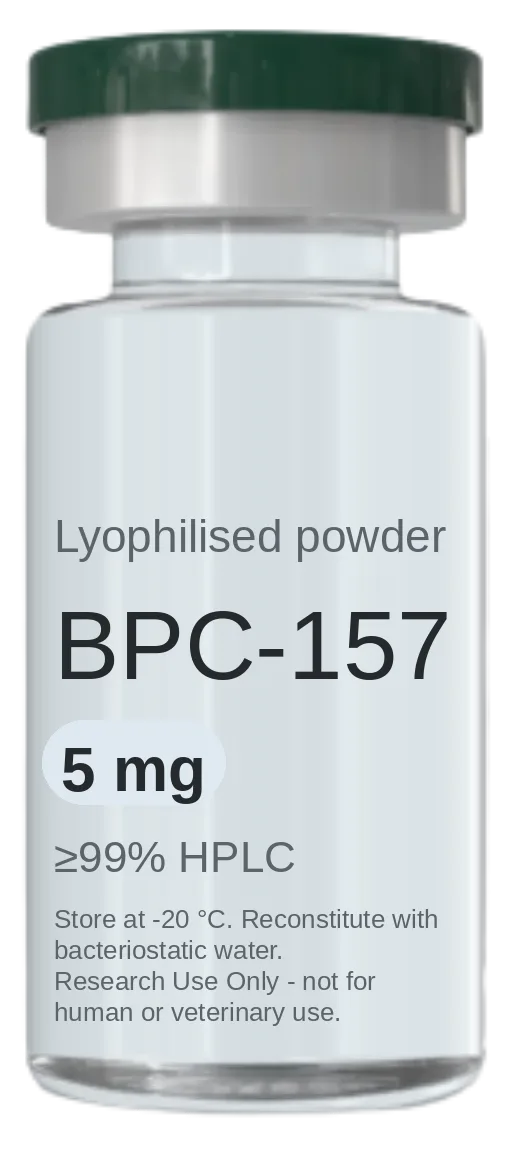
BPC-157 + TB-500
BPC-157 and TB-500 in a single vial — the pairing most studied together in tissue-repair research.
- Purity:
- ≥99% HPLC
- Sizes available:
- 5 mg + 5 mg
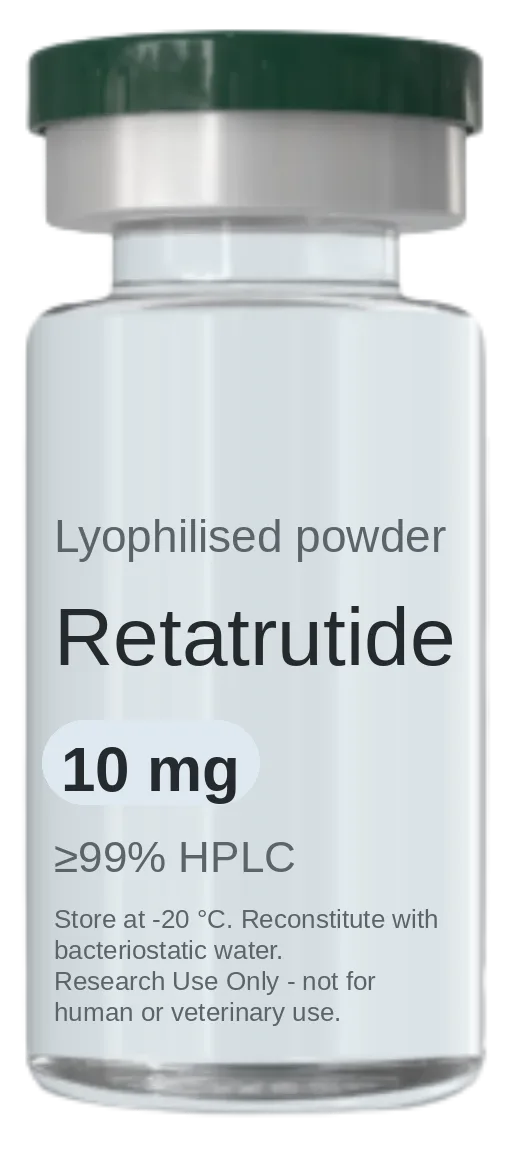
Retatrutide
Triple-agonist metabolic research peptide targeting GLP-1, GIP and glucagon receptors.
- Purity:
- ≥99% HPLC
- Sizes available:
- 10 mg
The consultation
One intake that settles goals, history and contraindications alongside compound, quantity, documentation and route — reviewed by a physician before anything ships.
More notes
-
Peptide Invoice: What Argentine Customs Wants
What a research peptide invoice needs so Argentine customs releases the shipment instead of holding it in bonded storage.
-
Hexarelin vs CJC-1295: The Differences
Hexarelin is a ghrelin-mimetic GHRP; CJC-1295 is a GHRH analog. What separates the two mechanisms and their documentation.
-
Certificate of Origin to Import Peptides?
Do you need a certificate of origin to import research peptides into Argentina? What customs actually asks for, and what document matters.