
Note
Import Code for Peptides in Argentina
What code Argentine customs requires to receive research peptide shipments, and when your courier already covers it.
You do not automatically need your own Import Code to receive research peptides in Argentina. It depends on the channel the shipment travels through. If the package enters as courier under the simplified regime, the courier company declares it under its own customs code and you only need a CUIT or CUIL. If the shipment enters through the formal import channel — because of volume, declared value, or the way the dispatcher chooses to process it — you need to be registered as an importer with ARCA (Argentina's former AFIP) before the goods arrive.
What the Import Code Is and Who Issues It
The Import/Export Code is an authorization issued by ARCA (Agencia de Recaudación y Control Aduanero, the agency that was called AFIP until 2026) inside its Special Customs Registry. It is not a separate procedure from your tax registration: it is built on top of your CUIT, requires Level 3 Clave Fiscal, and once granted it is tied to your record in the Sistema Registral. It is the number a licensed customs broker (despachante de aduana) uses to declare goods in your name inside the import monitoring system (SIMI), which replaced the old DJAI.
The code does not classify what you are importing — the tariff position (NCM) of the product does that. It identifies who is importing. It is the customs identity of the importer, not a specific authorization for peptides.
When You Need Your Own Code — and When You Don't
The difference comes down to the entry channel:
- Postal or courier shipments under the simplified regime. International couriers operate under their own customs authorization and file the declaration on your behalf, within certain thresholds of value and of the number of shipments per year. Under this scheme you don't need to register your own Import Code — a CUIT or CUIL is enough to identify the transaction for tax purposes. Those thresholds change over time, so it's worth confirming them with whoever is handling the shipment rather than assuming your case qualifies.
- Formal import channel. If the volume, the declared value, or the nature of the shipment exceeds what the simplified regime covers, it has to be declared through the general circuit. In that case, whoever is listed as the recipient needs to be registered in ARCA's Import Registry before the shipment arrives — this is not something resolved at customs on the same day.
Most research peptide shipments to laboratories and individual researchers in Argentina travel as small packages with a low declared value, and end up in the simplified courier circuit. That's not a fixed rule, though — it depends on the specifics of each shipment, not on the product itself. Shipments to Argentina are quoted individually with the documentation that matches the channel the order will actually travel through.
Steps to Register as an Importer, If Your Case Requires It
If the volume or frequency of your imports justifies having your own code, the process involves:
1. Having an active CUIT and Level 3 Clave Fiscal (arranged in person at ARCA if you don't already hold that level). 2. Registering in the Sistema Registral as an importer/exporter, declaring the activity. 3. Enabling the Sistema Informático María (SIM) service, or its current successor, which is where declarations are filed. 4. Setting up an electronic fiscal domicile, if you don't have one already.
In practice almost nobody handles this alone — a licensed customs broker manages it, and is also the person who knows how to correctly classify the product's tariff position and assemble the documentation customs will ask for when the shipment arrives.
What Argentine Customs Wants for a Research Peptide, Beyond the Code
The importer's code is one piece. What actually determines whether a shipment clears or gets held up is the documentation that travels with it:
- Commercial invoice with an exact description of the product and its declared use.
- Declaration of use: that the material is intended for laboratory research (RUO — Research Use Only), not for human or veterinary consumption. This wording, stated on the shipping documentation, is what keeps customs from classifying it as a pharmaceutical or food product — categories with entirely different requirements.
- Certificate of analysis (COA) for the batch, if the customs agent asks for one to confirm identity and purity of the compound. This is the same document referenced on the quality page, where each report is tied to a specific lot.
- Correct tariff position (NCM), which varies by peptide and by its presentation (lyophilized powder in a vial, for example). This is confirmed by whoever dispatches the shipment, not something to assume from memory.
A shipment correctly declared as laboratory reference material, with invoice and paperwork that are internally consistent, moves through customs with less friction than one where the documentation is ambiguous about what the product actually is. PeptoClinic prepares the customs file for each shipment to Argentina as laboratory reference material, and that documentation matters as much to a clean clearance as the importer's code itself.
Why This Matters More for Large Orders Than a Single Vial
If you're receiving one or two vials for your own lab work, your shipment most likely enters through the simplified courier circuit without any extra paperwork on your end — the courier already has its own code and its own process. The Import Code becomes a real consideration when a laboratory or institution starts receiving orders with some regularity, or in quantities that exceed the simplified regime: that's when it makes sense to resolve the registration in advance, rather than after a shipment is already sitting in bonded storage waiting on a declaration that can't be filed without the code.
Compounds such as retatrutide, BPC-157 or MOTS-c travel with consistent laboratory documentation on every shipment, regardless of which channel they enter through — the traceability behind the certificate of analysis doesn't change depending on how the import was declared. The full range of compounds available is in the catalog.
Laboratory Research Material Only — Not for Human or Veterinary Use
Everything described here applies to material supplied strictly for research use (RUO): in vitro and laboratory research. None of this is a medicine, a supplement or a food, none of it is approved for human or veterinary consumption, and none of these statements has been evaluated by ANMAT or any equivalent regulatory authority. The customs documentation reflects exactly that: laboratory reference material, not a product intended for therapeutic use.
Frequently asked questions
Does every peptide shipment to Argentina need an Import Code?
No. Shipments entering through the simplified courier regime are declared by the courier company under its own customs authorization, and the recipient only needs a CUIT or CUIL. Your own code becomes necessary only when the shipment has to move through the formal import channel.
Where is the Import Code issued?
ARCA (the former AFIP) issues it through its Special Customs Registry, built on top of your CUIT and Level 3 Clave Fiscal. Most importers handle the process through a licensed customs broker, who also prepares the declaration for each shipment.
Can an individual register for the code, or is it only for companies?
An individual with a CUIT can register for it — no company structure is required. What determines whether it's needed at all is the entry channel and volume of the shipment, not the legal form of the recipient.
What happens if my shipment arrives through the formal channel and I don't have the code?
The goods stay in bonded storage until the importer registration is resolved, because without the code the declaration can't be filed in the import monitoring system. It's worth resolving the registration before the shipment is in transit if you already know it will move through that channel.
Is the tariff position (NCM) the same for every peptide?
Not necessarily. It varies by compound and by its presentation, and it's confirmed by whoever dispatches the shipment or prepares the documentation. It's not something to assume without checking case by case.
Does the certificate of analysis replace the Import Code?
No, they serve different purposes. The Import Code identifies who is importing; the certificate of analysis (COA) identifies and certifies the specific batch being shipped. Customs can ask for both, each for a different reason.
Does PeptoClinic handle the Import Code registration for me?
PeptoClinic prepares the customs file for each shipment to Argentina — invoice, declaration of use as research material, and batch documentation — as part of the quote. Registering the Import Code itself, when a case requires it, is a procedure the recipient completes with ARCA, with or without the assistance of a customs broker.
Does anything change if the order is for an institutional laboratory instead of an individual?
The registration itself is the same ARCA process for any CUIT. What usually changes is frequency and volume: a laboratory with recurring orders is more likely to exceed the thresholds of the simplified regime, which is why it makes sense to evaluate registering as an importer before it becomes urgent.
Compounds mentioned
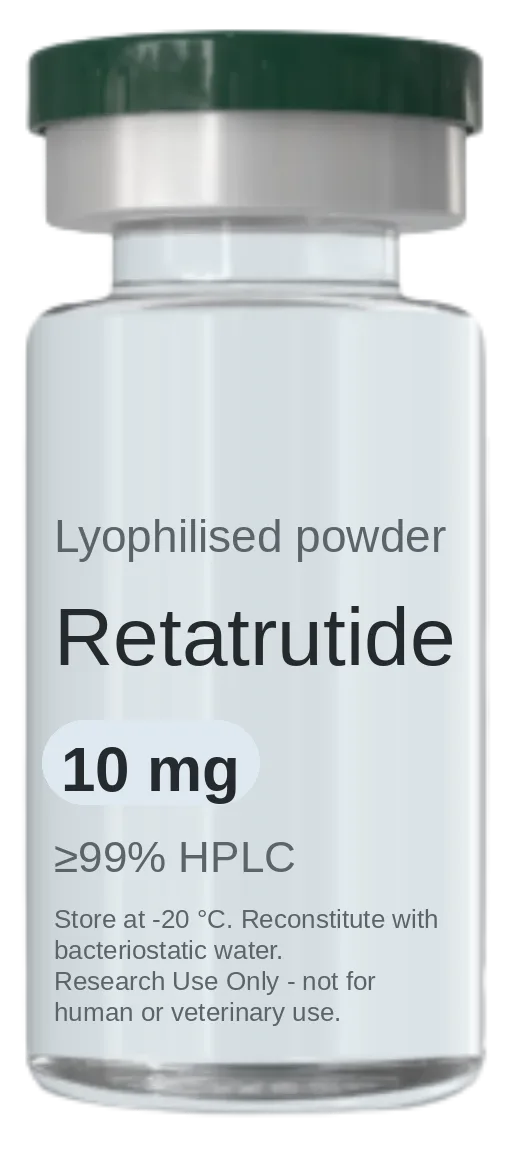
Retatrutide
Triple-agonist metabolic research peptide targeting GLP-1, GIP and glucagon receptors.
- Purity:
- ≥99% HPLC
- Sizes available:
- 10 mg
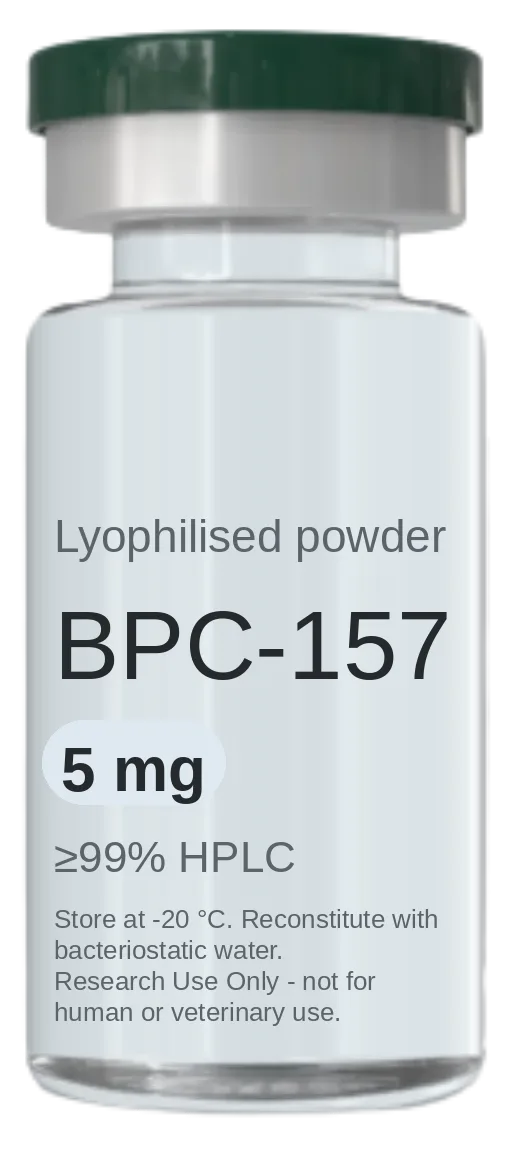
BPC-157 + TB-500
BPC-157 and TB-500 in a single vial — the pairing most studied together in tissue-repair research.
- Purity:
- ≥99% HPLC
- Sizes available:
- 5 mg + 5 mg
The consultation
One intake that settles goals, history and contraindications alongside compound, quantity, documentation and route — reviewed by a physician before anything ships.
More notes
-
Temporary Import Regime & Peptides
Temporary import covers goods that leave the country again; a research peptide shipment stays and gets used up.
-
Retatrutide vs GHK-Cu: What's the Difference
Retatrutide and GHK-Cu are different molecules studied for different reasons. Here's what each investigates and what documentation backs a batch.
-
Invoiced vs. Unbilled Peptide Suppliers
What changes when a research peptide supplier invoices the transaction versus one that takes payment and leaves no paper trail.