
Note
Argentina Customs: Peptides Without a Broker
Postal shipment rules don't always skip the customs broker — when the simplified channel applies and what paperwork a research peptide needs.
Yes, it's possible: Argentina's postal shipment regime lets a package clear customs without the recipient hiring a customs broker, as long as the shipment enters through the simplified mail or courier channel and isn't flagged for inspection. But that exception has a clear edge, and a research peptide — a powder that customs cannot identify at a glance — is exactly the kind of cargo most likely to fall into documentary review. At that point, a broker stops being optional.
What is the postal shipment regime, and why does it sometimes skip the broker?
The postal shipment regime (also called the simplified import regime) exists so a small, personal-use package doesn't have to go through the same process as a large commercial import. When a shipment enters through that channel — official mail or an international courier such as DHL, FedEx or UPS operating under the door-to-door regime — it's the postal operator itself that files the simplified declaration with AFUP/ARCA, not the recipient. That's why, for most personal packages, you don't need to go out and find a broker: one is already working on the courier's side, as part of the service you paid for at checkout.
That's what makes the question look simpler than it is. "No, you don't need a broker" is true for the standard case. It doesn't cover every item that can fit inside the box.
Who files the declaration if you didn't hire anyone?
The courier does. It uses the commercial invoice that travels with the package — the one describing what the contents are, how much they weigh and their declared value — to complete the simplified declaration under your name, with your national ID as the importer. You don't sign anything in front of customs and you don't choose a broker: the import desk of the logistics operator itself handles it, as part of the service.
That's exactly why the paperwork accompanying the shipment has to be assembled correctly from the point of origin. If the invoice description is vague, incomplete, or doesn't match the actual contents, the customs selectivity system has more reason to pull that package out of the automatic lane and route it to manual review.
What documentation needs to travel with the peptide so it isn't held?
Three documents matter in practice:
- The commercial invoice, with an exact description of the contents: research material, not for human or veterinary consumption, with quantity and presentation (vial, lyophilised powder).
- The lot's certificate of analysis (COA), issued by the laboratory that verified purity. This isn't a decorative document — it's what lets you demonstrate, if customs asks, exactly what you're receiving and which lot it came from. You can see how to read one — which columns matter and which verification link is genuine — on the quality and certificates of analysis page.
- A statement of use, consistent with the two above: Research Use Only, intended for laboratory research, with no stated intent for consumption.
What doesn't work is an invoice that says one thing while the vial's label says another, or a description that reads like a finished supplement. That inconsistency is what turns a routine clearance into a review.
When does customs require a broker even though the shipment is postal?
Three situations typically push a shipment outside the simplified lane:
- The shipment gets flagged for inspection. The customs control system selects a portion of packages for documentary or physical review, independent of declared value. A chemical substance that isn't part of the usual personal-use catalogue (clothing, electronics, books) is more likely to land there.
- Value or weight exceed the simplified regime's threshold. Above that limit, the operation is processed as a formal import, and a formal import does require a licensed customs broker — the only professional legally authorized to file that kind of declaration.
- The merchandise requires intervention from another agency before it can be released — for example, if the control channel routes the question to a health authority. At that point, the courier's internal broker, built for the standard process, isn't enough, and a broker who can manage that specific intervention is needed.
None of these three depend on the quality of the product. They depend on how the shipment is declared and on what the selectivity system does with that particular package, which isn't fully predictable from the sender's side.
Research peptides: why the declaration doesn't look like a medicine's
All material supplied by PeptoClinic is provided strictly for laboratory research — in vitro and bench use — never for human or veterinary consumption. It is not a medicine, not a supplement, not a food, and none of its properties have been evaluated by ANMAT, the FDA, or any equivalent authority. No prescription is issued or required, and questions about human-use protocols fall outside what this operation addresses.
That distinction isn't a minor legal nuance — it's what determines how the invoice is filled out and which field of the postal declaration applies. A shipment declared as "research material, not for consumption" is processed differently from one that — even with the exact same vial inside — described itself as intended for use in people. Consistency between what the paper says and what the contents are is, again, what decides whether the package keeps moving or gets a second look.
Compounds like retatrutide or BPC-157, among the most searched from Argentina, travel under this same criterion: research-grade documentation, with no indication of human use. You can see how the country pages for retatrutide in Argentina and BPC-157 in Argentina are framed, with the same RUO approach applied across the catalogue.
What happens if the shipment gets held for review?
The courier notifies you that the package is under review and, generally, requests supporting documentation if it didn't travel attached or if customs asks for something additional — invoice, COA, statement of use. Having those three documents settled and consistent before the package leaves origin is what shortens that step. A shipment with clear documentation almost always resolves inside the courier's own process; one with ambiguous documentation is the kind that ends up needing a specific intervention managed by someone, with the added time that implies.
What to have ready before requesting a shipment
Before coordinating a shipment to Argentina, it helps to arrive with this already settled: the exact description of the material you'll receive, the certificate of analysis for the corresponding lot, and the certainty that the invoice will describe the contents consistently with that documentation. That's precisely what gets resolved at the quoting stage: PeptoClinic has no public-priced catalogue and no cart — every request is quoted according to the compound, quantity and destination, and that's also where the shipment's accompanying documentation gets planned. You can see how shipments are prepared for the region on the shipping page and the rest of the available compounds on the Argentina page.
All material referenced here is supplied for laboratory research only and is not approved, intended or labeled for human or veterinary use.
Frequently asked questions
Is the postal shipment regime the same for official mail and private couriers?
Not exactly: both fall under the simplified shipment category, but each operator — Correo Argentino or an international courier — manages its own filing with customs, with its own timelines and its own internal broker for the standard process.
Can I request a broker myself to avoid delays?
You can ask the courier, but it's generally unnecessary: if the shipment enters through the simplified channel and isn't flagged for inspection, the operator resolves the process without you having to hire anyone separately.
Does a low declared value guarantee there won't be a review?
No. A value within the simplified regime's threshold makes the automatic process more likely, but selection for documentary control doesn't depend only on value — the type of declared merchandise matters too.
What happens if the invoice doesn't describe the peptide as research material?
That's the kind of inconsistency most likely to get a package pulled for review, because the description doesn't match what normally moves through the personal-use channel.
Does the certificate of analysis need to travel physically inside the box?
Not necessarily inside the box — what matters is that it's available to present if the courier or customs requests it during the process, alongside the invoice.
Does this apply the same way to every compound in the catalogue?
The declaration criteria — research material, consistent documentation, an available certificate of analysis — are the same for every compound, regardless of which one it is.
Does a licensed broker charge differently for a postal shipment?
That depends on the specific case and the type of intervention customs requires; it's not something PeptoClinic manages or quotes, since it belongs to the customs process rather than to the supply of the material.
Is this legal advice about foreign trade?
No: this is a general description of how Argentina's postal regime works, so you know what to expect. For a specific case with questions about tariffs or interventions, the right contact is a licensed customs broker.
Compounds mentioned
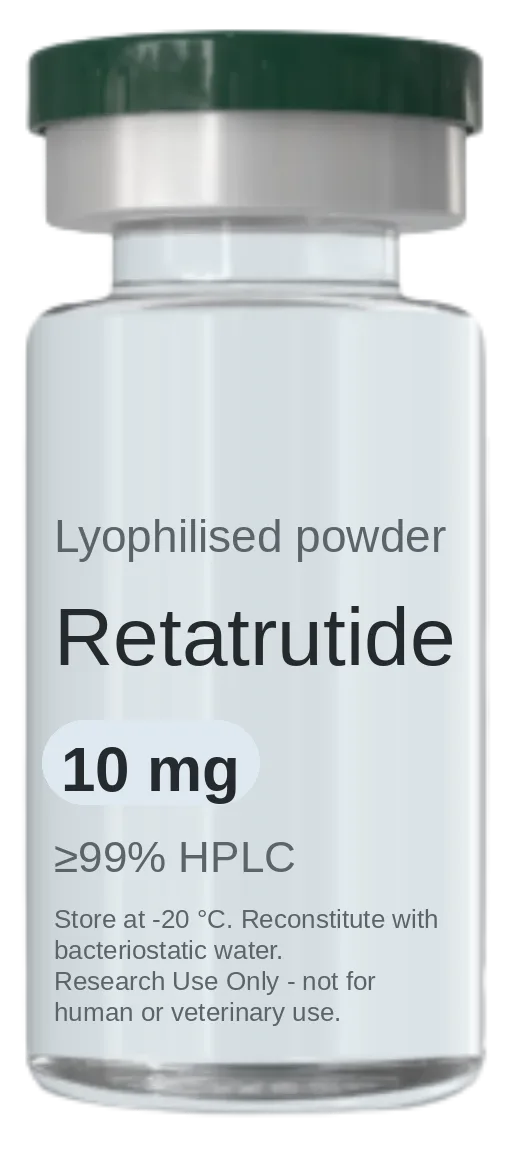
Retatrutide
Triple-agonist metabolic research peptide targeting GLP-1, GIP and glucagon receptors.
- Purity:
- ≥99% HPLC
- Sizes available:
- 10 mg
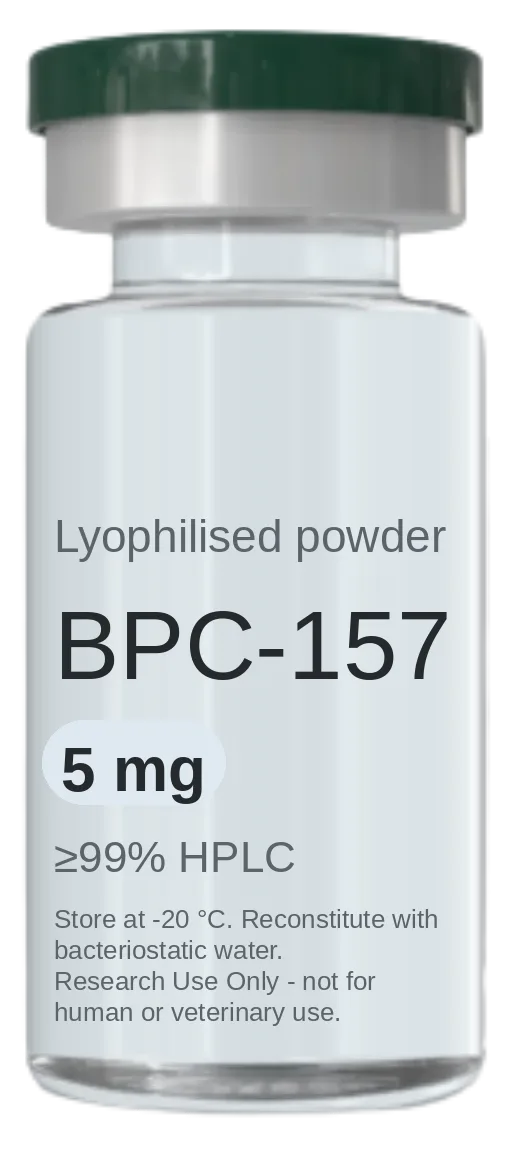
BPC-157 + TB-500
BPC-157 and TB-500 in a single vial — the pairing most studied together in tissue-repair research.
- Purity:
- ≥99% HPLC
- Sizes available:
- 5 mg + 5 mg
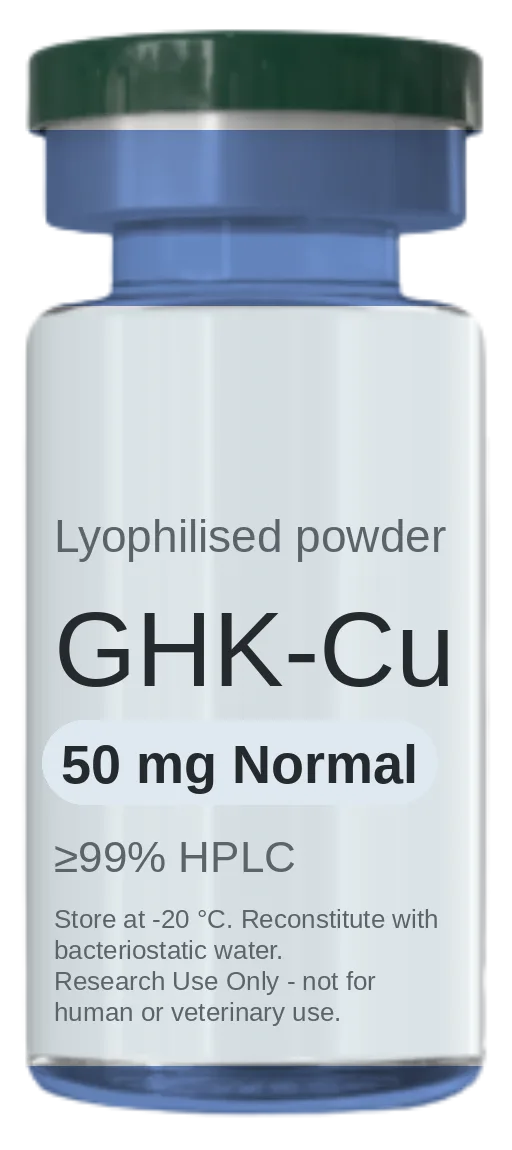
GHK-Cu (Copper Peptide)
Copper-binding tripeptide studied in extracellular matrix and dermal research models.
- Purity:
- ≥99% HPLC
- Sizes available:
- 50 mg Normal – 50 mg Plus
The consultation
One intake that settles goals, history and contraindications alongside compound, quantity, documentation and route — reviewed by a physician before anything ships.
More notes
-
GHK-Cu vs Epithalon: What's the Difference
GHK-Cu and Epithalon are distinct research peptides in structure and in what the literature studies on each. Here's the difference.
-
Freight Forwarder vs Courier to Argentina
Can a freight forwarder replace a courier to import research peptides into Argentina? What changes, and what the practical answer is.
-
No One Home for Your Argentina Shipment?
What happens when a research peptide shipment to Argentina arrives at an address with no one there to sign for it.