
Note
Invoice Not in Spanish? Argentine Customs
An invoice in English or another language doesn't stop a research peptide shipment to Argentina — here's what customs actually checks.
A commercial invoice written in English, or in any language other than Spanish, does not by itself hold up a research peptide shipment entering Argentina. Argentine customs processes commercial invoices in English every day, because English is the standard language of international trade, and the courier import pipeline is built to receive them that way. What can cause a delay isn't the language the invoice is written in — it's whether the description of the contents is specific enough to classify the goods, in whatever language it's written.
Why does customs accept an invoice in another language?
International trade documentation has historically been written in English. The courier companies that move shipments between a supplier abroad and a recipient in Argentina process thousands of commercial invoices a day, and the overwhelming majority are not in Spanish. The customs broker clearing a package doesn't need a translated invoice — they need to be able to identify what's inside, how much of it, and what value has been declared.
That means what actually matters isn't the document's language, it's its content:
- A clear description of the goods (which compound, what form — a lyophilised powder vial — and what quantity).
- A declared value consistent with what's actually shipped.
- Complete, legible sender and recipient details.
An invoice in English that nails those three points clears the same way a Spanish one would. A vague or incomplete invoice in Spanish causes more delays than a well-prepared one in English.
When might a customs broker actually ask for a translation?
There's one specific scenario where language starts to matter: when the description of the goods is ambiguous and the broker can't classify it from what's on the paper. Even then, it isn't that the language itself gets rejected — the broker is asking for a clarification. Sometimes a short email in Spanish explaining what the product is settles it; sometimes they ask for a targeted translation of the invoice or of the documents that accompany it.
This is why the clarity of the document matters more than the language it's written in: an invoice that just says "research material" with nothing else is harder to classify than one that specifies the compound, the form, and states that it's laboratory reference material. PeptoClinic prepares the customs file for every shipment to Argentine destinations with exactly that in mind — the material is quoted for import as laboratory reference material, with documentation built so the description doesn't leave gaps a customs broker has to fill in on their own.
You can see how the full shipment is handled — what accompanies the package, what doesn't — on the shipping page.
What happens if customs holds the package over documentation?
A hold over incomplete documentation is not a final rejection. In the vast majority of cases, the issue resolves by adding whatever information is missing: a clarification about the contents, a corrected invoice, or an additional contact detail. What actually complicates a shipment isn't the language of the paperwork — it's nobody being able to respond quickly when customs asks for something specific.
That's why it's worth treating the import document as something that has to stand on its own, without the recipient needing to step in and explain what they bought. When a shipment is headed to Argentina, that's exactly the logic behind every quote: the customs file describes the compound and its declared use as laboratory reference material from the point of origin, not as an explanation improvised later if something gets held up.
Invoice language doesn't change how the material travels
Worth clearing up something that sometimes gets tangled with the language question: none of this has anything to do with how the shipment is packed or transported. The material travels as a lyophilised powder in a sealed vial, with desiccant and protected from light, at room temperature — not in a cold chain, because lyophilised powder is stable that way for weeks. Cold only starts to matter after reconstitution, when it needs to be kept between 2 and 8 °C. That detail — packaging, stability, what to do on arrival — is covered on the shipping page, and it's independent of whatever language the invoice is written in.
Laboratory research material, not for human or veterinary use
Everything PeptoClinic supplies is provided strictly for research use (Research Use Only — RUO): in vitro and laboratory research. Nothing shipped is a medicine, a supplement, or a food. No product is approved or intended for human or veterinary consumption, nor for the diagnosis or treatment of any condition, and none of these statements have been evaluated by the FDA, ANMAT, or any equivalent authority. PeptoClinic is not a pharmacy, a clinic, or a telehealth service: no prescriptions are issued or filled, and no dosing or administration guidance is provided.
That framing — RUO, intended for laboratory use — is exactly what carries over into the customs documentation for every shipment, in whatever language it's written.
How documentation gets built for an order headed to Argentina
PeptoClinic operates as a technical supply consultancy: there's no cart and no published price. The technical team reviews the compound, the purity specification, the quantity, and the dispatch route, and returns a written quote, normally within one business day. That quote includes how the shipment will be documented so it clears without surprises, which keeps the chance of invoice language becoming a problem on the way down to essentially nothing.
For specific compounds that have their own page with Argentina-specific entry information — like retatrutide, MOTS-c, or BPC-157 — it's worth checking that page before requesting a quote: it has the detail specific to that compound for that destination.
What to check on the certificate of analysis, beyond the invoice
The invoice certifies what was declared and what it's worth. The certificate of analysis (COA) certifies something else entirely: what's actually in the vial. The batches analysed by Janoshik Analytical on 2026-04-13 — retatrutide, MOTS-c, GHK-Cu, and the BPC-157 + TB-500 combination — have public reports, and it's worth reading them the same way you'd read any customs document: looking for content described with precision, not taking a generic label at face value. How to read a COA step by step is covered on the quality page, and the full list of available compounds is in the catalog.
Frequently asked questions
Does Argentine customs require the invoice to be in Spanish?
There's no requirement that an invoice be translated into Spanish for a shipment to clear. English is the standard language for international commercial invoicing, and the courier import pipeline is built to receive documentation in that language without requiring a translation as a mandatory step.
If it's not the language, what actually holds up a shipment?
What typically holds up a clearance is an ambiguous description of the contents, or a declared value that doesn't match what's actually shipped. That happens in any language: a poorly written invoice in Spanish causes the same delay as one in English without enough detail.
If a translation is requested, who provides it?
If a customs broker needs a clarification about the contents, a brief response is usually enough — sometimes a targeted translation of the description, not of the whole document. PeptoClinic prepares the file for every shipment to Argentina with the goal of that clarification never being needed in the first place.
Does the shipment declare the product as a medicine?
No. The material is declared for what it is: reference material for laboratory research (RUO). It's never documented as a medicine, a supplement, or a consumer product, because it isn't one and isn't approved as one.
Does an invoice in another language affect how the shipment is packed?
There's no connection between the two. Packaging depends on the state of the material — lyophilised powder, stable at room temperature, with no cold chain needed — not on the language of the commercial document that accompanies it.
How long does it take to resolve a documentation hold?
It varies depending on how long it takes to complete whatever information customs requested. There's no fixed timeline that can be promised, since it depends on the courier's and customs' response in each specific case.
Can I ask for the customs documentation details to be included in a quote?
Yes. When requesting a quote, PeptoClinic's technical team explains how that specific shipment to Argentina will be documented, including what the invoice describes and what accompanies the package.
Where can I find compound-specific information for Argentina?
Several compounds have their own page with Argentina-specific entry detail, such as [retatrutide](/en/argentina/retatrutide/) or [GHK-Cu](/en/argentina/ghk-cu/). It's worth checking that page before requesting a quote for that particular compound.
Compounds mentioned
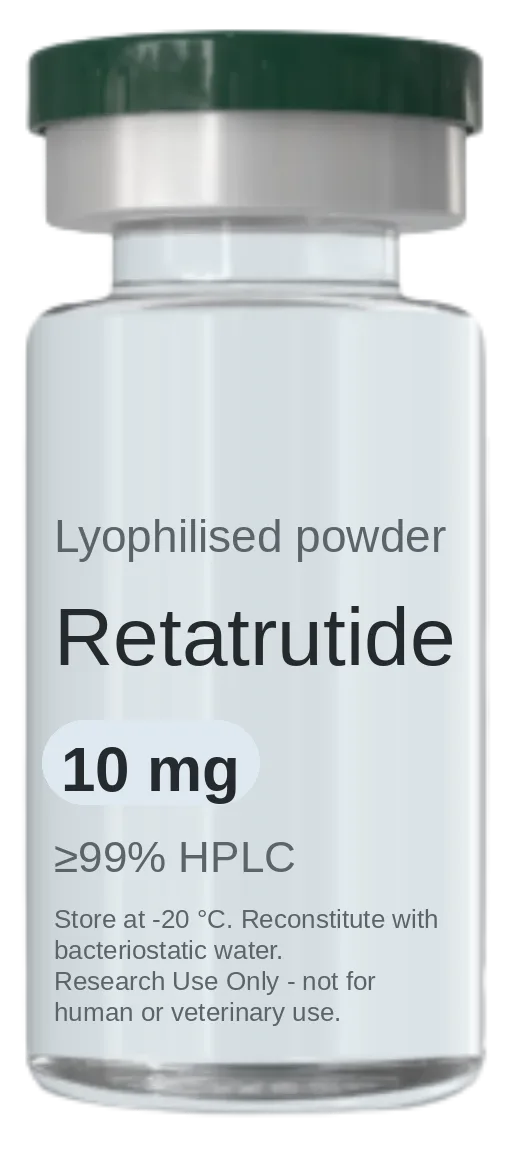
Retatrutide
Triple-agonist metabolic research peptide targeting GLP-1, GIP and glucagon receptors.
- Purity:
- ≥99% HPLC
- Sizes available:
- 10 mg
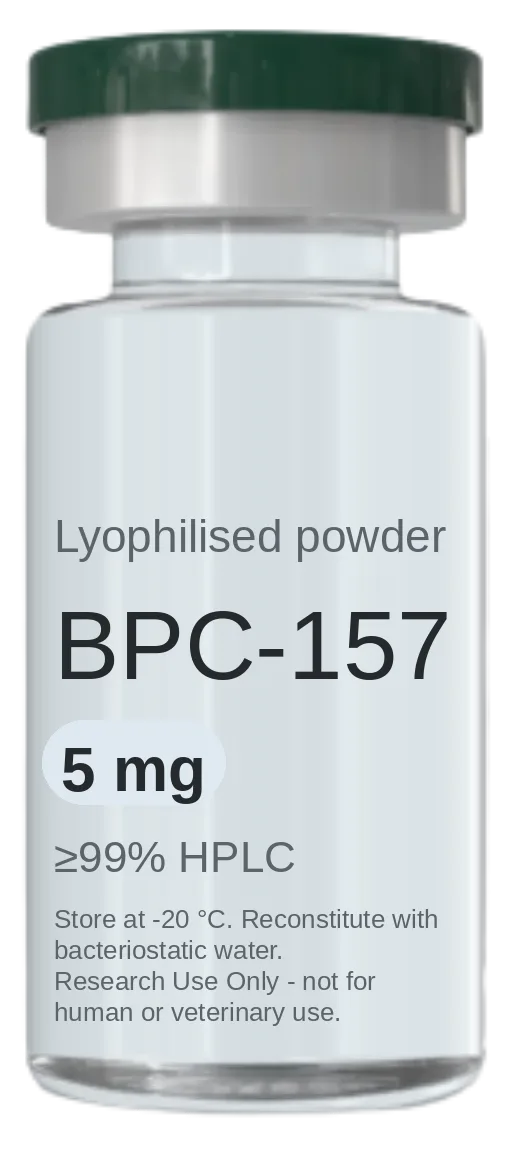
BPC-157 + TB-500
BPC-157 and TB-500 in a single vial — the pairing most studied together in tissue-repair research.
- Purity:
- ≥99% HPLC
- Sizes available:
- 5 mg + 5 mg
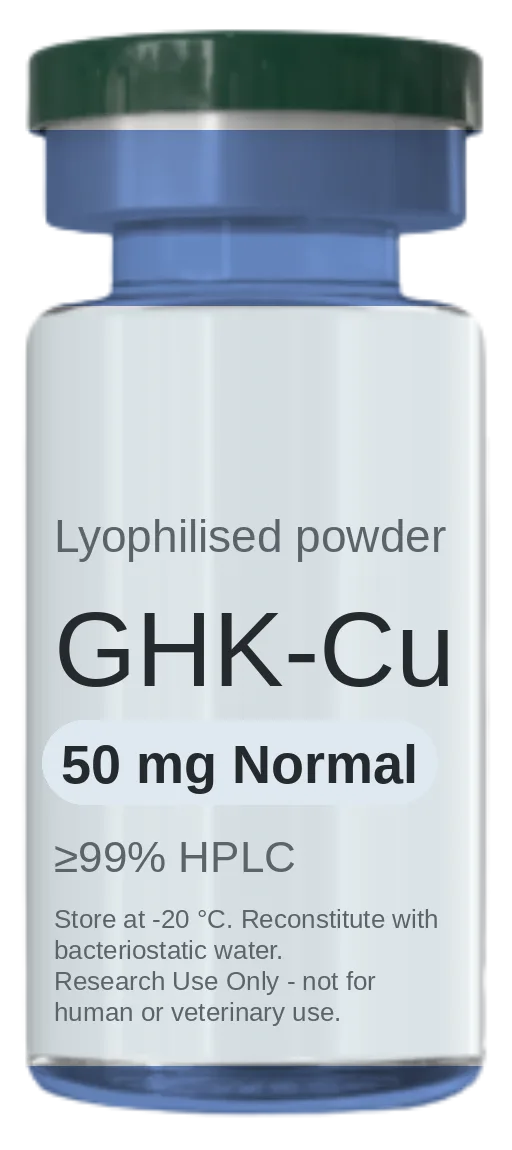
GHK-Cu (Copper Peptide)
Copper-binding tripeptide studied in extracellular matrix and dermal research models.
- Purity:
- ≥99% HPLC
- Sizes available:
- 50 mg Normal – 50 mg Plus
The consultation
One intake that settles goals, history and contraindications alongside compound, quantity, documentation and route — reviewed by a physician before anything ships.
More notes
-
Retatrutide vs. Tirzepatide: Differences
Retatrutide adds a third receptor that tirzepatide doesn't activate — here's how the two differ in structure, mechanism, and published research.
-
NAD+ vs Selank: What's the Difference?
NAD+ is a cellular coenzyme; Selank is a synthetic peptide derived from tuftsin. Structure, mechanism, and what each one is studied for.
-
Peptide Customs Clearance Cost in Argentina
What determines customs clearance cost for a research peptide shipment to Argentina, and what documentation PeptoClinic prepares for it.