
Note
Is BPC-157 Legal in the US?
By the PeptoClinic editorial team · Medically reviewed by Dr. Emily Parker
BPC-157 isn't an FDA-approved drug and pharmacies can't compound it, but it isn't a controlled substance either. Here's what that means.
BPC-157 is not an approved drug in the United States, and it is not a controlled substance either. The FDA has never approved a BPC-157 product for any condition, and the agency has also placed it on the list of bulk substances that compounding pharmacies are barred from using, citing possible safety risks. That combination — not approved, not scheduled, but flagged against compounding — is the actual legal picture, and it is more specific than a flat "legal" or "illegal" answer.
What "legal" actually covers here
Three separate questions get collapsed into "is it legal," and they have three different answers.
- Is it an FDA-approved drug? No. There is no brand-name BPC-157 product with an FDA approval letter, the way Zepbound or Ozempic have one.
- Is it a controlled substance under the DEA's schedules? No. BPC-157 does not appear on any DEA schedule, so possession doesn't carry the same criminal exposure as a Schedule II or III substance.
- Can a licensed pharmacy compound it into a prescription? No, not anymore. The FDA put BPC-157 on its list of bulk drug substances that may present significant safety risks, which means 503A and 503B compounding pharmacies are barred from using it as an ingredient.
That third point is the one most people miss. It's the FDA's actual published answer to "is BPC-157 legal," and it's a narrower statement than either "approved" or "banned."
Why there's no approved BPC-157 drug
BPC-157 is a synthetic peptide derived from a protective protein found in gastric juice, and most of the published research looks at tissue repair — tendon, ligament, and gut healing in animal models. A 2019 review in Gwyer et al., Cell Tissue Res covers the mechanistic work on musculoskeletal repair, and a 2025 systematic review in Vasireddi et al., HSS J looks specifically at what's been published in sports medicine. Both describe a body of animal and in vitro data without a completed human clinical trial program behind it.
No pharmaceutical sponsor has taken BPC-157 through the FDA's drug approval pathway — no Phase 1 safety trial, no Phase 2 dose-finding study, no Phase 3 trial registered for it the way retatrutide or tirzepatide went through theirs. Without that trial record, there is no New Drug Application for the FDA to approve or deny. The molecule simply hasn't gone through the process that produces an approved drug, which is a different situation from a molecule that was studied and rejected.
Why pharmacies can't compound it for you
Before the FDA's bulk drug substances list existed, some compounding pharmacies were mixing BPC-157 into prescriptions on a case-by-case basis under 503A rules. That changed once the FDA added it to the restricted list alongside other research peptides — ipamorelin, GHK-Cu in injectable form, epitalon, KPV, MOTS-c, selank, semax, DSIP, thymosin, and TB-500 are on the same list. The agency's stated concern is that these substances haven't been shown safe and effective for the uses compounders were putting them to, and compounding bypasses the review a drug would otherwise need.
The practical effect: a pharmacist who fills a BPC-157 prescription today is operating outside what the FDA says compounding pharmacies are permitted to do with that ingredient. That's a different problem from the drug being "illegal to possess," but it does mean the normal path of walking into a pharmacy with a prescription isn't available the way it is for an approved medication.
What research material looks like instead
PeptoClinic's BPC-157 is supplied for research purposes, not dispensed through a pharmacy prescription. A physician reviews each consultation before anything ships, and the catalogue — including peptides like GHK-Cu, KPV, and thymosin alpha-1 — follows that same model. None of it is marketed as a treatment for any condition, because none of it has gone through the approval process that would let it be. Current pricing for each compound is on the pricing page; lab reports and what a certificate of analysis actually verifies are covered on the quality page.
How this compares to peptides that did get approved
Not every research peptide is in the same regulatory position. Some molecules in this category exist both as an unapproved research peptide and as an approved brand-name drug for a specific use — tirzepatide is Mounjaro and Zepbound, semaglutide is Ozempic and Wegovy, tesamorelin is Egrifta. BPC-157 isn't one of those: there is no approved brand-name BPC-157 drug on the market, and the material PeptoClinic supplies is not equivalent to, and is not, any approved drug. The full catalog separates these cases out compound by compound rather than treating "peptide" as a single legal category.
Where that leaves someone buying it
The honest summary, without legal advice beyond what's published: BPC-157 is not an FDA-approved drug, it's not a DEA-controlled substance, and it's on the FDA's list of substances pharmacies cannot legally compound. Buying research material isn't the same transaction as filling a prescription, and no seller — PeptoClinic included — can represent it as treating, curing, or preventing anything, because that representation would require the approval it doesn't have.

Medical review
Dr. Emily Parker

Reviews every consultation as it comes in
Frequently asked questions
Is BPC-157 banned in the US?
No. It is not scheduled by the DEA and there's no federal ban on possessing it. What's restricted is its use as an ingredient in pharmacy compounding, which the FDA addressed directly on its bulk drug substances list.
Can a doctor legally prescribe BPC-157?
A doctor can discuss it, but a compounding pharmacy cannot legally fill a BPC-157 prescription, since the FDA placed it on the list of bulk substances compounders may not use. There is no approved brand-name version a doctor could prescribe through a normal pharmacy channel either.
Why did the FDA restrict BPC-157 for compounding instead of approving or banning it?
The FDA's bulk drug substances list exists specifically for ingredients the agency says may present safety risks when compounded without the full review a new drug normally undergoes. That's a narrower, more specific action than either approving the molecule or placing it under criminal control.
Is BPC-157 the same legal category as steroids?
No. Anabolic steroids are DEA-scheduled controlled substances with criminal penalties attached to unauthorized possession and distribution. BPC-157 isn't on any DEA schedule, so it doesn't carry that same legal framework.
Does "not FDA-approved" mean BPC-157 is unsafe?
It means the FDA hasn't reviewed a BPC-157 drug application and issued an approval — the agency hasn't made a safety-and-efficacy determination either way for a specific product. Published research on the molecule, like the review in [Vasireddi et al., HSS J](https://pubmed.ncbi.nlm.nih.gov/40756949/), is largely preclinical and doesn't substitute for that review.
Will BPC-157 ever get FDA approval?
That would require a sponsor to run it through the full clinical trial pathway — Phase 1 through Phase 3 — the way tirzepatide and retatrutide have gone through theirs. No such program has produced a completed application for BPC-157 as of this writing.
Is it legal to import BPC-157 for personal research use?
Import rules depend on declared purpose and quantity, and that's a customs question rather than an FDA approval question. It's a separate issue from whether the molecule itself is approved or scheduled.
What does PeptoClinic sell BPC-157 as, if it's not a prescription drug?
Research material, with each consultation reviewed by a physician before anything ships. It isn't represented as a treatment for any condition, and the [BPC-157 product page](/en/product/bpc-157/) and [pricing page](/en/pricing/) describe the material on that basis.
Compounds mentioned
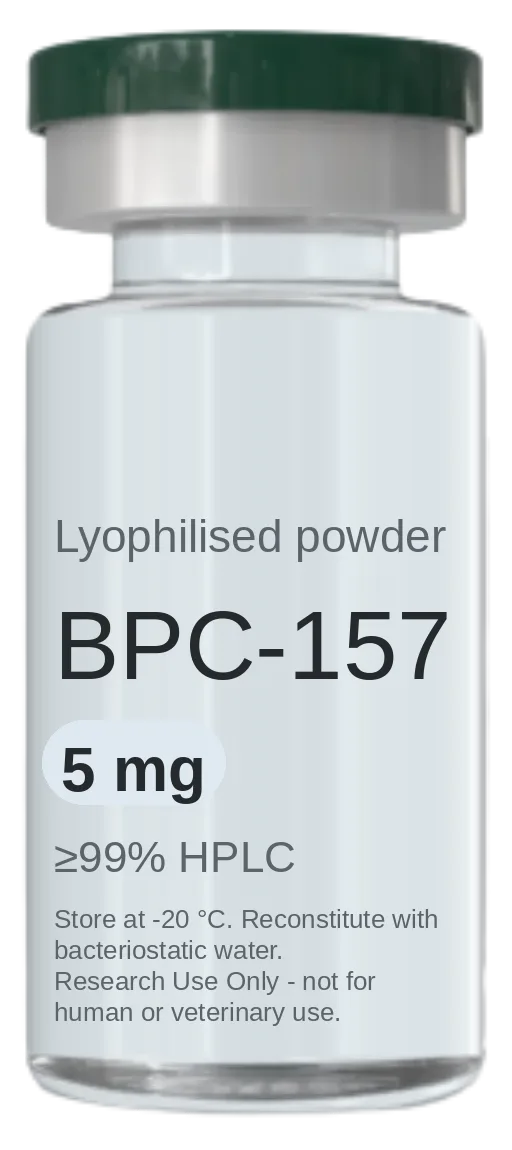
BPC-157 + TB-500
BPC-157 and TB-500 in a single vial — the pairing most studied together in tissue-repair research.
- Purity:
- ≥99% HPLC
- Sizes available:
- 5 mg + 5 mg
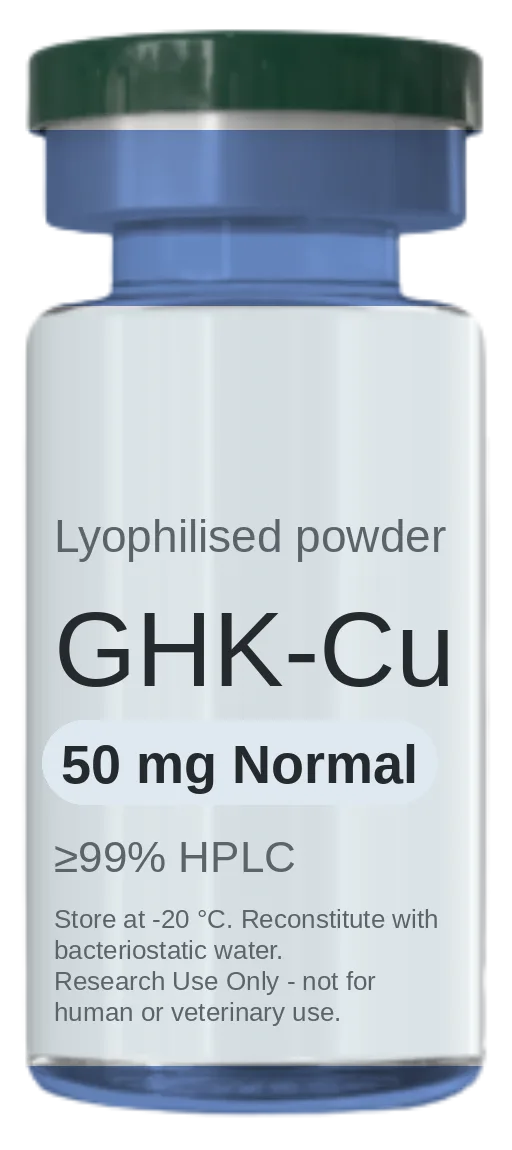
GHK-Cu (Copper Peptide)
Copper-binding tripeptide studied in extracellular matrix and dermal research models.
- Purity:
- ≥99% HPLC
- Sizes available:
- 50 mg Normal – 50 mg Plus
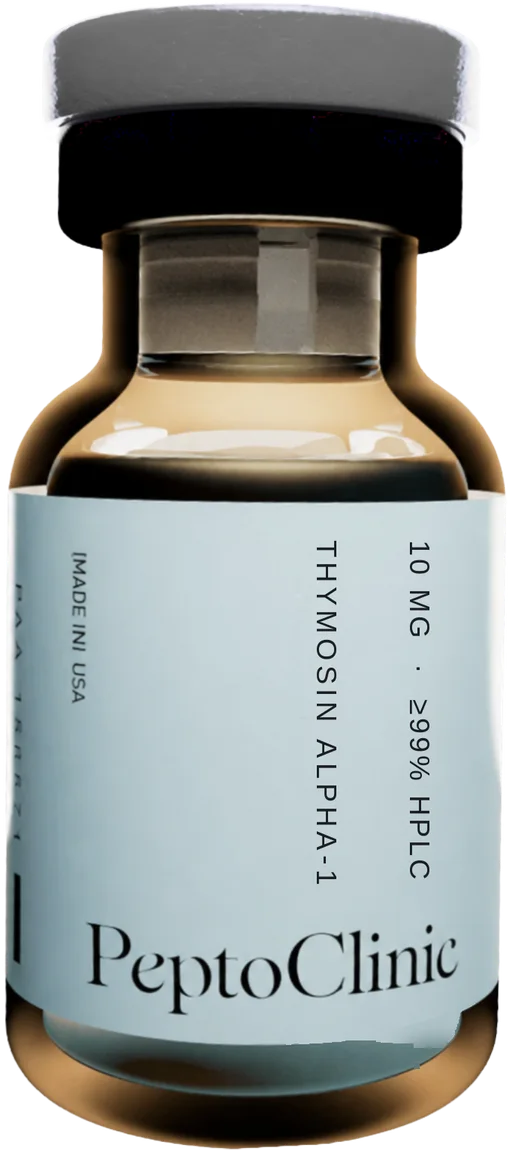
Thymosin Alpha-1
28-amino-acid thymic peptide studied as an immune modulator; synthetic form thymalfasin.
- Purity:
- ≥99% HPLC
- Sizes available:
- 10 mg
The consultation
One intake that settles goals, history and contraindications alongside compound, quantity, documentation and route — reviewed by a physician before anything ships.
More notes
-
LL-37 vs BPC-157: How They Differ
LL-37 and BPC-157 belong to different peptide families entirely — what each one investigates and what a batch report should show.
-
BPC-157 vs GHK-Cu: What's the Difference
BPC-157 and GHK-Cu are distinct research peptides with different structures and study lines. Here's what separates them, with sources.
-
What Is BPC-157 Used For?
What research on BPC-157, a synthetic pentadecapeptide, investigates in animal models, and how PeptoClinic documents the lot it supplies.
-
LL-37 vs GHK-Cu: What Sets Them Apart
LL-37 is a 37-residue cationic peptide; GHK-Cu is a copper-bound tripeptide. We compare structure, mechanism, and research lines.
-
LL-37 vs Thymosin Alpha 1: The Difference
LL-37 is an antimicrobial cathelicidin; Thymosin Alpha 1 is a thymic T-cell regulator. What the research literature shows about each.