
Note
LL-37 vs BPC-157: How They Differ
LL-37 and BPC-157 belong to different peptide families entirely — what each one investigates and what a batch report should show.
LL-37 and BPC-157 are not variants of the same peptide and they do not compete in the same research category: they come from different families, different biological origins, and lines of study that do not overlap. LL-37 is a 37-amino-acid cathelicidin peptide involved in innate immune defense. BPC-157 is a 15-amino-acid pentadecapeptide derived from a partial sequence of a protein found in human gastric juice. That the two show up together in the same search says more about how the Argentine research-peptide market bundles unrelated compounds than about any real resemblance between them.
What LL-37 Is
LL-37 is the only cathelicidin peptide active in humans, produced from the hCAP18 precursor and released through proteolysis in neutrophils, monocytes, and epithelial cells. It is a 37-amino-acid chain that folds into an amphipathic alpha-helix on contact with a lipid membrane. Published research on it runs along two main lines: its activity against bacterial membranes in in vitro assays, and its role as a signaling molecule within innate immunity, with proposed receptors such as FPR2 across several cell types.
It is a relatively unstable molecule in solution. As an exposed linear chain, it is sensitive to proteases, which shapes how it has to be stored and handled in a laboratory setting.
What BPC-157 Is
BPC-157 stands for "Body Protection Compound," a 15-amino-acid fragment identified from a protective protein present in human gastric juice. Most of the published literature on this sequence comes from a Croatian research group that studied it in animal models, focused on angiogenesis-related pathways — particularly VEGFR2 signaling — and on the nitric oxide system. It is, in that sense, a research molecule tied to gastrointestinal and vascular tissue physiology, not an antimicrobial defense peptide.
Unlike LL-37, BPC-157 has a structural feature that made it attractive for laboratory work: its technical name includes "stable" because it resists acidic pH conditions, which is unusual for a peptide of that length. Anyone documenting a specific batch of the compound can check the BPC-157 Argentina page for what to verify before requesting a quote.
The Differences That Matter When Comparing a Batch
When someone asks "how do they differ," they are usually not asking for abstract biochemistry — they want to know whether the two are interchangeable, or whether the same documentation applies to both. Neither is true.
- Size and structural class. LL-37 is a 37-residue cathelicidin with a helical structure; BPC-157 is a linear 15-residue pentadecapeptide.
- Biological origin. LL-37 comes from the innate immune system (neutrophils, hCAP18 precursor); BPC-157 comes from a sequence identified in gastric juice.
- Research focus. LL-37 is studied for activity against microbial membranes and immunomodulation; BPC-157 is studied for angiogenic pathway and nitric oxide signaling in tissue.
- Stability. BPC-157 shows resistance to acidic conditions; LL-37, as an exposed linear chain, is more susceptible to proteolytic degradation.
- Catalogue availability. BPC-157 is part of the research peptide catalogue that PeptoClinic quotes as laboratory material. LL-37 is not currently in that catalogue.
There is no scientifically valid way to say one is "stronger" or "purer" than the other. They answer different research questions, with different mechanisms and different biological systems involved — comparing potency between them is like comparing potency between a PCR reagent and an antibody. The question has no common axis.
What to Ask For in Batch Documentation
Regardless of which peptide is in question, the question that separates a serious supplier from the rest is always the same: is there an independent laboratory report behind the batch? PeptoClinic publishes analysis reports from Janoshik Analytical for the batches it supplies, and those reports are meant to be opened, not taken on faith. The quality and batch control page explains how to read a certificate of analysis: what the laboratory compares, what declared content versus content found actually means, and why a report with no verification link is worth less than one with a working link.
A certificate of analysis that cannot be verified against the laboratory that signed it is not a certificate. It is a picture.
For anyone specifically interested in BPC-157, the BPC-157 product page links the documentation available for that compound. For LL-37, since it is not currently in the catalogue, the same standard applies as with any peptide a supplier does not back with documentation: request the batch report before deciding anything else.
Research Only
Everything above describes what the scientific literature investigates about these two molecules in in vitro and animal models. Neither LL-37 nor BPC-157 is approved as a medicine, supplement, or consumer product for human or veterinary use in Argentina or in any other market. The material PeptoClinic quotes is supplied strictly as Research Use Only (RUO): a laboratory reagent for in vitro research, not for administration to people or animals. No prescription is issued or required, and no question about use or administration protocol is answered, since that falls outside what this activity covers.
Frequently asked questions
Do LL-37 and BPC-157 belong to the same peptide family?
No. LL-37 is a cathelicidin, the only one active in humans, while BPC-157 is a pentadecapeptide derived from a gastric juice sequence. They come from entirely different structural families and biological origins.
Which one is larger?
LL-37 has 37 amino acids and BPC-157 has 15. The size difference also shows up in structure: LL-37 folds into an amphipathic alpha-helix, while BPC-157 is a much shorter linear chain.
What research line does each one address?
LL-37 is studied mainly for activity against microbial membranes and for immunomodulation in in vitro assays. BPC-157 is studied in animal models focused on angiogenic pathways, such as VEGFR2 signaling, and on the nitric oxide system.
Can one be called more potent than the other?
Not in any scientifically meaningful way. They answer different research questions, with different mechanisms and different biological systems, so there is no common potency scale to compare them on.
Does PeptoClinic supply LL-37 as research material?
Not currently — it is not in the [catalogue](/en/catalog/). BPC-157 is part of the current catalogue and has batch documentation available on request.
How is the purity of a BPC-157 batch verified?
Through the independent laboratory report that accompanies the batch. The [quality page](/en/quality/) explains how to read that report: what it compares, what content it declares, and how to confirm the verification link matches the laboratory that signed it.
Why is BPC-157 called "stable"?
Because, unlike most peptides of similar length, it resists acidic pH conditions without fully degrading — a characteristic documented since its original identification in gastric juice.
Is this material approved for human or veterinary use?
No. All material is supplied as a research reagent (RUO), for laboratory use only. It is not a medicine, it is not approved for human or animal consumption, and it comes with no instructions for use in people.
Compounds mentioned
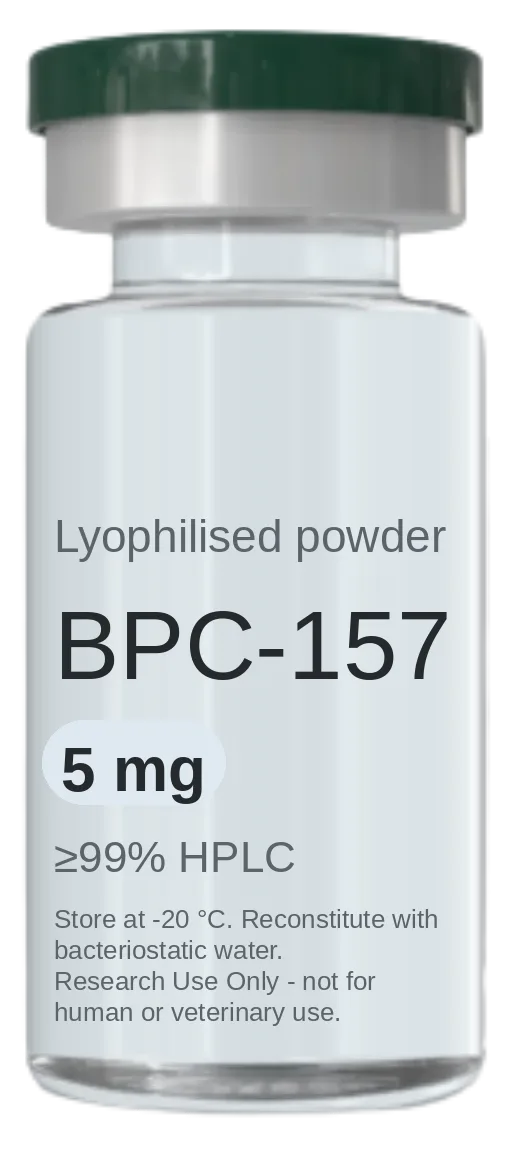
BPC-157 + TB-500
BPC-157 and TB-500 in a single vial — the pairing most studied together in tissue-repair research.
- Purity:
- ≥99% HPLC
- Sizes available:
- 5 mg + 5 mg
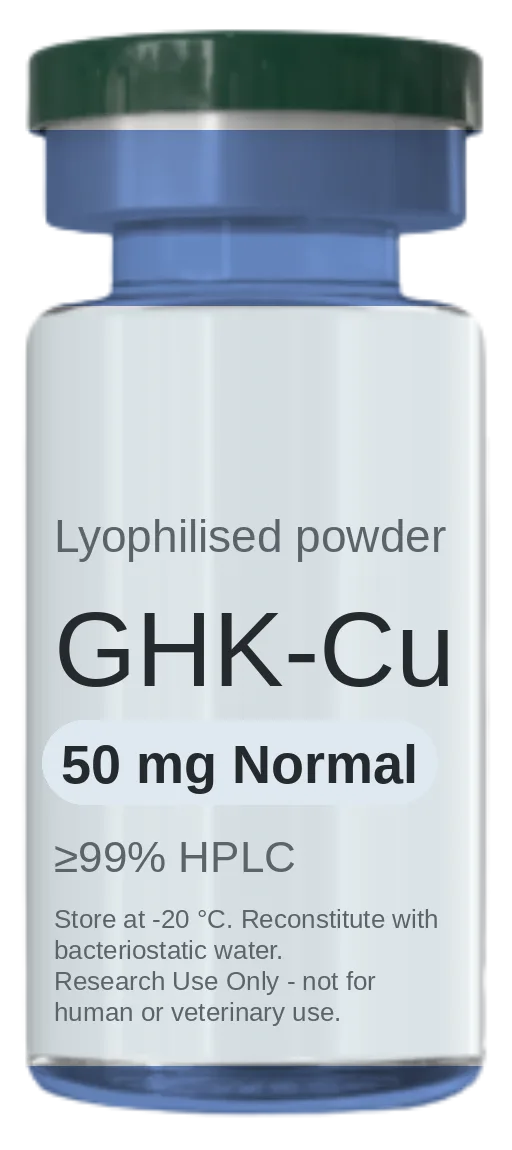
GHK-Cu (Copper Peptide)
Copper-binding tripeptide studied in extracellular matrix and dermal research models.
- Purity:
- ≥99% HPLC
- Sizes available:
- 50 mg Normal – 50 mg Plus
The consultation
One intake that settles goals, history and contraindications alongside compound, quantity, documentation and route — reviewed by a physician before anything ships.
More notes
-
What Certificate Does ANMAT Require?
ANMAT doesn't issue a certificate to release research peptides from Argentine customs — here's what documentation actually does.
-
No Commercial Invoice: Argentina Customs
What Argentine customs does when a research peptide shipment arrives without the supplier's commercial invoice, and how to keep it from getting held.
-
GHRP-6 vs Ipamorelin: Key Differences
GHRP-6 and Ipamorelin activate the same receptor, but published research describes very different selectivity and side-effect profiles.