
Note
Is CJC-1295 Legal in the US?
By the PeptoClinic editorial team · Medically reviewed by Dr. Emily Parker
CJC-1295 has not been approved by the FDA and isn't a scheduled controlled substance — what that status does and doesn't mean.
CJC-1295 has not received approval from the FDA for any use, and it has not been scheduled as a controlled substance under U.S. law. That makes it legal to possess in the sense that no federal statute criminalizes it the way the Controlled Substances Act criminalizes an anabolic steroid or a Schedule III drug — but "not scheduled" is a narrower statement than "approved," and the two get confused constantly in search results.
What "legal" actually means here
Three separate questions get collapsed into one when someone types "is CJC-1295 legal":
- Is it an approved drug? No. PeptoClinic's facts page tracks this across the full catalogue, and CJC-1295 sits with retatrutide, BPC-157, and the rest of the peptides that have not been approved by the FDA anywhere, as of this writing.
- Is it a controlled substance? No. CJC-1295 does not appear on a DEA schedule.
- Can a pharmacy legally compound it into a prescription product? The FDA maintains a list of bulk drug substances that compounders may not use because of safety concerns — BPC-157, ipamorelin, and GHK-Cu, among others, are named on it (FDA, Certain Bulk Drug Substances). CJC-1295 is not one of the substances named on that list, which is a different thing from the agency having reviewed it and cleared it.
None of this means CJC-1295 is a medicine a doctor can prescribe. It means the molecule occupies a regulatory gap: unapproved, unscheduled, and not individually addressed in FDA compounding guidance.
The two forms sold under this name
"CJC-1295" covers two related peptides, and mixing them up is where most of the confusion starts.
The original molecule, studied with a Drug Affinity Complex (DAC) attached, is a growth-hormone-releasing hormone (GHRH) analog engineered to bind to serum albumin and stay in circulation far longer than natural GHRH. Teichman et al., published in the Journal of Clinical Endocrinology & Metabolism in 2006, studied this DAC version in healthy adults and reported that single doses produced sustained elevations in growth hormone and IGF-I over an extended period, well beyond what a short-acting GHRH analog would produce.
The version listed in PeptoClinic's CJC-1295 (No-DAC) catalog entry — also called Mod GRF 1-29 — is the same GHRH analog sequence without the DAC modification. Removing DAC removes the long albumin-binding tail, which changes how long the peptide stays active. Vendors and forums sometimes use "CJC-1295" loosely for both forms, so a legal or regulatory answer about one doesn't automatically transfer to the other — neither form has been approved by the FDA, but they are not interchangeable molecules.
Where this leaves the regulatory picture
No clinical trial of either form of CJC-1295 has advanced to an FDA approval. The compound sits in the same unapproved category as other research peptides sold today: not cleared for any indication, not the subject of a pending New Drug Application that has been announced publicly, and not addressed by name in FDA compounding risk guidance the way some other peptides are.
That last point matters because it's often misread as a green light. A substance not being named on a restricted list is not the same as the FDA having evaluated it and found it safe. The FDA's list of bulk substances that may not be compounded exists because those substances were flagged; absence from that list simply means CJC-1295 hasn't gone through that specific review, not that it passed one.
GHRH analogs that did get approved
CJC-1295 is a modified version of growth-hormone-releasing hormone. That family of molecules is not hypothetical territory for the FDA — one GHRH analog has already cleared the approval process, which is useful context for separating the molecule class from this specific unapproved compound.
| Aspect | CJC-1295 (with or without DAC) | Tesamorelin |
|---|---|---|
| Molecule class | GHRH analog | GHRH analog |
| Brand product | None | Egrifta (Theratechnologies) |
| FDA status | Not approved | Received FDA approval |
| Approved indication | None | Excess abdominal fat in people with HIV and lipodystrophy |
| Supporting human trial | Teichman et al., 2006 | Falutz et al., NEJM 2007 |
| Half-life design | DAC version: extended via albumin binding; No-DAC version: short-acting | Short-acting, daily dosing in the approved product |
| Sold by PeptoClinic | Yes, as CJC-1295 (No-DAC) | Yes |
PeptoClinic's tesamorelin is the research-grade peptide, not Egrifta — it is a different manufacturing chain from a brand pharmaceutical and is not approved by the FDA in that form, even though the underlying molecule has a brand equivalent that is. The same distinction applies anywhere a research peptide shares a mechanism with an approved drug: the molecule class having an approved member doesn't carry approval over to a different product.
CJC-1295 isn't alone in the GH-axis category, either. Raun et al., published in the European Journal of Endocrinology in 1998, described ipamorelin as the first selective growth hormone secretagogue of its kind — a different mechanism (a ghrelin-mimetic rather than a GHRH analog) but the same unapproved status. PeptoClinic's ipamorelin sits in the same regulatory position as CJC-1295: not scheduled, not approved, not individually named in FDA compounding risk guidance.
What legal status doesn't tell you
"Not illegal to possess" says nothing about what's actually in a given vial. That's a separate question from the regulatory one, and it's answered by a certificate of analysis from an independent laboratory, not by the legal status of the molecule. PeptoClinic's quality page covers how each batch gets analyzed and how to read the report rather than take a purity number on faith. Catalog availability and current listings sit on PeptoClinic's pricing page.

Medical review
Dr. Emily Parker

Reviews every consultation as it comes in
Frequently asked questions
Is CJC-1295 approved by the FDA?
No. Neither the DAC version nor the No-DAC (Mod GRF 1-29) version has received FDA approval for any use, and no FDA-approved product is sold under the name CJC-1295.
Is CJC-1295 a controlled substance in the US?
No. CJC-1295 does not appear on a DEA drug schedule, which means possession isn't addressed by the Controlled Substances Act the way a scheduled drug would be. That's distinct from FDA approval, which it also doesn't have.
Can a pharmacy legally compound CJC-1295 into a prescription?
CJC-1295 is not named on the FDA's list of bulk drug substances that compounding pharmacies are barred from using, unlike BPC-157, ipamorelin, or GHK-Cu, which are named on that list. Not being named is not the same as the compound having been reviewed and cleared for compounding use.
What's the difference between CJC-1295 with DAC and without DAC?
The DAC version carries a Drug Affinity Complex that binds to serum albumin, extending how long the peptide circulates. The No-DAC version, also called Mod GRF 1-29, is the same core GHRH analog sequence without that modification, giving it a shorter active window. Both are unapproved by the FDA.
Is CJC-1295 the same as tesamorelin?
No. Both are GHRH analogs, but they're different molecules. Tesamorelin is the active ingredient in Egrifta, a product that received FDA approval for excess abdominal fat in people with HIV and lipodystrophy. CJC-1295 has no approved brand equivalent.
Does CJC-1295's legal status mean it's been tested for safety?
No. Not being scheduled and not being named in FDA compounding restrictions reflects the compound's regulatory category, not a safety evaluation. The only way to know what's actually in a given batch is an independent certificate of analysis.
Will CJC-1295 ever be approved by the FDA?
There's no public indication of that happening. As of this writing, CJC-1295 remains unapproved in the United States and elsewhere, alongside other research peptides that have not gone through an FDA review process.
Where can I see current availability and pricing for CJC-1295?
[PeptoClinic's pricing page](/en/pricing/) lists current catalog pricing by market, and the [CJC-1295 (No-DAC) product page](/en/product/cjc-1295-no-dac/) has the specifics for that entry.
Compounds mentioned
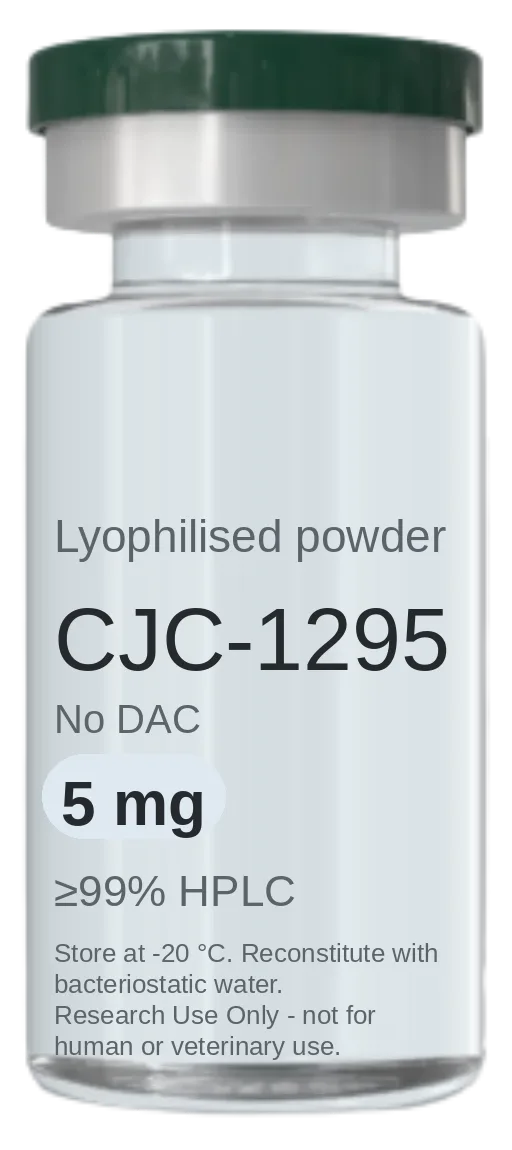
CJC-1295 (sin DAC)
Modified GRF(1-29) tetrasubstituted analogue without drug affinity complex.
- Purity:
- ≥99% HPLC
- Sizes available:
- 5 mg – 20 mg
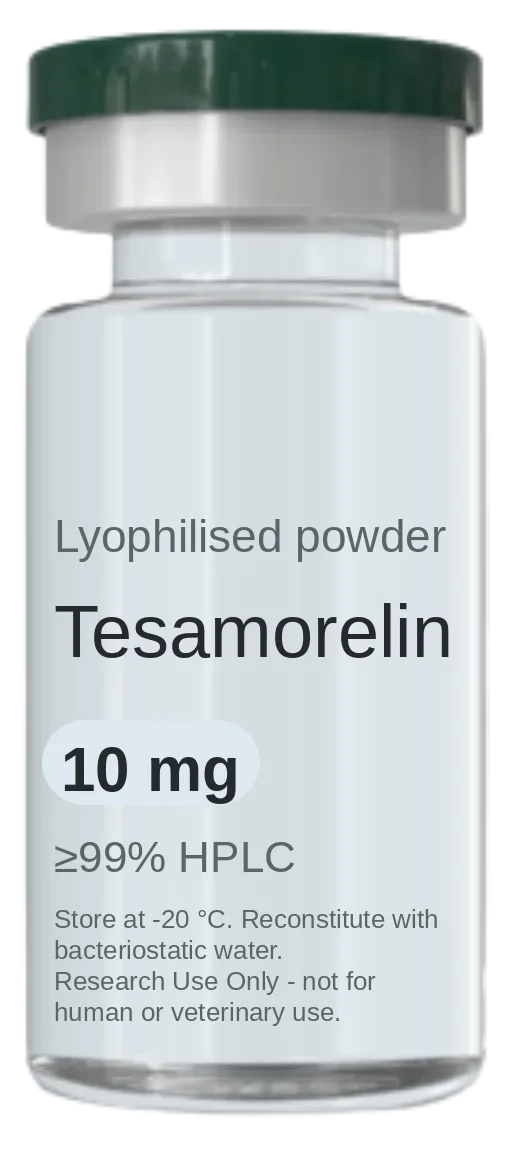
Tesamorelin
Stabilised GHRH(1-44) analogue studied in adipose tissue distribution research.
- Purity:
- ≥99% HPLC
- Sizes available:
- 10 mg – 20 mg
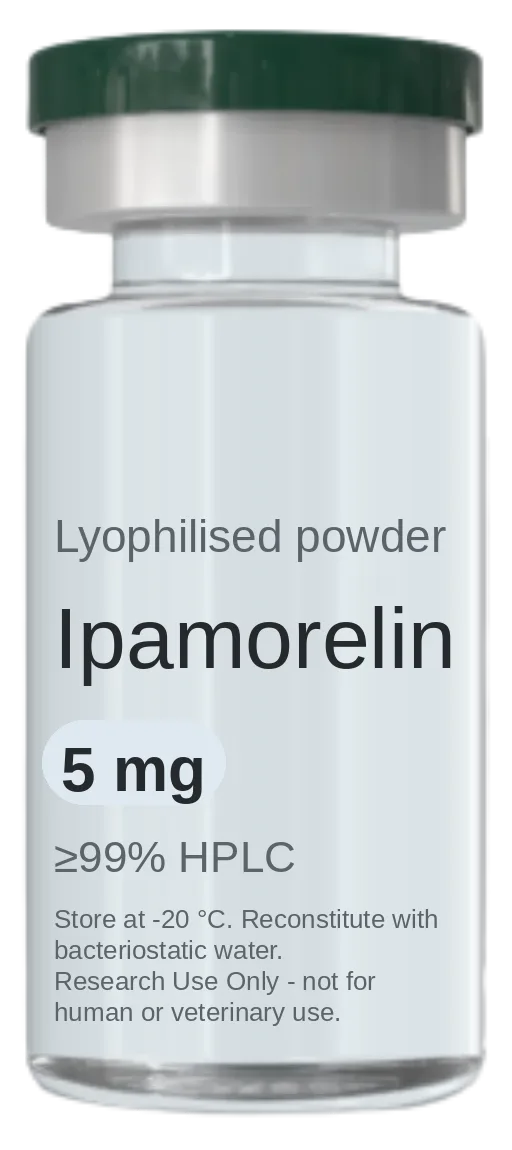
Ipamorelin
Selective ghrelin receptor (GHS-R1a) agonist pentapeptide.
- Purity:
- ≥99% HPLC
- Sizes available:
- 5 mg – 20 mg
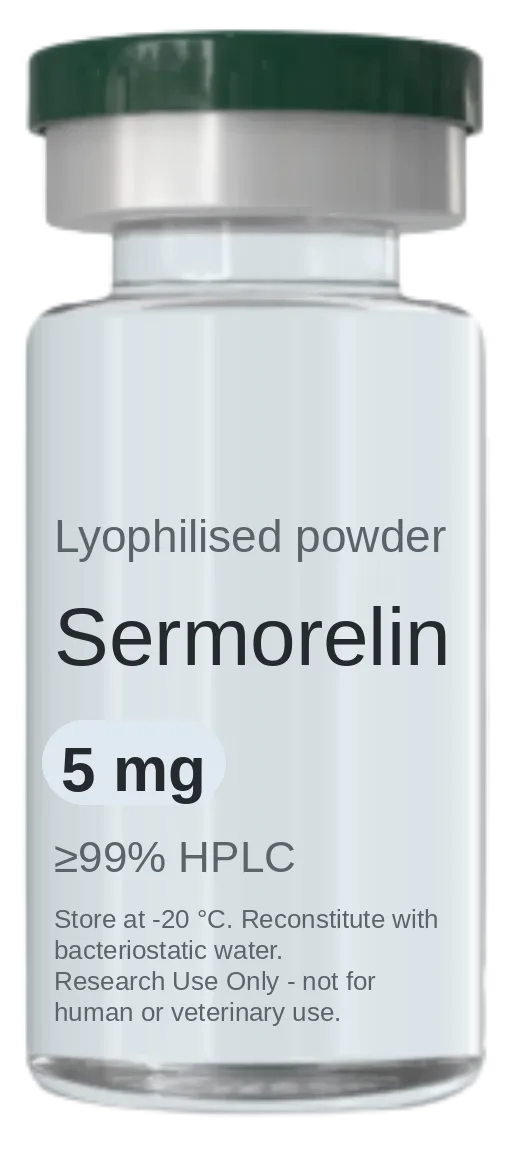
Sermorelin
Growth hormone-releasing hormone analogue used in endocrine signalling research.
- Purity:
- ≥99% HPLC
- Sizes available:
- 5 mg – 20 mg
The consultation
One intake that settles goals, history and contraindications alongside compound, quantity, documentation and route — reviewed by a physician before anything ships.
More notes
-
CJC-1295 With DAC or Without: The Difference
CJC-1295 with DAC and without DAC differ in half-life and how each shapes GH pulse patterns according to published research.
-
Is Ipamorelin Legal in the US?
Ipamorelin isn't approved by the FDA and sits on its list of substances compounding pharmacies can't use. Here's what that actually means.
-
CJC-1295 or Tesamorelin: what each shows
What published research shows on CJC-1295 and tesamorelin: mechanism, differences, and which compound has more clinical data.
-
Sermorelin or CJC-1295: What Research Says
A comparison of published research on sermorelin and CJC-1295 without DAC: mechanisms, key studies, and structural differences.
-
GHRP-6 vs CJC-1295: How They Differ
GHRP-6 agonizes the ghrelin receptor; CJC-1295 (no DAC) agonizes the GHRH receptor — different mechanisms, often studied together.