
Note
Task Number in a Certificate of Analysis
The task number is the code a laboratory assigns to an analysis. It lets you verify a certificate of analysis is genuine, not a copy.
A laboratory task number is the unique code a laboratory assigns to a work order when it receives a sample for analysis. It appears in the header of a certificate of analysis and is the field that connects the document to a record in the laboratory's own database. Without that number, a certificate is a file with someone's logo on it — editable, copyable, and indistinguishable from a forgery at a glance.
What happens when a sample reaches the laboratory
When an independent analytical laboratory receives a sample, measurement does not begin immediately. The lab opens a record first: it logs the intake date, the description of the compound, the declared weight or concentration, the submitting party, and the methods to be applied. That record receives a sequential number — the task number.
From that point forward, everything the laboratory does with that sample is tied to that number. The HPLC chromatogram, the purity calculation, the mass found in the vial, the signature of the responsible analyst. When the analysis is complete, the certificate issued carries that number printed in the header. It is the thread connecting the PDF to the original internal record.
This process means the task number cannot be assigned after the fact. It exists in the laboratory's database from the moment the sample arrived, before the result is known.
Why the task number matters more than the logo
A logo is an image file. A reputable laboratory's name can be copied into a document in thirty seconds. What cannot be forged undetectably is a task number that exists in the laboratory's database and returns the same data the certificate states when searched.
This is concrete: if a supplier shows a certificate from Janoshik Analytical with task number 136921, a buyer can go to Janoshik's site, search that number, and check whether the same compound, the same date, and the same result appear. If the number does not exist or the data does not match, the certificate is fraudulent. If they match, the analysis is real.
The difference between a verifiable certificate and one that is not lies not in its design or language. It lies in whether that number exists on a server that the supplier does not control.
What a complete certificate contains
The task number anchors the document, but a properly issued certificate of analysis includes several additional fields that make the data interpretable:
- Laboratory name and physical address. A laboratory without a street address has nowhere to be located or inspected.
- Date of analysis. Not the date the supplier published the certificate — the date the laboratory performed the measurement. A certificate from three years ago says nothing about what is in today's vial.
- Compound name and CAS number. The scientific name, not a trade name. Retatrutide carries CAS 2381089-83-2. The CAS number identifies the molecule without ambiguity across languages and name variants.
- Analytical method. HPLC — high-performance liquid chromatography — is the standard for research peptides. A certificate that does not name the method does not say how the measurement was made.
- Purity result. The percentage, with enough decimal places to be informative. "≥99%" as a result is an acceptance criterion, not an analytical finding. "99.893%" is what the instrument actually found.
- Declared weight versus found weight. A vial labeled 10 mg may contain 11.96 mg by analysis. That difference is relevant to anyone working with the sample and belongs in the record.
- Analyst identification. This indicates who is accountable for the result. A certificate without a signature or analyst identifier is a document without an author.
The task numbers for PeptoClinic's current lots
The four published reports were all issued by Janoshik Analytical from analyses performed on 2026-04-13. Full documentation is available on the quality page.
The Retatrutide lot carries task number 136921. The analysis found a purity of 99.893% and an actual content of 11.96 mg in a vial labeled 10 mg.
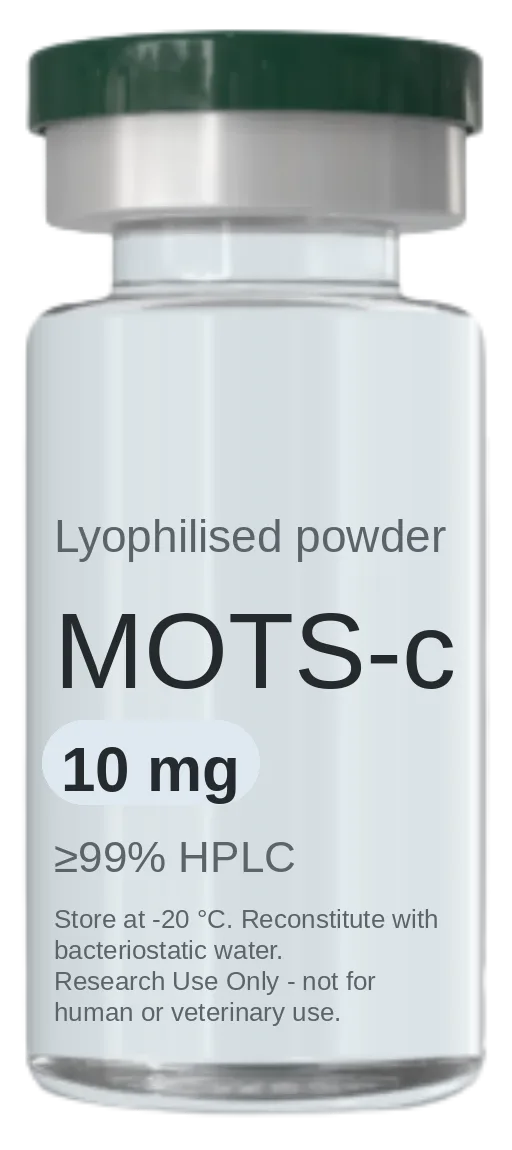
The MOTS-c lot corresponds to task number 136923. Purity was 99.669%, with 11.31 mg of content in the vial.
The GHK-Cu lot carries task number 204977, with a 50 mg labeled vial.
The combined BPC-157 and TB-500 lot carries task number 204975, with 5 mg of each compound in a 10 mg total vial.
All four come from the same laboratory and the same date of analysis, which makes the conditions under which they were measured directly comparable.
Two of the four certificates support direct verification on the Janoshik portal. The other two have their numbers published, but the laboratory's portal returns an error when those queries are attempted. That does not invalidate the analyses, but it limits independent online verification to the first two at this time.
What documents are not certificates of analysis
Several document types circulate under the name "certificate of analysis" without being one:
- Technical data sheets or manufacturer specifications. These describe what a compound should contain according to its formula — not what a specific lot that reached a specific vial actually contains.
- Safety data sheets (SDS/MSDS). These cover hazards, storage and handling. They do not measure purity.
- Supplier's own certificates. The seller analyzed their own product and signed the result. That may be accurate, but there is no way to verify it independently.
- Documents without a task number. If the file carries no number assigned by an external laboratory, there is nothing to search on any server the supplier does not control.
The practical test is straightforward: is there a task number issued by an independent laboratory that can be looked up in that laboratory's database? If yes, it is a certificate. If not, it is supplier documentation.
How to ask a supplier for the task number
The question is direct and can be asked before any order is placed: "Does the lot you are offering have a task number from an independent laboratory? Can you share it?"
A supplier with real analyses can answer in two steps: they provide the number and specify where to verify it. If the answer is a PDF with no task number, or a vague explanation of internal quality procedures, that response itself is information.
For compounds in PeptoClinic's catalogue, the task number for each available lot is provided as part of the documentation shared at the time of quoting.
For laboratory research only
All material that PeptoClinic supplies is strictly for Research Use Only (RUO): in vitro research and work in controlled laboratory settings.
No compound in the PeptoClinic catalogue is a medicine, a supplement or a food. None has been evaluated or approved by ANMAT, the FDA or any other regulatory authority for use in humans or animals. PeptoClinic is not a pharmacy, a clinic or a source of guidance on dosing, protocols or administration routes.
Frequently asked questions
What is the difference between a task number and a lot number?
A lot number identifies the production batch — the batch the manufacturer produced. A task number identifies the analysis — the work the laboratory performed on a sample from that lot. A single lot can have multiple task numbers if different samples were analyzed or if analysis was repeated at different times. For verifying the quality of a received lot, the relevant number is the laboratory's task number, not the manufacturing lot number.
Does a task number guarantee the compound is authentic?
Not by itself. It guarantees that a record with that number exists in the laboratory's database. The actual verification comes from confirming that the record describes the compound of interest, that the date corresponds to the lot received, that the data in the record matches what the certificate states, and that the result is retrievable from the laboratory's own system. A task number without those conditions is only a number.
Do all laboratories use the term "task number"?
No. Depending on the laboratory, the same field may appear as job number, analysis number, report ID or certificate number. The term varies; the function is the same: a code that ties the document to the laboratory's internal record and can be searched independently of the supplier.
Can I verify the task numbers for PeptoClinic's lots?
All four task numbers are published on [the quality page](/en/quality/). For two of the four lots, the Janoshik Analytical verification portal returns the full record when the number is entered. For the other two, the online verification system currently returns an error — the numbers are published, but independent online confirmation is available for the first two at this time.
How long does a laboratory take to issue a certificate?
That depends on the laboratory and its volume of work. The relevant question for a buyer is not the turnaround time but whether the date of analysis precedes the dispatch of the lot. A certificate dated after a shipment was sent does not analyze what was received.
Is a purity of 99% better than 98%?
In absolute terms, fewer impurities is better. In practical terms, the difference between 98% and 99% is less significant than the difference between having a verifiable independent analysis and not having one. The generally accepted floor for research peptide work is 98% HPLC. Both PeptoClinic lots with purity reported on the certificate exceed that threshold: Retatrutide at **99.893%** and MOTS-c at **99.669%**.
What if a certificate has no task number?
Then it is not a certificate issued by an independent laboratory. It may be a technical data sheet, a manufacturer's document, or a file with a recognized laboratory's name on it. Without an external task number, there is no way to verify that the laboratory performed that analysis on that lot. The absence of a number does not prove the document is fraudulent, but it makes independent verification impossible.
Why do some certificates say "approved" rather than giving an exact percentage?
Because they combine two separate things: the analytical result and the quality control decision. "Approved" or "conforms" is the supplier's conclusion relative to their own acceptance criteria — not the value the instrument produced. A complete certificate includes both: the exact figure the analysis returned and, where applicable, the acceptance conclusion drawn from that result.
Compounds mentioned
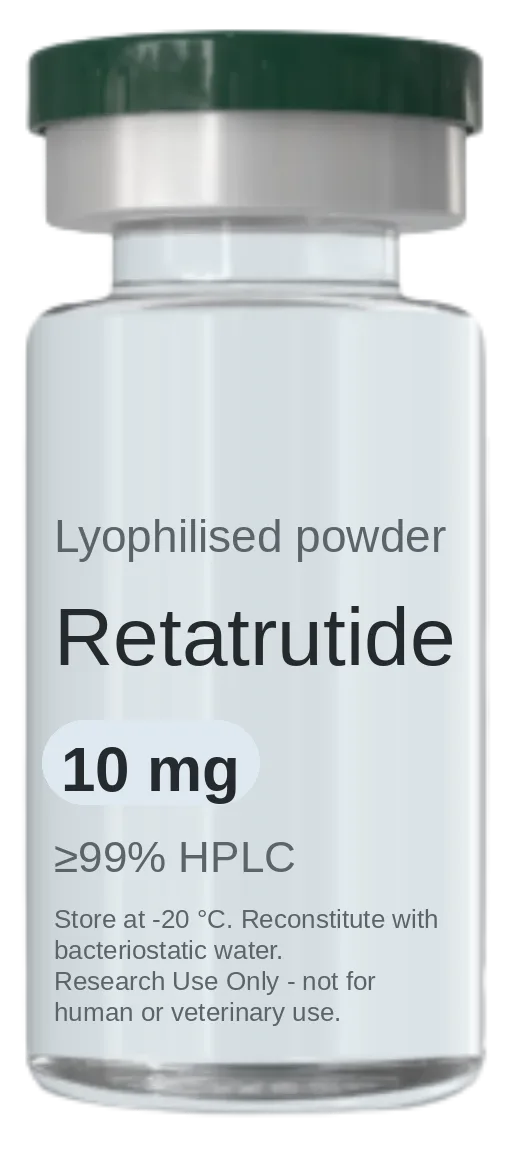
Retatrutide
Triple-agonist metabolic research peptide targeting GLP-1, GIP and glucagon receptors.
- Purity:
- ≥99% HPLC
- Sizes available:
- 10 mg
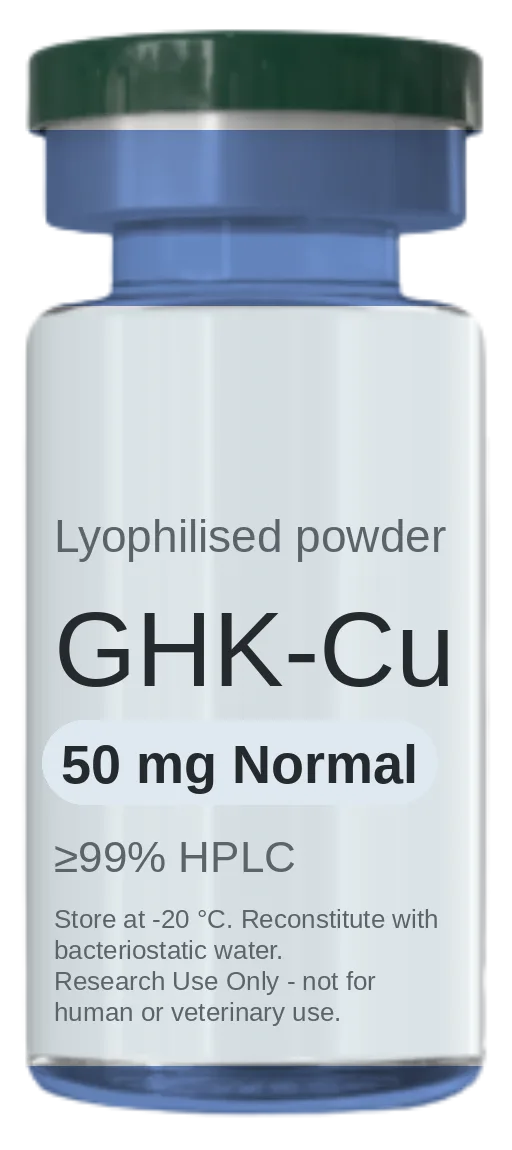
GHK-Cu (Copper Peptide)
Copper-binding tripeptide studied in extracellular matrix and dermal research models.
- Purity:
- ≥99% HPLC
- Sizes available:
- 50 mg Normal – 50 mg Plus
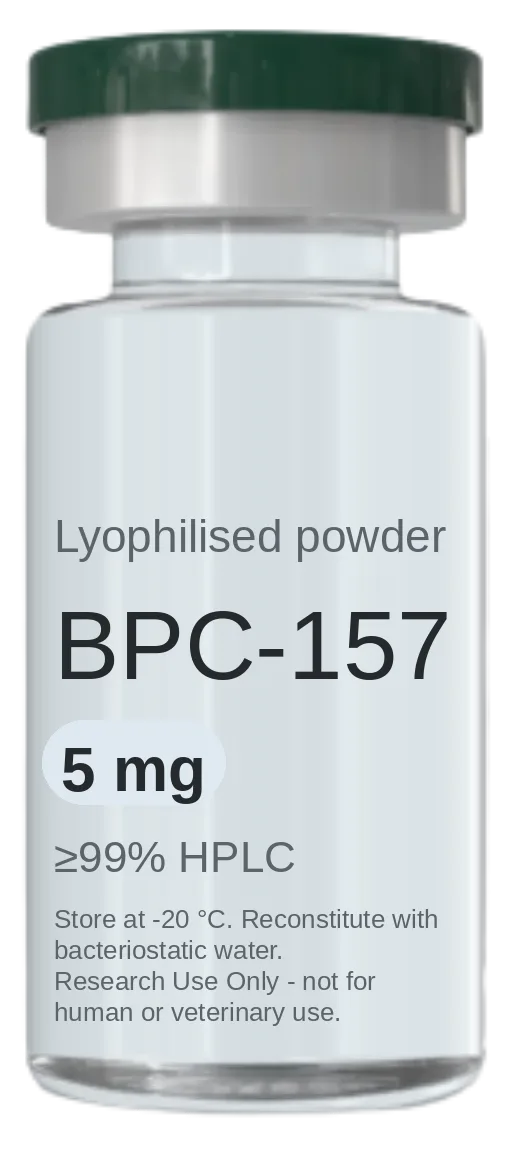
BPC-157 + TB-500
BPC-157 and TB-500 in a single vial — the pairing most studied together in tissue-repair research.
- Purity:
- ≥99% HPLC
- Sizes available:
- 5 mg + 5 mg
The consultation
One intake that settles goals, history and contraindications alongside compound, quantity, documentation and route — reviewed by a physician before anything ships.
More notes
-
Thymosin Alpha 1 vs BPC-157: Differences
Thymosin Alpha 1 and BPC-157 study different pathways — immune modulation vs tissue repair. RUO material with a verifiable COA.
-
USD Limit for Simplified Courier to Argentina
Argentina's simplified courier regime covers shipments up to USD 3,000 FOB; above that, formal customs clearance is required.
-
Peptide Shipments to Argentina: Annual Limit
What Argentina's postal shipment regime says about how many research peptide packages you can receive per year.