
Note
Net content in a certificate of analysis
Net content in a CoA is the measured mass of peptide in the vial — it differs from the label because of salt form and hydration water.
Net content is the mass of peptide the laboratory measured in the vial, expressed in milligrams. It rarely matches the number on the label, and that gap is not a manufacturing error. It is the predictable result of how lyophilised peptides are weighed and the chemical form they take after purification.
What the number on a vial actually declares
When a manufacturer labels a vial "10 mg retatrutide," that figure is a target loading claim — what was intended to go in — not a direct measurement of what is inside. Lyophilisation, counter-ions, and residual moisture make the real mass almost always different from the stated amount.
Net content in a certificate of analysis (CoA) is the mass the laboratory found when it weighed the sample before analysis. In the Janoshik Analytical report for PeptoClinic's retatrutide lot (task 136921, analysed 13 April 2026), the vial was labelled 10 mg and the net content was 11.96 mg. For the MOTS-c lot from the same date (task 136923), net content was 11.31 mg.
That difference is not extra peptide and not a labelling error. It is the gap between the weight of the peptide as a salt — the form it exists in after HPLC purification — and the weight calculated as free base, which is what labels typically declare.
Why the measured mass differs from the label
Synthetic peptides are purified by reverse-phase chromatography. The process uses trifluoroacetic acid (TFA) or acetic acid as part of the mobile phase, and the peptide ends up associated with those molecules as a counter-ion: a TFA salt or an acetate salt. When the sample is lyophilised, the powder in the vial is that salt, not the pure free base.
The vial label typically declares content as the free-base equivalent. The laboratory weighs the salt. The difference between those two figures is the mass of the counter-ion and the water of hydration. It is not contamination and not filler — it is the chemistry of how these materials are produced.
The size of the gap matters. A vial labelled 10 mg that weighs 11.96 mg has a ratio consistent with a TFA salt of a peptide of that molecular size. A vial that weighs 16 mg against a 10 mg declaration needs an explanation: it could indicate residual solvent the drying process did not remove, or a lower actual peptide quantity compensated by extra mass. The way to distinguish them is to cross net content with purity percentage.
Net content and purity are separate measurements
Purity percentage measures what fraction of the total analysed sample is the correct peptide — not how much the vial weighs. It is calculated from the area under the HPLC chromatogram: if 99.893% of the peak area belongs to the retatrutide peak and the remainder to impurities, purity is 99.893%. That figure says nothing about absolute mass.
Net content is the total weight of the analysed sample. If that weight is 11.96 mg and purity is 99.893%, the retatrutide within those 11.96 mg is approximately 11.947 mg. The remaining 0.013 mg are impurities.
Evaluating a lot requires both figures together. High net content with low purity means a lot of material, most of it impurity. High purity with unusually low net content may indicate an underfilled vial. A CoA that shows only purity and omits net content is an incomplete document. The PeptoClinic quality page explains what each lot report includes and why those specific data points are the ones that matter.
Reading these sections in a real report
A Janoshik Analytical report has a header listing the compound, task number, and analysis date. In the body:
- Net content: mass in milligrams weighed by the laboratory.
- Purity: percentage calculated from HPLC peak area.
- Chromatogram: the separation graph. The main peak is the peptide; minor peaks are impurities.
- Test method: the HPLC protocol used, including detection wavelength. UV at 220 nm is standard for peptides because the amide bond absorbs in that region.
The task number allows the report to be traced back to the laboratory. Some Janoshik reports include an active verification link; others provide the task number without a direct URL. In either case, the number is what lets a buyer contact the laboratory and confirm the document is genuine. A CoA without a task number is not verifiable.
PeptoClinic publishes task numbers for all analysed lots. For retatrutide the number is 136921; for MOTS-c it is 136923. Full documentation is available on request at [email protected].
What net content does not say
Net content answers one question: how many milligrams of material are in the vial at the time of analysis. It does not say:
- Whether the material is the correct compound. That is confirmed by purity and, when included, a mass spectrum.
- Whether the lot is endotoxin-free. That requires a separate LAL assay, which not every supplier performs.
- Whether the material was produced under sterile conditions. There is no way to infer that from weight alone.
- How long the compound retains integrity in storage. That depends on peptide stability, storage temperature, and vial conditions.
When evaluating a supplier, net content is one data point among several. A complete CoA includes the chromatogram, purity, net content, analysis conditions, and the signature of the responsible analyst. The absence of any of those elements is a reason to ask questions before ordering.
This material is for laboratory research only
The peptides PeptoClinic Research Supply provides are research materials intended strictly for in vitro use and controlled research environments. They are not medicines. They are not approved or intended for human or veterinary consumption, diagnosis, or treatment, and they have not been evaluated by any regulatory authority for any therapeutic indication.
PeptoClinic is not a pharmacy, a clinic, a compounding facility, or a source of dosing or administration guidance. The full catalogue lists compounds available in lyophilised vial format for research. Enquiries about shipments to Argentina and import documentation are handled at [email protected].
Frequently asked questions
Does a net content higher than the label mean there is more peptide than declared?
Not necessarily. The difference almost always corresponds to the mass of the counter-ion — TFA or acetate — and the water of hydration that accompany the peptide in its lyophilised salt form. Labels typically declare the free-base equivalent; the laboratory weighs the complete salt. The actual quantity of active peptide is estimated by combining net content with purity percentage, not by comparing the measured weight directly to the label.
Is a net content lower than the label a sign of fraud?
It can be a normal filling variation or it can indicate a problem. What matters is the magnitude and whether the supplier can support it with a chromatogram. A shortfall of a few percent within process tolerance is not alarming; a 30% shortfall without analytical documentation warrants an explanation before proceeding.
Could a supplier falsify the net content on a CoA?
A falsified CoA exists as a document. The only reliable defence is to verify the task number directly on the issuing laboratory's site or by contacting the laboratory through its published channels. If a document has no task number, or if the number does not match the laboratory's records, the report is not authentic.
Does the purity percentage apply to the net content or to the free-base equivalent on the label?
It applies to what the laboratory analysed: the weighed sample, which is the lyophilised salt. The 99.893% purity Janoshik Analytical found for retatrutide lot 136921 means 99.893% of the chromatographic peak area belongs to the compound's peak within that sample. It is not a percentage calculated against the label weight.
Does the net content on a CoA change if the vial is stored longer?
The CoA reflects the state of the lot on the date of analysis, which is declared in the report header. What can change over time is the integrity of the compound inside the vial, but the original CoA does not measure that — a new analysis of the same lot at a later date would be required.
What laboratories issue verifiable CoAs with net content for peptides?
Janoshik Analytical issues the reports for PeptoClinic lots. Other laboratories that analyse synthetic peptides include Intertek and SGS, among others. What matters is that the laboratory is independent of the supplier and that the report number allows the document's authenticity to be confirmed at the source.
Can I request the CoA for a specific lot before placing an enquiry?
PeptoClinic publishes task numbers for analysed lots and provides documentation on request. For compound-specific documentation or to ask about availability, the contact is [email protected]. The [quality page](/en/quality/) summarises what is published for each lot.
What is the difference between an external laboratory CoA and an internal quality control report?
An external CoA is a measurement made by a third party with no commercial interest in the result and no direct relationship with whoever is selling the lot. An internal quality control report is produced by the manufacturer using their own equipment. The external report is verifiable at the source; the internal one is not, without direct access to the supplier's laboratory. For research materials, the value lies in the external report with a traceable task number.
Compounds mentioned
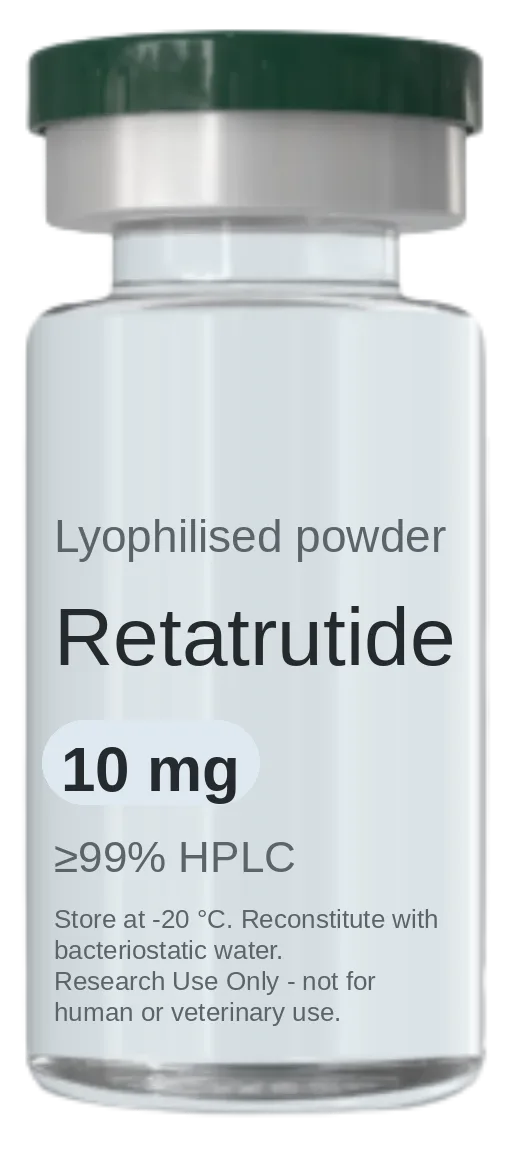
Retatrutide
Triple-agonist metabolic research peptide targeting GLP-1, GIP and glucagon receptors.
- Purity:
- ≥99% HPLC
- Sizes available:
- 10 mg
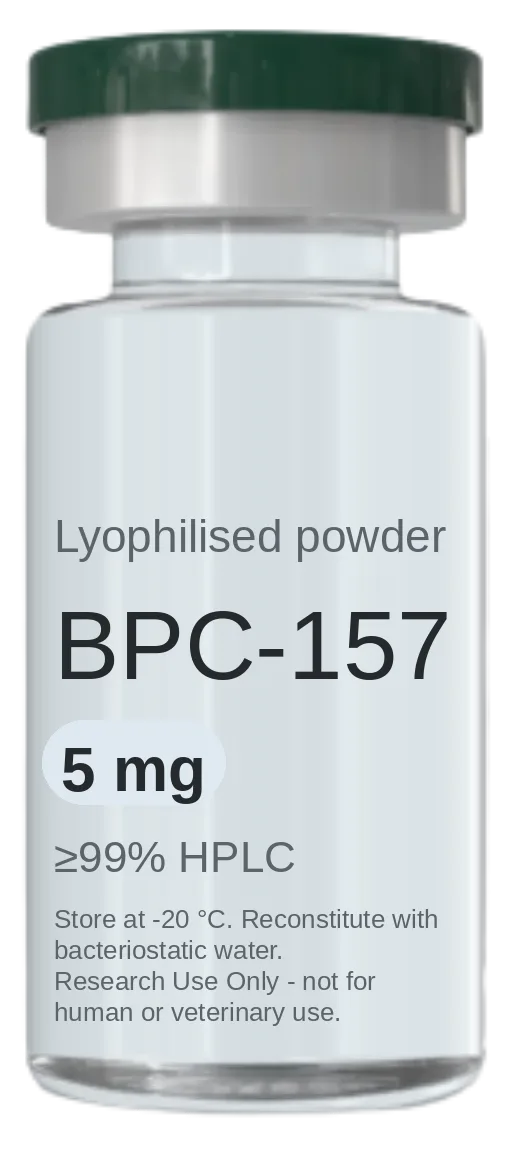
BPC-157 + TB-500
BPC-157 and TB-500 in a single vial — the pairing most studied together in tissue-repair research.
- Purity:
- ≥99% HPLC
- Sizes available:
- 5 mg + 5 mg
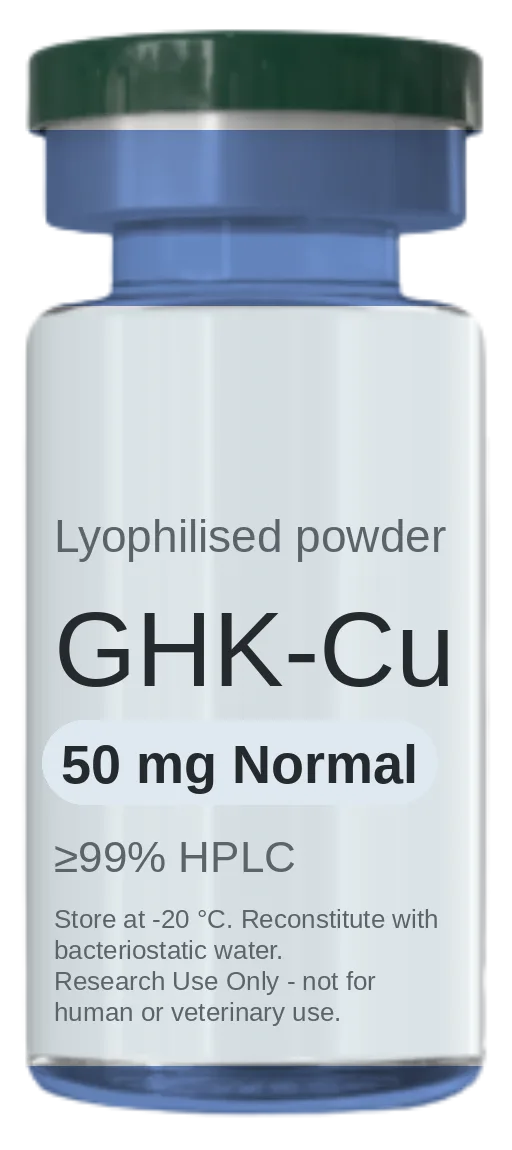
GHK-Cu (Copper Peptide)
Copper-binding tripeptide studied in extracellular matrix and dermal research models.
- Purity:
- ≥99% HPLC
- Sizes available:
- 50 mg Normal – 50 mg Plus
The consultation
One intake that settles goals, history and contraindications alongside compound, quantity, documentation and route — reviewed by a physician before anything ships.
More notes
-
No Certificate of Analysis, No Peptides
What it means when a research peptide supplier can't produce the batch-specific certificate of analysis, and why that gap alone is disqualifying.
-
Bonded Warehouse Deadline Before Abandonment
Argentine customs gives importers roughly 90 days to clear research peptides from bonded storage before the lot is declared abandoned.
-
What Is Argentina's Statistics Fee?
Argentina's statistics fee adds to the cost of importing a research peptide: what it taxes, how it's calculated, and what paperwork matters.