
Note
Peptide Purity by HPLC: How It's Calculated
HPLC purity is the percentage of the main peak area over total chromatogram area. What that figure measures, what it misses, and how to read a CoA.
HPLC purity for a peptide is the percentage of the total chromatogram area that belongs to the main peak. If the target peptide accounts for 99.3% of all integrated area and the remaining peaks sum to 0.7%, the reported purity is 99.3%. The formal name for this figure is normalized area percent — the standard method analytical laboratories use when issuing a certificate of analysis (CoA) for a research peptide lot.
How the analysis works
A small aliquot of the dissolved sample is injected into a chromatographic column. The mobile phase carries it through, and components separate according to their differential affinity for the stationary phase. Synthesis impurities — truncated sequences, deletion peptides, deprotection byproducts — elute at different retention times than the target compound and emerge as distinct peaks.
A UV detector measures absorbance as each component exits the column. For peptides, the detector is set to 215–220 nm, the range where the peptide bond absorbs. That wavelength responds to any fragment carrying peptide structure, not only to the target compound — which is precisely what makes it useful for detecting synthesis impurities across an entire lot.
The output is a chromatogram: absorbance plotted against retention time. Each peak represents one component of the mixture.
The area percent calculation
The instrument's software integrates the area under each peak. The formula is:
Purity (%) = (area of the main peak ÷ sum of all peak areas) × 100
A main peak with 993 area units and all other peaks summing to 7 gives (993 ÷ 1000) × 100 = 99.3%. No external calibration curve is needed because this is a relative measurement: what fraction of the total integrated absorbance belongs to the peak of interest. That also means the method works when no certified reference standard exists for the specific compound.
What impurities appear most often
Solid-phase peptide synthesis (SPPS) generates two main categories of impurities:
- Truncated or deleted sequences. Each amino acid coupling step is never fully quantitative. A 20-residue peptide synthesized at 98.5% coupling efficiency per step accumulates byproducts that no post-synthesis purification removes entirely.
- Deprotection byproducts. Protecting groups are removed in a single cleavage step at the end of synthesis. Traces of those byproducts can persist in the finished lot.
Both categories elute at different times than the target peptide and appear as separate peaks in the chromatogram. That separation is what makes them countable.
What ≥99% HPLC means in practice
A peptide declared at 99.0% HPLC purity contains 1% of material other than the target compound, distributed across all minor peaks. That fraction may include synthesis fragments — but also water of crystallization, counterions from the purification process, or byproducts that do not absorb at 215 nm.
The last category is the method's structural boundary. Normalized area percent measures precisely what the UV detector detects. Materials that do not absorb at the working wavelength — water, inorganic salts, most counterions — are invisible to the detector and do not enter the denominator. A lot could carry inorganic content that does not appear anywhere in the chromatogram.
For a laboratory working with a well-characterized compound, HPLC purity is the reference parameter for peptide synthesis impurities. Complementary methods — Karl Fischer titration for water content, mass spectrometry for molecular identity confirmation, elemental analysis for inorganic impurities — complete the picture when the application requires it.
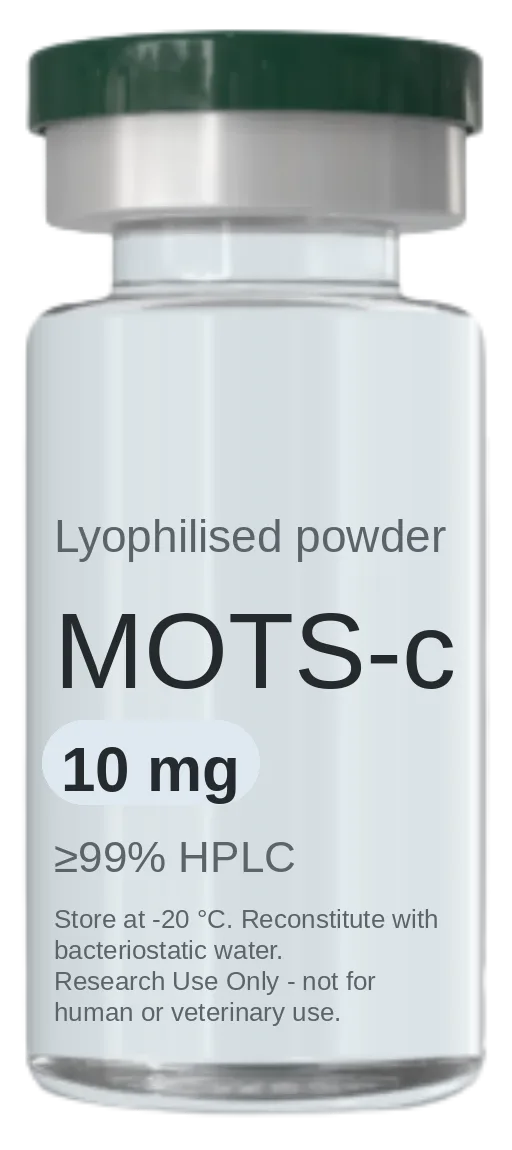
PeptoClinic supplies research peptides at ≥99% HPLC purity, verified by an independent laboratory. The Retatrutide and MOTS-c lots analyzed by Janoshik Analytical in April 2026 returned 99.893% and 99.669% respectively. The lower figure — 99.669% — is the floor for what has been dispatched from this catalogue, and it is the number that describes the line honestly rather than the one that reads better in a heading.
How to read a certificate of analysis
A useful HPLC purity CoA includes at minimum:
- Compound name and lot number
- Chromatographic conditions: column, mobile phase composition, gradient, detector wavelength
- Retention time of the main peak
- Area percent of the main peak
- The chromatogram itself, or a direct reference to where it can be retrieved
- Analysis date and analyst identifier or signature
What should not be accepted as purity evidence: a number in a table with no chromatogram attached, a PDF with no date and no identified laboratory, a screenshot with no reference to the specific sample analyzed.
Janoshik Analytical reports include a verifiable task number, the chromatogram and the full spectrum. The four lots analyzed for PeptoClinic are linked from the PeptoClinic quality page, where each report can be opened directly. If a supplier cannot produce the chromatogram that generated their number, that number is unverified.
Conditions that change the reading
The same lot can return different figures under different analytical conditions. Three factors account for most of the variation.
Mobile phase gradient. A slower gradient resolves impurities that elute close to the main peak. A fast gradient can merge an adjacent shoulder into the main peak, leaving those impurities uncounted and the reported purity inflated.
Detector wavelength. At 215 nm the detector responds to nearly any peptide-containing structure. At 280 nm it responds only to aromatic residues such as tryptophan and tyrosine. A peptide without those residues, analyzed at 280 nm, produces a low or null signal — analytically useless as a sole purity measure for the vast majority of research peptides.
Column temperature. Temperature affects chromatographic separation and shifts retention times. Conditions must be recorded in the report for the analysis to be reproducible and interpretable by a third party.
A CoA that reports only the number without documenting the conditions under which it was produced is a partial document.
Research use only
The peptides analyzed by HPLC and supplied by PeptoClinic are designated strictly for Research Use Only (RUO): in vitro and laboratory work.
This material is not approved for human or veterinary use. It is not a medicine, a supplement or a consumer product. No claim on this site has been evaluated by the FDA, ANMAT or any equivalent authority. PeptoClinic is not a pharmacy, a clinic or a source of dosing or administration guidance.
Research programmes that need material with documented purity for in vitro applications can review the PeptoClinic catalogue or write to [email protected] to request a quote.
Frequently asked questions
What is the difference between HPLC purity and mass spectrometry purity?
HPLC purity (normalized area percent) measures what fraction of the total chromatographic area belongs to the target compound, detected by UV absorbance. Mass spectrometry confirms molecular identity by the mass of the ion but is not by itself a quantitative purity method. The two are complementary: MS confirms that the main peak is the correct compound; HPLC quantifies how much of the total sample corresponds to that peak.
Does 99% HPLC mean the vial is 99% pure peptide?
Not exactly. The 99% figure is the UV-detected area assigned to the main peak as a fraction of all detected area. Material that does not absorb at the working wavelength — water, counterions, inorganic excipients — does not appear in the chromatogram and does not enter the denominator. HPLC purity is the standard for peptide synthesis impurities; inorganic content is quantified by separate methods when the application requires it.
Why does the chromatogram matter and not just the number?
A number without a chromatogram is not verifiable. A well-resolved chromatogram shows whether secondary peaks exist, whether the main peak carries shoulders indicating co-elution with impurities, and whether baseline integration was performed correctly. A figure in a table could derive from chromatographic conditions chosen to minimize impurity separation, or from an integration that absorbed an adjacent shoulder into the main peak area.
Which detector wavelength is correct for peptide purity?
The standard range is 215–220 nm because the peptide bond absorbs there, and the peptide bond is present in every synthesis fragment. Some laboratories also report at 254 nm or 280 nm as a supplementary check, but those wavelengths require specific residues and are not valid as a sole purity measure for most research peptides.
How do I verify that a Janoshik Analytical report is genuine?
Janoshik Analytical assigns a task number to each analysis. That number can be used to retrieve the report directly at janoshik.com. PeptoClinic's reports include the task number; two of the four published lots carry a working verification link. The remaining two have a key but no working address, because the verifier at www.janoshik.com/verify/ returned an error when checked — that is noted in the documentation rather than omitted.
How often is each lot analyzed?
Each lot receives its own analysis before dispatch. Results from a prior lot are not carried over to a new one. The four reports published by PeptoClinic correspond to four distinct lots analyzed on April 13, 2026. The task number identifies the specific lot, not the compound in general.
What happens if a lot falls below 99%?
That lot is not supplied under the ≥99% HPLC specification. The lowest purity PeptoClinic has published to date is 99.669% (MOTS-c, task 136923). That figure — not the highest — is the one that describes the real floor of what has been dispatched.
Does HPLC purity change during storage?
Yes. Peptide degradation during storage generates fragments that would appear as additional peaks in a subsequent analysis. Lyophilized peptides are stored at low temperatures for this reason, and analyses are performed before dispatch, not after extended warehouse storage. A purity figure on a CoA reflects the lot at the time of analysis.
Compounds mentioned
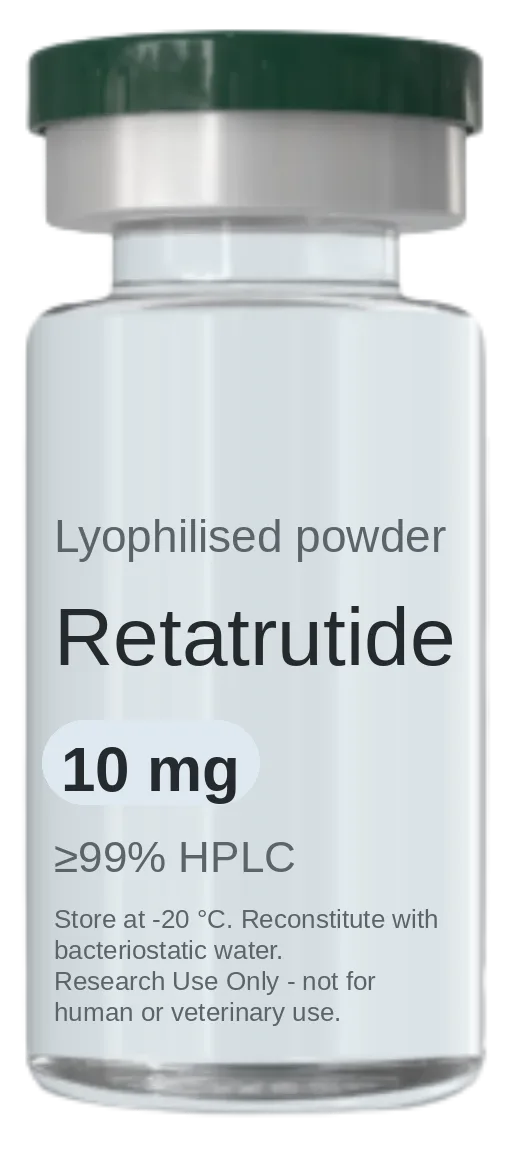
Retatrutide
Triple-agonist metabolic research peptide targeting GLP-1, GIP and glucagon receptors.
- Purity:
- ≥99% HPLC
- Sizes available:
- 10 mg
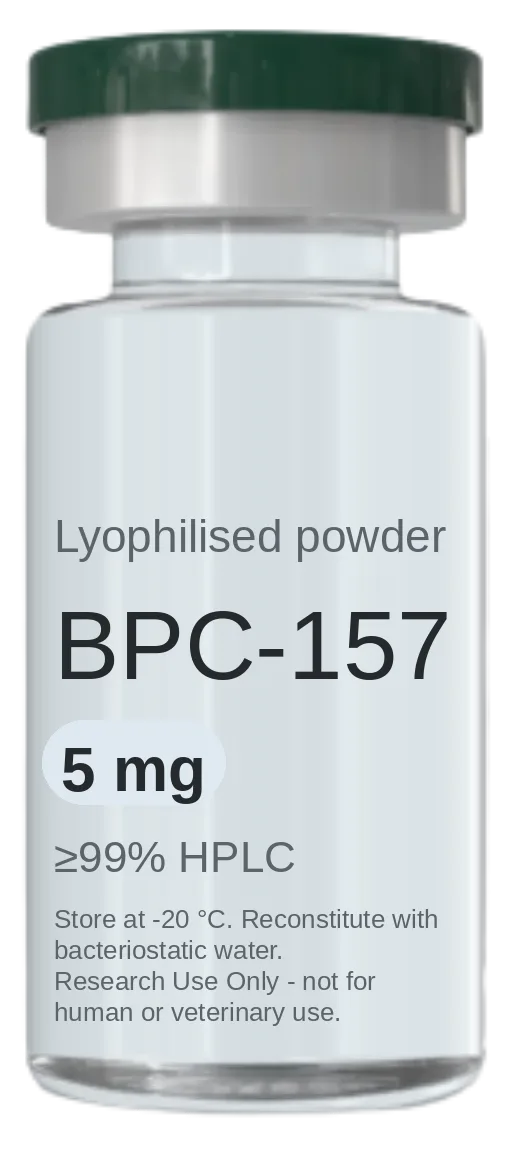
BPC-157 + TB-500
BPC-157 and TB-500 in a single vial — the pairing most studied together in tissue-repair research.
- Purity:
- ≥99% HPLC
- Sizes available:
- 5 mg + 5 mg
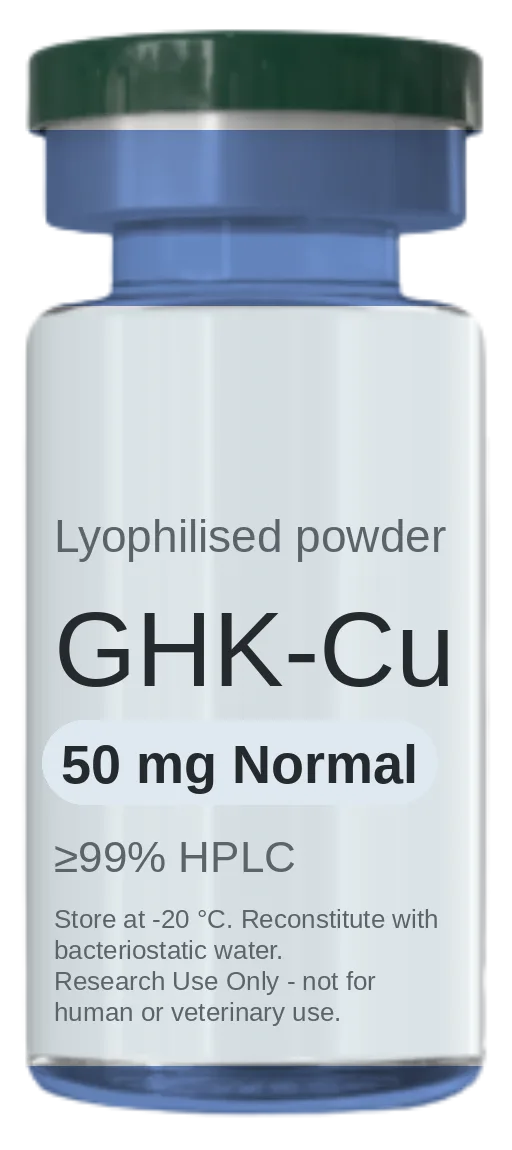
GHK-Cu (Copper Peptide)
Copper-binding tripeptide studied in extracellular matrix and dermal research models.
- Purity:
- ≥99% HPLC
- Sizes available:
- 50 mg Normal – 50 mg Plus
The consultation
One intake that settles goals, history and contraindications alongside compound, quantity, documentation and route — reviewed by a physician before anything ships.
More notes
-
Retatrutide vs CJC-1295: Key Differences
Retatrutide and CJC-1295 no DAC are different research peptide classes, with different mechanisms and different purity reports behind them.
-
Retatrutide vs BPC-157: Key Differences
Retatrutide and BPC-157 are research peptides with different mechanisms, families, and study objectives. Here's why they're not interchangeable.
-
Paying Argentina's Customs Duty on Peptides
How the import duty on a research peptide shipment is paid when it arrives in Argentina, and who actually collects it.