
Note
Peptide Solubility: Definition and Methods
What determines peptide solubility, how laboratories measure it, and why it matters for designing research experiments.
Peptide solubility is the maximum concentration a peptide can reach in solution without precipitating, under defined conditions of pH, temperature, and solvent. It is expressed in mg/mL. The value determines which solvent to choose for a given research application and what concentrations are experimentally reachable. Laboratories measure it by three main methods: visual inspection of turbidity, nephelometry, and quantitative HPLC of the supernatant after centrifugation.
How amino acid composition determines solubility
A peptide is a chain of amino acids joined by peptide bonds. Each amino acid carries a side chain with distinct physicochemical properties. Aqueous solubility depends on how favorable the interactions are between those side chains and water.
Residues that carry charge at neutral pH — lysine, arginine, aspartate, glutamate — interact well with water and increase solubility. Hydrophobic residues — leucine, isoleucine, valine, phenylalanine, tryptophan — tend to associate with each other to minimize contact with the aqueous solvent. That tendency reduces solubility and can produce visible precipitates or submicroscopic aggregates.
A peptide where more than half the residues are hydrophobic has a high probability of being poorly soluble in aqueous buffers at neutral pH. Laboratories address this with co-solvents such as DMSO in small proportions, or by adjusting pH to ionize titratable groups and increase electrostatic repulsion between chains.
The role of pH
Solubility changes with pH because many functional groups have pKa values within the biological range. Histidine (pKa ~6.0), lysine (~10.5), arginine (~12.5), aspartate (~3.9), and glutamate (~4.1) change ionization state as the medium pH shifts.
At acidic pH, amino groups are protonated and net positive charge increases solubility for peptides rich in basic residues. At alkaline pH, carboxyl groups are deprotonated and solubility improves for acidic peptides. A peptide with a mixture of residues has an isoelectric point where net charge is zero and solubility reaches its minimum.
Adjusting the solvent pH above or below the isoelectric point is the first maneuver when a peptide precipitates under standard conditions.
How solubility is determined in the laboratory
Visual inspection
The simplest method: lyophilized peptide is added to a known volume of solvent, agitated, and observed. A clear solution indicates complete dissolution; turbidity or visible precipitate indicates the solubility limit has been exceeded. The method is fast and requires no specialized instrumentation, but it is subjective and does not detect submicroscopic aggregates that can compromise the quality of an assay.
Nephelometry
A nephelometer measures the intensity of light scattered by particles in suspension. More particles produce a stronger signal. This allows detection of the onset of precipitation before it is visible to the eye and allows solubility curves to be built across a concentration range. The method adapts to 96-well plates, making it suitable for screening multiple conditions in parallel.
Quantitative HPLC
The most precise method for research purposes. The peptide is prepared at the target concentration, centrifuged to sediment undissolved material, and the supernatant is injected into an HPLC system with UV detection. Comparison against a standard of known concentration gives the fraction that actually entered solution.
HPLC is the only method that distinguishes between dissolved peptide and peptide present as colloidal aggregates that do not sediment but are not in free monomeric solution. Purity measured by HPLC — the metric Janoshik Analytical reports in the batch documentation PeptoClinic publishes — is a property independent of solubility.
Factors that modify solubility
Temperature. Solubility generally increases with temperature, though some peptides show the inverse: heat-induced conformational changes expose hydrophobic residues and reduce net solubility.
Ionic strength. Adding salts can increase or decrease solubility. At low concentrations, salts shield charges and reduce inter-peptide repulsion (salting-in). At high concentrations, they compete with the peptide for solvation water and can precipitate it (salting-out).
Organic co-solvents. DMSO, acetonitrile, and ethanol are used to solubilize hydrophobic peptides. Their addition lowers the dielectric constant of the medium and reduces the tendency toward aggregation. Co-solvent concentration must be compatible with the intended experimental application.
Lyophilizate counter-ion. How the peptide was prepared before shipping affects its behavior in solution. A trifluoroacetate (TFA) counter-ion lyophilizate tends to reconstitute differently from an acetate counter-ion lyophilizate, even when HPLC purity is equivalent in both.
Solubility and purity: independent properties
A peptide can have high purity — 99% of the material is the correct sequence — and still have low solubility if that sequence is intrinsically hydrophobic. Neither property implies the other.
In the PeptoClinic catalogue, HPLC purity is the primary metric in batch documentation. Solubility does not appear in every standard certificate; when it is relevant to experimental design, it is worth requesting explicitly at the quotation stage, or consulting the published literature for the specific sequence.
For peptides such as BPC-157 and GHK-Cu, the literature records data on behavior in aqueous solution that guides buffer selection for in vitro research.
Aggregation: the problem that mimics insolubility
Aggregation occurs when several peptide chains associate into supramolecular structures — dimers, oligomers, fibrils — without necessarily precipitating. The result can be a visually clear solution where most of the peptide is in aggregate form rather than free in monomeric solution.
For peptides that form secondary structures in water — beta-sheets in particular — aggregation can be rapid and difficult to reverse. Strategies documented in the literature include chaotropic buffers (urea, guanidinium hydrochloride), controlled sonication, and working at low concentration. Protocols for this class of peptide are indexed on PubMed.
Research use only
PeptoClinic supplies research peptides strictly as Research Use Only (RUO) material, for in vitro and laboratory applications. No compound in the catalogue has been approved by the FDA, ANMAT, or any equivalent authority for therapeutic, diagnostic, or preventive use in humans or animals.
PeptoClinic is not a pharmacy, a clinic, or a healthcare provider. No prescription is written, filled, or required. The information in this article describes physicochemical properties of interest to researchers. It does not constitute guidance for use in persons.
Researchers who need solubility data for a specific compound can request it at the quotation stage by writing to [email protected].
Frequently asked questions
What does it mean when a peptide is described as "water insoluble"?
In practice, most peptides have some degree of aqueous solubility that varies with pH and temperature. The expression "water insoluble" is conventionally used when solubility falls below approximately 1 mg/mL under standard conditions — neutral pH, room temperature — a threshold that makes experimental work difficult without adjustments such as a pH change or the addition of organic co-solvents.
Does the certificate of analysis include a solubility figure?
Not always. A standard HPLC certificate reports purity, mass-spectrometry identity confirmation, and water content by Karl Fischer, but not solubility as a numerical value. If solubility is a critical parameter for the experiment, requesting it explicitly at the quotation stage or consulting the published literature for that specific sequence is the practical path forward.
Why does the same peptide sometimes dissolve better in dilute acetic acid than in pure water?
Peptides rich in basic residues — lysine, arginine — become protonated at acidic pH and acquire a net positive charge. That charge increases electrostatic repulsion between chains and promotes dispersion in the solvent. Dilute acetic acid (around 10%) and dilute hydrochloric acid are frequently used solvents in research for this class of peptide.
What is the difference between kinetic and thermodynamic solubility?
Thermodynamic solubility is the equilibrium value, measured after the system has had time to stabilize. Kinetic solubility is measured over short time scales, as in rapid assays that add water to a DMSO stock. For most peptides the difference is small, but for sequences that aggregate slowly it can be relevant to experimental design.
What is the isoelectric point and why does it affect solubility?
The isoelectric point (pI) is the pH at which the peptide carries zero net charge. At that value, electrostatic repulsion between molecules is minimal and the tendency to precipitate is at its highest. Working at least two pH units above or below the pI typically improves solubility. The pI is calculated from the pKa values of the ionizable residues in the sequence.
Does storage temperature affect how a lyophilizate reconstitutes?
A lyophilizate stored at −20 °C does not change composition with storage temperature, but moisture absorbed when the vial is opened can alter reconstitution behavior. To avoid condensation on the powder, the vial should be allowed to equilibrate to room temperature with the cap in place before opening.
Can solubility vary between batches of the same peptide?
It should be equivalent if the sequence and synthesis process are identical. In practice, differences in lyophilization method or counter-ion — TFA versus acetate — can produce batch-to-batch variation in solubility even when HPLC purity is the same for both batches.
What is the salting-out effect and when does it occur?
Salting-out occurs when salt concentration is high enough to compete with the peptide for solvation water. As available water decreases, the peptide tends to precipitate. The effect is relevant in experiments that combine high-ionic-strength buffers with peptides of low intrinsic solubility.
Compounds mentioned
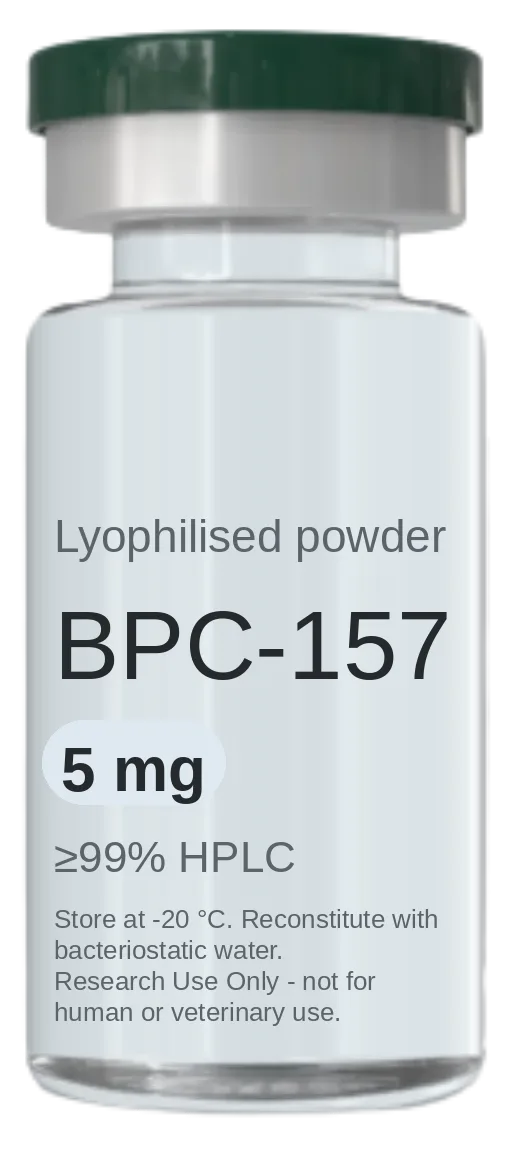
BPC-157 + TB-500
BPC-157 and TB-500 in a single vial — the pairing most studied together in tissue-repair research.
- Purity:
- ≥99% HPLC
- Sizes available:
- 5 mg + 5 mg
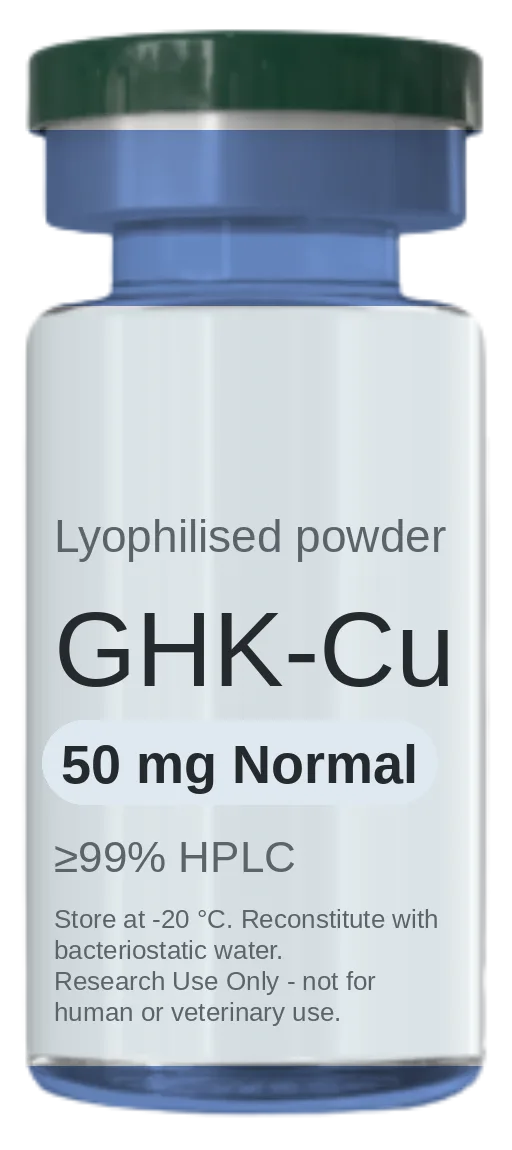
GHK-Cu (Copper Peptide)
Copper-binding tripeptide studied in extracellular matrix and dermal research models.
- Purity:
- ≥99% HPLC
- Sizes available:
- 50 mg Normal – 50 mg Plus
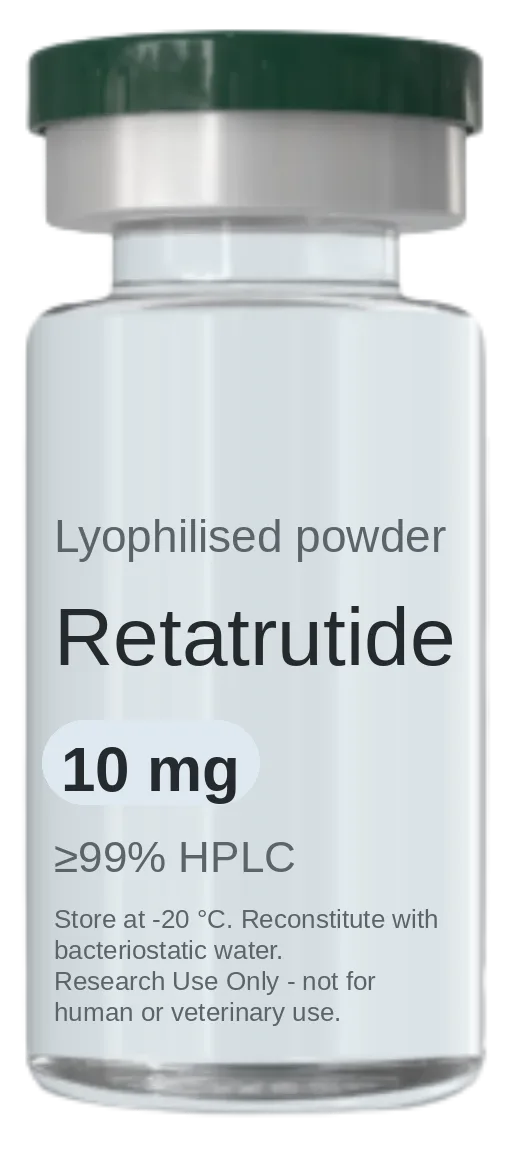
Retatrutide
Triple-agonist metabolic research peptide targeting GLP-1, GIP and glucagon receptors.
- Purity:
- ≥99% HPLC
- Sizes available:
- 10 mg
The consultation
One intake that settles goals, history and contraindications alongside compound, quantity, documentation and route — reviewed by a physician before anything ships.
More notes
-
No Certificate of Analysis, No Peptides
What it means when a research peptide supplier can't produce the batch-specific certificate of analysis, and why that gap alone is disqualifying.
-
Bonded Warehouse Deadline Before Abandonment
Argentine customs gives importers roughly 90 days to clear research peptides from bonded storage before the lot is declared abandoned.
-
What Is Argentina's Statistics Fee?
Argentina's statistics fee adds to the cost of importing a research peptide: what it taxes, how it's calculated, and what paperwork matters.