
Note
Peptide vs Protein: What's the Difference?
A peptide is a short amino acid chain. A protein is longer and folds into a stable three-dimensional structure.
A peptide is a short chain of amino acids joined by peptide bonds. A protein is a longer chain that folds into a defined, stable three-dimensional shape. The most widely used boundary between the two is fifty amino acids: below that, the compound is a peptide; above it, with its own spatial structure, a protein.
That size difference is not merely a naming convention. It determines how a compound is manufactured, how its purity is verified, how it is stored, and what class of research it supports.
Amino acids: the shared building block
Both peptides and proteins are built from the same starting material: amino acids. Each amino acid has an amino group (–NH₂), a carboxyl group (–COOH), and a side chain that makes it chemically distinct from the rest. When two amino acids link together, the carboxyl of one reacts with the amino of the next and releases a water molecule. The bond that forms is called a peptide bond, and it is the same bond whether the chain is three amino acids long or three hundred.
Two linked amino acids form a dipeptide. Three form a tripeptide. Once a chain reaches roughly ten to twelve, the compound is called a peptide. When it extends past fifty amino acids and folds into a stable three-dimensional structure, it becomes a protein.
The fifty-amino-acid boundary
The number fifty is conventional. Some reference texts put the cutoff at one hundred; others draw the line by molecular weight in kilodaltons. The structural difference the cutoff describes, however, is real.
A short peptide of twenty or thirty amino acids typically does not adopt a stable three-dimensional shape in solution. It is flexible and adapts to its environment. A protein, by contrast, folds into a specific conformation — alpha helices, beta sheets, loops — and that conformation is what determines its function. Hemoglobin transports oxygen because its folding creates a pocket that holds the heme group. If the protein loses that structure through heat or pH change — if it denatures — it stops working even though its amino acid sequence is unchanged.
The research peptides in PeptoClinic's catalogue — including BPC-157, ipamorelin, and retatrutide — contain between 5 and 39 amino acids. They are short enough to be synthesized chemically with precision and structured enough to interact with specific receptors in study models.
Synthesis: how each type is made
A research peptide is manufactured by solid-phase peptide synthesis (SPPS). The process adds amino acids one at a time to a growing chain anchored to a solid resin, in a sequence controlled by the operator. When the chain is complete, it is cleaved from the resin, purified by HPLC, and verified by mass spectrometry.
That verification is possible because the peptide is a defined molecule: every amino acid in the same order, with the same exact molecular mass. That identity can be confirmed and reported as a single number.
A full-size protein cannot be synthesized that way at scale. It is produced in biological systems — bacteria, yeast, Chinese hamster ovary (CHO) cells. The process is more complex, less controllable step by step, and yields a product with greater intrinsic variability. Verification is still possible, but the methods and the metrics are different: SDS-PAGE, size-exclusion chromatography, bioactivity assays.
Structure: four levels versus one or two
Biochemistry describes four levels of structure in proteins:
- Primary: the amino acid sequence.
- Secondary: locally repeating structures (alpha helix, beta sheet).
- Tertiary: the full three-dimensional fold of a single chain.
- Quaternary: the assembly of multiple chains into a functional complex.
A short peptide generally has only primary structure and, in some cases, elements of secondary structure. A protein can have all four. That added complexity is why proteins are more sensitive to temperature, pH, and denaturing agents, and why storage and cold-chain requirements carry different consequences depending on which type of compound is being handled.
Molecular weight follows the same logic. Common research peptides have molecular weights between 0.5 kDa and 5 kDa. Biologically relevant proteins start at the 5.8 kDa of insulin and reach 150 kDa for a monoclonal antibody or higher. Weight determines how a compound is filtered in in vitro renal models, how it crosses membranes in cell systems, and which analytical technique resolves it with the greatest precision.
Purity verification: what a real certificate shows
When PeptoClinic ships a lot to a researcher, it includes a certificate of analysis from [Janoshik Analytical](https://www.janoshik.com/) — an independent laboratory based in the Czech Republic — reporting HPLC and mass spectrometry results. The analysis dated April 13, 2026 found 99.893% purity for the retatrutide lot and 99.669% for MOTS-c.
Those figures are achievable because the compound is a defined peptide: the technique separates the compound's peak from any impurity and measures the proportion at that resolution. The 99.669% is the lowest purity published for current lots, and it is the figure PeptoClinic cites — not the best result — because a headline built on the highest figure breaks the day a different lot is published.
PeptoClinic's quality documentation includes the certificates of analysis for current lots, verifiable directly on the laboratory's site. For a protein biologic, the report would use different parameters that are not directly comparable to the HPLC figure of a synthetic peptide.
Research material, not for clinical use
The compounds PeptoClinic supplies are Research Use Only (RUO) material: in vitro studies and laboratory work. They are not medicines, not supplements, and not approved by any regulatory authority — FDA, ANMAT, or equivalent — for human or veterinary use.
PeptoClinic is not a pharmacy, not a clinic, and does not write or require prescriptions. Requests for guidance on administration, dosing, or protocols for use in people fall outside what PeptoClinic can respond to.
Frequently asked questions
How many amino acids separate a peptide from a protein?
The most widely used convention sets the boundary at fifty amino acids. Below that count, the compound is a peptide; above it, once it adopts a stable three-dimensional structure, it is a protein. Some reference texts use one hundred as the cutoff, or draw the line by molecular weight. The exact figure varies by source, but the structural difference it describes is consistent.
Is insulin a peptide or a protein?
Active insulin has 51 amino acids and sits in the grey zone of the boundary. Classical biochemistry classifies it as a protein because of its tertiary structure; endocrinology refers to it as a peptide hormone. In chemical synthesis it is treated as a low-molecular-weight peptide because its defined sequence allows the same manufacturing and verification methods as other synthetic peptides.
Why do peptides lyophilize with greater stability than proteins?
Lyophilization removes water from a compound to stabilize it during storage. Short peptides, which have no tertiary structure to lose, tolerate that process with less risk of denaturation. A protein that loses its fold during lyophilization may not regain it on reconstitution, which affects its utility in research. That is why research peptides are typically distributed as lyophilized powder.
What exactly is a peptide bond?
It is the covalent bond that forms when the carboxyl group of one amino acid reacts with the amino group of the next, releasing a water molecule. That bond holds every amino acid chain together, in both peptides and proteins. Its bond energy is high, which makes the chain stable under normal laboratory conditions and during storage at controlled temperature.
Do research peptides show activity in in vitro cell models?
The scientific literature available on [PubMed](https://pubmed.ncbi.nlm.nih.gov/) documents interactions between various peptides and specific cell receptors in in vitro models. That recorded activity is what generates research interest. In vitro studies are not equivalent to safety or efficacy data in living organisms, which require a different type of investigation under separate authorization.
How is the sequence of a synthetic peptide verified?
The standard tool is mass spectrometry: it compares the measured molecular mass against the theoretical mass calculated from the declared sequence. If they match, the sequence is correct. HPLC adds purity information — what fraction of what is in the vial is the declared compound, and what fraction is impurities or by-products of the synthesis process.
What is the difference between a peptide and a free amino acid?
A free amino acid is the individual molecule, unlinked to any other. A peptide has at least two amino acids joined by a peptide bond. The distinction matters in research because the linked form has physicochemical properties and receptor-interaction characteristics that are entirely different from those of the free amino acid. [GHK-Cu](/en/product/ghk-cu/), for example, is a copper tripeptide studied in cell culture models, with properties that glycine, histidine, and lysine do not have individually.
Can I review technical documentation before requesting a quote?
Yes. The [quality page](/en/quality/) includes the certificates of analysis for current lots, issued by Janoshik Analytical, with HPLC results and compound identity. For compounds without a visible certificate or for specific lots, a written inquiry to PeptoClinic's technical team returns a response within the next business day.
Compounds mentioned
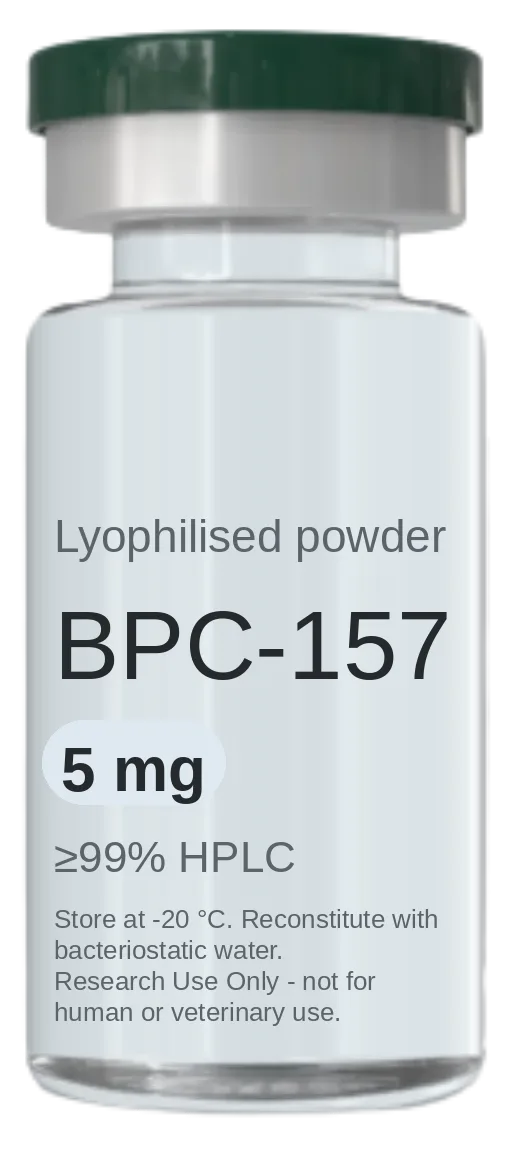
BPC-157 + TB-500
BPC-157 and TB-500 in a single vial — the pairing most studied together in tissue-repair research.
- Purity:
- ≥99% HPLC
- Sizes available:
- 5 mg + 5 mg
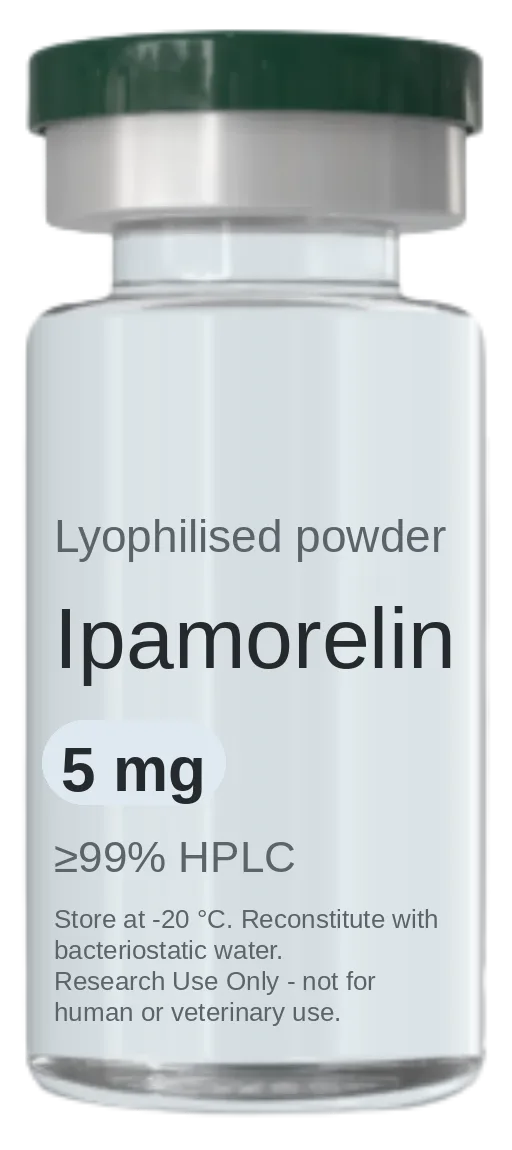
Ipamorelin
Selective ghrelin receptor (GHS-R1a) agonist pentapeptide.
- Purity:
- ≥99% HPLC
- Sizes available:
- 5 mg – 20 mg
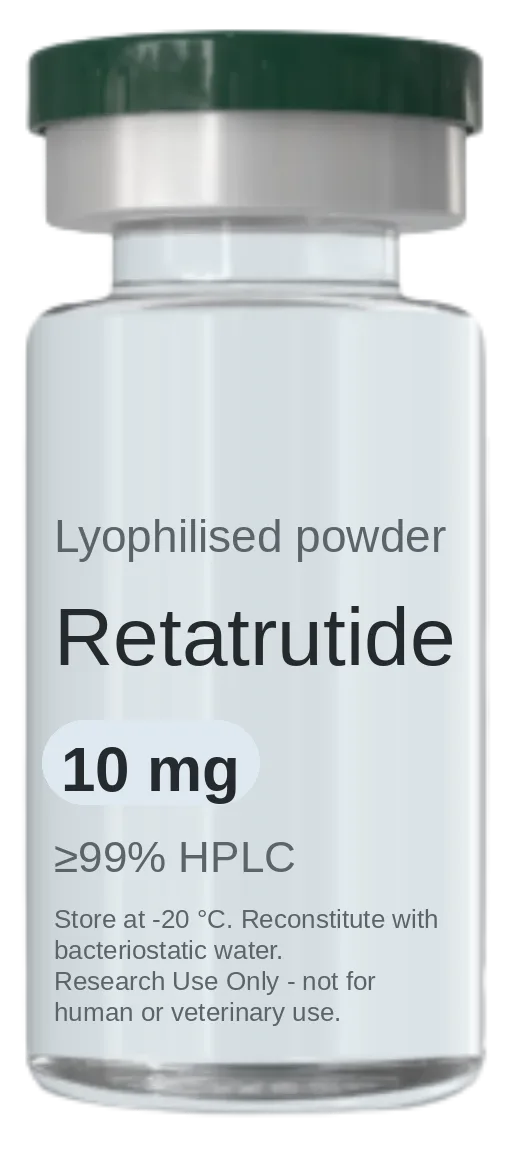
Retatrutide
Triple-agonist metabolic research peptide targeting GLP-1, GIP and glucagon receptors.
- Purity:
- ≥99% HPLC
- Sizes available:
- 10 mg
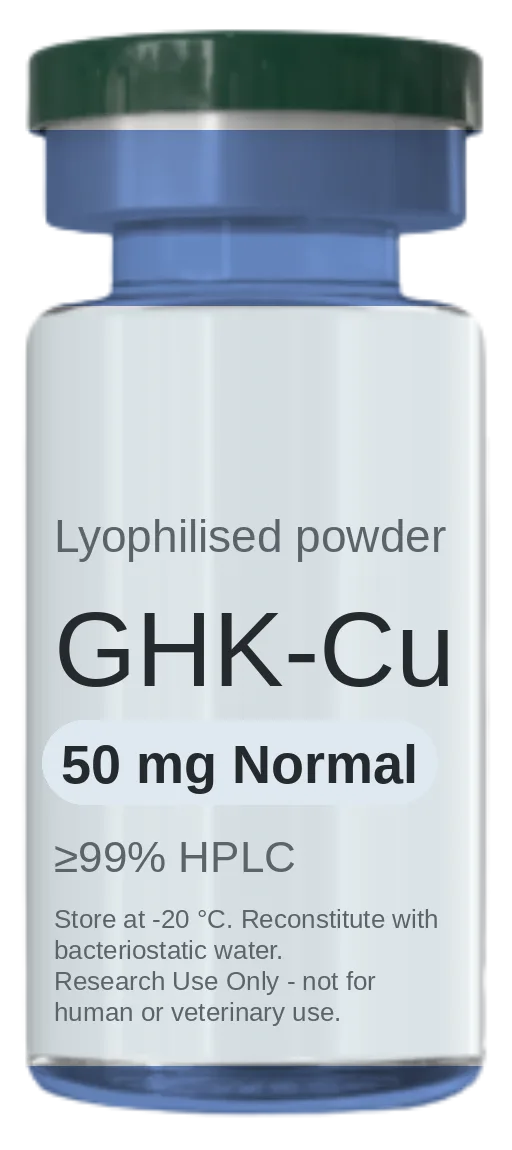
GHK-Cu (Copper Peptide)
Copper-binding tripeptide studied in extracellular matrix and dermal research models.
- Purity:
- ≥99% HPLC
- Sizes available:
- 50 mg Normal – 50 mg Plus
The consultation
One intake that settles goals, history and contraindications alongside compound, quantity, documentation and route — reviewed by a physician before anything ships.
More notes
-
Retatrutide vs. Tesamorelin: What's Different
Retatrutide and tesamorelin target different receptors and different research questions — here's what the documentation shows.
-
KPV vs. Selank: What's the Difference
KPV is an anti-inflammatory tripeptide; Selank is a nootropic peptide. We compare origin, research focus and documentation for each.
-
Importing Selank to Argentina for Research
Selank can be imported into Argentina as laboratory research material, with customs paperwork prepared for that purpose.