
Note
Peptides in Argentina: Own Use or Resale
The legal line between importing research peptides for your own lab and importing them to resell in Argentina, and what documentation changes.
Importing a research peptide for your own laboratory and importing the same product with the intention of reselling it are two different operations under Argentine customs and under the law — not two volumes of the same operation. The difference is not the number of vials. It is the declared use, and what that declaration allows afterward: a researcher bringing material into their own programme does so under a research destination, while someone planning to resell is, in practice, trying to place a product on the market for which no health registration exists in Argentina — and that reclassifies the operation entirely.
What does "own use" mean for a research peptide import?
Own use means the material enters to be used inside the facilities of the person who imported it — a laboratory, a university, a research centre — and does not leave that circuit again. The invoice and the supplier's documentation describe the product for what it is: reference material for in vitro research, not a medicine and not a supplement. That framing is what applies to the peptides quoted in the PeptoClinic catalog: each one is supplied strictly for laboratory research use (Research Use Only, RUO), never for human or veterinary consumption.
What changes when the intention is resale?
Resale means the importer is not the end user. They buy a lot, split it or redistribute it, and hand it to third parties. That movement takes the product out of the frame of "reference material for one's own assay" and places it in a commercial distribution chain — the same chain that ANMAT regulates in Argentina for any product intended for use in people. A research peptide does not carry that registration, because nobody submitted it, evaluated it, or approved it as a medicine or a supplement before any national authority. Reselling it under that expectation — even if the label says "for research" — puts into circulation a product that has no authorization for the use the final buyer will likely give it. That is the real distance between the two operations: it is not a longer form to fill out, it is an activity the Argentine health framework does not contemplate as lawful.
Why does resale run into the lack of a health registration?
Because the Argentine system has no intermediate category between "laboratory material" and "product for human consumption." A compound is registered as a medicine, registered as a dietary supplement, or not registered at all — and research peptides fall into neither of the first two categories, because nobody submitted them for that. As long as the declared destination is laboratory research, that absence of registration is coherent with the use: nobody is going to consume it. The moment the destination shifts to resale, to people who are going to use it on themselves, the absence of registration stops being an administrative detail and becomes the central problem of the operation.
How does a research peptide enter Argentina?
The shipment arrives as what it is: a sealed vial of lyophilized powder, with the supplier's documentation stating a research destination. It does not travel in a cold chain — lyophilized powder is stable at room temperature for weeks, so the box carries no coolant and no dry ice, just the vial protected from light with its desiccant. That holds equally for someone importing a single lot for their own assay and for any other recipient: the shipping method does not change with volume. What changes is the declared use and what the importer does with the product afterward. This site explains the dispatch process into the country on the shipping to Argentina page, and the retatrutide country page covers what that looks like for one specific compound.
What documentation has to travel with the shipment?
At minimum, a commercial invoice describing the product as research material, and the lot's laboratory report — the certificate of analysis (COA) showing what an independent third party found when they tested it. PeptoClinic publishes reports from Janoshik Analytical: the one for retatrutide, for example, found a purity of 99.893% on the lot analysed, and the one for MOTS-c, 99.669%. That second figure is the lowest of the four published reports, and it's the one worth looking at before assuming every lot performs like the best one. The quality page explains how to read a certificate like this line by line, and what to ask a supplier who doesn't provide one.
Someone importing for their own programme needs that document to justify the nature of the material to customs and to their own institution. Someone planning to resell does not solve the underlying problem with a COA: the certificate says what is in the vial, it does not authorize distributing it for a use the health framework doesn't cover.
Is there a volume difference between the two operations?
Volume is not the variable that defines the legal category, although in practice a large lot with no declared research destination tends to be the signal that triggers stricter scrutiny. A researcher can import several vials of the same compound to replicate an assay, and that stays own use if the final destination is their own laboratory. Resale, by contrast, is defined by destination — the product going out to third parties — not by quantity.
Does PeptoClinic sell for resale?
PeptoClinic is a technical supply consultancy: every shipment is quoted after a technical consultation about the compound, the purity specification, the quantity, and the lot documentation needed for dispatch. The material is supplied for laboratory research, not as merchandise for commercial redistribution. A researcher who needs, say, BPC-157 for their own assay can inquire directly about the compound and receive the corresponding lot documentation.
The material is for laboratory research, not for use in people
Everything supplied under this catalog is classified strictly as Research Use Only (RUO): material for in vitro and laboratory research. No product is approved or intended for human or veterinary consumption, for diagnosis, or for treatment, and no claims about these compounds have been evaluated by ANMAT, the FDA, or any equivalent authority. Anyone looking for a guide to using these compounds in people won't find one here, because that is neither the purpose of the product nor the role of this consultancy.
Frequently asked questions
What is the exact legal difference between importing for own use and for resale?
The difference is in the declared and actual destination of the product: own use means the material stays inside the facilities of the person who imported it, for their own research programme, while resale means a third party will receive it for another use — and that other use, in most cases, is a form of consumption no Argentine health authority has evaluated or approved for these compounds.
Does a researcher need a special permit to import a research peptide?
They need the shipment's documentation — the supplier's invoice and certificate of analysis — to correctly describe the product as research material, and that description has to be consistent with the actual use it will get. There is no health registration in Argentina for these compounds, so there is no prior approval process; what exists is the obligation that the declaration be true.
Why don't research peptides have a health registration in Argentina?
Because a health registration is processed for a product a person will consume, and nobody submitted these compounds to ANMAT with that destination. As long as the declared and actual use is laboratory research, that absence of registration is not an irregularity — it is consistent with what the product is.
Can a research peptide be resold if it's labelled RUO?
The RUO label describes the product; it does not change what the final buyer is going to do with it. If the resale is directed at people who will use the compound on themselves, the RUO label does not resolve the missing health registration for that use — it remains a product with no approval for human consumption placed into a commercial distribution chain.
What happens if the imported volume is small?
Volume does not change the legal category of the operation. A small lot declared and used for one's own research is own use; a small lot destined for third parties for another use is still resale, only at a smaller scale.
What documentation should a buyer ask a supplier for before importing?
An independent laboratory's certificate of analysis for the specific lot being shipped, not a generic certificate for the compound: the lot number, the date of analysis, the method used, and whether the lab offers a way to verify the result.
Does PeptoClinic provide lot documentation with each shipment?
Yes, lot documentation accompanies the quoted material, along with the invoice describing the product as research material. The purity reports published by Janoshik Analytical, with results between 99.669% and 99.893% depending on the compound analysed, are available for review before placing a request.
Is this article a guide to importing products for human consumption?
No. Everything this article describes applies to material classified as Research Use Only, for in vitro and laboratory research. No compound mentioned is approved for human or veterinary consumption, and this consultancy does not provide guidance for use in people.
Compounds mentioned
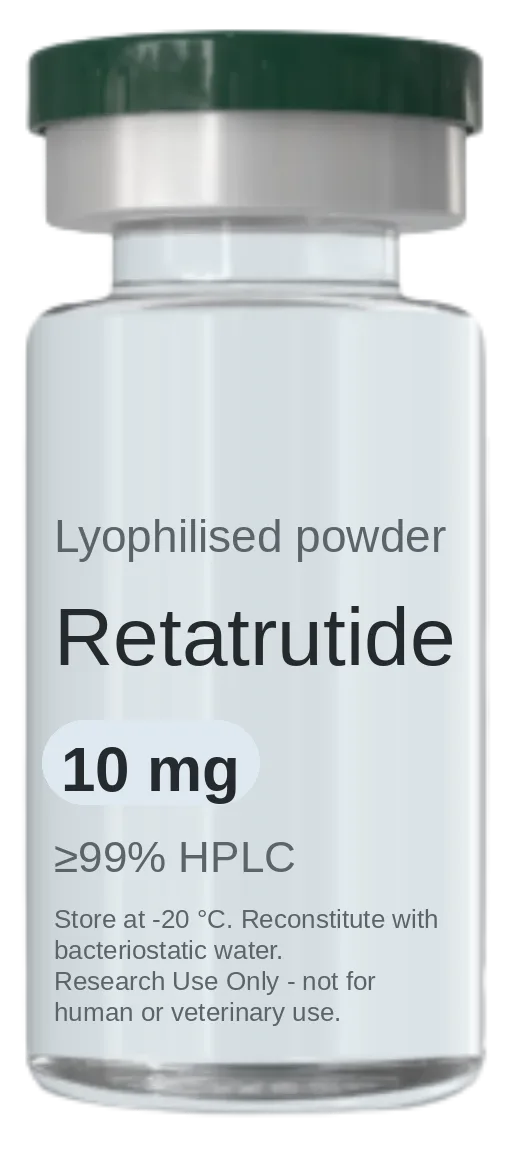
Retatrutide
Triple-agonist metabolic research peptide targeting GLP-1, GIP and glucagon receptors.
- Purity:
- ≥99% HPLC
- Sizes available:
- 10 mg
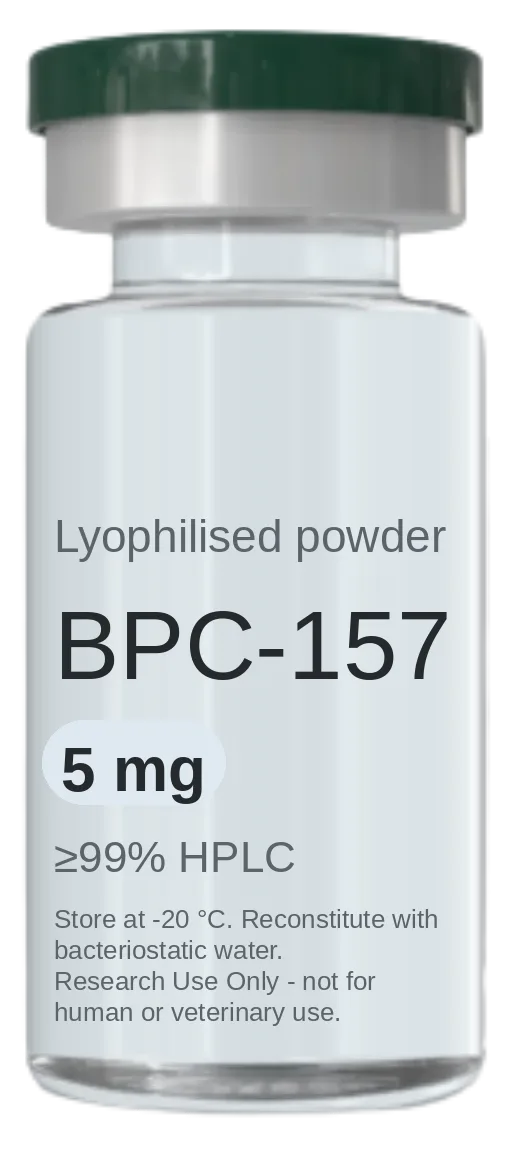
BPC-157 + TB-500
BPC-157 and TB-500 in a single vial — the pairing most studied together in tissue-repair research.
- Purity:
- ≥99% HPLC
- Sizes available:
- 5 mg + 5 mg
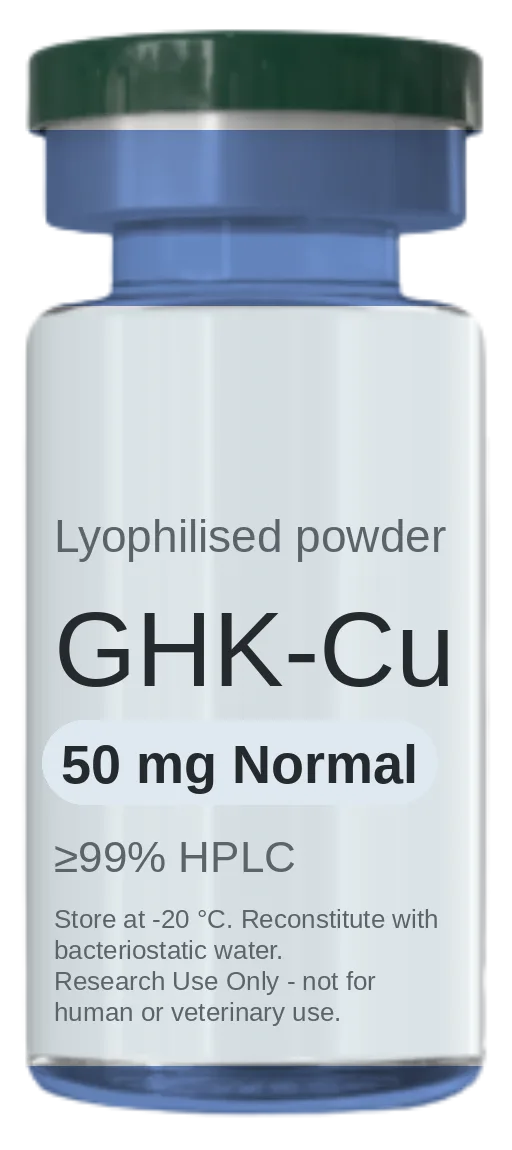
GHK-Cu (Copper Peptide)
Copper-binding tripeptide studied in extracellular matrix and dermal research models.
- Purity:
- ≥99% HPLC
- Sizes available:
- 50 mg Normal – 50 mg Plus
The consultation
One intake that settles goals, history and contraindications alongside compound, quantity, documentation and route — reviewed by a physician before anything ships.
More notes
-
Temporary Import Regime & Peptides
Temporary import covers goods that leave the country again; a research peptide shipment stays and gets used up.
-
Retatrutide vs GHK-Cu: What's the Difference
Retatrutide and GHK-Cu are different molecules studied for different reasons. Here's what each investigates and what documentation backs a batch.
-
Invoiced vs. Unbilled Peptide Suppliers
What changes when a research peptide supplier invoices the transaction versus one that takes payment and leaves no paper trail.