
Note
Peptides Stuck in Argentine Customs
What "in fiscal deposit" means for a research peptide shipment at Argentine customs, and the steps that get it released.
A shipment marked "in fiscal deposit" has been pulled out of the normal delivery flow by Argentine customs and is being held in an authorized warehouse until someone — the recipient, a customs broker, or an authorized third party — completes a pending step. It does not mean the package has been seized, and it does not mean it is lost. It means the shipment is paused, and there is a specific action that needs to happen before a clock starts running against it.
What fiscal deposit is and why a shipment ends up there
Fiscal deposit (depósito fiscal) is the holding stage for goods entering the country while their customs status gets resolved: a document is missing, a duty needs to be paid, an inspection was requested, or the recipient hasn't yet started the import clearance. It's a routine administrative step in international trade, not a penalty. The difference between a shipment that clears in a couple of days and one that sits for weeks almost always comes down to whether the paperwork traveling with the package was complete from the start.
For research material like peptides, the "in fiscal deposit" status usually shows up for one of these reasons:
- A missing or inconsistent commercial invoice — vague description of the contents, a declared value that doesn't match the paperwork, or no composition detail at all.
- No certificate of analysis (CoA), or any document confirming exactly what is inside the vial.
- An unclear tariff classification. If the declared tariff code doesn't match the product description, the system flags it for review.
- A red or orange channel in the customs selectivity system, which requires a physical or documentary inspection before release.
- A recipient without an active tax ID for imports, or one who hasn't started the clearance process in time.
What to do the moment the status shows "in fiscal deposit"
The first rule is not to let time pass. Fiscal deposit runs on a clock: once a shipment is there, a period begins — the length depends on the type of deposit and the import regime — after which customs can classify it as abandoned cargo and move toward auction or destruction. The exact deadlines and formal steps are published by Argentina's customs authority, which is the source to confirm current timeframes at the moment they apply to you.
In practice, resolving it means:
- Confirming the exact reason for the hold. The courier or postal carrier that brought the shipment can usually tell you whether it's a documentation, a duty, or a classification issue. Without that, there's nothing concrete to fix.
- Completing or correcting the missing documentation. If the hold is because the certificate of analysis or a more precise content description is missing, that's what needs to be provided — and it's exactly what a serious supplier should be able to hand over without delay.
- Starting the import clearance if it hasn't been filed yet, through a customs broker or the simplified regime that applies given the shipment's value and type.
- Paying any duties owed, if that was the reason for the hold in the first place.
- Following up actively. A fiscal deposit hold doesn't clear itself — someone has to file the paperwork.
What documentation keeps a shipment from getting stuck in the first place
The most common reason a peptide shipment gets held isn't an overzealous customs office — it's that the paperwork traveling with it doesn't give the customs officer enough to identify what's being examined. A lyophilized vial with nothing but a trade name on the label reads, to a customs system, as an unidentified substance.
What reduces the risk of a hold:
- A commercial invoice with a full technical description: compound name, quantity, format (lyophilized vial), and an explicit statement that the shipment is laboratory research material, not intended for human or veterinary consumption.
- A certificate of analysis (CoA) for the batch, issued by an independent laboratory, confirming identity and purity. On the quality page, every compound can be checked against the reports published by Janoshik Analytical — the same documentation that ships with the material.
- A tariff classification consistent with the product's nature, avoiding generic descriptions that raise questions during selectivity screening.
This documentation work happens before the package ships, not after it's already stuck. It's why, for shipments to Argentina, the customs file is put together alongside the quote rather than handled as an afterthought.
How long can a shipment sit there before it's lost
There's no single number: it depends on the regime the shipment entered under (courier, postal, general import), the type of deposit, and whether the recipient received formal notice. What is consistent is the logic — customs notifies, gives a window to regularize the shipment, and if that window closes without action, the shipment moves into abandoned-cargo status, with the risk of auction or destruction. So the practical rule is the same in every case: the moment tracking shows "in fiscal deposit," start the process that same day rather than waiting for a formal notice to arrive.
A compound like retatrutide or material like BPC-157 has nothing about it that treats it differently at customs than any other small-volume laboratory reagent. The handling it gets depends entirely on whether the paperwork resolves the customs officer's questions at the first check — not on the compound itself.
Research material, not for consumption
Everything in the catalog is supplied strictly for laboratory research, in reagent form. It is not a medicine, not a supplement, and not approved for human or veterinary consumption, diagnosis, or treatment. No claims about it have been evaluated by ANMAT, the FDA, or any equivalent authority. None of this replaces a regulatory review of clinical use, because that isn't what it's intended for. The customs documentation that travels with each shipment states exactly that: reference material for laboratory use.
Frequently asked questions
Is a shipment in fiscal deposit the same as a seized shipment?
No. Fiscal deposit and seizure are different statuses. Fiscal deposit is a holding area where goods wait while a pending step gets resolved; seizure is a later measure applied only in specific cases, such as prohibited goods or falsified documentation. A properly documented shipment in fiscal deposit is almost always released once the required step is completed.
Who has to handle the paperwork to release it — the sender or the recipient?
Generally the clearance process is filed by the recipient in Argentina, since they're the one listed as the importer with customs. The sender can help by providing additional documentation, such as a certificate of analysis or a corrected invoice, but the formal filing happens on the recipient's side.
Does releasing a shipment require a customs broker?
It depends on the regime and the shipment's value. Low-value shipments under the simplified courier regime are often resolved without a broker. Higher-volume or higher-value imports usually benefit from, or require, a licensed customs broker.
What happens if nothing is done?
If the process isn't started within the notified window, the shipment can move into abandoned-cargo status, which allows customs to auction or destroy it. That's the worst-case outcome, and it's avoidable — acting early almost always resolves the hold before it gets there.
Is a missing certificate of analysis enough to hold a shipment?
It can be. When the documentation doesn't clearly identify what's inside the package, it's reasonable for the selectivity system to flag it for review. Shipping with the batch's certificate of analysis from the start meaningfully lowers that risk.
Do research peptides face any special restriction at Argentine customs?
There's no restriction that treats them differently from any other small-volume laboratory reagent imported into the country. What determines the customs handling is the quality of the documentation — description, tariff classification, certificate of analysis — not the name of the compound.
How long does it typically take to clear a fiscal deposit hold?
There's no fixed, publishable timeframe, because it depends on the reason for the hold and how quickly the missing documentation gets completed. What's controllable is how fast the process gets started — the sooner it's filed, the sooner it resolves.
Does PeptoClinic handle the customs process in Argentina?
PeptoClinic prepares the documentation file — invoice, technical description, and certificate of analysis — so that clearance goes through without objections. The formal filing with Argentine customs is done by the recipient or their customs broker, as with any import.
Compounds mentioned
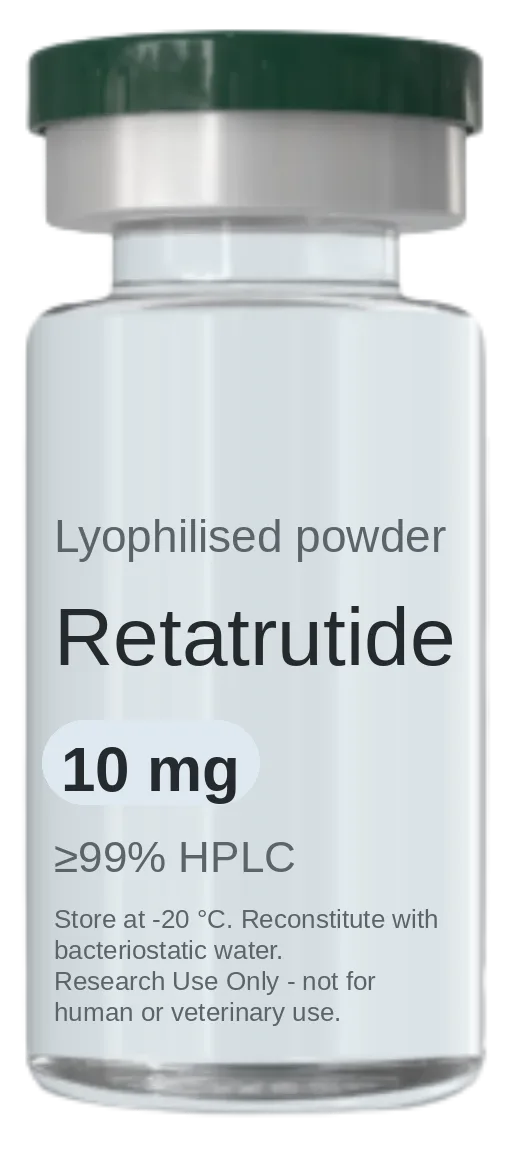
Retatrutide
Triple-agonist metabolic research peptide targeting GLP-1, GIP and glucagon receptors.
- Purity:
- ≥99% HPLC
- Sizes available:
- 10 mg
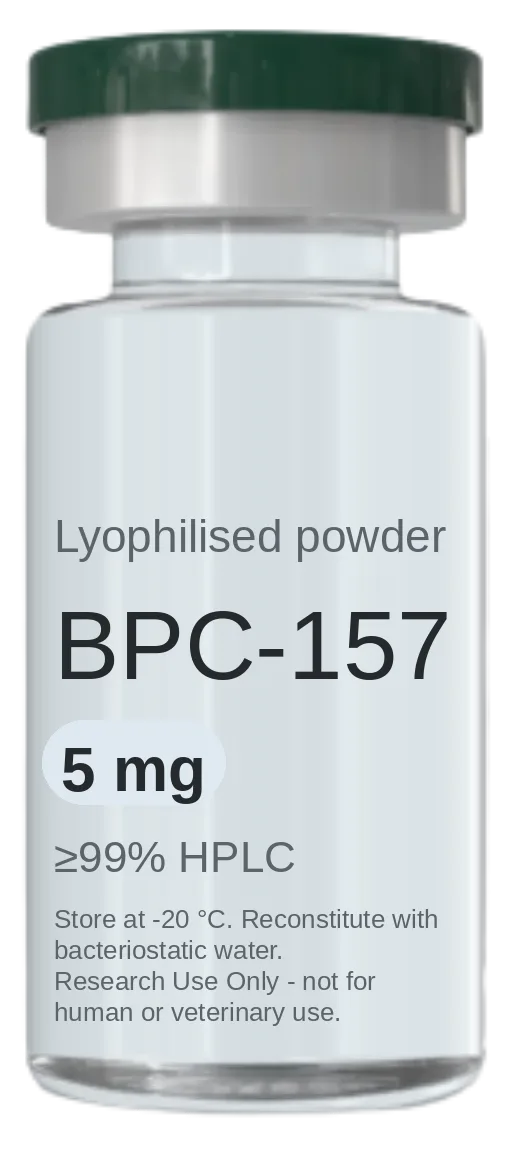
BPC-157 + TB-500
BPC-157 and TB-500 in a single vial — the pairing most studied together in tissue-repair research.
- Purity:
- ≥99% HPLC
- Sizes available:
- 5 mg + 5 mg
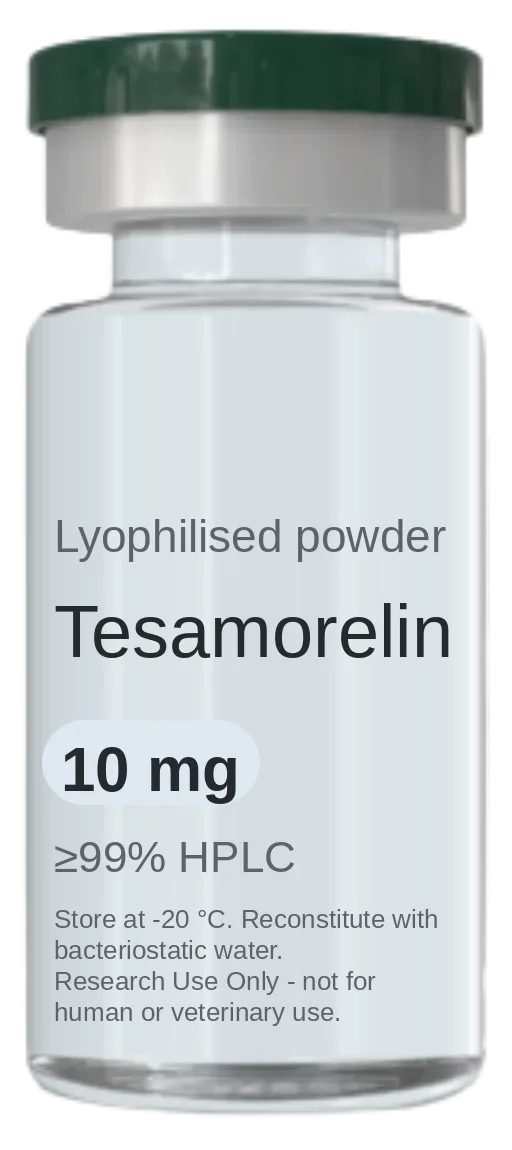
Tesamorelin
Stabilised GHRH(1-44) analogue studied in adipose tissue distribution research.
- Purity:
- ≥99% HPLC
- Sizes available:
- 10 mg – 20 mg
The consultation
One intake that settles goals, history and contraindications alongside compound, quantity, documentation and route — reviewed by a physician before anything ships.
More notes
-
Temporary Import Regime & Peptides
Temporary import covers goods that leave the country again; a research peptide shipment stays and gets used up.
-
Retatrutide vs GHK-Cu: What's the Difference
Retatrutide and GHK-Cu are different molecules studied for different reasons. Here's what each investigates and what documentation backs a batch.
-
Invoiced vs. Unbilled Peptide Suppliers
What changes when a research peptide supplier invoices the transaction versus one that takes payment and leaves no paper trail.