
Note
Racemization in Peptide Synthesis
Racemization converts L-amino acids to their D-form during synthesis, altering peptide structure and compromising experimental reproducibility.
Racemization in peptide synthesis is the partial conversion of an amino acid from its L-configuration—the naturally occurring form—to its D-form during one or more steps of the synthesis process. When it occurs, the resulting peptide contains one or more residues in the wrong stereochemical configuration, which changes its three-dimensional shape and can fundamentally alter its behavior in research conditions.
The chirality of amino acids
All proteinogenic amino acids except glycine have a chiral center: the alpha carbon. Biology builds proteins exclusively from L-amino acids, the configuration recognized by receptors, enzymes, and the proteins they interact with. D-amino acids exist in nature in specific contexts—certain bacterial peptides, some antibiotics—but they are not the reference configuration in the organisms typically studied in laboratory settings.
The L and D forms are non-superimposable mirror images, like a left hand and a right hand. They share the same molecular formula and the same mass, but they behave differently in the presence of biological structures that are also chiral.
In chemical synthesis, if the process does not actively protect that alpha carbon during amino acid activation, the environment can convert L to D. The rate of that conversion depends on the specific amino acid, the coupling reagent used, temperature, and solvent.
The oxazolone pathway
When an amino acid is activated for coupling to the next residue in the chain, a high-energy intermediate forms transiently. Under unfavorable conditions, that intermediate can cyclize to produce an oxazolone: a five-membered ring in which the alpha carbon temporarily loses its defined configuration.
An oxazolone is a planar compound around the chiral center. The incoming nucleophile can attack from either face of the ring. The result is a mixture: peptide with the amino acid in L-configuration, and peptide with that same amino acid in D-configuration.
Histidine deserves specific attention. Its two imidazole ring nitrogens act as intramolecular bases and facilitate oxazolone formation at a rate considerably higher than most other residues. It is the most racemization-prone amino acid in conventional solid-phase synthesis. Protocols that include histidine require specific conditions to manage this.
Cysteine presents a different mechanism: in the presence of base, it can tautomerize and lose the alpha-carbon configuration without necessarily passing through an oxazolone intermediate.
What it means for the final peptide
A residue in D where L is expected produces a diastereomer: a peptide with the same sequence but a different three-dimensional surface. The consequences depend on which residue is affected and where it sits in the chain.
In some cases the effect is minor; in others, the peptide carrying the racemized residue is inactive in the models under study, or has qualitatively different activity. A batch with partial racemization is a batch that contains at least two distinct compounds in variable proportions—something that compromises the reproducibility of any experiment built around it.
Detection is not straightforward. Conventional HPLC does not separate L- and D-amino acids within a peptide because both have the same hydrophobicity and mass. Detecting racemization requires specific methods: chiral amino acid analysis after peptide hydrolysis and derivatization with a chiral agent, chiral column chromatography, or mass spectrometry with controlled fragmentation to resolve epimers.
In a standard reverse-phase HPLC purity report, a peptide racemized at 5% can appear as 100% pure if the epimer peak co-elutes with the main peak. Racemization is one of the most silent defects a peptide batch can carry.
How it is controlled during synthesis
Control of racemization is what separates a mature synthesis process from one that optimizes only for gross yield.
Modern coupling reagents—HATU, HBTU combined with HOBt, DIC with Oxyma—are designed to minimize the lifetime of the active intermediate and reduce the window in which an oxazolone can form. Older reagents, such as pentafluorophenyl esters or acyl chlorides, are more reactive and generate more racemization.
Temperature is also a factor. Synthesis run at elevated temperature accelerates oxazolone formation. Protocols for susceptible amino acids combine reagent choice with reduced temperature during the coupling step.
Excess base in the reaction medium is another variable: strong bases, or their prolonged presence, promote abstraction of the alpha-proton. Modern protocols minimize base to exactly what is needed for Fmoc deprotection.
Post-synthesis verification is equally part of the control. The batch reports on PeptoClinic's quality page document purity determined by HPLC and mass spectrometry. The analytical methodology a supplier uses to verify the identity and integrity of a batch is information that should be available, not an unsupported claim.
For laboratory research only
The peptides discussed on this page are synthesized for laboratory research exclusively (Research Use Only, RUO): in vitro work and controlled research conditions.
No compound in the PeptoClinic catalogue is approved or intended for human or veterinary consumption, diagnosis, or treatment of any condition. Mechanism descriptions on this page are references to published scientific literature, not claims about outcomes in people. No regulator—ANMAT, the FDA, or any equivalent authority—has evaluated the material supplied for use in living organisms.
Researchers working with peptides who need documented lots can review supply conditions at PeptoClinic Research Supply.
Frequently asked questions
What is the difference between an L-peptide and a D-peptide?
An L-peptide contains amino acids in their natural configuration, the form biology uses to build proteins. A D-peptide has at least one amino acid in the mirror-image configuration, which is not the form recognized by most receptors and enzymes in model organisms. Both have the same sequence and molecular weight, but different three-dimensional structures and consequently different behavior in laboratory models.
Which amino acids are most susceptible to racemization?
Histidine is the most documented case: its imidazole nitrogens facilitate oxazolone intermediate formation at a rate considerably higher than most other residues. Cysteine is also sensitive, through a different mechanism involving alpha-proton abstraction under basic conditions. Amino acids with short aliphatic side chains, such as alanine, are comparatively less susceptible.
Why does standard HPLC miss racemization?
Reverse-phase HPLC separates compounds by hydrophobicity. An L-peptide and its D-epimer at the same residue have identical mass and nearly identical hydrophobicity, so they co-elute or differ by a retention time so small that the peak reads as a single compound. Resolving epimers requires chiral column chromatography or chiral amino acid analysis after peptide hydrolysis.
What is an oxazolone and why does it matter?
An oxazolone is a five-membered cyclic intermediate that forms when the activated terminus of an amino acid reacts with its adjacent carbonyl. Once formed, the alpha carbon sits in a planar environment: the attacking reagent can approach from either face, producing a mixture of L and D at that residue. Minimizing oxazolone formation is the central design objective of modern coupling reagents.
How does racemization affect experimental reproducibility?
A batch with partial racemization is, in compositional terms, a mixture of at least two distinct compounds. If the epimer percentage varies between batches—which is common when racemization is not actively controlled—two experiments using the same nominal peptide can yield different results without any flaw in the experimental design. Stereochemical characterization is therefore part of the documentation a serious supplier should provide alongside the material.
Do modern coupling reagents eliminate racemization entirely?
They reduce it significantly but do not eliminate it. HATU, HBTU/HOBt, and DIC/Oxyma minimize the lifetime of the active intermediate and oxazolone formation, but temperature, solvent, base concentration, and the specific amino acid remain relevant variables. For particularly susceptible residues such as histidine, the best-controlled protocols combine reagent choice with reduced coupling temperature and post-process analytical verification.
Can racemization occur during storage?
Yes, though at a much slower rate than during synthesis. Storage under inappropriate conditions—elevated temperature, extreme pH, moisture, repeated freeze-thaw cycles—can induce gradual racemization. Lyophilized peptides stored cold and dry are considerably more stable than the same compounds in solution. [Packaging during shipping](/en/shipping/) — a sealed vial, desiccant and protection from light — is one of the factors that determines whether a batch arrives with the same stereochemical integrity it had when it left the laboratory.
How is stereochemical purity verified in a batch?
The most direct method is chiral amino acid analysis: the peptide is hydrolyzed to its constituent amino acids, derivatized with a chiral agent, and run on a chiral column. The result shows what fraction of each amino acid is in D-configuration. Some specialized laboratories also offer mass spectrometry with fragmentation that identifies the exact position of the racemized residue within the chain.
Compounds mentioned
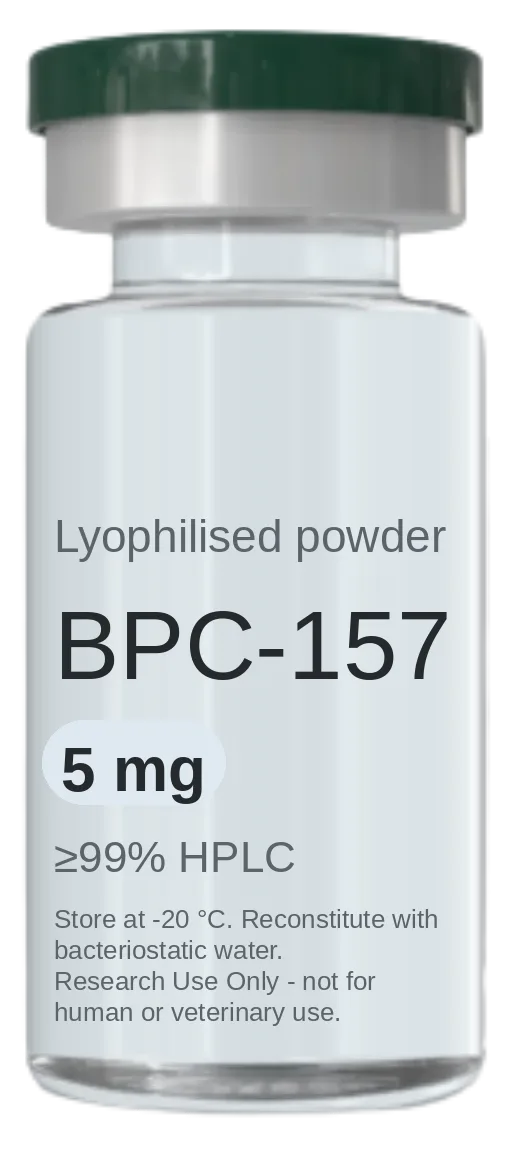
BPC-157 + TB-500
BPC-157 and TB-500 in a single vial — the pairing most studied together in tissue-repair research.
- Purity:
- ≥99% HPLC
- Sizes available:
- 5 mg + 5 mg
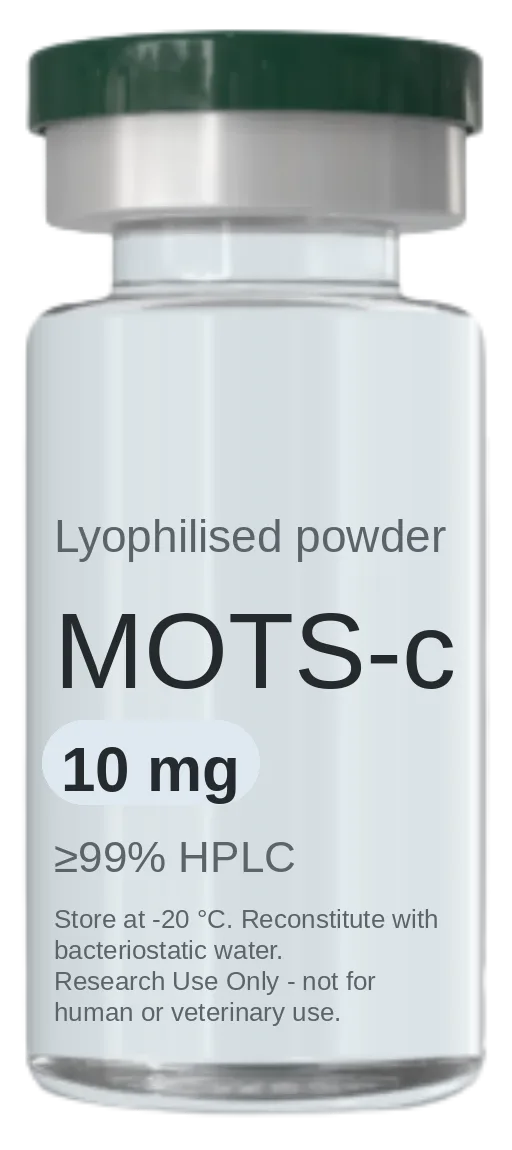
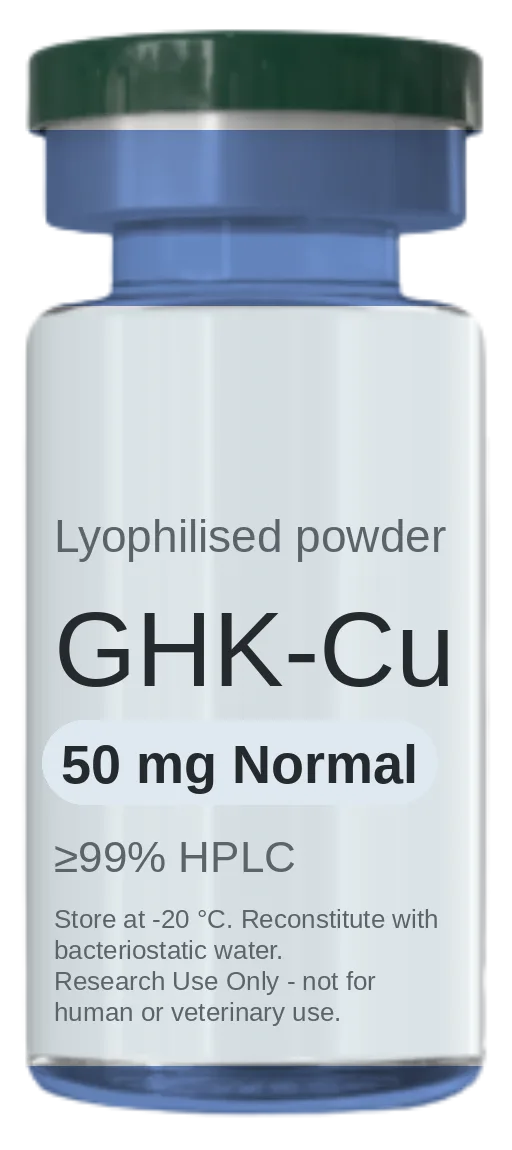
GHK-Cu (Copper Peptide)
Copper-binding tripeptide studied in extracellular matrix and dermal research models.
- Purity:
- ≥99% HPLC
- Sizes available:
- 50 mg Normal – 50 mg Plus
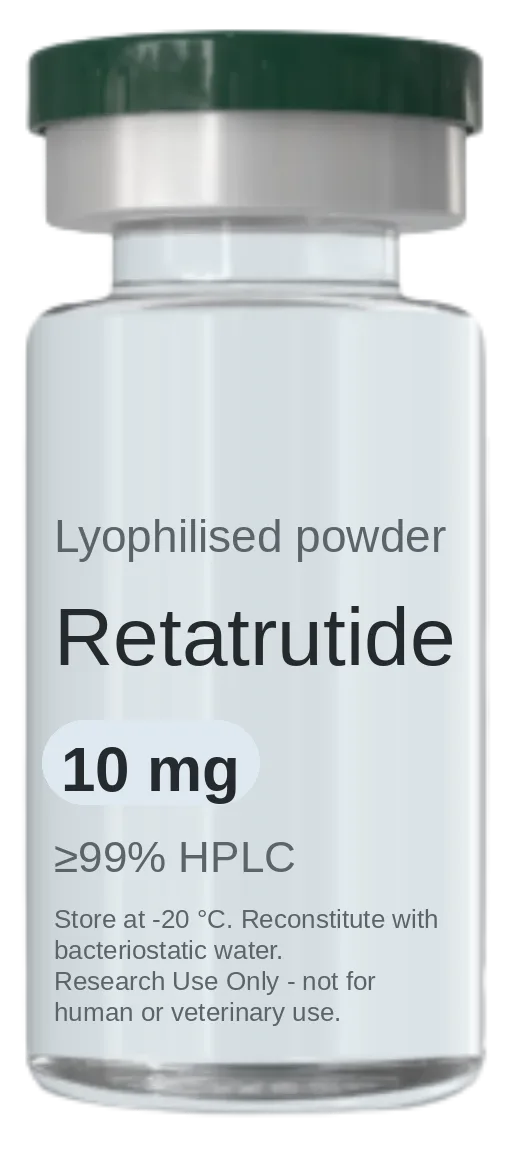
Retatrutide
Triple-agonist metabolic research peptide targeting GLP-1, GIP and glucagon receptors.
- Purity:
- ≥99% HPLC
- Sizes available:
- 10 mg
The consultation
One intake that settles goals, history and contraindications alongside compound, quantity, documentation and route — reviewed by a physician before anything ships.
More notes
-
Retatrutide vs. Tirzepatide: Differences
Retatrutide adds a third receptor that tirzepatide doesn't activate — here's how the two differ in structure, mechanism, and published research.
-
NAD+ vs Selank: What's the Difference?
NAD+ is a cellular coenzyme; Selank is a synthetic peptide derived from tuftsin. Structure, mechanism, and what each one is studied for.
-
Peptide Customs Clearance Cost in Argentina
What determines customs clearance cost for a research peptide shipment to Argentina, and what documentation PeptoClinic prepares for it.