
Note
Research Peptide vs. Drug: The Difference
A research peptide is not a drug. The difference lies in regulatory approval, declared use, and the documentation that follows.
The difference between a research peptide and a drug is regulatory, not chemical. A drug carries formal approval from a competent authority — the FDA in the United States, ANMAT in Argentina — certifying safety and efficacy for a defined clinical use. A research peptide is supplied exclusively for laboratory and in vitro work, without approval for administration to people or animals.
That distinction looks administrative on the surface. In practice it determines the documentation that ships with the compound, how it moves across borders, and who can legally use it for what purpose.
What makes something a drug
For the FDA to register a compound as a drug, the manufacturer must demonstrate quality, safety, and efficacy — in that order — supported by clinical data in humans. The process can take years. At the end of it, a drug carries a specific set of records:
- A registration number in the public FDA database.
- A prescribing information document listing approved indications, contraindications, dosing, and warnings.
- A defined dispensing status: over the counter or by prescription only.
- A manufacturing facility that meets current regulatory standards.
The approval is specific. It covers one molecule in one formulation, produced by one named facility, for one approved indication. A compound that satisfies every element of that description is a registered drug. One that does not is not — even if the molecule is chemically identical to an approved product and the analytical purity is equivalent.
That specificity is why regulatory status cannot be transferred by structural analogy. Each approval is its own dossier, built on its own clinical data for its own indication. A peptide that shares a scaffold with a registered drug shares a scaffold, not a registration.
What makes something a research peptide
A research peptide — also called RUO material, for Research Use Only — is intended for laboratory use: in vitro assays, preclinical studies under institutional protocol, investigation of molecular mechanisms. It carries no approved indications because it has never been evaluated for them.
The standard that matters here is not clinical but analytical. The supplier documents how pure and homogeneous the compound is. That documentation is the certificate of analysis, or CoA, signed by an independent analytical laboratory rather than any health authority.
PeptoClinic Research Supply works with Janoshik Analytical for the batch reports published on the site. The four analyses available were conducted on April 13, 2026, each identified by a task number that can be verified directly with the laboratory. The lowest purity documented to date is 99.669% by HPLC, from the MOTS-c lot (task 136923). Full documentation is available on the PeptoClinic quality page.
Documentation is the practical difference
When a patient picks up a drug from a pharmacy, the document chain behind that package originates at a regulatory authority. The registration specifies what can be claimed about the product and what conditions the manufacturer must maintain to keep it on the market.
When a laboratory receives an RUO peptide, the relevant document is the CoA: it states purity by HPLC, confirms molecular identity, and records batch integrity. It does not list clinical indications, does not prescribe anything, and does not represent any safety evaluation for use in people. These are documents for different purposes and they are not interchangeable.
A supplier of RUO material that does not publish CoAs signed by a named laboratory with a verifiable task number has no auditable documentation — it has text on a webpage. The gap between those two things is precisely what makes a CoA worth checking. A task number ties the result to a specific analysis performed on a specific date on a specific lot. Without that link, a purity figure is an assertion without a chain.
Why the same peptides appear in both frameworks
Some molecules travel simultaneously through research and clinical use, or were investigated for years before eventually being registered as drugs. That creates genuine confusion because the same molecule can exist under entirely different legal frameworks depending on who is using it, in what formulation, in which country, and under what declared use.
Retatrutide, for example, is in active Phase III clinical trials for obesity and type 2 diabetes. As of this writing, it has not received regulatory approval for clinical use in any country. The material available as RUO is not a preliminary version of a future drug: it is analytical material for research with its own documentation chain. Batch specifications for the published lot are on the PeptoClinic retatrutide page.
BPC-157 and TB-500 have a different trajectory: the published literature available through PubMed covers studies in experimental models, not completed human clinical trials. Published research is not the same as regulatory approval — they are distinct milestones in a process that may end in approval, in abandonment, or remain at the preclinical stage indefinitely. The full catalogue of research compounds distributed by PeptoClinic is at /en/catalog/.
The distinction is not about the quality of a compound or the significance of the research. It is about which steps have been completed, formally, before a specific regulatory body, in a process that produces a public record.
Regulatory framing and cross-border shipments
In the United States, the FDA regulates drugs sold in the US market. A compound without FDA approval cannot be marketed or sold as a drug. Research material supplied under an RUO designation is a distinct classification that corresponds to its declared use.
PeptoClinic prepares customs documentation for each shipment as laboratory reference material — which is what RUO peptides are. The compound does not ship as a drug because it is not a drug: it is analytical material for research, accompanied by an external laboratory CoA and complete batch documentation. For researchers in Argentina, PeptoClinic prepares the customs file under the laboratory reference material classification that matches the declared use, not any drug classification. Destinations and logistics details are on the PeptoClinic shipping page.
This material is for laboratory research only
All material supplied by PeptoClinic Research Supply is intended strictly for laboratory and in vitro research. None of it is approved or intended for human or veterinary consumption, diagnosis, or treatment. No compound in the catalogue has been evaluated by the FDA, ANMAT, or any equivalent authority for use in people or animals.
PeptoClinic Research Supply is not a pharmacy, a clinic, or a telehealth provider. No prescription is written or filled. Inquiries about use protocols in humans are not answered.
Frequently asked questions
Is the difference between an RUO peptide and a drug in the molecule itself?
No. The difference is in the regulatory framework and declared use, not the chemical structure. The same molecule can exist as research material and, if it completes the approval process with human clinical trials and authority review, as a registered drug. Approval does not alter the molecule; it changes what can be claimed about it and what uses are legally permitted.
What is a certificate of analysis and why does it matter for RUO material?
A CoA is a document signed by an independent analytical laboratory certifying the identity and purity of a specific lot. For RUO material, it is the auditable record of what is in the vial. A CoA without an identified laboratory, a verifiable task number, and a date of analysis cannot be independently corroborated.
Does a peptide without regulatory approval mean it is dangerous?
Not necessarily. It means the clinical studies that regulatory approval requires were not completed or not initiated for that compound. The analytical standard — purity and molecular identity — can be stringent regardless of regulatory status. Those are separate questions: one is about analytical chemistry, the other is about clinical evidence in humans.
Can a physician in the United States prescribe a research peptide?
A physician can prescribe what the FDA has approved. A compound without FDA approval cannot be prescribed or dispensed as a drug under US law. The regulatory framework does not provide for prescribing RUO material for use in people.
How can I verify that the peptide I receive is what it claims to be?
The lot CoA is the starting point. PeptoClinic publishes Janoshik Analytical reports with task numbers, making it possible to verify results directly with the laboratory. For the four lots currently published, the minimum purity was 99.669% by HPLC. Documentation is available at [/en/quality/](/en/quality/).
Do research peptides come with a package insert?
No. A package insert is a regulatory document that accompanies registered drugs and describes approved indications, dosing, and clinical warnings. RUO material is accompanied by a CoA that documents the analytical characteristics of the lot. These are documents for different purposes; the CoA does not substitute for a package insert.
What information does a Janoshik Analytical report include?
The reports published by PeptoClinic include: the laboratory task number, the date of analysis, the identified compound, purity by HPLC expressed as a percentage, and the gravimetric content of the lot in milligrams. The four lots currently available were analyzed on April 13, 2026, and carry task numbers 136921, 136923, 204977, and 204975.
Does the RUO designation apply regardless of where the shipment is going?
Yes. Regardless of destination, PeptoClinic supplies material under the RUO designation that corresponds to its declared use: laboratory and in vitro research. The customs classification used for each shipment reflects that use. Country-specific documentation and logistics details are on the [PeptoClinic shipping page](/en/shipping/).
Compounds mentioned
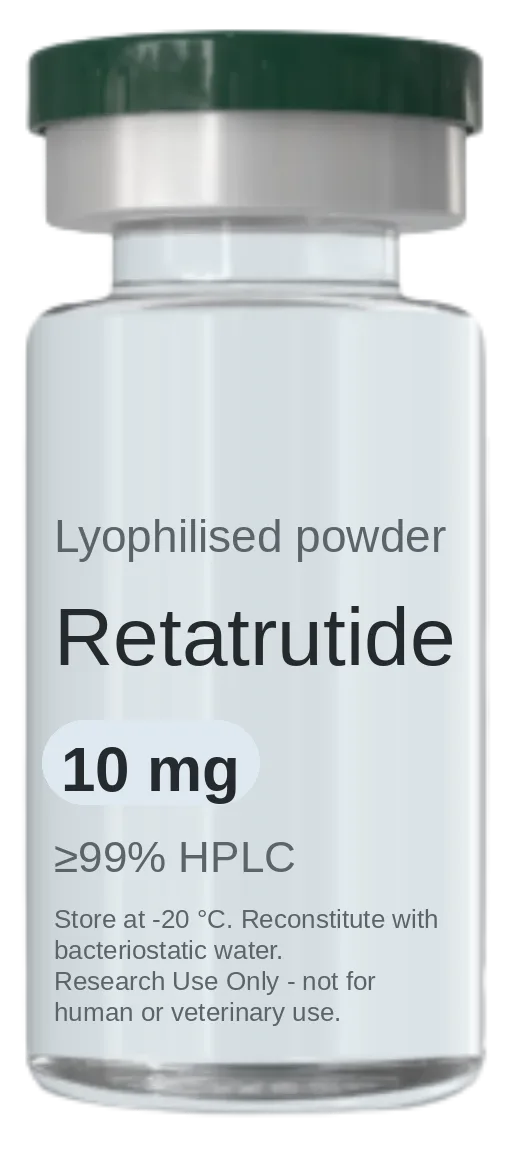
Retatrutide
Triple-agonist metabolic research peptide targeting GLP-1, GIP and glucagon receptors.
- Purity:
- ≥99% HPLC
- Sizes available:
- 10 mg
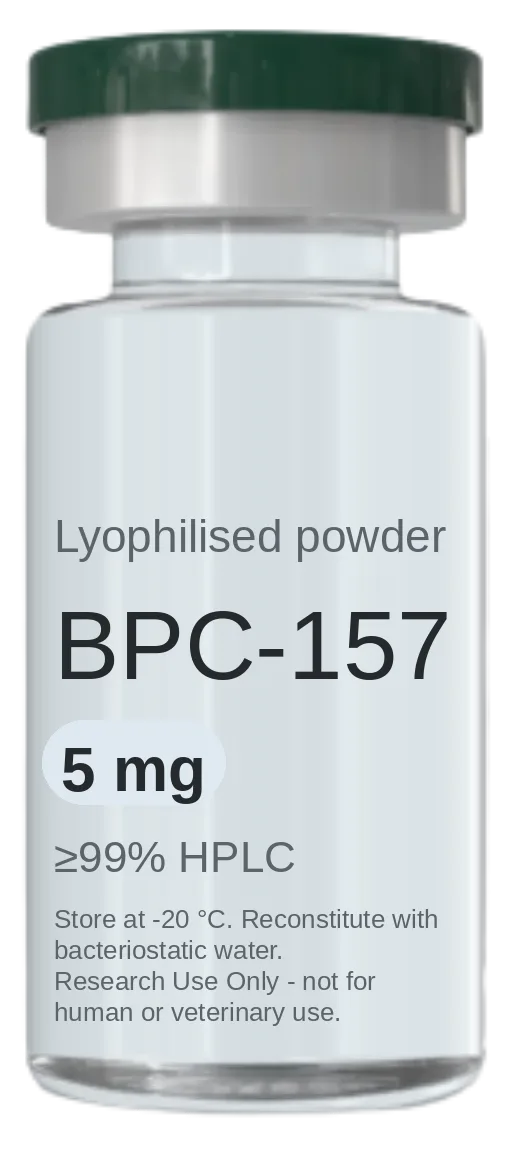
BPC-157 + TB-500
BPC-157 and TB-500 in a single vial — the pairing most studied together in tissue-repair research.
- Purity:
- ≥99% HPLC
- Sizes available:
- 5 mg + 5 mg
The consultation
One intake that settles goals, history and contraindications alongside compound, quantity, documentation and route — reviewed by a physician before anything ships.
More notes
-
Thymosin Alpha 1 vs Selank: How They Differ
Thymosin Alpha 1 and Selank sit in different research families—one studied in immunomodulation, the other in the anxiolytic-cognitive axis.
-
Temporary Import Regime & Peptides
Temporary import covers goods that leave the country again; a research peptide shipment stays and gets used up.
-
Retatrutide vs GHK-Cu: What's the Difference
Retatrutide and GHK-Cu are different molecules studied for different reasons. Here's what each investigates and what documentation backs a batch.