
Note
Why Research Peptides Aren't ANMAT-Approved
ANMAT evaluates medicines, not laboratory supplies. Why RUO peptides have no registration number and what documentation actually applies.
ANMAT does not register research peptides because it does not evaluate laboratory supplies: it evaluates medicines intended for human or veterinary use. A peptide catalogued as Research Use Only (RUO) is not a medicine, carries no therapeutic indication, and submits no registration dossier because it belongs to a different legal category. There is no rejected application, and there is no approval pending. The compound and the registration process operate in separate regulatory lanes.
What ANMAT evaluates, and what it does not
The Administración Nacional de Medicamentos, Alimentos y Tecnología Médica has jurisdiction over medicines, foods, and medical devices destined for human or veterinary use. For a medicine to be sold in Argentina, the sponsoring laboratory submits a dossier containing clinical evidence of safety and efficacy, stability data, manufacturing process information, and a proposed package insert. ANMAT evaluates that evidence and, if warranted, grants the registration number authorising sale under the declared indication.
That process exists because there is a patient at the end of the supply chain. Someone is going to ingest, inhale, or inject the compound under a specific therapeutic claim, and the state verifies that the declared benefit exceeded the risk in the study population.
Research peptides have no patient at the end of their supply chain. They have a laboratory. They carry no package insert, no therapeutic indication, and no clinical dossier submitted to obtain one. They do not appear in ANMAT's medicine registry for the same reason an HPLC solvent does not: they are laboratory inputs, and ANMAT does not register laboratory inputs.
The category that does apply: Research Use Only
Research Use Only, abbreviated RUO, is the technical designation identifying compounds supplied exclusively for laboratory research: in vitro studies, cell culture models, and basic research. This category exists in Argentina and in most international regulatory frameworks because legal systems have distinguished for decades between a laboratory reagent and a therapeutic product.
A laboratory reagent can be biologically active. It can have publications on PubMed documenting its effects in animal models or in cell culture. It can be under active study as a drug candidate by pharmaceutical companies. None of those conditions converts it into a medicine. It remains the laboratory supply it was classified as — one that may eventually, if clinical evidence supports it and a company submits the required dossier, become an approved drug in some market.
The literature on retatrutide, MOTS-c, BPC-157, and GHK-Cu documents that earlier stage of the process: in vitro findings, animal model results, and in some cases Phase I or Phase II clinical trials conducted by academic institutions or pharmaceutical sponsors. Those phases do not produce drug approval because they are not the finished product. They are a stage in a sequence that can take more than a decade.
The path from research compound to approved medicine
New drug development follows a documented international sequence: a preclinical stage in laboratory and animal models, Phase I trials in healthy volunteers to evaluate safety, Phase II trials in small groups to establish dose range and early efficacy signals, Phase III trials in large groups comparing the compound against the current standard of care. At the end of that sequence, a company submits the dossier to the regulatory agency of whichever country it wants to enter. In Argentina, that agency is ANMAT.
The average time from the start of compound development to regulatory approval has been documented at eight to fifteen years in the fastest-approving markets. The dropout rate between the start of Phase I and final approval exceeds eighty percent. The cumulative cost for compounds that complete the sequence exceeds one billion dollars.
Most peptides present in the research literature have not completed that sequence. Some have trials in progress: retatrutide is in a Phase III trial coordinated by Eli Lilly, with results published in peer-reviewed journals. Others have solid preclinical evidence without a formally initiated clinical phase. All share the same status with ANMAT: no medicine registration exists because no dossier has been submitted, and no dossier has been submitted because the process enabling it is not yet complete.
What suppliers document instead
A supplier of research materials does not submit a clinical dossier because it is not selling a medicine. What it does provide — and what a receiving laboratory has the right to require — is chemical documentation: a certificate of analysis (CoA) attesting to the compound's identity, its purity as determined by HPLC, and the traceability of that analysis to an accredited external laboratory.
The CoA is not equivalent to a medicine registration and is not presented as one. It documents different things: the purity and identity of the laboratory supply, not therapeutic efficacy in human beings. It is the documentation appropriate to the RUO category.
PeptoClinic's quality page publishes the analyses from Janoshik Analytical, conducted on 13 April 2026. Retatrutide reached 99.893% purity (task 136921). MOTS-c reached 99.669% (task 136923). Both figures are verifiable directly in Janoshik's system using the task number. The verification does not depend on what PeptoClinic states; it depends on what the analytical laboratory published.
What this means for laboratories in Argentina
An Argentine laboratory incorporating peptides into a research program does not look for an ANMAT registration number. It looks at the supplier's CoA. The relevant question is not whether the compound holds a sanitary registration but whether purity is documented by verifiable third-party analysis and whether the batch's traceability chain is complete.
PeptoClinic's catalogue includes compounds at different stages of the research literature, from candidates with ongoing trials to compounds with published preclinical evidence. All are supplied as RUO material with an external laboratory CoA. PeptoClinic handles enquiries from Argentina and prepares the documentation required for import as laboratory reference material. Shipping details by destination are on the shipping page.
For laboratory research only
All material supplied by PeptoClinic is intended exclusively for laboratory research: in vitro studies and basic research settings. It is not a medicine. It is not approved or intended for human or veterinary consumption, diagnosis, or treatment of any condition. No claims regarding these compounds have been evaluated by ANMAT, the FDA, or any equivalent regulatory authority.
PeptoClinic is not a pharmacy, a clinic, or a healthcare provider. Enquiries about protocols or administration in people are not handled.
Frequently asked questions
Does the absence of ANMAT registration mean research peptides are illegal?
No. The RUO category exists in Argentine law for materials not destined for human consumption. Carrying no medicine registration is not the same as being illegal: the two are separate categories governed by separate rules. Argentine laboratories routinely import biological reagents without medicine registrations, following the customs procedures that apply to laboratory supplies.
Could ANMAT approve one of these compounds in the future?
It could, if a pharmaceutical company completes the required clinical trials and submits the relevant dossier. If a medicine based on such a compound gains approval in a market such as the United States or the European Union, the sponsoring company may then file with ANMAT for the Argentine market. That additional step carries no guaranteed timeline and depends entirely on the company carrying the development forward.
What is the difference between an RUO peptide and an approved medicine?
An approved medicine has clinical evidence reviewed by a regulatory authority, a specific therapeutic indication, a package insert covering adverse effects and contraindications, and was manufactured to standards certified for that use. An RUO peptide has chemical documentation — analytical identity and purity of the supply — for use in laboratory research. They are documentation sets for different legal categories; neither replaces the other.
How can I verify authenticity if there is no ANMAT registration?
By checking the CoA against data published by the analytical laboratory. A certificate with a task ID from an accredited laboratory is verifiable directly: the laboratory's system can be queried with that number to confirm the values match the certificate received. That verification does not depend on the supplier — it depends on the analytical laboratory that ran the analysis.
Do all peptide suppliers face the same regulatory situation?
The RUO category applies to the material, not the supplier. What varies between suppliers is the quality of documentation supporting that material. Some present CoAs from accredited laboratories with task IDs verifiable by third parties; others present internally generated documents with no external traceability. The distinction to check is whether the analysis comes from an accredited third party and whether it can be independently verified. No regulation mandates that choice; each supplier makes it.
Can ANMAT intervene in an RUO case?
ANMAT has authority to intervene if a product classified as a laboratory supply is marketed with therapeutic indications directed at human consumption, because in that case the declared category does not match the actual use. The RUO framework requires that material genuinely be destined for laboratory research and that no therapeutic claims be made about it.
Why do some peptides have more published research than others?
The volume of published literature follows available funding and pharmaceutical interest. Peptides targeting conditions with large potential markets attract more research investment and generate more publications. Compounds with less published literature have received less research funding to date — not because their chemistry is less documentable.
What does PeptoClinic supply for researchers in Argentina?
PeptoClinic Research Supply is a technical supply consultancy that quotes research peptides to laboratory customers in Argentina and across the region. Material ships as laboratory reference material, with a certificate of analysis from an accredited external laboratory and the customs file prepared for import under the applicable category. Enquiries reach the technical team at [email protected].
Compounds mentioned
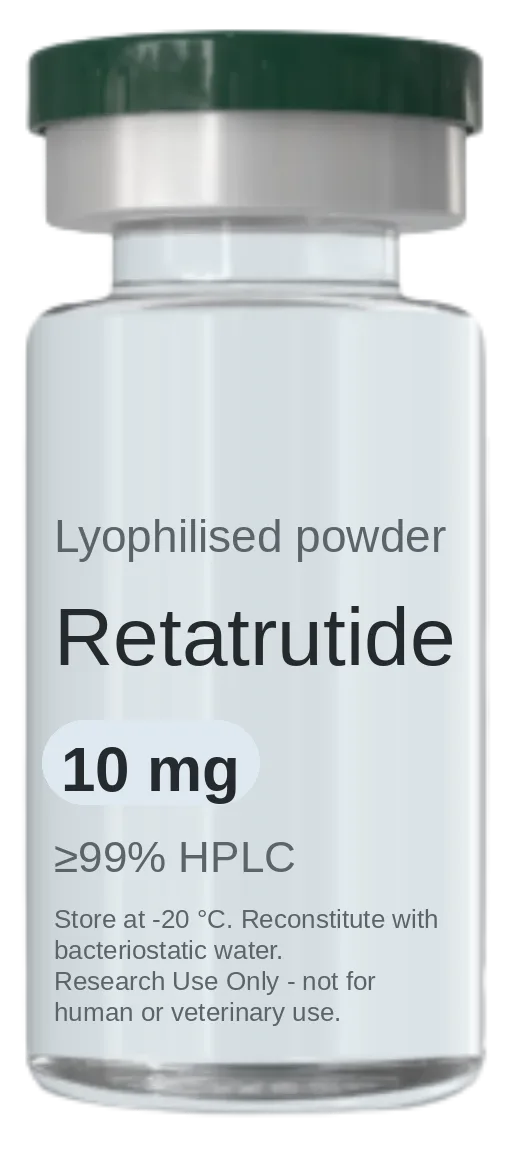
Retatrutide
Triple-agonist metabolic research peptide targeting GLP-1, GIP and glucagon receptors.
- Purity:
- ≥99% HPLC
- Sizes available:
- 10 mg
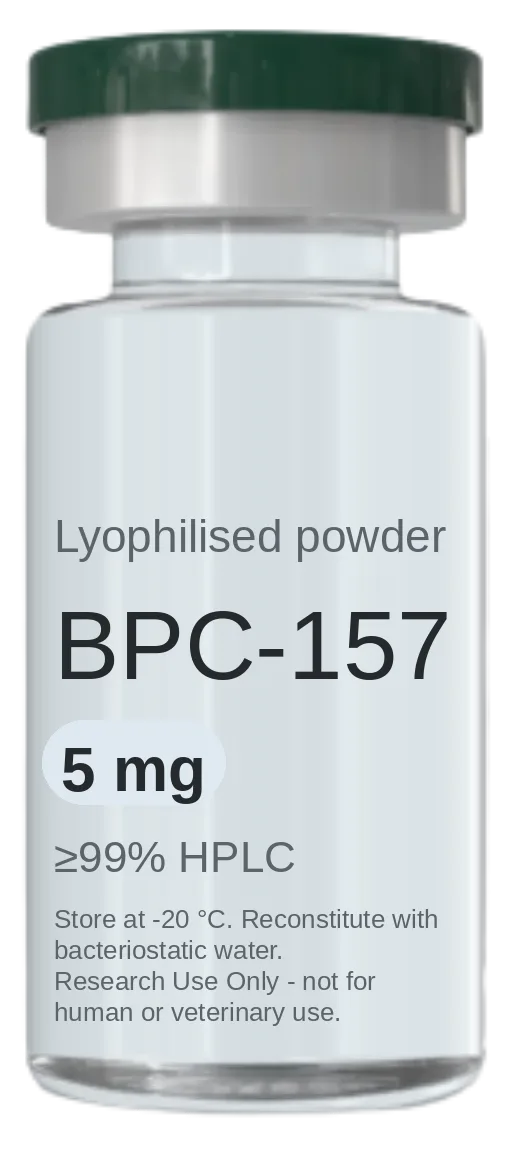
BPC-157 + TB-500
BPC-157 and TB-500 in a single vial — the pairing most studied together in tissue-repair research.
- Purity:
- ≥99% HPLC
- Sizes available:
- 5 mg + 5 mg
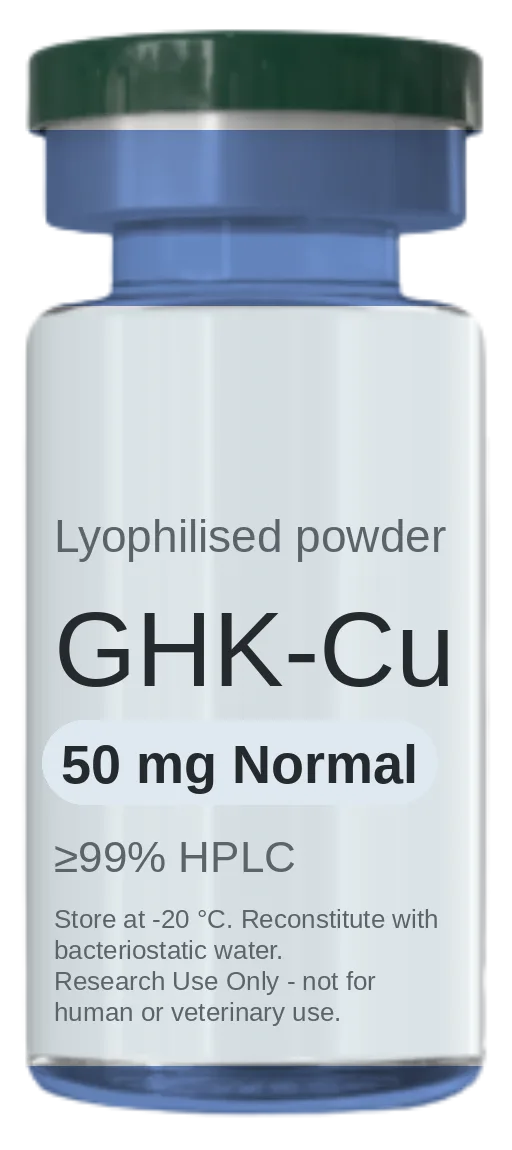
GHK-Cu (Copper Peptide)
Copper-binding tripeptide studied in extracellular matrix and dermal research models.
- Purity:
- ≥99% HPLC
- Sizes available:
- 50 mg Normal – 50 mg Plus
The consultation
One intake that settles goals, history and contraindications alongside compound, quantity, documentation and route — reviewed by a physician before anything ships.
More notes
-
Peptide Shipments to Argentina: Annual Limit
What Argentina's postal shipment regime says about how many research peptide packages you can receive per year.
-
Retatrutide vs Epithalon: Key Differences
Retatrutide and Epithalon are research peptides from different classes, studied in different fields. Here's how they differ.
-
ANMAT Delay on Customs-Held Peptide
What happens if ANMAT delays its answer on a research peptide held at Argentine customs, and what you can do while you wait.