
Note
Research Reagent Tariff Codes in Argentina
Argentina's NCM for synthetic peptides and lyophilized research reagents: Chapter 38, subheading 3822.90.90, and what customs documentation requires.
Argentina classifies imports under the Nomenclatura Común del MERCOSUR (NCM), an eight-digit harmonized system that determines the customs duty, import regime, and documentation that the Dirección General de Aduanas (DGA, under AFIP) will require at the port of entry. For synthetic peptides, lyophilized proteins, and similar laboratory reagents imported as research material, the classification falls most commonly under Chapter 38, heading 38.22, subheading 3822.90.90. Pure peptide compounds presented without excipients may alternatively be classified under Chapter 29, heading 29.37. Which position applies affects the import duty rate and the permits involved, and the decision belongs to the licensed customs broker who files the declaration.
How the NCM works
The NCM shares its first six digits with the Harmonized System of the World Customs Organization, used by more than 200 countries. The seventh and eighth digits are MERCOSUR-specific and allow additional disaggregation within each subheading. When Argentina refers to a "posición arancelaria," the reference is to the full eight-digit NCM that identifies the product in the AFIP nomenclator. The external tariff that applies when the origin is the United States or another non-MERCOSUR country is the AEC (Arancel Externo Común), the common external tariff shared across the bloc.
Classification follows a fixed hierarchy: first the chapter, based on the nature of the product; then the heading, based on its primary use; then the subheading, based on technical specifications. An error at any of these three steps can produce higher duties, customs holds, or incorrect declarations.
Chapter 38: prepared laboratory reagents
Chapter 38 covers miscellaneous chemical products. Heading 38.22 is dedicated to diagnostic or laboratory reagents on a backing, prepared diagnostic or laboratory reagents whether or not on a backing, and certified reference materials.
Within 38.22, the subheading that covers non-medical research reagents without a physical backing — lyophilized vials of synthetic peptides, for example — is 3822.90.90: the others, within the group of other reagents (that is, neither certified reference materials nor diagnostic kits for the specific diseases listed in the preceding subheadings).
For this classification to hold under customs review, the documentation must make clear that the product is a laboratory reagent and not a pharmaceutical raw material or finished medicament. That is precisely what a Research Use Only (RUO) declaration does: it defines the destination of the material and keeps it out of Chapter 30, where the procedures and requirements are different. PeptoClinic ships every lot with a full customs file that includes the RUO declaration alongside the laboratory's analytical report. The documents that travel with each shipment are described on the quality page.
When Chapter 29 applies
Chapter 29 covers organic chemicals. A pure synthetic peptide — no excipients, no added solvents, presented as a defined chemical compound — may be classified here if the declarant and customs agree that the substance is an organic compound rather than a prepared reagent.
The most relevant heading within Chapter 29 for hormonal peptide analogs is 29.37, which includes natural or synthetic hormones, prostaglandins, thromboxanes, and leukotrienes. Subheading 2937.19.90 covers other polypeptide hormones and their derivatives: a GLP-1 analog or a growth hormone secretagogue could fall here if the importer presents it as a pure compound of Chapter 29.
The practical difference between Chapter 29 and Chapter 38 may be the tariff rate and, more importantly, the ancillary permit regime. A licensed customs broker familiar with DGA classification rulings for the specific compound can advise which classification has stronger precedent and what technical argument would be needed if customs requests justification.
Certified reference materials: subheading 3822.90.10
If the product ships with a certified reference material certificate issued under internationally recognized standards — such as ISO 17034 — the applicable subheading is 3822.90.10 rather than 3822.90.90. A certified reference material has documented metrological traceability and is used to calibrate instruments or validate analytical methods.
Standard research reagents with a certificate of analysis by HPLC are not certified reference materials in that technical sense, even when the analytical documentation is rigorous. Lyophilized synthetic peptides with an HPLC purity report fall under 3822.90.90, not 3822.90.10, unless the manufacturer has issued a reference material certificate under the specific standards that subheading requires. The distinction matters because the wrong subheading can generate customs observations.
Documentation Argentine customs will request
For a research reagent imported as laboratory-use material, the documents the DGA typically examines at clearance are:
- Commercial invoice with the technical description of the compound, quantity, weight, value, and country of origin.
- Packing list with gross and net weight per unit.
- Certificate of analysis (CoA) identifying the lot number, HPLC purity, and compound identity by mass spectrometry or another analytical method.
- Safety data sheet (SDS) in accordance with the Globally Harmonized System (GHS).
- End-use declaration specifying that the material is intended exclusively for in vitro laboratory research and not for human or veterinary use.
PeptoClinic prepares this file for every lot: the Janoshik Analytical CoA and the RUO declaration travel with the shipment. The four published reports, all analysed on 2026-04-13, are available on the quality page. For the specific shipping process to Argentina, including routing and packaging, the details are on the Argentina page.
The customs broker
Customs classification has legal consequences: an incorrect declaration to the DGA can result in fines, delays, or seizure of the shipment. In Argentina, the despachante de aduana is the licensed professional authorized to file the declaration with AFIP. For research materials without a standard classification track record, the broker is the right contact to review precedents in DGA classification rulings and prepare the technical argument if customs requests justification.
A CoA from an independent laboratory carries more weight than a self-issued certificate because it traces the purity result to a named third party. That traceability is what a broker will reference when arguing the classification in front of a customs officer. Compounds available from PeptoClinic, including the lot documentation for each, are listed in the catalog.
For laboratory research only
All material supplied by PeptoClinic is classified Research Use Only (RUO): strictly for in vitro and laboratory research.
None of the compounds in the PeptoClinic catalog is a medicine, a supplement, or a product approved for human or veterinary use. No regulatory authority — not ANMAT, not the FDA, nor any equivalent — has evaluated these materials for consumption, diagnosis, or treatment. PeptoClinic is not a pharmacy, does not engage in clinical activity, and does not issue or require prescriptions.
This framing is also the reason the correct tariff classification for this type of material is Chapter 38 and not Chapter 30. The RUO declaration is not a formality. It is an accurate description of the product's destination, and it is what keeps the material outside the pharmaceutical circuit and its associated permit requirements.
Requesting a quote for Argentina
To quote research reagents destined for Argentina, describe your programme, the compound of interest, and the estimated quantity. PeptoClinic reviews the request and responds within one business day with the available lot, the certificate of analysis, the shipping conditions, and the customs documentation. Available compounds are listed in the catalog, and the full process for Argentine buyers is described on the Argentina page.
Frequently asked questions
What is the NCM and how does it differ from tariff codes used in other countries?
The NCM (Nomenclatura Común del MERCOSUR) is the goods classification system used by Argentina, Brazil, Uruguay, and Paraguay. It has eight digits: the first six are identical to the Harmonized System of the World Customs Organization, a global standard with more than 200 signatory countries; the last two are MERCOSUR-specific and allow additional disaggregation within each subheading. When Argentina refers to a "posición arancelaria," it means the full eight-digit NCM that identifies the product in the AFIP nomenclator.
Do research reagents pay import duties or VAT when entering Argentina?
The applicable import duty (AEC) and VAT depend on the specific NCM of the product and its country of origin. Under the general regime, non-MERCOSUR imports pay duties according to the NCM subheading, plus VAT at 21%, plus an additional import VAT component. For laboratory reagents under Chapter 38, the MERCOSUR AEC is typically low, but VAT applies in all cases. A customs broker can provide the exact percentages for the NCM of the specific compound being imported.
What happens if Argentine customs challenges the declared NCM?
The DGA can issue observations if it considers the declared classification incorrect. In that case, the customs broker presents the technical argument — supported by the CoA, the SDS, and the end-use declaration — and can request a formal classification ruling. This is why documentation precision at the origin matters: a vague description on the commercial invoice opens the door to competing interpretations and extends the hold at port.
Do research reagents require ANMAT authorization to enter Argentina?
Research reagents classified under Chapter 38 are not medicines and do not pass through the ANMAT window. If the product were imported under Chapter 30, ANMAT would be involved. Classification as RUO material under Chapter 38 is, among other things, what keeps the material outside the pharmaceutical circuit and its authorization requirements. For biological materials or materials of human origin, SENASA may have a role; a customs broker with experience in research reagents can advise case by case.
Does the supplier's certificate of analysis count as customs documentation?
Yes. The CoA is one of the documents Argentine customs may request to verify the nature of the product. A CoA issued by an independent laboratory — identifying the compound, the lot number, the analytical method, and the purity result — carries more weight than a self-issued certificate because it traces the result to a named third party. PeptoClinic ships Janoshik Analytical CoA reports with every lot; the published reports are available on the [quality page](/en/quality/).
Is it possible to import research material without a licensed customs broker?
In Argentina, a despachante de aduana is required for commercial operations above certain thresholds and for specific customs regimes. Small shipments may qualify as postal or courier imports with a declared value below set limits, but those routes carry restrictions on weight, value, and frequency. For research programmes with regular or volume shipments, working with a broker licensed before the DGA is the correct path.
What is the practical difference between subheadings 3822.90.10 and 3822.90.90?
Subheading 3822.90.10 is reserved for certified reference materials with metrological traceability under internationally recognized standards such as ISO 17034. Subheading 3822.90.90 covers all other laboratory reagents not falling under the preceding subheadings of heading 38.22. Lyophilized synthetic peptides with an HPLC certificate of analysis fall under 3822.90.90, not 3822.90.10, unless the producer has issued a certified reference material certificate under the specific standards that subheading requires — a document distinct from an analytical purity report.
What does the customs file that travels with each shipment contain?
The file PeptoClinic prepares for each Argentine shipment includes the commercial invoice, the packing list, the Janoshik Analytical certificate of analysis for the specific lot, the safety data sheet, and the RUO end-use declaration. These documents are prepared to support customs clearance under Chapter 38 as laboratory reference material. The full detail of what ships with each lot is on the [quality page](/en/quality/).
Compounds mentioned
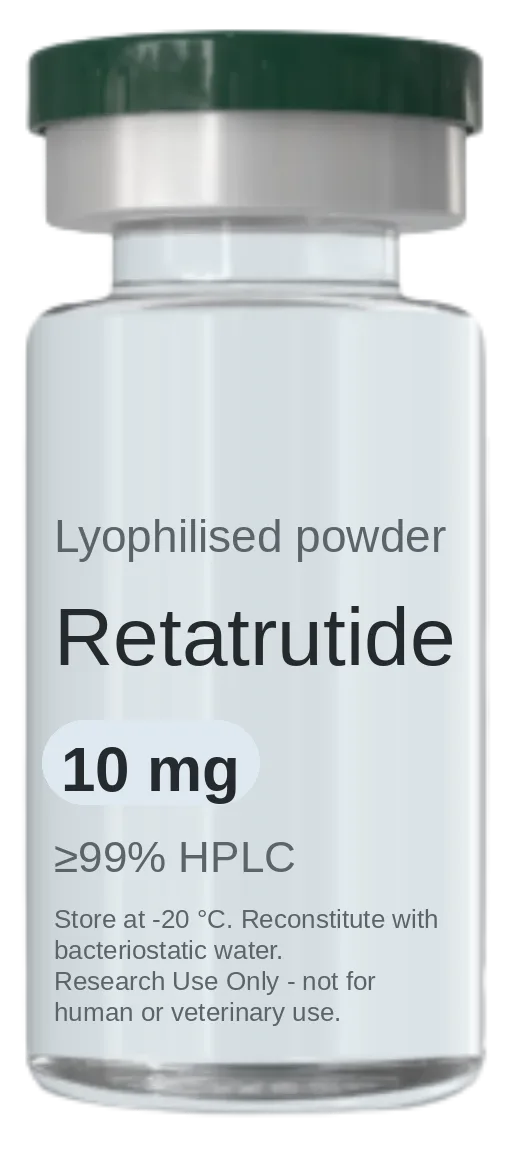
Retatrutide
Triple-agonist metabolic research peptide targeting GLP-1, GIP and glucagon receptors.
- Purity:
- ≥99% HPLC
- Sizes available:
- 10 mg
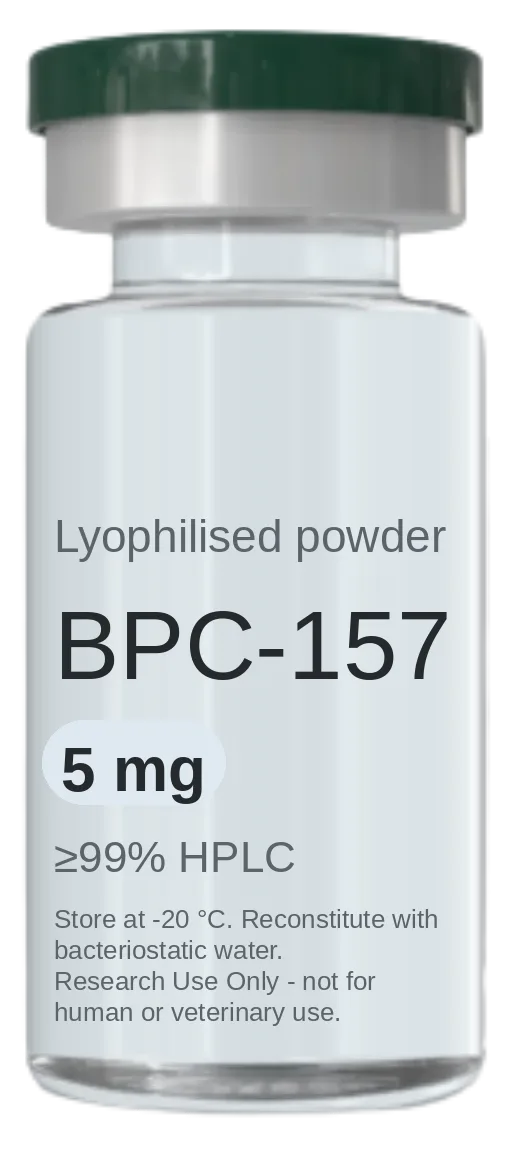
BPC-157 + TB-500
BPC-157 and TB-500 in a single vial — the pairing most studied together in tissue-repair research.
- Purity:
- ≥99% HPLC
- Sizes available:
- 5 mg + 5 mg
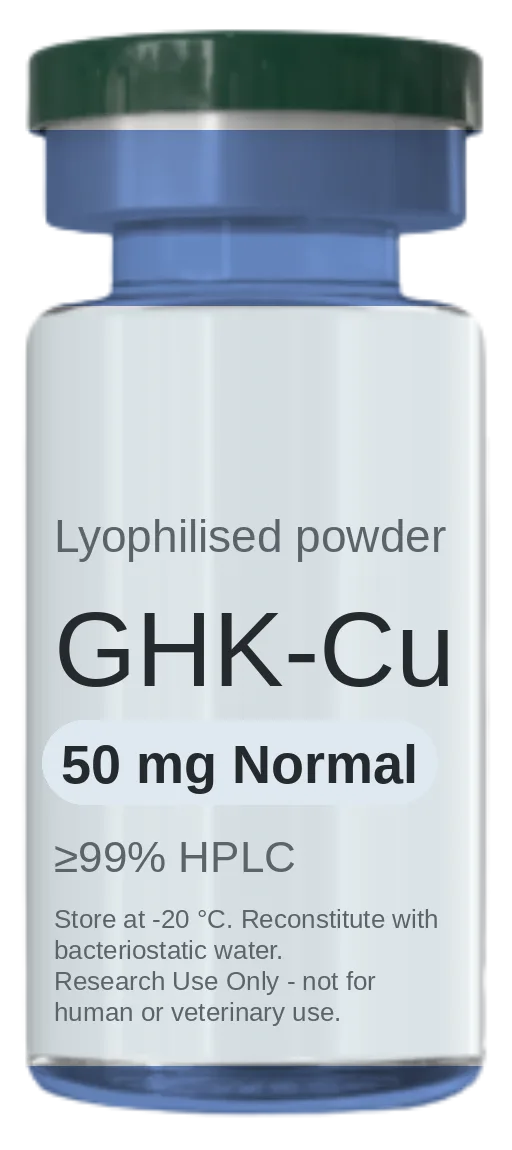
GHK-Cu (Copper Peptide)
Copper-binding tripeptide studied in extracellular matrix and dermal research models.
- Purity:
- ≥99% HPLC
- Sizes available:
- 50 mg Normal – 50 mg Plus
The consultation
One intake that settles goals, history and contraindications alongside compound, quantity, documentation and route — reviewed by a physician before anything ships.
More notes
-
Can You Ship Peptides as a "Sample"?
Why declaring a paid research peptide shipment as a duty-free commercial sample is invalid in Argentina, and what paperwork works instead.
-
Semax vs LL-37: What's the Difference
Semax is a synthetic heptapeptide; LL-37 is a human cathelicidin. Different origin, structure and research field, side by side.
-
Peptide Invoice: What Argentine Customs Wants
What a research peptide invoice needs so Argentine customs releases the shipment instead of holding it in bonded storage.