
Note
End-Use Declaration for Research Reagents
What an end-use declaration is, what it must contain, and why Argentine customs requires one when importing RUO research peptides.
An end-use declaration is a sworn statement that the importer signs at customs when clearing a shipment. Under that signature, the importer attests that the material will be used exclusively for the declared purpose. For a shipment of research reagents, that purpose is laboratory research: in vitro assays, analytical studies, preclinical investigations. Argentine customs (AFIP) will not release certain products without this document in the file.
What the declaration contains
An end-use declaration includes, at minimum:
- The importer's tax identification number, legal name or full name, and registered address
- An exact description of the imported product: compound name, tariff classification, quantity, and unit of measure
- The declared destination: exclusive use for laboratory research
- A commitment not to resell the material or redirect it to any use other than the one declared
- The signature of the responsible party and, for an institution, its official seal
Some clearances also require documentation that confirms the receiving laboratory exists: its registration number with the relevant authority, a lease agreement for the facility, or an operating permit for the premises.
Why customs requires this document
The logic is traceability and control. Certain product categories carry different tariff treatment depending on their declared use: the same compound may be exempt from import duties when it enters as a research reagent and subject to standard duties when it enters as an industrial input. The declaration formalizes that destination and makes the importer legally responsible for maintaining it.
For synthetically produced peptides carrying an RUO (Research Use Only) designation, AFIP treats the import under a regime that requires this declaration because the compounds are not food, not medicines, and not ordinary industrial inputs. They are materials with a specific technical use, and customs wants a document that states that explicitly.
The RUO regime carries a direct legal consequence: the importer cannot redirect the material. Using an imported lot for anything other than what was declared constitutes customs fraud under the Argentine Customs Code — not a minor administrative infraction.
Who signs the declaration
In a direct import to a private laboratory or a university research unit, the signature belongs to the project director or the laboratory's technical director. In the case of an importing company acting as an intermediary for distribution to client laboratories, the importing company signs, and depending on the circumstances, the final receiving laboratory may also sign.
When PeptoClinic coordinates a shipment to Argentina, the technical lot documentation — commercial invoice, certificate of analysis, safety data sheet — is delivered to the local importer before the clearance begins. The importer, who may be the laboratory itself or a licensed customs broker, signs the declaration in their own name. PeptoClinic does not act as an importer in Argentine territory. PeptoClinic prepares the technical file and leaves the customs procedure in the hands of whoever holds legal standing in the country.
The tariff classification and its relation to the declaration
The tariff position assigned to the product determines what additional documentation the clearance requires. Synthetically produced research peptides are typically classified under Chapter 29 of the tariff schedule (Organic Chemical Products) or Chapter 30 (Pharmaceutical Products), depending on the AFIP inspector's judgment and the product description on the commercial invoice.
When the classification falls under a subheading associated with a specific destination — research inputs, laboratory reagents — the declaration is the document that justifies that classification. Without it, the inspector may reclassify the product under a higher-duty position or reject the clearance outright.
That is why the commercial invoice, the lot's certificate of analysis, and the end-use declaration must be consistent with each other. If the invoice says "research" and the certificate of analysis confirms the lot's technical nature, the declaration reinforces that reading. Inconsistencies between the documents stop the clearance.
What a complete import file contains
The end-use declaration is one of several documents that make up the import file:
- Commercial invoice from the supplier, with a technical description of the product
- Packing list
- Bill of lading or airway bill, depending on the mode of transport
- Lot certificate of analysis (CoA), showing the purity determined by the analytical laboratory
- Safety data sheet (SDS)
- Signed end-use declaration
Depending on the compound, a prior import authorization from SENASA may also be required if the material contains components of biological origin that fall under SENASA's jurisdiction.
The certificate of analysis deserves a separate note. It is issued by an independent analytical laboratory that verified the lot's purity, not by the material's supplier. At PeptoClinic, reports come from Janoshik Analytical, a laboratory with publicly verifiable results. For the Retatrutide lot analyzed on April 13, 2026, Janoshik recorded a purity of 99.893% by HPLC under task number 136921. Reports are available in the quality section before any quotation, so the import file can be assembled in advance rather than gathered after an order is placed.
For laboratory research only
PeptoClinic supplies research peptides strictly under the RUO designation. The material is intended for in vitro research and laboratory assays. It is not a medicine, not a supplement, and is not approved or intended for human or veterinary consumption.
No regulatory authority — not ANMAT, not the FDA, not any equivalent — has evaluated these materials for therapeutic or diagnostic use. No prescription is written, filled, or required. Questions about administration protocols in people are not answered.
This RUO designation is precisely what makes the end-use declaration valid as an import pathway: the compound enters the country as a research reagent because that is what it is. The classification is not an administrative convenience; it is an accurate description of the material.
Document consistency as the axis of the clearance
A well-founded end-use declaration needs backing from the rest of the file. AFIP can audit, after the clearance, that the material actually reached the declared laboratory. That is why the certificate of analysis is not just a purity argument: it is also part of the documentary chain that supports the RUO classification.
When a lot enters under a research reagent tariff position and the declaration names a laboratory as the recipient, having a Janoshik report with the task number, the analysis date, and a signed result closes the file in a way that a subsequent audit can review without finding inconsistencies.
The PeptoClinic catalogue lists available compounds with their published analysis reports. For shipments to Argentina, complete technical documentation is included as part of the quotation. A lot is not dispatched without the local importer having the full file assembled before the first customs step.
Frequently asked questions
Does the end-use declaration replace a SENASA authorization?
No. They are separate documents from separate agencies. The end-use declaration is a customs instrument that declares the material's destination to AFIP. If the product requires a SENASA authorization — for example, because it contains biological-origin components under SENASA's jurisdiction — that authorization is additional and must be obtained before the clearance begins. Synthetically produced peptides in lyophilized vials are not biological materials in the sense SENASA applies to that term, but the determination depends on the specific compound and the inspector reviewing the file.
Can a private laboratory import under this regime, or is it reserved for academic institutions?
A private laboratory with a valid operating permit can import research reagents and sign an end-use declaration. AFIP does not reserve this regime exclusively for public universities or government institutions. What varies is the documentation that certifies the receiving laboratory's status: a company with research-and-development activity on file has a cleaner profile at customs than an individual without that declared activity.
What happens if the material is used for something other than what was declared?
The end-use declaration is a sworn statement. Using it to import material that is subsequently redirected to a different purpose constitutes a violation of the Argentine Customs Code. Consequences range from fines and seizure of the material to criminal proceedings, depending on the scale. The legal risk belongs to the importer; the foreign supplier is not a party to the local customs procedure.
Is the lot certificate of analysis mandatory for the clearance?
It depends on the tariff classification and the inspector's judgment. In practice, a certificate issued by an independent analytical laboratory makes the clearance easier because it reinforces the product's technical description on the invoice. Without it, the inspector may request the laboratory's own analysis or reclassify the product under a higher-duty position. PeptoClinic includes the certificate of analysis in every lot's documentation.
Does PeptoClinic act as the importer in Argentina?
No. PeptoClinic prepares the technical lot documentation and delivers it to the client who is importing. The customs procedure, including signing the end-use declaration, is the responsibility of the local importer or the customs broker they appoint. The technical documentation — invoice, certificate of analysis, safety data sheet — is ready as part of the quotation.
Does one declaration cover multiple compounds in the same shipment?
Yes. If a laboratory imports several compounds in the same shipment, the declaration lists all of them with their quantities, descriptions, and tariff classifications. It is not a blanket standing permit: each shipment carries its own declaration. If a shipment includes [Retatrutide](/en/product/retatrutide/), BPC-157, and MOTS-c, all three appear in the same declaration with their individual data.
Where can the certificates of analysis for available lots be found?
Published analysis reports are in the [PeptoClinic quality section](/en/quality/). Each report is issued by Janoshik Analytical and states the task number, the analysis date, the method used, and the result obtained. They are available before the quotation so the customs file can be assembled in advance rather than gathered after the order is placed.
How long does a research reagent clearance take in Argentina?
AFIP does not publish guaranteed timelines. A green-channel clearance can resolve in one or two business days from the moment a complete file is submitted without observations. Red channel means physical inspection and longer timelines. These are orientation figures; actual time depends on the system's operational load at that moment and whether the file is complete and consistent from the first submission.
Compounds mentioned
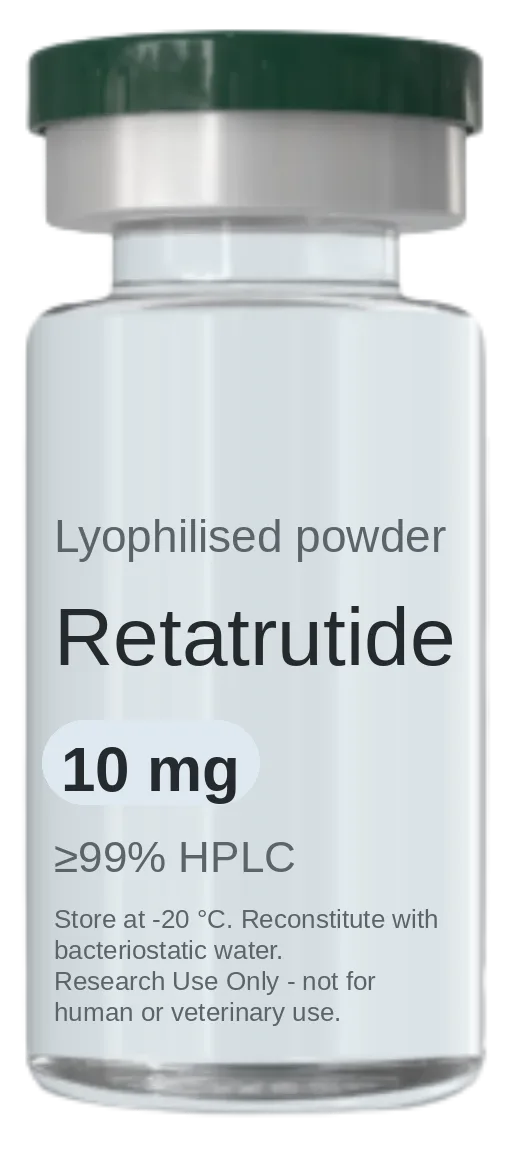
Retatrutide
Triple-agonist metabolic research peptide targeting GLP-1, GIP and glucagon receptors.
- Purity:
- ≥99% HPLC
- Sizes available:
- 10 mg
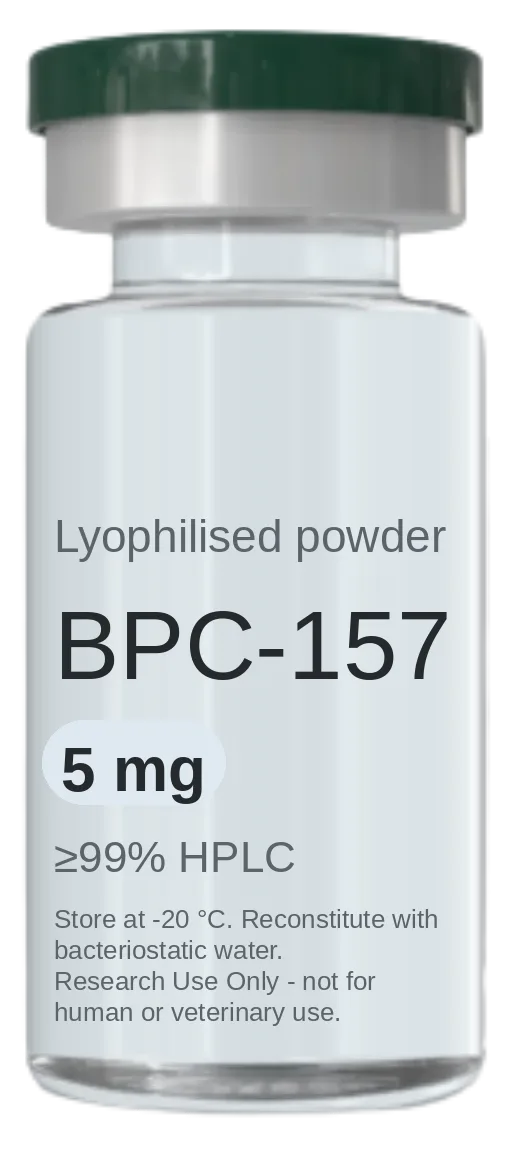
BPC-157 + TB-500
BPC-157 and TB-500 in a single vial — the pairing most studied together in tissue-repair research.
- Purity:
- ≥99% HPLC
- Sizes available:
- 5 mg + 5 mg
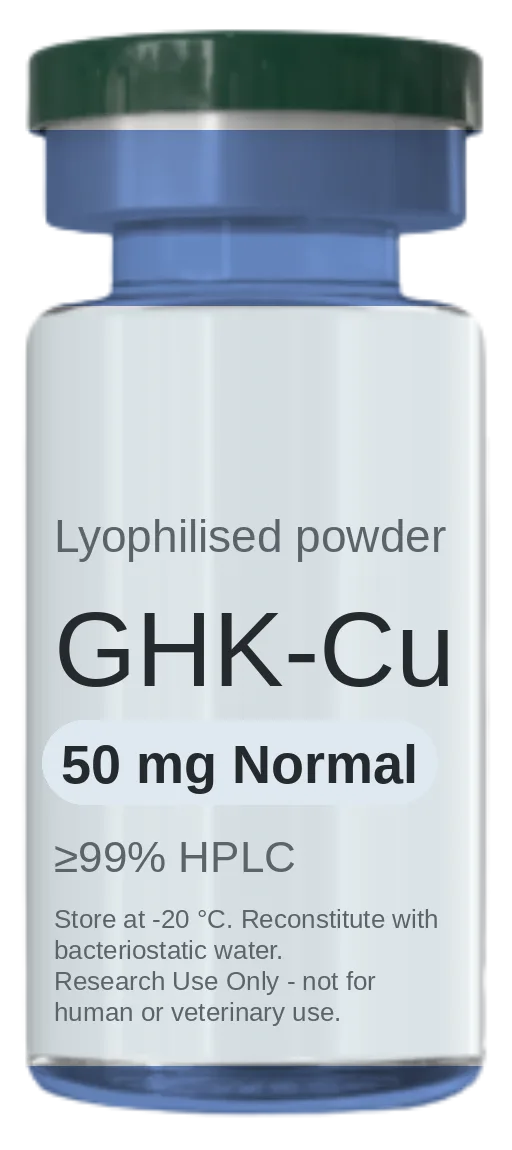
GHK-Cu (Copper Peptide)
Copper-binding tripeptide studied in extracellular matrix and dermal research models.
- Purity:
- ≥99% HPLC
- Sizes available:
- 50 mg Normal – 50 mg Plus
The consultation
One intake that settles goals, history and contraindications alongside compound, quantity, documentation and route — reviewed by a physician before anything ships.
More notes
-
GHK-Cu vs Epithalon: What's the Difference
GHK-Cu and Epithalon are distinct research peptides in structure and in what the literature studies on each. Here's the difference.
-
Freight Forwarder vs Courier to Argentina
Can a freight forwarder replace a courier to import research peptides into Argentina? What changes, and what the practical answer is.
-
No One Home for Your Argentina Shipment?
What happens when a research peptide shipment to Argentina arrives at an address with no one there to sign for it.