
Note
What COA Ships with Retatrutide to Argentina
The Janoshik Analytical report that accompanies every retatrutide lot shipped to Argentina: what it contains, how to read it, and how to verify it.
Every lot of retatrutide shipped to Argentina leaves with a Certificate of Analysis issued by Janoshik Analytical, an independent laboratory based in the Czech Republic that specializes in third-party verification of research peptides. The document identifies the lot by task number, reports purity as measured by HPLC chromatography, and records the actual content found in the sample. It is not a manufacturer's specification sheet. It is a signed report from a laboratory that has no commercial interest in the result — which is what makes it checkable.
What a Certificate of Analysis is, and what it is not
A COA is the output of a chemical analysis commissioned from an external laboratory. The supplier provides a sample; the laboratory runs the declared method and returns the data. The document is signed by the laboratory, not by the supplier.
What the COA establishes is the chemical identity and purity of the material analyzed in that specific lot. It says nothing about different lots, about what happens to the material after the laboratory measures it, or about fitness for any particular use.
For the research peptides in the PeptoClinic catalogue, every published report uses HPLC — high-performance liquid chromatography. That method separates the components of a sample based on their physicochemical properties and quantifies what fraction of the total mass belongs to the declared peptide. The result is a purity expressed as a percentage.
A COA issued by a named laboratory with a queryable task number is qualitatively different from a document generated by the supplier itself or from a PDF that cannot be traced to any external system. The task number is the mechanism: it lets the reader pull the data from the laboratory's own database rather than from the supplier's word.
The Janoshik Analytical report for the retatrutide lot
The report PeptoClinic provides with retatrutide lots is Task 136921, analyzed on April 13, 2026 by Janoshik Analytical.
The fields that appear in that document are:
- Compound analyzed: Retatrutide
- Task number: 136921
- Method: HPLC
- Date of analysis: April 13, 2026
- Purity found: 99.893%
- Declared content on the label: 10 mg
- Actual content measured by the laboratory: 11.96 mg
The content figure matters because it answers whether the vial delivers what the label says. In this case, the measured content exceeds the nominal: the laboratory found 11.96 mg where the label declares 10 mg.
How to read the reported purity
The 99.893% is the fraction of the sample's total mass that HPLC attributed to the retatrutide peptide. The remaining fraction may consist of synthesis-related impurities, isomers, or solvent traces, depending on the sample preparation method used by the laboratory.
PeptoClinic does not publish its best result across all available lots. It publishes the worst one. The floor across the entire published catalogue is 99.669%, from the MOTS-c analysis (Task 136923, same date). That standard exists because a headline built on the highest purity figure breaks the first time a lower result is published. The full set of available reports, with task numbers and complete results, is on the quality page.
How to verify the COA independently
Janoshik Analytical operates an online verification system. For Task 136921, the report contains the information needed to retrieve the result directly from the laboratory's own database, bypassing PeptoClinic entirely.
The process works as follows: go to the Janoshik Analytical verification page, enter the task number from the document you received, and the laboratory returns the analysis data from its own records. That step is what distinguishes a verifiable COA from a file anyone could produce in a document editor. If the task number returns no result in the laboratory's system, the document does not correspond to a real analysis.
A note on the other published reports: the GHK-Cu (Task 204977) and BPC-157 + TB-500 (Task 204975) reports also come from Janoshik Analytical and carry the same analysis date. However, the direct verification URL for those two returns an error at the time this post is published. PeptoClinic does not link readers to a broken verifier. If you want to check those reports, enter the task number directly into the laboratory's verification system.
What ships physically with a lot destined for Argentina
Lots of retatrutide quoted for Argentine destinations leave classified as laboratory reference material. The shipping documentation includes the Janoshik Analytical COA and the customs file prepared under that classification — not as a medicine, supplement, or consumer product.
The COA itself does not change by destination. It is the same document, the same task number, and the same analysis results regardless of where the lot arrives. What changes between destinations is the customs paperwork, which is adapted to the applicable regulations in each country. The general conditions for international shipment are detailed on the shipping page.
Argentina has been part of PeptoClinic's served destinations since 2026. The COA is delivered in digital form when an order is confirmed, before the physical lot leaves.
Why the issuing laboratory matters
Not all COAs carry the same weight. A report issued by the supplier itself is not independent verification — the entity with a commercial interest in the result is the one writing it. A report signed by a laboratory whose name does not appear in any identifiable professional record cannot be confirmed by anyone.
Janoshik Analytical is a laboratory with a public history of peptide analysis. Its tasks are queryable by task number. That is what turns the document from an assertion into a data point you can check yourself, without taking the supplier's word for anything. It is also why PeptoClinic publishes the task number and not just the percentage: the number is the address. A purity figure without an address is a claim; a purity figure with a task number in a functioning external system is evidence.
The full set of published reports is listed on the PeptoClinic research peptide catalogue.
Research use only
Retatrutide and all compounds in the PeptoClinic catalogue are supplied strictly for laboratory research — Research Use Only (RUO), meaning in vitro work and controlled laboratory settings.
This material is not approved or intended for human or veterinary use. It is not a medicine, a supplement, or a consumer product. No regulatory authority — not the FDA, not ANMAT, not any equivalent — has evaluated or approved these compounds for therapeutic use. PeptoClinic is not a pharmacy, not a clinic, and does not write, fill, or require prescriptions. Requests for dosing or administration guidance for use in persons fall outside what this service can answer.
Frequently asked questions
What is the task number on the COA?
It is the identifier Janoshik Analytical assigns to each analysis it performs. Every analysis receives a unique number that allows it to be retrieved directly from the laboratory's system, without going through the supplier. For the PeptoClinic retatrutide lot, that number is 136921.
Is 99.893% the minimum guaranteed for every lot?
No. It is the result from the specific lot analyzed in Task 136921 on April 13, 2026. The floor across all published PeptoClinic reports is 99.669%, from the MOTS-c analysis. That is the figure PeptoClinic quotes as a general catalogue standard. It is available on the [quality page](/en/quality/).
Does the COA certify the material as suitable for human use?
No. The COA certifies the chemical identity and purity of the analyzed lot. It says nothing about fitness for any use — human, veterinary, or otherwise. The material is supplied exclusively as laboratory reference material for research.
What does it mean that the measured content exceeds the label?
The vial contains more of the compound than the label declares. For Task 136921, the label says 10 mg and the analysis found 11.96 mg. That figure comes from the laboratory's own weighing of the sample it received and is reported as measured.
Can I see the COA before requesting a quote?
Yes. Reports for available lots are published on the [quality page](/en/quality/). If you have questions about the documentation for a specific lot, contact the technical team at [email protected].
Why does the GHK-Cu report not have a working verification link?
The GHK-Cu (Task 204977) and BPC-157 + TB-500 (Task 204975) reports include task numbers, but the direct verification URL from Janoshik returns an error when opened. PeptoClinic does not direct readers to broken pages. You can enter the task number directly into the laboratory's verification system.
Does shipping to Argentina require special documentation from the recipient?
The material is classified and shipped as laboratory reference material for research. PeptoClinic prepares the customs file under that classification. Whether a particular institution or recipient profile triggers additional requirements on the Argentine side depends on applicable local regulation for incoming research material. The [shipping page](/en/shipping/) covers general international shipment conditions.
Did Janoshik Analytical analyze every compound in the catalogue?
The four reports published to date are all from Janoshik Analytical, all dated April 13, 2026. They cover retatrutide, MOTS-c, GHK-Cu, and BPC-157 + TB-500. The quality page lists each report with its task number and the available results.
Compounds mentioned
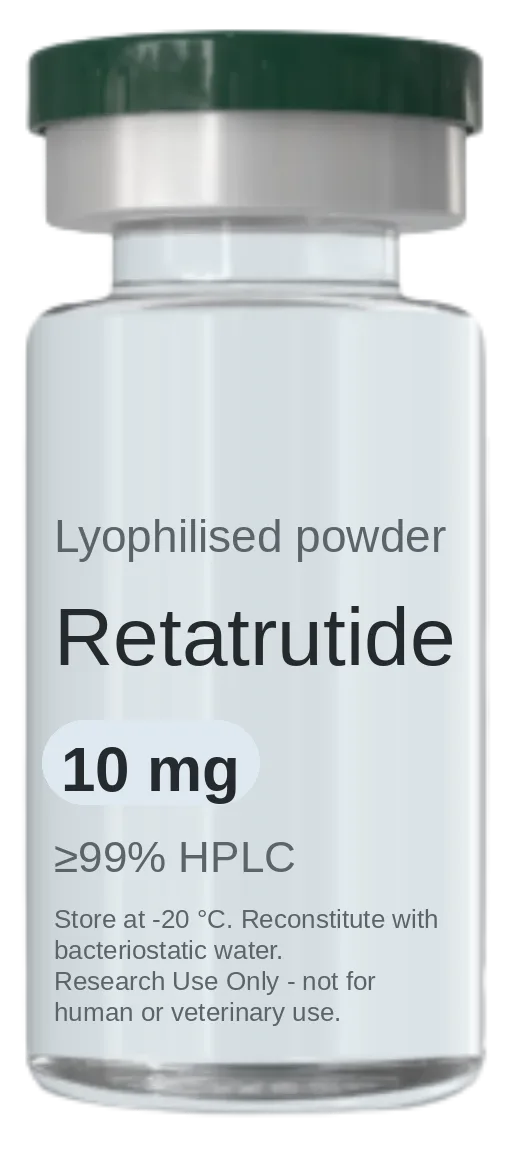
Retatrutide
Triple-agonist metabolic research peptide targeting GLP-1, GIP and glucagon receptors.
- Purity:
- ≥99% HPLC
- Sizes available:
- 10 mg
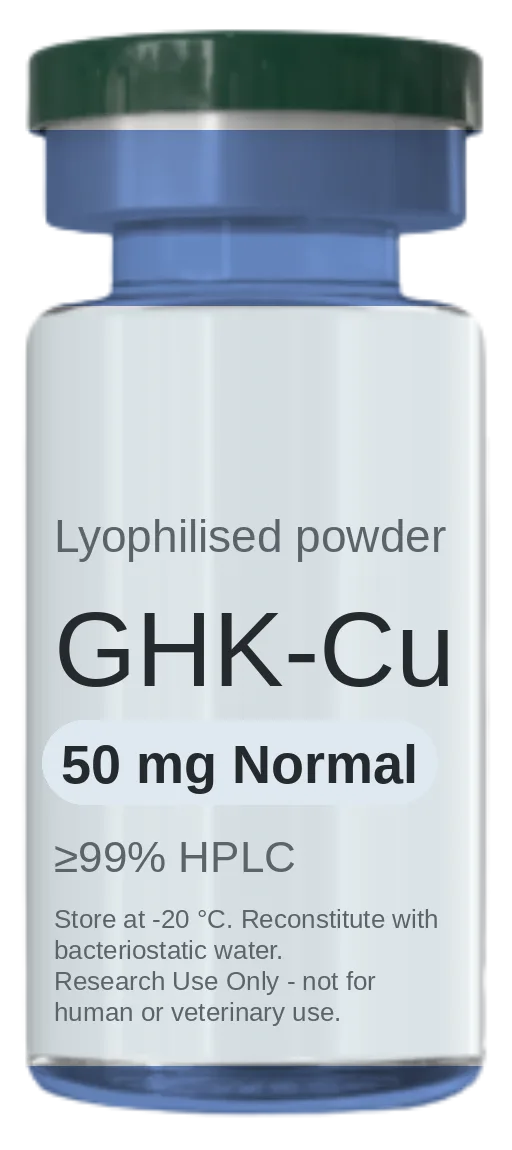
GHK-Cu (Copper Peptide)
Copper-binding tripeptide studied in extracellular matrix and dermal research models.
- Purity:
- ≥99% HPLC
- Sizes available:
- 50 mg Normal – 50 mg Plus
BPC-157 + TB-500
BPC-157 and TB-500 in a single vial — the pairing most studied together in tissue-repair research.
- Purity:
- ≥99% HPLC
- Sizes available:
- 5 mg + 5 mg
The consultation
One intake that settles goals, history and contraindications alongside compound, quantity, documentation and route — reviewed by a physician before anything ships.
More notes
-
Tesamorelin vs Sermorelin: The Difference
Tesamorelin and sermorelin are both GHRH analogs, but not the same molecule. Here's the structural difference and what the studies on each measure.
-
Peptide Supplier vs. Reseller: What Differs
The real difference is whether someone can name the lab that tested a batch and show the report — or only promise it's pure.
-
MOTS-c or NAD+: What's the Difference
MOTS-c and NAD+ are studied through different mitochondrial pathways; here's what each line of research actually measures.