
Note
Retatrutide vs MOTS-c: Key Differences
Retatrutide is a triple metabolic agonist; MOTS-c is a mitochondrial peptide. Mechanism, documented purity and format, compared.
Retatrutide and MOTS-c share a catalogue but nothing else — not molecular family, not mechanism, not the research question each one answers. Retatrutide is a triple agonist acting on the GLP-1, GIP and glucagon receptors, studied in research on body weight and energy metabolism. MOTS-c is a peptide derived from a sequence encoded in mitochondrial DNA, studied in research on mitochondrial function and metabolic homeostasis. The only real overlap is that both end up near the word "metabolism" in the literature — everything else separates them.
What is retatrutide in the research literature?
Retatrutide is a synthetic peptide designed to activate three hormone receptors at once: GLP-1, GIP and the glucagon receptor. That "triple agonist" architecture is what distinguishes it from single-pathway analogs, and it's also why it shows up in studies centered on glucose signaling, energy expenditure and appetite regulation, at the level of animal models and clinical research in investigational phases. The molecule doesn't occur in nature — it's a laboratory design built to act on three metabolic pathways simultaneously.
What is MOTS-c in the research literature?
MOTS-c belongs to a different category entirely: mitochondrial-derived peptides. Its sequence is encoded within mitochondrial DNA, not nuclear DNA, which already sets it apart from most of the research peptide catalogue, which consists of synthetic designs with no direct natural counterpart. Studies investigating it focus on communication between the mitochondria and the cell nucleus, on the metabolic response to exercise, and on the regulation of insulin sensitivity at the cellular level. It's a short peptide — 16 amino acids — and its biological origin is the exact opposite of retatrutide's: one arises from a natural sequence, the other is a synthetic multi-receptor design.
The core difference: molecular class and biological target
Laid out plainly, this is what separates one from the other:
- Retatrutide: synthetic peptide, agonist at three hormone receptors (GLP-1, GIP, glucagon), with no known natural precursor.
- MOTS-c: a 16-amino-acid peptide encoded in the mitochondrial genome, with a documented endogenous biological function that predates its synthesis for research use.
- Retatrutide is studied along the metabolism-appetite-glucose axis via membrane receptors.
- MOTS-c is studied along the metabolism-mitochondria axis via intracellular signaling.
They aren't interchangeable as research subjects: they answer different research questions, and comparing their "potency" doesn't make sense because they don't compete on the same mechanism.
Purity and documentation: what each certificate says
This is where opinion ends and the document begins. Both compounds carry a certificate of analysis from Janoshik Analytical, the same laboratory, with the same analysis date: April 13, 2026.
The retatrutide batch (task 136921, 10 mg label) was analyzed at a purity of 99.893%, with 11.96 mg of content. The MOTS-c batch (task 136923) was analyzed at a purity of 99.669%, with 11.31 mg of content. That 99.669% is, as of today, the lowest figure among the four published certificates in the catalogue — and it's the one to cite when discussing "the purity floor," not the highest one available.
Neither certificate is a promise about the next batch: it's a reading of that batch, on that date, by that laboratory. The correct way to verify a research peptide is to open the certificate, not to trust a label. How to read one is explained in detail on the quality page.
Delivery format: why neither travels in a cold chain
Retatrutide and MOTS-c ship the same way: lyophilised powder in a sealed vial, with desiccant, protected from light. In that state, neither one needs refrigeration during transport — lyophilised powder stays stable at room temperature for weeks, so the box carries no gel pack, no dry ice and no temperature logger.
Cold matters afterward: once reconstituted, either compound becomes a solution and requires an unbroken cold chain from that point on, between 2 and 8°C, with a use window of 30 to 60 days. The difference isn't in the compound — it's in whether the vial is still lyophilised or has already been reconstituted. Packaging details and available routes are on the shipping page.
Shipping to Argentina
PeptoClinic has supplied research material to destinations in Argentina since August 2026, with the customs file prepared to bring it in as laboratory reference material. Both retatrutide and MOTS-c are available for quoting to Argentine destinations, following the same process: a technical inquiry describes the compound, purity specification and quantity, and the team returns a written quote, normally within one business day. The full catalogue, with all 19 available references, can be reviewed on the catalogue page.
Research material, not for human or veterinary use
Retatrutide and MOTS-c are supplied strictly as Research Use Only (RUO) material: for in vitro and laboratory research. Neither is a medicine, a supplement or a food. Neither is approved or intended for human or veterinary consumption, diagnosis or treatment. No regulatory body — not ANMAT, not the FDA, nor any equivalent authority — has evaluated these statements. No prescription is issued, filled or required, and any inquiry about human-use protocols falls outside the scope of this technical consultancy.
Frequently asked questions
Do retatrutide and MOTS-c belong to the same peptide family?
No. Retatrutide is a synthetic peptide designed as an agonist at three distinct hormone receptors (GLP-1, GIP and glucagon), while MOTS-c is a peptide derived from a sequence encoded in mitochondrial DNA, with a completely different biological origin.
Which one shows higher purity on the published certificates?
According to the Janoshik Analytical certificates dated April 13, 2026, the retatrutide batch was analyzed at 99.893% purity and the MOTS-c batch at 99.669%. Both figures correspond to a specific batch, not a guarantee about future batches.
Do both come in the same delivery format?
Yes. Both are supplied as lyophilised powder in a sealed vial with desiccant, and neither requires a cold chain while it stays in that state. The need for refrigeration appears only after reconstitution.
Can both be quoted for a destination in Argentina?
Yes, both are available for quoting to Argentine destinations, with the import documentation prepared as laboratory reference material.
What's the difference in the mechanism each compound is studied for?
Retatrutide is studied in relation to membrane receptors linked to glucose metabolism and energy expenditure. MOTS-c is studied in relation to mitochondria-nucleus signaling and cellular metabolic homeostasis. These are separate research axes, not versions of the same question.
Does MOTS-c have a natural origin, or is it fully synthetic?
Its sequence corresponds to a region of the mitochondrial genome identified in prior research; the material supplied for research is synthesized in a laboratory to replicate that sequence, not extracted from tissue.
Does either compound require a cold chain for transport?
Not during the transport stage as lyophilised powder. A cold chain becomes necessary once the material is reconstituted into solution, not before.
Is either compound approved for human or veterinary use?
No. Both are supplied exclusively as research material (RUO), without approval for human or veterinary consumption, and without evaluation by ANMAT, the FDA or any equivalent regulatory body.
Compounds mentioned
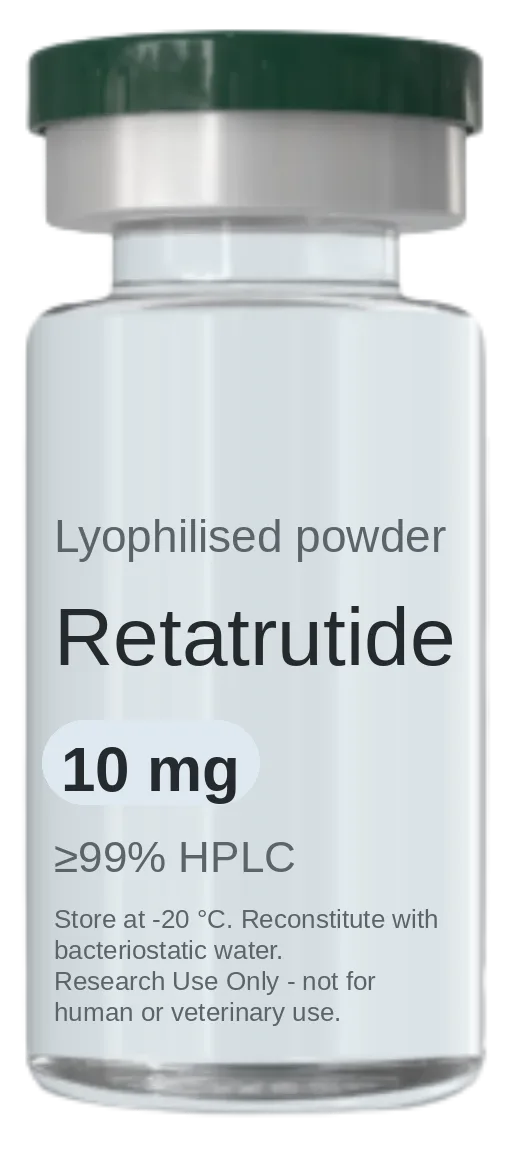
Retatrutide
Triple-agonist metabolic research peptide targeting GLP-1, GIP and glucagon receptors.
- Purity:
- ≥99% HPLC
- Sizes available:
- 10 mg
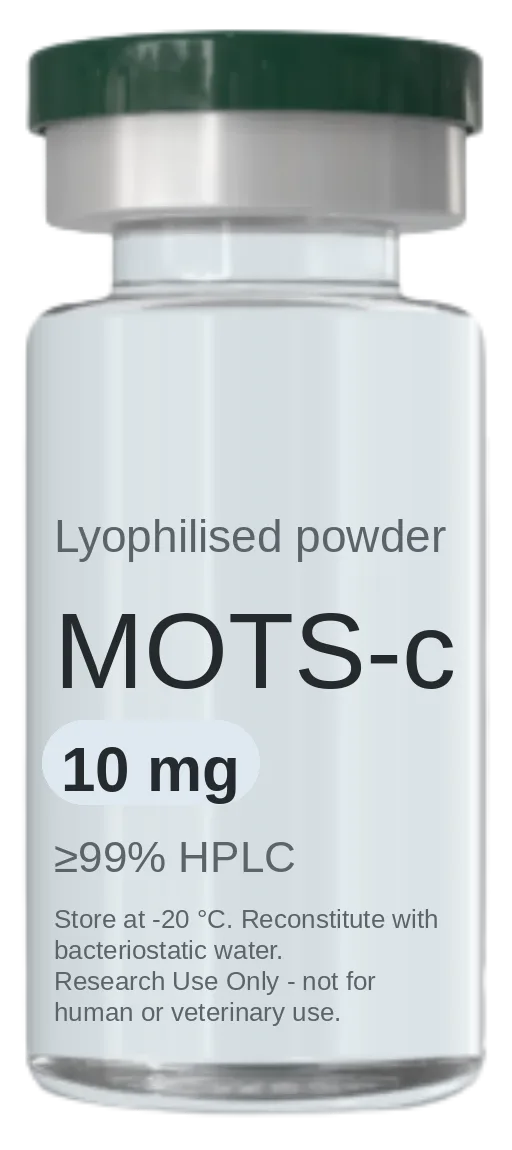
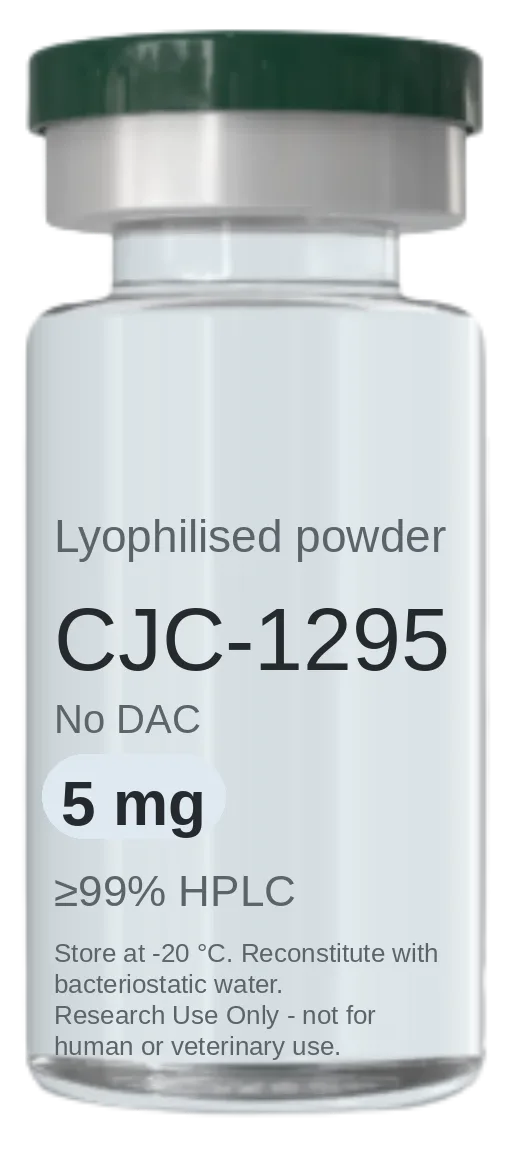
CJC-1295 (sin DAC)
Modified GRF(1-29) tetrasubstituted analogue without drug affinity complex.
- Purity:
- ≥99% HPLC
- Sizes available:
- 5 mg – 20 mg
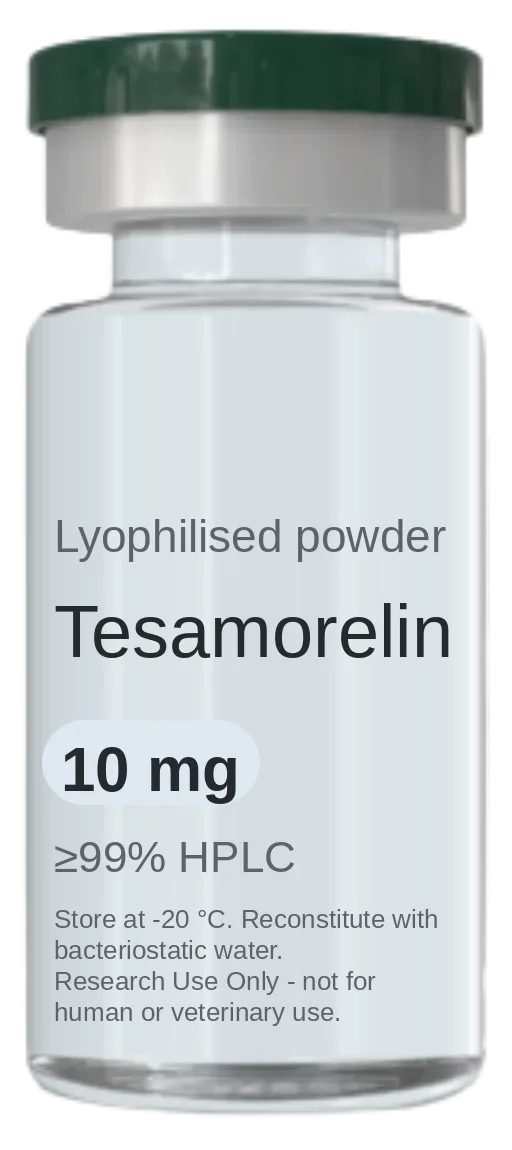
Tesamorelin
Stabilised GHRH(1-44) analogue studied in adipose tissue distribution research.
- Purity:
- ≥99% HPLC
- Sizes available:
- 10 mg – 20 mg
The consultation
One intake that settles goals, history and contraindications alongside compound, quantity, documentation and route — reviewed by a physician before anything ships.
More notes
-
Temporary Import Regime & Peptides
Temporary import covers goods that leave the country again; a research peptide shipment stays and gets used up.
-
Retatrutide vs GHK-Cu: What's the Difference
Retatrutide and GHK-Cu are different molecules studied for different reasons. Here's what each investigates and what documentation backs a batch.
-
Invoiced vs. Unbilled Peptide Suppliers
What changes when a research peptide supplier invoices the transaction versus one that takes payment and leaves no paper trail.