
Note
Retatrutide: What It Is and How It Works
Retatrutide is a triple GIP/GLP-1/glucagon receptor agonist with published phase 2 data. PeptoClinic supplies it with a Janoshik Analytical certificate.
Retatrutide is an acylated synthetic peptide that acts simultaneously on three receptors: the glucose-dependent insulinotropic polypeptide receptor (GIP), the glucagon-like peptide-1 receptor (GLP-1), and the glucagon receptor. That triple affinity distinguishes it from single or dual agonists and is the basis of the published clinical trials to date.
Triple agonism: GIP, GLP-1, and glucagon
Most peptides studied within the incretin axis act on one or two receptors. Retatrutide activates all three simultaneously.
GLP-1: the GLP-1 receptor is expressed in the pancreas, the central nervous system, and the gastrointestinal tract. Its activation reduces glucagon secretion, slows gastric emptying, and modulates signals related to food intake.
GIP: the GIP receptor shares some functions with the GLP-1 receptor but has a distinct role in the central nervous system and adipose tissue. Trials with dual GLP-1/GIP agonists suggest that the combination produces additive effects that neither axis generates alone.
Glucagon: the third axis. Glucagon increases hepatic energy expenditure and participates in the regulation of lipid metabolism. Including it introduces a mechanism that dual agonists do not have.
The research hypothesis is that activating all three receptors simultaneously produces metabolic effects distinct from those observed with narrower-spectrum agonists. The published clinical trials are the appropriate source to consult for any specific result.
Chemical structure
Retatrutide has nine amino acids in its main sequence. A long fatty acid chain — attached by acylation — is added to that backbone, giving the compound an extended half-life and enabling weekly dosing in clinical trials.
The investigational code name is LY3437943. The international nonproprietary name "retatrutide" was assigned when the compound entered phase 2 trials under that official designation.
The supply format for research is lyophilized powder in a vial. Lyophilization stabilizes the peptide for storage and transport; the reconstitution procedure for laboratory use falls within the investigator's protocol.
The phase 2 trial
The current reference study is a phase 2 trial published in the *New England Journal of Medicine* in 2023. Jastreboff et al. evaluated retatrutide in adults with obesity over 48 weeks, with different dose groups randomly assigned and a double-blind placebo control.
The observations reported dose-dependent effects on body weight and metabolic parameters. The highest-dose group (12 mg weekly) recorded the most pronounced reduction. The complete data, adverse event tables, and methodology are in the original publication — that is the primary source to read.
PeptoClinic has no affiliation with Eli Lilly or with the trial investigators. The citation is there so readers can verify the data at the source, not to imply that results replicate outside a controlled trial.
A phase 2 trial is designed to evaluate safety and establish dose ranges. Phase 2 results are not equivalent to phase 3 results, and no clinical trial result is directly extrapolable to use outside the protocol.
The certificate of analysis
PeptoClinic publishes certificates of analysis for the lots it supplies. The retatrutide lot in the research catalog was analyzed by Janoshik Analytical on April 13, 2026, task 136921.
The analysis reported 99.893% purity by HPLC. The vial carries a 10 mg label; the measured content was 11.96 mg. The certificate is available on the product page.
Janoshik Analytical is an independent Czech laboratory. PeptoClinic does not operate that laboratory or influence its results.
The PeptoClinic quality policy requires that every delivered lot carries its certificate of analysis. No material is supplied without a published analysis.
For laboratory research use only
Retatrutide, like all compounds PeptoClinic supplies, is material for laboratory research use only (RUO): in vitro studies and laboratory work.
This material is not a medicine, is not a supplement, and is not approved or intended for human or veterinary consumption, diagnosis, or treatment of any condition. No claim on this page has been evaluated by the FDA, ANMAT, or any equivalent authority.
PeptoClinic is not a pharmacy, clinic, telehealth provider, compounding facility, or medical consultancy. No prescriptions are written, filled, or required. Requests for human-use protocols are outside the scope of this service.
If you need medical guidance, consult a licensed healthcare professional.
Other peptides in the metabolic axis
Research on peptides acting on energy metabolism extends beyond retatrutide. PeptoClinic's catalog includes other compounds with active literature in this area.
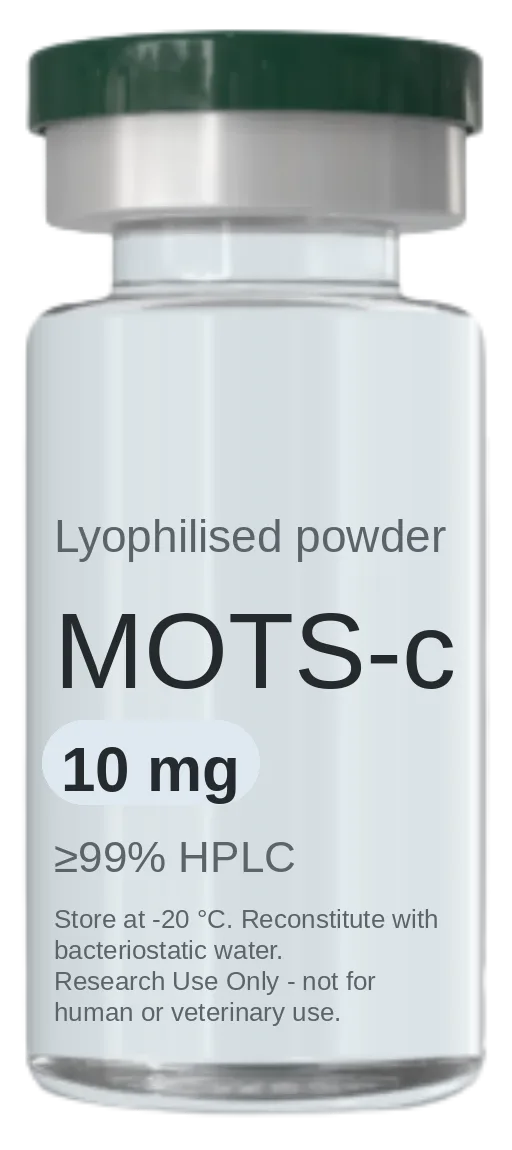
Tesamorelin is a synthetic analogue of growth hormone-releasing factor (GHRH) with effects studied in lipid metabolism in clinical trials. MOTS-c is a peptide derived from mitochondrial DNA that appears in the literature on aging biology and energy metabolism. The PeptoClinic MOTS-c lot was analyzed by Janoshik Analytical at 99.669% purity — the lowest published among current catalog lots.
Each compound has its own bibliography and its own trial data. Comparing peptides makes sense within a specific research protocol.
How to get a quote from PeptoClinic
PeptoClinic operates as a technical supply consultancy. There is no cart, no published price, and no automated checkout. A researcher describes what their program needs — compound, purity specification, quantity, lot documentation, packaging, customs route — and the technical team returns a written quote, normally within one business day.
Supply to Argentina is prepared with customs documentation for import as laboratory reference material. The full shipping process describes the flow from quote to delivery at destination.
For inquiries, write to [email protected].
Frequently asked questions
Is retatrutide the same as semaglutide or tirzepatide?
No. Semaglutide is a GLP-1 agonist only. Tirzepatide is a dual GLP-1/GIP agonist. Retatrutide activates all three receptors: GIP, GLP-1, and glucagon. The mechanisms are distinct and each has a separate clinical trial bibliography.
What does glucagon agonism add to the mechanism?
Glucagon has effects on hepatic energy expenditure and lipid metabolism that GLP-1 agonists alone do not directly activate. Adding that third axis is what distinguishes retatrutide from dual agonists. The specific effects are documented in the published trials.
Does retatrutide have regulatory approval?
No. As of the publication date of this article, retatrutide has no approval from any regulatory authority for therapeutic use. There is no approved clinical indication from the FDA, ANMAT, or any equivalent. The material is supplied exclusively for laboratory research.
What purity was found in the analyzed lot?
Janoshik Analytical reported **99.893%** purity by HPLC in task 136921, analyzed April 13, 2026. The vial carries a 10 mg label; the measured content was 11.96 mg.
Why does the measured content exceed the label weight?
The label weight (10 mg) is the guaranteed nominal weight. The laboratory-measured value (11.96 mg) indicates the lot contained more material than nominal. The difference is favorable to the researcher and is documented in the certificate of analysis.
How do you verify the certificate of analysis?
The Janoshik Analytical certificate for task 136921 is available on the product page. Janoshik publishes its reports with a task number on its site. PeptoClinic does not control or modify the laboratory's reports.
Can PeptoClinic ship to Argentina?
Yes. PeptoClinic supplies research material to Argentina. Shipments are prepared with customs documentation for import as laboratory reference material. The full process is on the [shipping page](/en/shipping/).
What documentation accompanies the order?
Each lot ships with its Janoshik Analytical certificate of analysis and customs documentation prepared for import as laboratory reference material. The full detail of what is included in each shipment is on the [quality page](/en/quality/).
Compounds mentioned
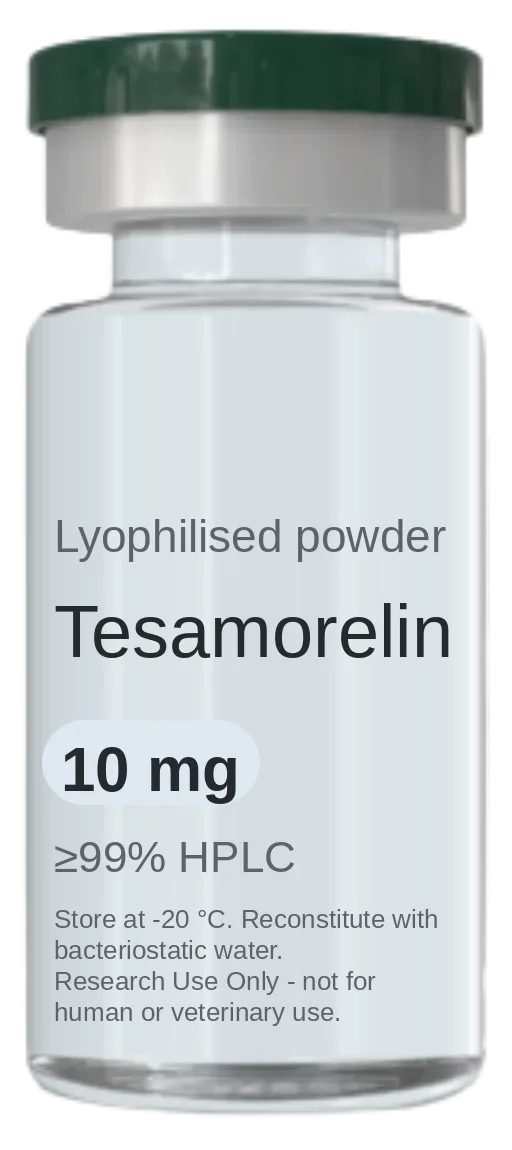
Tesamorelin
Stabilised GHRH(1-44) analogue studied in adipose tissue distribution research.
- Purity:
- ≥99% HPLC
- Sizes available:
- 10 mg – 20 mg
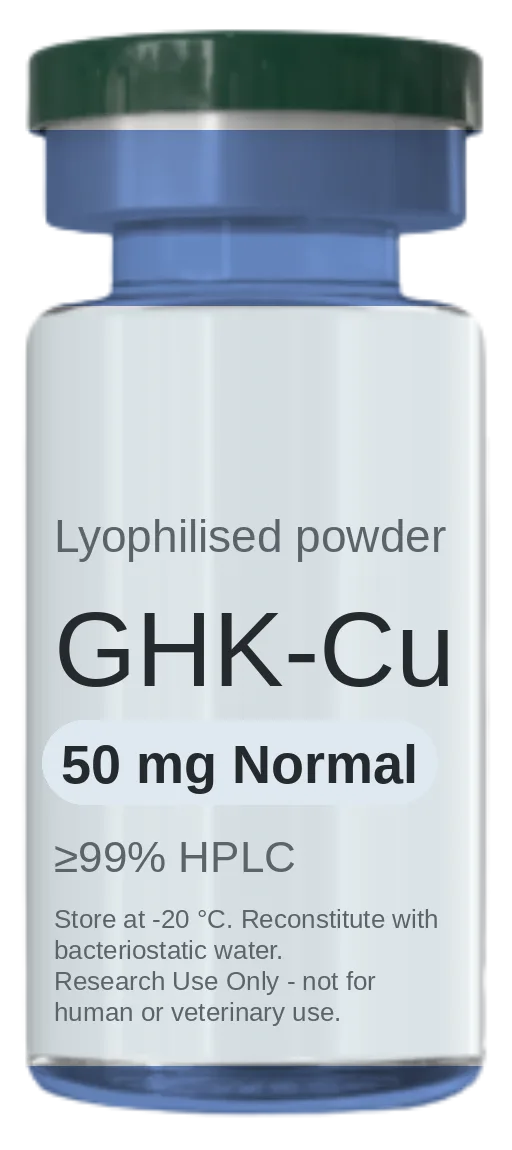
GHK-Cu (Copper Peptide)
Copper-binding tripeptide studied in extracellular matrix and dermal research models.
- Purity:
- ≥99% HPLC
- Sizes available:
- 50 mg Normal – 50 mg Plus
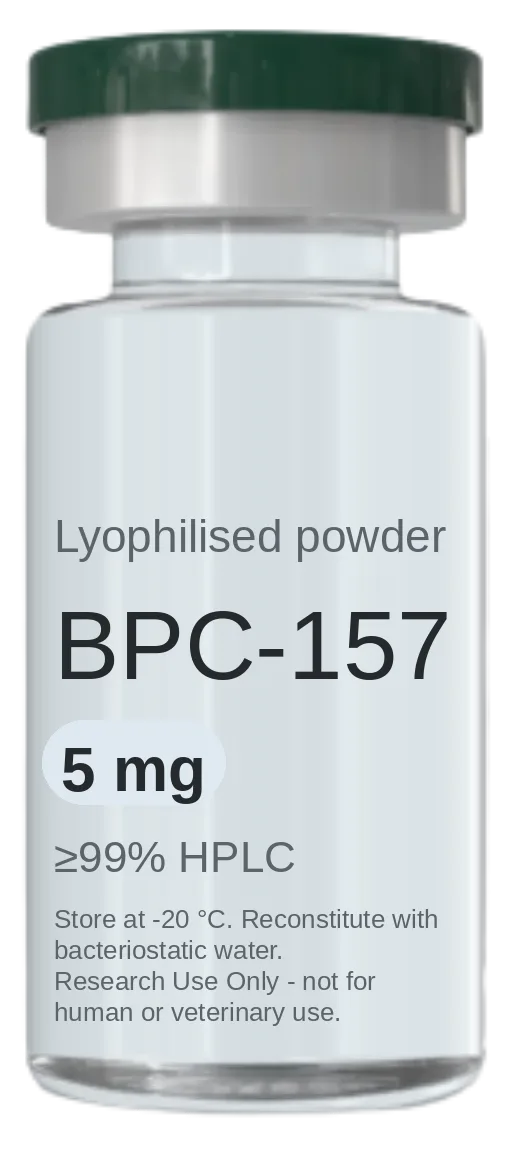
BPC-157 + TB-500
BPC-157 and TB-500 in a single vial — the pairing most studied together in tissue-repair research.
- Purity:
- ≥99% HPLC
- Sizes available:
- 5 mg + 5 mg
The consultation
One intake that settles goals, history and contraindications alongside compound, quantity, documentation and route — reviewed by a physician before anything ships.
More notes
-
Temporary Import Regime & Peptides
Temporary import covers goods that leave the country again; a research peptide shipment stays and gets used up.
-
Retatrutide vs GHK-Cu: What's the Difference
Retatrutide and GHK-Cu are different molecules studied for different reasons. Here's what each investigates and what documentation backs a batch.
-
Invoiced vs. Unbilled Peptide Suppliers
What changes when a research peptide supplier invoices the transaction versus one that takes payment and leaves no paper trail.