
Note
Sequence Identity in Peptide Analysis
What sequence identity means in a peptide analysis, how MS/MS measures it, and how it differs from HPLC purity.
Sequence identity measures how closely the amino acid chain of an analyzed peptide matches the expected reference sequence. In analytical laboratory work, it is the confirmation that the synthesized molecule is exactly what the label states: not a variant with a substituted residue, not a structurally similar analog. It is a separate data point from purity, and a rigorous certificate of analysis reports both independently.
Why the amino acid sequence defines a peptide
A peptide is a chain of amino acids connected by peptide bonds. The precise order of that chain — the sequence — determines how the molecule folds, which functional groups are exposed, and which structures it can interact with in the laboratory environment. Changing a single amino acid at a critical position can completely alter the compound's behavior.
When a synthesized peptide lot arrives, the relevant question is not only how much material is in the vial. The question that matters is whether what is in the vial has the correct sequence.
A concrete example: sermorelin has 29 amino acids. If synthesis incorporates a leucine where an isoleucine belongs — two amino acids with identical molecular mass — simple mass spectrometry cannot distinguish them. Tandem fragmentation is required to separate the two residues and confirm the chain is correct.
How sequence identity is determined
The standard method in analytical laboratories is tandem mass spectrometry (MS/MS). It works in two stages.
First stage — total mass. The peptide is ionized and the mass-to-charge ratio of the intact compound is measured. This confirms the molecular formula and rules out contaminants with a different mass.
Second stage — fragmentation. The peptide ion is fragmented inside the spectrometer. The resulting fragments correspond to portions of the chain, and their pattern allows the sequence to be reconstructed amino acid by amino acid. Fragments retaining the N-terminal end are called b ions; those retaining the C-terminal end are y ions. When the combined set of b and y ions covers the full length of the peptide, sequence identity is 100%.
An older method is Edman degradation: the N-terminal amino acid is removed one at a time and each is identified by chromatography. It remains accurate for short peptides of up to roughly 20 residues, but for longer chains and high-throughput laboratories, MS/MS is faster and more sensitive.
The analytical criteria applied to PeptoClinic Research Supply lots are described in the quality section.
Sequence identity and purity: two different questions
This is the most common point of confusion when reading a certificate of analysis.
HPLC purity measures what proportion of the total chromatogram signal corresponds to the peak of the compound of interest. A purity of 99.7% means that 99.7% of the UV-active material elutes at the expected retention time. It does not say whether that peak has the correct sequence.
Sequence identity says whether the predominant compound is the peptide stated on the label. Two peptides with different sequences but similar hydrophobicity can co-elute on the same column: HPLC records them as a single peak.
The four combinations that can appear on a report:
- High purity and confirmed sequence: the correct outcome.
- High purity and sequence unconfirmed: what was measured is unknown.
- Confirmed sequence and low purity: the compound is correct, but impurities are present.
- Sequence does not match: the lot is incorrect regardless of the purity percentage.
For laboratory research, both parameters matter. One data point without the other is insufficient to characterize a lot.
What to read on a certificate of analysis
A useful CoA includes at minimum:
- Compound name, molecular formula, and CAS number or sequence in single-letter notation.
- HPLC purity: main peak area over the total, with chromatographic conditions (column, gradient, wavelength).
- Molecular mass confirmation: calculated mass vs. found mass by MS.
- Sequence confirmation: method used (MS/MS or Edman) and sequence coverage achieved.
- Issuing laboratory name, date of analysis, and task or lot number.
- A verification link or code the laboratory can independently confirm.
Lots available through the PeptoClinic catalog are accompanied by reports from Janoshik Analytical, an independent laboratory specializing in peptide analysis. The retatrutide lot analyzed in April 2026 (task 136921) returned 99.893% HPLC purity; the MOTS-c lot (task 136923), 99.669%. Both reports include a task number verifiable directly in the laboratory's system.
Direct CoA verification
The value of a certificate of analysis is not in the printed document. It is in the issuing laboratory being able to independently confirm that a given task number corresponds to a given analysis. If the verification system does not exist or returns an error, the document is no more reliable than the image that generated it. Before trusting a CoA, locate the laboratory, open its online verifier, and enter the task number.
Cases where sequence identity is decisive
Position isomers. Some peptides have pairs of amino acids with identical molecular weights in interchangeable positions. The total mass of the peptide is identical in both variants; only MS/MS fragmentation distinguishes which is which.
Synthesis modifications. C-terminal amidation, N-terminal acetylation, and cyclization change the masses of the chain termini but do not always alter the HPLC retention time. MS/MS reveals them in the fragment spectrum.
High-similarity analogs. BPC-157 and related synthetic variants have similar masses. Confirming the exact sequence rules out confusion between analogs when working with lots from different sources.
Research material: laboratory use only
The peptides PeptoClinic Research Supply provides to researchers are material for Research Use Only (RUO): in vitro and laboratory research. They are not approved or intended for human or veterinary consumption, diagnosis, or treatment.
Nothing in this post is clinical guidance, an administration protocol, or a therapeutic indication. The sequence identity analyses described here are relevant for characterizing research materials in the context of laboratory work. Published PubMed literature on these methods is peer-reviewed science; the laboratory data accompanying a lot is analytical documentation. Neither constitutes a clinical use indication.
Frequently asked questions
What does sequence identity mean in a peptide analysis?
Sequence identity measures how closely the amino acid chain of an analyzed peptide matches the expected reference sequence. In the quality control of synthetic peptides, it confirms that the produced molecule has exactly the correct amino acids in the correct order. It is determined primarily by tandem mass spectrometry (MS/MS).
How does sequence identity differ from HPLC purity?
HPLC purity measures how much of the material in the sample corresponds to the peak of the compound of interest, but it does not identify what that compound is. Sequence identity confirms that the predominant compound is the correct peptide. They are two different questions: "how much is there?" versus "what is it?" A complete certificate of analysis answers both.
What are b ions and y ions in an MS/MS spectrum?
They are the fragments generated by breakage of the peptide chain during fragmentation. B ions retain the N-terminal end of the chain; y ions retain the C-terminal end. When both series together cover the full length of the peptide, the sequence can be reconstructed amino acid by amino acid and confirmed against the reference.
Can a peptide have high purity but incorrect sequence identity?
Yes. If two peptides with different sequences have similar hydrophobicity, they co-elute on the HPLC column and register as a single peak. The apparent purity can be high, but the predominant compound is not necessarily the correct one. This is why confirmation by MS or MS/MS is necessary in addition to the HPLC chromatogram.
What does "sequence coverage" mean in an MS/MS report?
Sequence coverage is the percentage of the total peptide sequence confirmed by detected fragments. Coverage of 100% means every amino acid was identified in at least one fragment. Lower coverage does not always indicate an error, but it requires the analyst to justify the uncovered residues in the report.
Is Edman degradation still relevant?
For short peptides and when confirmation of a free N-terminus is needed, Edman degradation remains accurate and is used as a complementary method. For longer chains or high-volume analysis, MS/MS is the standard because of its speed and sensitivity, and because it does not require the N-terminus to be free.
How do I verify that a certificate of analysis is authentic?
The first step is to identify the issuing laboratory and access its online verification system. If the laboratory publishes analyses with a unique task number, that number must return the same data as the document. A CoA without a verification system, or with a verifier that fails, cannot be considered validated by the laboratory regardless of what the header states.
How do I request a lot with complete analytical documentation?
PeptoClinic Research Supply prepares quotes that include the analysis report for the available lot. Describe the compound and the purity specifications the research programme requires, and the technical team returns the quote with purity and sequence identity documentation for the corresponding lot. Inquiries are answered within one business day.
Compounds mentioned
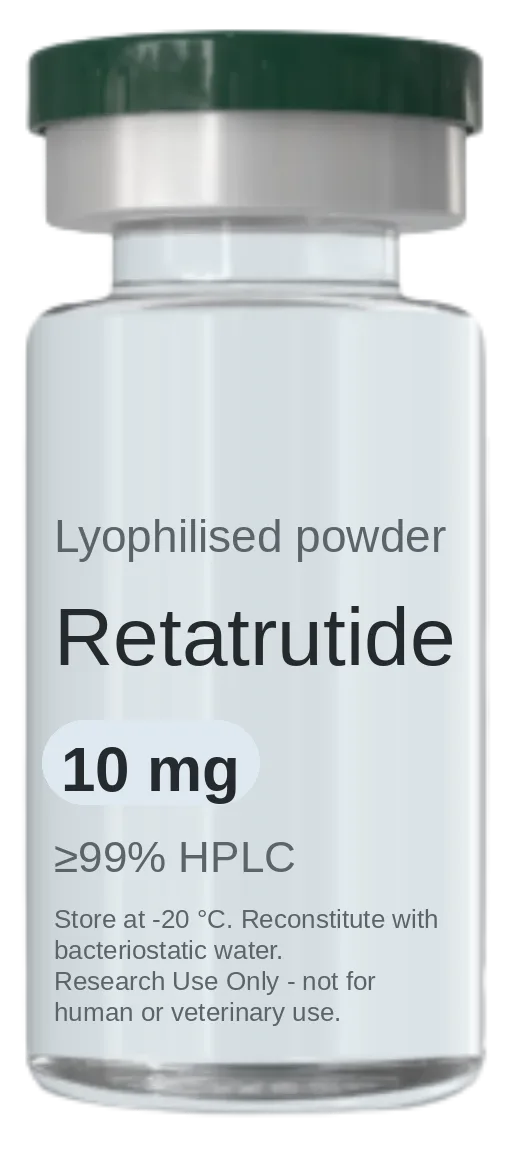
Retatrutide
Triple-agonist metabolic research peptide targeting GLP-1, GIP and glucagon receptors.
- Purity:
- ≥99% HPLC
- Sizes available:
- 10 mg
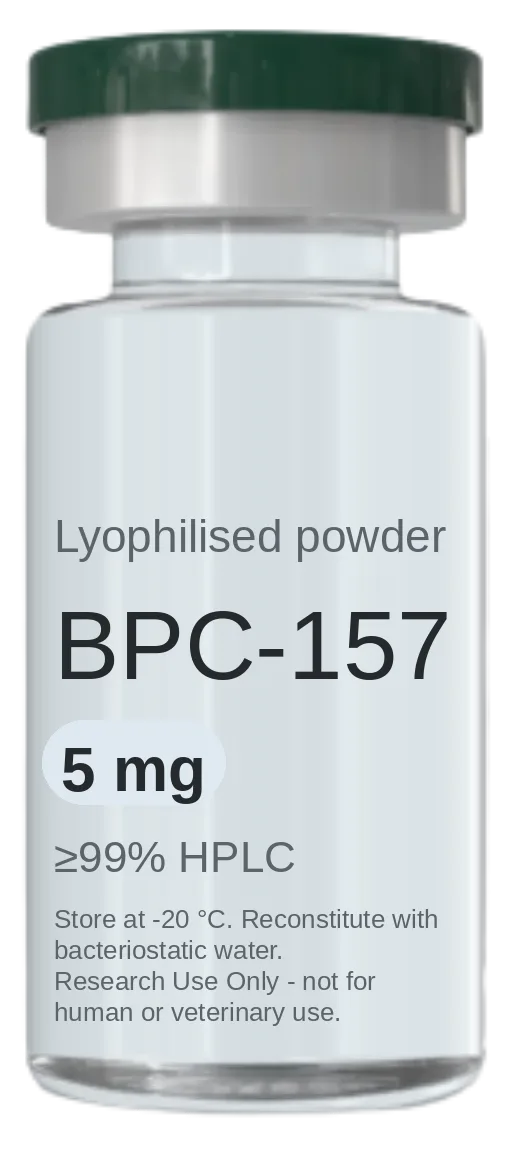
BPC-157 + TB-500
BPC-157 and TB-500 in a single vial — the pairing most studied together in tissue-repair research.
- Purity:
- ≥99% HPLC
- Sizes available:
- 5 mg + 5 mg
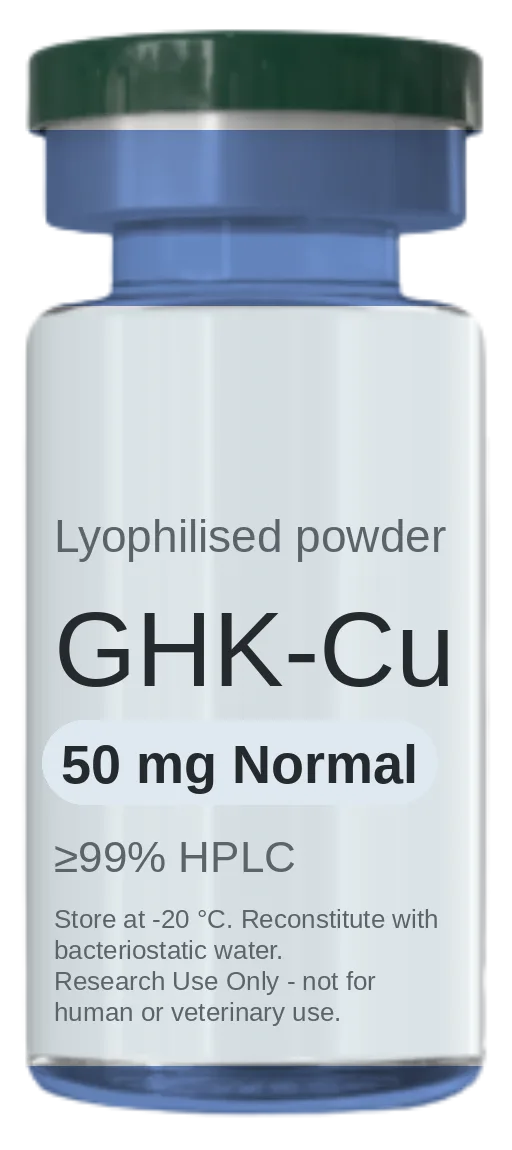
GHK-Cu (Copper Peptide)
Copper-binding tripeptide studied in extracellular matrix and dermal research models.
- Purity:
- ≥99% HPLC
- Sizes available:
- 50 mg Normal – 50 mg Plus
The consultation
One intake that settles goals, history and contraindications alongside compound, quantity, documentation and route — reviewed by a physician before anything ships.
More notes
-
No Batch Number on the Invoice: Customs
If a peptide shipment's invoice skips the batch number, Argentine customs can hold it and request supporting documents.
-
Real Peptide Stock or Catalog?
How to tell if a research peptide supplier holds real stock or is just quoting from a generic catalog, before you pay anything.
-
How to Verify a Janoshik COA
What to check on a Janoshik Analytical certificate to confirm a research peptide matches its stated batch.