
Note
Transport Insurance for Importing Peptides
Transport insurance isn't required to import research peptides into Argentina — here's what customs actually checks instead.
No, there is no Argentine regulation requiring transport insurance to import a research peptide. Transport insurance is a commercial choice, not a legal requirement: it covers loss or damage to a shipment in transit, not whether the package is allowed to enter the country. What customs actually checks is something else — the documentation that identifies the contents as research material — and that is where attention belongs, not on whether a policy exists.
What transport insurance covers, and what it doesn't
International transport insurance indemnifies for physical loss of the shipment (it goes missing, it's stolen) or for damage to the contents (a vial arrives broken, the box got wet). It's a contract between the sender or importer and an insurer or the courier itself, and its scope ends there.
What transport insurance does not do:
- It doesn't replace the invoice or the paperwork describing the contents.
- It doesn't prevent a customs delay caused by an incomplete declaration.
- It doesn't turn an irregular shipment into a regular one.
That distinction matters because the two questions get merged constantly: someone asks "do I need insurance?" when the question that actually worries them is "will this shipment clear customs without problems?" Those are two different questions, and the second one isn't answered by a policy.
What Argentine customs actually asks for
Customs doesn't ask for insurance. It asks that the shipment be correctly declared: what it is, what it's used for, who sent it and who receives it. At PeptoClinic, every quote to an Argentine destination ships with the customs file prepared so the material enters declared as what it is — laboratory reference material for research, never as a consumer product. That correct declaration is what prevents delays, not a transport policy.
The technical team reviews the compound, the quantity, the batch documentation and the dispatch route before quoting, specifically so that part is resolved up front and doesn't get discovered mid-route.
If it's not required, when does it make sense to pay for it?
Since it isn't a requirement, the question becomes a pure cost-benefit one: what happens if the shipment is lost?
- Low declared-value shipments: many international couriers already include a basic liability coverage within their standard rate, at no extra charge. For a small shipment, that baseline coverage is usually enough.
- Higher-value shipments, or several compounds bundled together: here it's worth evaluating additional insurance, because a courier's basic coverage usually has a fixed cap that doesn't scale with the actual value of the contents.
- Routes with more than one leg or with a transfer point: the longer and more fragmented the logistics chain, the more points where something can go missing, and the stronger the case for insuring the full route.
None of these three situations has anything to do with customs or with the nature of the product. It has to do with how much you're willing to lose if the package doesn't arrive, and that's decided by whoever pays for the freight, not by a regulation.
Why shipping lyophilised peptides doesn't need special conditions
A common question that gets tangled up with the insurance one is whether the shipment needs a cold chain, and whether that adds a different kind of coverage. It doesn't. The material travels as lyophilised powder in a sealed vial, and lyophilised powder stays stable at room temperature for weeks. That's why the box carries no coolant, no gel pack, no dry ice, and no temperature logger: it carries a sealed vial with desiccant, protected from light. The details of how it's packaged and what paperwork travels with the box are on the shipping page.
Cold only starts to matter afterward, once the peptide has been reconstituted into solution for laboratory use — at that point it does require 2–8 °C and an unbroken chain. But that happens at the destination laboratory, not during international transport, so it adds no insurance or packaging requirement to the shipment itself.
What documentation actually makes the difference at the border
If insurance isn't what clears the package, what does? Three things, in order of importance:
1. An invoice that correctly describes the contents as research material, with the compound, quantity and sender identified. 2. The batch's laboratory report (certificate of analysis). PeptoClinic publishes reports from Janoshik Analytical for analysed batches, and the quality page explains how to read one before assuming a high number means anything by itself. 3. A dispatch route chosen in advance, so the courier knows what to declare at origin instead of improvising along the way.
Compounds like retatrutide or BPC-157 each have their own page for Argentina specifically for this reason: the documentation that accompanies a compound isn't generic, and it's worth checking per product before quoting a shipment. The same applies to MOTS-c, which has its own published report and its own reviewed dispatch route.
The material is for laboratory research, not for human use
Everything quoted through PeptoClinic is reference material strictly for research use (RUO) — laboratory and in vitro use. It is not a drug, not a supplement, and it is not approved or evaluated by ANMAT, the FDA or any equivalent authority for human or veterinary consumption, diagnosis or treatment. No quote includes guidance on use in people, and requests seeking that kind of guidance are declined.
What to settle before quoting a shipment to Argentina
Before asking about insurance, it's worth resolving three things with whoever is quoting the shipment: which compound and quantity will be declared, which batch report accompanies it, and which dispatch route will be used. Once those three pieces are settled, insurance stops being the central question — it's an optional add-on to a shipment that's already well put together, not a patch for one that isn't. The full catalogue and a specific quote are available from the catalogue page.
Frequently asked questions
Is transport insurance mandatory to import peptides into Argentina?
No. There is no Argentine regulation requiring it. It's an optional commercial coverage against loss or damage in transit, separate from the customs documentation that actually determines whether the package enters without problems.
What's the difference between transport insurance and customs documentation?
Insurance pays out if the shipment is lost or damaged along the way. Customs documentation — the invoice, the description of contents, the batch report — is what determines whether customs lets the package through. They're two different things, and only the second one is essential.
Who usually pays for the insurance, the sender or the recipient?
It depends on the commercial agreement between the parties. In many cases the international courier already includes basic liability coverage in its standard rate, and additional insurance is purchased separately when the declared value exceeds that baseline coverage.
What happens if the shipment is lost or damaged and there was no additional insurance?
If the courier includes basic coverage as part of its service, that coverage applies up to its usual cap. With no insurance at all — neither basic nor additional — the loss falls on whoever arranged the shipment, which is why it's worth checking what coverage the chosen service includes before dispatching.
Does insurance cover a package held by customs over an incomplete declaration?
No. Transport insurance covers physical loss or damage to the contents, not delays or holds caused by documentation. An incomplete declaration is resolved with correct paperwork, not with a policy.
Does the shipment's declared value need to match its real value for insurance to apply?
Yes, any transport coverage is calculated against the declared value of the contents. Declaring a value different from the real one leaves the coverage misaligned with what's actually being insured.
Do peptides ship cold, and does that change anything about insurance?
No. The material ships as lyophilised powder at room temperature, with no coolant or thermal packaging, because it's stable that way for weeks. Cold is only needed afterward, once reconstituted at the destination laboratory, and that doesn't affect the insurance decision at all.
What should I ask for before importing a research peptide into Argentina?
Before insurance, it's worth confirming three things: the exact compound and quantity to be declared, the laboratory report for the corresponding batch, and the planned dispatch route. Those three pieces are what determine whether the shipment clears without issues.
Compounds mentioned
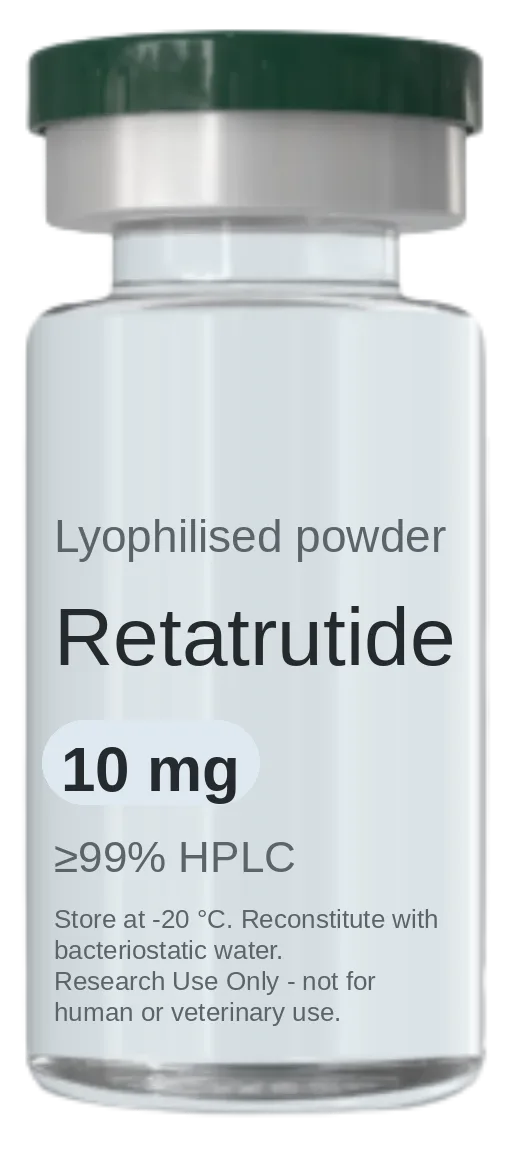
Retatrutide
Triple-agonist metabolic research peptide targeting GLP-1, GIP and glucagon receptors.
- Purity:
- ≥99% HPLC
- Sizes available:
- 10 mg
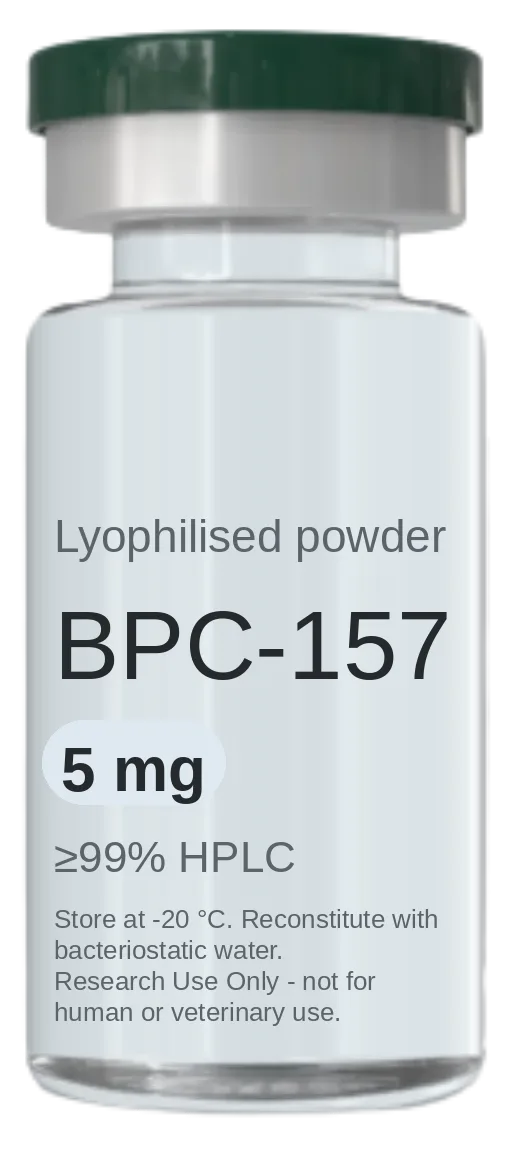
BPC-157 + TB-500
BPC-157 and TB-500 in a single vial — the pairing most studied together in tissue-repair research.
- Purity:
- ≥99% HPLC
- Sizes available:
- 5 mg + 5 mg
The consultation
One intake that settles goals, history and contraindications alongside compound, quantity, documentation and route — reviewed by a physician before anything ships.
More notes
-
GHK-Cu vs Epithalon: What's the Difference
GHK-Cu and Epithalon are distinct research peptides in structure and in what the literature studies on each. Here's the difference.
-
Freight Forwarder vs Courier to Argentina
Can a freight forwarder replace a courier to import research peptides into Argentina? What changes, and what the practical answer is.
-
No One Home for Your Argentina Shipment?
What happens when a research peptide shipment to Argentina arrives at an address with no one there to sign for it.