
Note
Argentina Postal Weight Limit for Peptides
What happens if a research peptide shipment to Argentina exceeds the simplified postal regime's weight limit, and how it's resolved.
If an international shipment exceeds the weight limit of Argentina's simplified postal regime, Customs pulls it out of that channel and routes it into the general import regime: it stops being an automatic process and starts requiring more documentation, and in some cases the involvement of a licensed customs broker. The package is not lost or seized just because it weighs too much — what changes is the administrative path it has to clear before it reaches its destination.
What is the simplified postal regime
The simplified regime is the channel through which the overwhelming majority of packages entering Argentina by Correo Argentino or an international courier are processed: the contents are declared, whatever duty applies is paid, and the package moves without the recipient having to file a formal import declaration or hire a customs broker. It exists precisely so that a small shipment — a personal order, a sample, a low-volume batch — doesn't have to go through the same process as a large commercial import.
That regime has caps. Both the international postal operator and Argentine customs regulation define how much a parcel can weigh to qualify as a simplified shipment. Once a package goes over that cap, Customs reclassifies it: it no longer moves through the fast lane, it moves through the general lane.
PeptoClinic supplies research peptides to Argentina as of 2026-08-05, and every shipment is built around that limit before it's dispatched, not after.
What exactly happens when a shipment exceeds the limit
It gets reclassified into the general import regime
The change of channel is the central consequence. A shipment that enters the general regime stops being processed with the courier's simplified paperwork and instead needs a formal import declaration, the same as any commercial cargo. That doesn't mean the contents are prohibited or that the shipment gets confiscated — it means the process to clear it through customs is a different one, with different timelines and different requirements.
It may require a licensed customs broker
Import through the general channel, unlike the simplified one, usually requires the involvement of a licensed customs broker to file the paperwork with Customs. That adds a step — and a cost — that the simplified postal regime avoids.
The package sits in bonded storage until the process is complete
While the reclassification is being resolved, the parcel is held in bonded storage (depósito fiscal), waiting for the documentation the general channel requires to be completed. How long that takes depends on how quickly that paperwork comes together, not on a fixed deadline.
The customs cost can change
The simplified regime usually carries a duty and tax treatment designed for small parcels. Once a shipment moves to the general channel, that treatment changes, and the cost of clearing it is recalculated under the rules that apply to a formal import.
In some cases, the shipment is returned to the sender
If the general-channel paperwork isn't completed within the deadline Customs sets, the package can end up returned to origin. It's the least desirable outcome of all, and it's exactly the one avoided by planning shipment weight before dispatch.
How this is avoided in practice
The way to sidestep all of this is simple: keep each parcel under the simplified regime's weight limit. That's a decision made before dispatch, not after a package is already stuck in bonded storage.
When a research order is small — a few vials of a compound like retatrutide or BPC-157 — the shipment fits comfortably within the simplified regime. The issue only becomes relevant when a lab needs a larger volume: several compounds, several batches, or quantities meant for a sustained research programme rather than a one-off order.
In those cases, the solution isn't to force a single heavy shipment through and see what Customs does with it. It's to split the order into several shipments, each within the simplified regime's cap, and coordinate dispatch so each parcel moves through the fast lane instead of getting caught in the general one. That's a logistics decision, and it's made at the quoting stage, when compound, quantity and batch documentation for the order are reviewed.
What this means for a larger-volume order
A lab or researcher restocking several compounds at once — for example MOTS-c and GHK-Cu in the same order — has two paths: one large shipment that risks crossing the cap and getting reclassified, or several smaller shipments that each stay within the simplified regime.
The second path looks slower on paper — it's more packages — but in practice it's usually faster overall, because each individual parcel follows the channel it's meant for instead of waiting in bonded storage for paperwork the simplified regime never needed. It's the same logic that applies to any import: shipment size is decided based on the process it's going to go through, not the other way around.
The material is for laboratory research, not human use
Everything shipped to Argentina under this regime is material supplied strictly for research — Research Use Only (RUO) — intended for in vitro and laboratory studies. It is not a medicine, a supplement or a food. It is not approved for human or veterinary consumption, nor for diagnosis or treatment, and none of its properties have been evaluated by ANMAT, the FDA or any equivalent authority. The batch documentation that accompanies each shipment — including the quality documentation backing the declared purity — is prepared for that laboratory use, not for a person-facing administration protocol.
Frequently asked questions
What exactly is the weight limit for the simplified postal regime?
The cap is set by Argentine customs regulation combined with the rules of the postal operator or courier carrying the shipment, and it can vary by operator type. That's why the practical approach isn't memorizing a single number — it's planning each shipment to stay comfortably under whatever threshold applies at the time of dispatch.
If my package exceeds the limit, is it lost?
No. Exceeding the weight limit doesn't mean confiscation or loss of the contents. It means the package moves to the general import regime instead of the simplified one, with more documentation and a longer clearance process.
Do I need to hire a customs broker if my shipment ends up in the general regime?
In most cases, yes, because the general import channel is designed to be operated with a licensed customs broker, unlike the simplified regime.
How long does a reclassified package stay held?
It depends on how long it takes to complete the documentation the general channel requires, not on a fixed deadline. In the meantime, the package remains in bonded storage.
Is it better to split a large order into several shipments?
Generally, yes. Keeping each parcel under the simplified regime's limit avoids reclassification, bonded storage, and the possible need for a customs broker, even though it means coordinating more than one shipment.
Does PeptoClinic help plan the weight of a large shipment to Argentina?
Yes. When a research order involves several compounds or larger quantities, the dispatch plan is worked out at the [quoting](/en/argentina/) stage, precisely so each parcel stays within the simplified regime.
Does the material travel in a cold chain, and does that affect declared weight?
No. The material ships as lyophilised powder in a sealed vial, which doesn't require a cold chain or refrigerant elements, so it adds no extra weight for that reason. Cold only becomes relevant after the vial has been reconstituted, at the storage stage — not during shipping.
What happens if a shipment is returned to sender for not completing the general-channel process?
It's the least common outcome, and the one actively avoided. It happens when the general-channel documentation isn't completed within the deadline Customs sets, and it's exactly the scenario prevented by keeping shipment weight within the simplified regime from the start.
Compounds mentioned
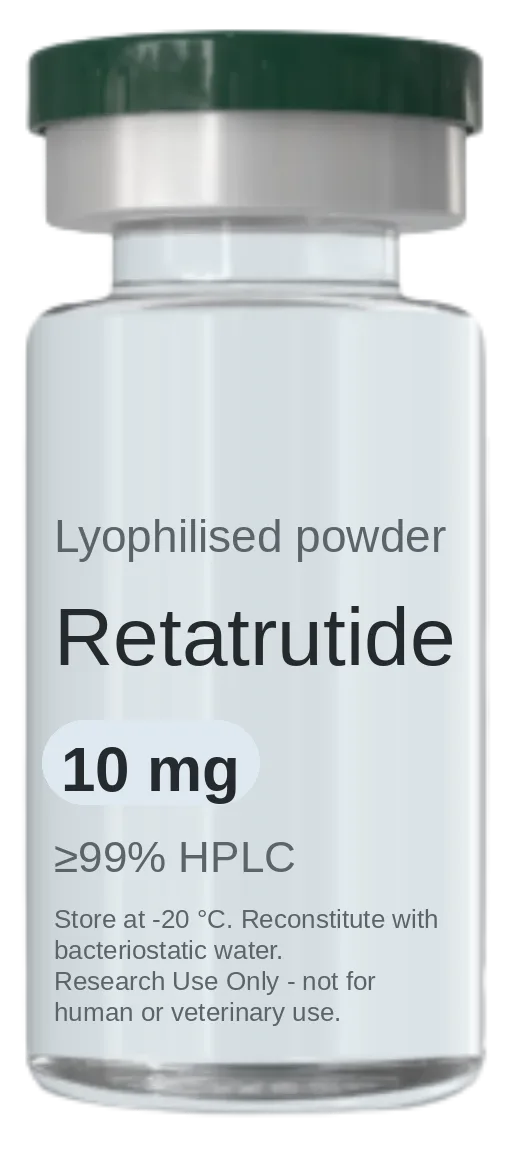
Retatrutide
Triple-agonist metabolic research peptide targeting GLP-1, GIP and glucagon receptors.
- Purity:
- ≥99% HPLC
- Sizes available:
- 10 mg
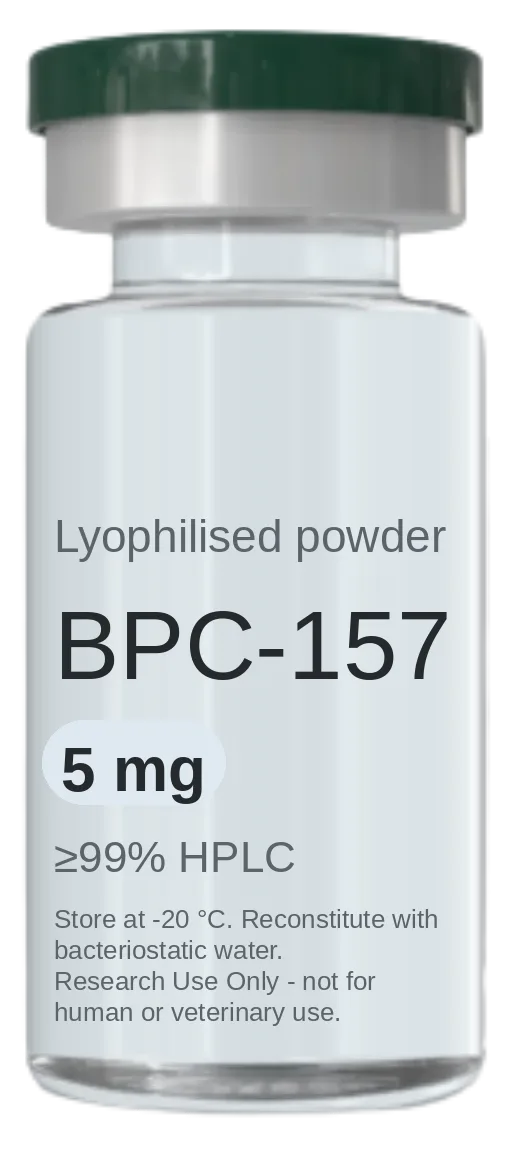
BPC-157 + TB-500
BPC-157 and TB-500 in a single vial — the pairing most studied together in tissue-repair research.
- Purity:
- ≥99% HPLC
- Sizes available:
- 5 mg + 5 mg
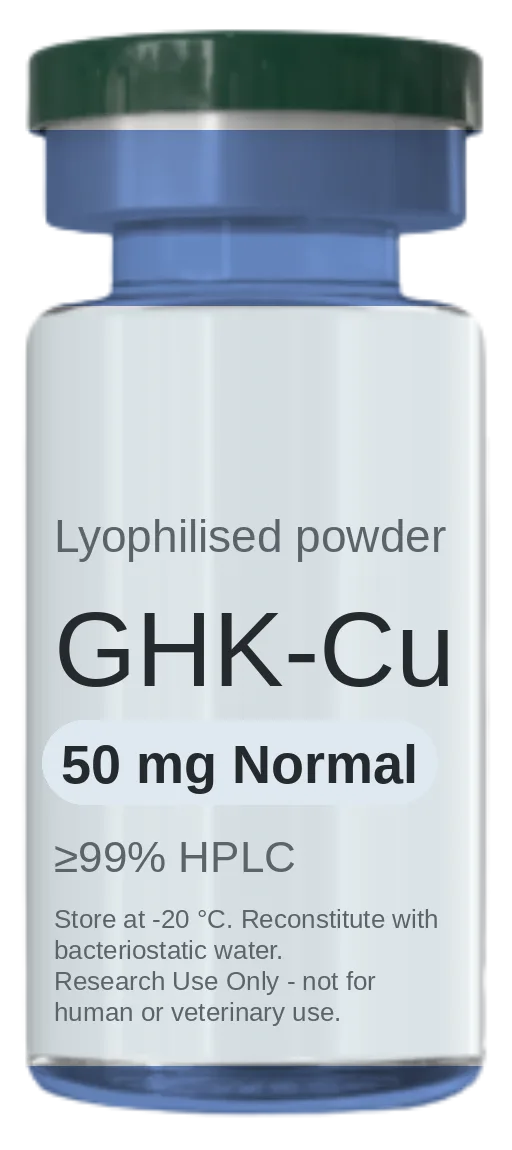
GHK-Cu (Copper Peptide)
Copper-binding tripeptide studied in extracellular matrix and dermal research models.
- Purity:
- ≥99% HPLC
- Sizes available:
- 50 mg Normal – 50 mg Plus
The consultation
One intake that settles goals, history and contraindications alongside compound, quantity, documentation and route — reviewed by a physician before anything ships.
More notes
-
Temporary Import Regime & Peptides
Temporary import covers goods that leave the country again; a research peptide shipment stays and gets used up.
-
Retatrutide vs GHK-Cu: What's the Difference
Retatrutide and GHK-Cu are different molecules studied for different reasons. Here's what each investigates and what documentation backs a batch.
-
Invoiced vs. Unbilled Peptide Suppliers
What changes when a research peptide supplier invoices the transaction versus one that takes payment and leaves no paper trail.