
Note
Size Exclusion Chromatography for Peptides
SEC detects aggregates and fragments that reverse-phase HPLC cannot. How to read this data in a peptide certificate of analysis.
Size exclusion chromatography (SEC) separates molecules in a sample according to their size in solution. In research peptide analysis, its primary function is detecting aggregates, multimers, and degradation fragments that reverse-phase HPLC cannot distinguish: these species carry the same amino acid sequence as the target compound but a different molecular weight, and they elute at different points along a SEC column. A batch measuring 99% purity by RP-HPLC can carry a non-trivial aggregate fraction that only SEC reveals.
How the separation works
A SEC column contains porous particles — silica or polymer — with pores of controlled size. When the sample enters the column alongside the mobile phase, each molecule behaves differently depending on whether it fits inside those pores.
Molecules larger than the pore size cannot enter them. They travel through the interstitial space between particles, reach the detector first, and elute in the smallest volume of solvent. Smaller molecules penetrate the pores, travel a longer effective path, and elute later.
The result is a chromatogram where the horizontal axis represents elution volume and the vertical axis represents absorbance, typically at 214 or 280 nm. Each visible peak corresponds to a family of molecules of similar size. Early peaks indicate higher-mass species — aggregates or oligomers. The main peak corresponds to the monomer. Late peaks correspond to lower-mass fragments or impurities.
Why this matters for synthetic peptides
Peptides have a natural tendency to aggregate in solution. Concentration, pH, temperature, and freeze-thaw cycling all shift that equilibrium. An aggregate is not the same compound as the monomer: its three-dimensional conformation differs, and in an in vitro experiment it may interact with receptors or enzymes differently from the isolated monomer.
When a research protocol requires a defined monomeric sample, knowing that the batch is 99% pure by HPLC is not sufficient to guarantee it. A report that includes SEC adds that dimension: what fraction of the total mass is monomer, and what fraction consists of detectable aggregates or fragments.
Longer peptides with a stronger tendency to adopt secondary structure benefit most from this additional analysis. Retatrutide, at 39 amino acids, sits in that category. The same applies to signaling peptides such as MOTS-c, whose activity in cellular models has been studied in relation to structural integrity.
The difference from reverse-phase HPLC
RP-HPLC separates by chemical affinity: molecules interact with the hydrophobic stationary phase and elute when the organic solvent gradient displaces them. It is the standard technique for measuring chemical purity in peptides, and it is the method that appears in most certificates of analysis, including those from Janoshik Analytical published on PeptoClinic's quality page.
SEC uses no chemical interaction: it separates exclusively by size. Two molecules with the same amino acid sequence but different aggregation states are indistinguishable in RP-HPLC — they share the same retention time — but elute as separate peaks in SEC.
The two techniques are complementary. A laboratory running both on the same batch can state that the sample has a defined chemical purity and a defined distribution of species by size. Neither replaces the other.
What a useful SEC report contains
A SEC report that is useful for research includes four concrete elements.
The full chromatogram: not just the purity figure, but the image of the separation. It allows the reader to see whether secondary peaks were omitted from reporting, whether the baseline is stable, and whether the main peak is well resolved from its neighbors.
The peak area integration table: the percentage area of each identified peak. The main peak is expressed as a fraction of total area. Secondary peaks are listed as well, with provisional identification as aggregate, fragment, or unknown impurity.
The run conditions: the column used with its separation range in daltons, mobile phase composition, flow rate, temperature, and detection wavelength. Without these, the result is neither reproducible nor comparable with runs from other laboratories.
The column exclusion limit: this defines which sizes fall outside the separation range. Molecules larger than the exclusion limit co-elute at the void volume without resolution between them, and no inference can be drawn about what they are.
A report presenting only a purity percentage without a chromatogram or run conditions does not allow verification of separation quality.
Stability monitoring
Beyond the initial characterization of a batch, SEC has a second use in research: monitoring stability over time. A material showing 98% monomer freshly lyophilized may show a lower percentage after several freeze-thaw cycles or after storage under suboptimal conditions.
Running SEC on the same sample before and after a storage protocol quantifies that shift. RP-HPLC may not detect it if the resulting fragments carry the same amino acid sequence as the original compound — in SEC they elute as distinct peaks because their mass differs.
For experiments requiring reproducibility across runs separated by days or weeks — a design common in in vitro peptide studies such as those using BPC-157 — this kind of analysis is a documented practice in the analytical chemistry literature.
For laboratory research only
All material supplied by PeptoClinic is intended exclusively for laboratory research (RUO, Research Use Only): in vitro studies, cell-model experiments, and controlled scientific research protocols. It is not a medicine, not a dietary supplement, and it is not approved or intended for human or veterinary consumption, diagnosis, or treatment by any regulatory authority, including the FDA or ANMAT.
Analytical data — HPLC, SEC, or any other method — describes the chemical composition of the material as a technical reference for the researcher. It is not clinical use guidance.
PeptoClinic's catalogue lists the compounds available for quotation.
Frequently asked questions
What is the difference between SEC and gel filtration chromatography?
They are the same principle under different names. "Gel filtration chromatography" is the historical term, more common in protein biochemistry, and references the early Sephadex supports. "Size exclusion chromatography" is the IUPAC systematic name and the term most used in the analytical literature for synthetic peptides. Current columns use silica or polymer particles, but the separation mechanism is identical.
Why do not all peptide certificates of analysis include SEC?
SEC requires equipment and columns beyond a standard RP-HPLC setup. A column appropriate for peptides — with a separation range of roughly 100 to 10,000 Da — differs from the protein columns in wider use and carries a higher cost. For short, linear peptides with a documented low tendency to aggregate, HPLC alone characterizes chemical purity with sufficient precision. SEC becomes relevant for longer, cyclic, or structurally complex peptides, or when the protocol requires a defined species-by-size distribution.
What monomer percentage is considered acceptable in SEC for in vitro research?
There is no single universal standard: the answer depends on the protocol, the target receptor, and the tolerance of the experimental system for aggregate presence. In the biopharmaceutical peptide literature, values above 95% monomer are commonly cited as a reference point for in vitro studies. The precise acceptance criterion is a decision for the researcher, not the material supplier.
Can SEC identify what the secondary peaks are?
SEC alone does not identify the chemical structure of secondary peaks: it distinguishes them by size, not by sequence. Determining whether a peak represents a dimer, a specific fragment, or an unrelated impurity requires mass spectrometry, typically SEC-MS, or a parallel RP-HPLC run with enzymatic digestion. SEC reports the size distribution; mass spectrometry reports molecular identity.
Can SEC estimate the molecular weight of a peptide?
With appropriate calibration — running the column against standards of known mass — SEC can estimate the molecular weight of a peak. The margin of error is larger than that of mass spectrometry, because the relationship between elution volume and mass depends on molecular shape and solvent interaction, not mass alone. For confirming peptide identity, mass spectrometry is the standard method, and it appears alongside HPLC in detailed certificates of analysis.
Is there scientific literature on SEC applied to synthetic peptides?
Yes. [PubMed](https://pubmed.ncbi.nlm.nih.gov/?term=size+exclusion+chromatography+synthetic+peptide+purity) indexes studies covering characterization of synthetic peptides, stability monitoring of GLP-1 analogues, and other research peptide families. USP General Chapter 621 includes SEC among the recognized methods for biopolymer analysis.
What is the difference between analytical and preparative SEC?
Analytical SEC uses narrow-bore columns and sample volumes in the microliter range: its purpose is to characterize the sample, not to purify it. Preparative SEC uses wider columns and larger injection volumes, allowing physical separation of the monomer fraction from aggregates to obtain an enriched fraction. In the context of a certificate of analysis, the method is always analytical SEC.
How does the reconstitution solvent affect SEC results?
The solvent affects the aggregation state of the sample before it enters the column. A solvent at an incorrect pH, with inadequate ionic strength, or at elevated temperature can induce aggregation prior to injection, producing a profile with more secondary peaks than the same material under controlled conditions. This is why reliable reports document the sample dilution buffer alongside the column mobile phase: both are part of the run conditions and both shape how the result should be interpreted.
Compounds mentioned
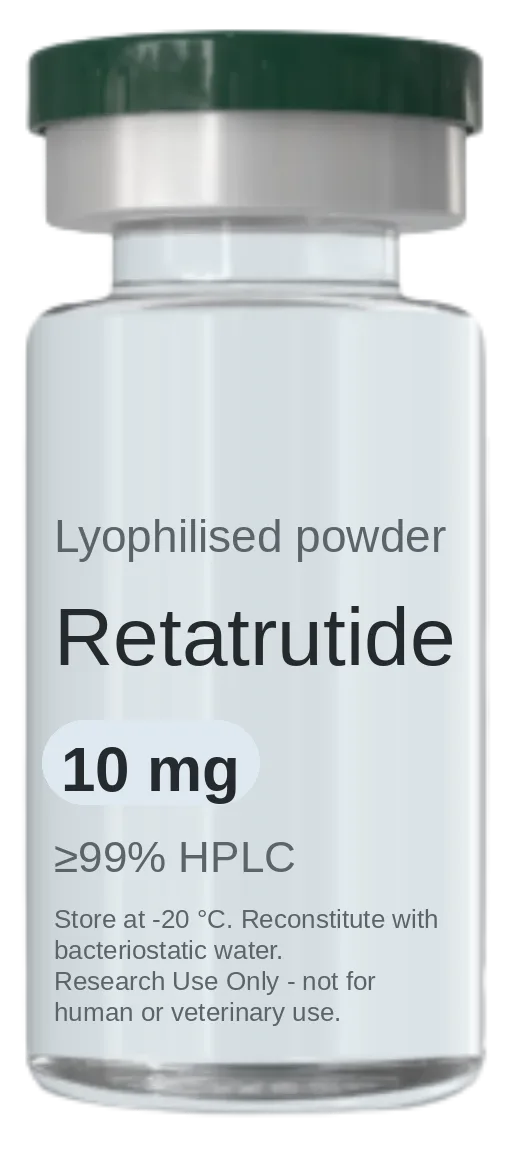
Retatrutide
Triple-agonist metabolic research peptide targeting GLP-1, GIP and glucagon receptors.
- Purity:
- ≥99% HPLC
- Sizes available:
- 10 mg
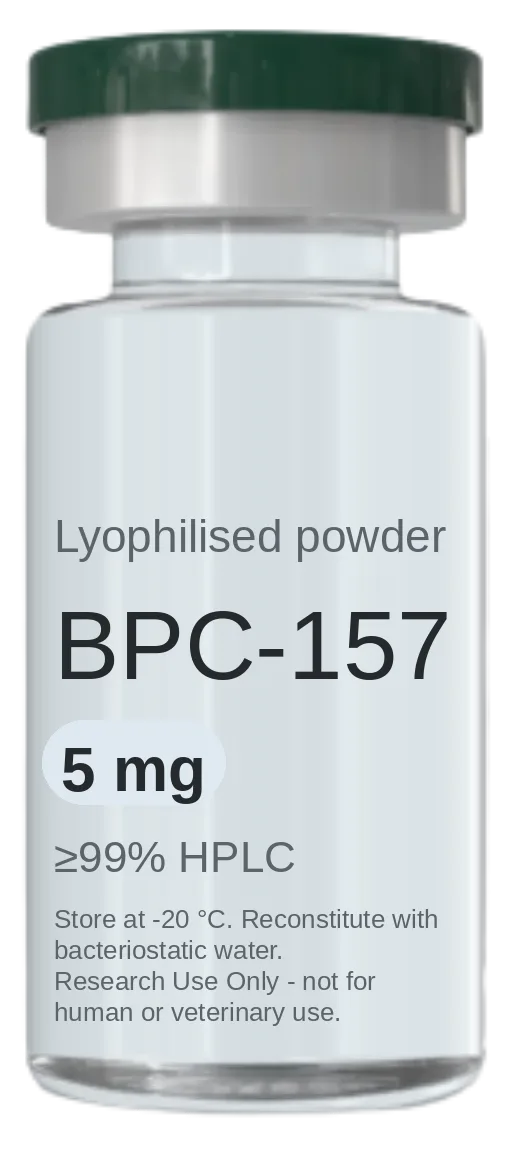
BPC-157 + TB-500
BPC-157 and TB-500 in a single vial — the pairing most studied together in tissue-repair research.
- Purity:
- ≥99% HPLC
- Sizes available:
- 5 mg + 5 mg
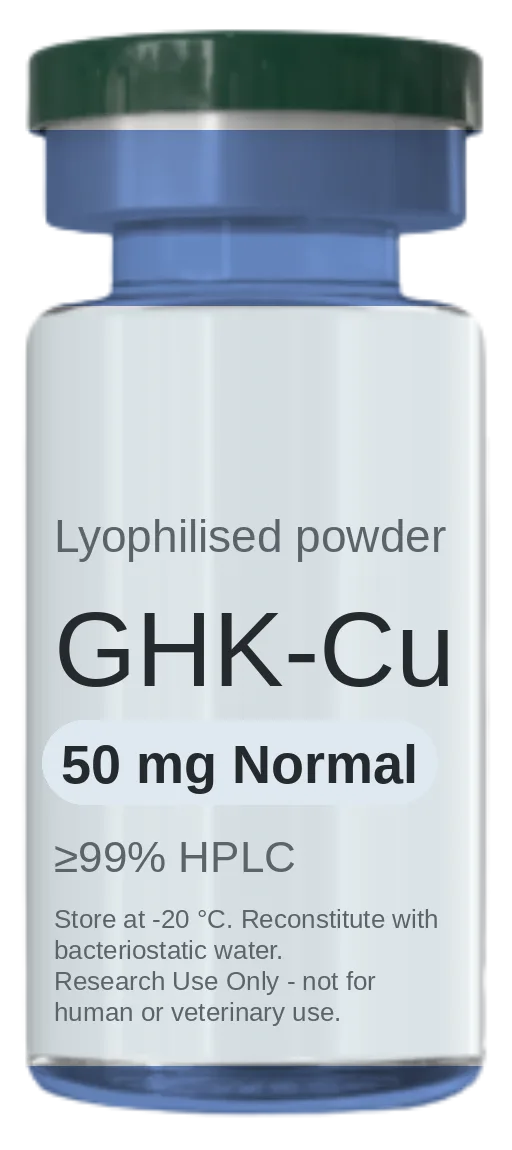
GHK-Cu (Copper Peptide)
Copper-binding tripeptide studied in extracellular matrix and dermal research models.
- Purity:
- ≥99% HPLC
- Sizes available:
- 50 mg Normal – 50 mg Plus
The consultation
One intake that settles goals, history and contraindications alongside compound, quantity, documentation and route — reviewed by a physician before anything ships.
More notes
-
Thymosin Alpha 1 vs BPC-157: Differences
Thymosin Alpha 1 and BPC-157 study different pathways — immune modulation vs tissue repair. RUO material with a verifiable COA.
-
USD Limit for Simplified Courier to Argentina
Argentina's simplified courier regime covers shipments up to USD 3,000 FOB; above that, formal customs clearance is required.
-
Peptide Shipments to Argentina: Annual Limit
What Argentina's postal shipment regime says about how many research peptide packages you can receive per year.