
Note
Synthetic vs Recombinant Peptides
A synthetic peptide is built by chemistry; a recombinant one by living organisms. Differences affect purity, impurities, and batch reproducibility.
A synthetic peptide is assembled one amino acid at a time through organic chemistry. A recombinant peptide is produced by inserting the encoding gene into a host organism — typically Escherichia coli, yeast, or mammalian cells — and letting that organism synthesize the sequence. Both routes produce amino acid chains, but they differ in impurity profile, maximum practical length, endotoxin risk, and batch-to-batch reproducibility.
How synthetic peptides are made
Solid-phase peptide synthesis (SPPS) is the standard method for short to medium sequences. The process anchors the first amino acid to a solid resin, then adds subsequent residues in repeated cycles of coupling and deprotection. When the chain is complete, it is cleaved from the resin and purified — typically by high-performance liquid chromatography (HPLC). The peer-reviewed literature on coupling reagents, protecting groups, and resin strategies is extensive and indexed in PubMed.
Several properties follow from this approach. Because the synthesis does not depend on any living system, the risk of bacterial endotoxin contamination is low when reagents and process conditions are controlled. Each step is independently verifiable, which makes batch-to-batch reproducibility achievable. HPLC quantifies purity precisely: the percentage of the main peak area is the figure that appears on a certificate of analysis for a given lot.
The practical limit of chemical synthesis is chain length. Above roughly 50–60 residues, coupling efficiency drops and truncation errors accumulate. A long sequence made by chemistry carries a higher probability of containing truncated or deletion products than a short one. Within that range, SPPS delivers material with a predictable impurity profile.
How recombinant peptides are produced
Recombinant production translates the problem to a language living organisms understand. A gene encoding the target sequence is designed, inserted into an expression vector, and transfected into a host cell line. The organism produces the peptide through its normal cellular machinery.
This approach makes sense when the sequence is long, when post-translational modifications — glycosylation, phosphorylation — are required that chemistry cannot replicate, or when production scale makes synthesis uneconomical. Human recombinant insulin is the most familiar commercial example: at 51 residues it is technically synthesizable, but the scale of global supply drove the industry to the recombinant route.
The complexity shows up in purification. A bacterial host such as E. coli produces lipopolysaccharides in its outer membrane. If purification does not remove them to acceptable levels, the material contains endotoxins that interfere with experiments involving immune cells or other sensitive systems. Mammalian cell culture avoids that problem but is slower and substantially more expensive to operate.
What differs when evaluating a lot
Impurity profile. A synthetic peptide may contain truncated sequences (synthesis stopped early), deletion sequences (a residue skipped), and incomplete resin cleavage products. A recombinant peptide may contain endotoxins, host cell proteins, and residual nucleic acids. These are distinct contaminants detected by different methods — a purity number alone does not differentiate them.
Post-translational modifications. Chemical synthesis produces exactly what it is programmed for: the specified sequence, without glycosylation or phosphorylation, unless those modifications are deliberately incorporated by design. Recombinant expression in mammalian cells can add those modifications, which in some experiments is necessary to reproduce the biology of the native protein.
Sequence length. For sequences up to 40–50 residues, chemical synthesis is the standard route. Above that threshold, recombinant methods or the chemical ligation of synthetic fragments become more practical. Most widely studied research peptides — BPC-157, TB-500, retatrutide, GHK-Cu, and others — fall within the range where SPPS is the conventional choice.
Analytical verification. A certificate of analysis for a well-documented synthetic peptide reports purity by HPLC and molecular mass by mass spectrometry. A well-documented recombinant lot adds endotoxin testing by LAL assay or equivalent, and host cell protein content. If a supplier presents only a purity figure without naming the analytical method or the laboratory, the number does not mean what it appears to mean.
What the certificate of analysis reveals about production
The certificate of analysis (CoA) connects a specific lot to its measurements. A supplier manufacturing by chemical synthesis and documenting correctly delivers at minimum: HPLC purity as a percentage of the main peak area, molecular mass confirmed by mass spectrometry, a lot number, and the name of the testing laboratory.
A purity figure without the chromatogram, without a lot number, and without a named laboratory is not verifiable. PeptoClinic publishes reports from Janoshik Analytical for available lots. The lowest purity found across the analyses conducted on 13 April 2026 was 99.669%. That figure comes with a laboratory task number — it is not a self-declaration.
The published reports are available on the quality page. When evaluating a supplier, comparing the CoA of a synthetic lot with that of a recombinant one is informative: the parameters that appear — and those absent — reveal both the production method and what the supplier considers necessary to demonstrate.
Choosing between methods for a research programme
The decision depends on the experimental question. For short, well-defined sequences with no requirement for post-translational modifications, chemical synthesis delivers material faster, with a more predictable impurity profile and a purity quantifiable by HPLC. For long sequences or work that requires the biological processing that occurs in the native organism, recombinant production is the appropriate route.
For peptides studied in metabolism, tissue recovery, neuroprotection, and cellular aging research, the origin is almost universally synthetic. Chemical synthesis is sufficient to reproduce the sequence, HPLC purity is quantifiable, and the impurity profile is easier to characterize. The recombinant route appears when those conditions do not hold: long sequences, glycosylated proteins, or volumes where cost per gram makes synthesis impractical.
PeptoClinic supplies research peptides as laboratory reference material. The catalogue lists available compounds with their corresponding laboratory reports. For questions about lot specifications, documentation, or how available material fits a programme's requirements, enquiries can be directed to [email protected]. Information on import documentation for destinations including Argentina is on the shipping page.
For laboratory research only
All material supplied by PeptoClinic is for in vitro and laboratory research only. It is not a medicine, a supplement, or a food. It has not been evaluated by the FDA, ANMAT, or any equivalent authority, and is not approved or intended for human or veterinary consumption, diagnosis, or treatment.
PeptoClinic is not a pharmacy, a clinic, or a source of guidance on dosing, administration, or protocols. Requests for human-use protocols are declined. Technical questions about lot specifications or available documentation can be directed to [email protected].
Frequently asked questions
Is a synthetic peptide lower quality than a recombinant one?
Quality is a function of process control and analytical verification, not production method. For short sequences, chemical synthesis produces material with quantifiable purity and a well-characterized impurity profile. For long sequences or those requiring biological modifications, recombinant production may be the only viable option. The quality of either depends on how rigorously the specific lot has been tested and documented.
How can I tell whether a peptide is synthetic or recombinant?
The certificate of analysis should state — or allow inference about — the production method. For short research peptides such as BPC-157 or retatrutide, synthetic origin is nearly universal, as those sequences fall well within the range where solid-phase synthesis is efficient. If a supplier cannot identify how a lot was produced or cannot supply the corresponding CoA, that is a signal about the traceability of the material.
Do recombinant peptides always contain endotoxins?
Not necessarily. A properly executed purification process can bring endotoxin content to acceptable levels. The problem arises when that step is abbreviated or omitted. The only way to confirm endotoxin content is to have an LAL assay result — or an equivalent test — for the specific lot. Assuming absence of endotoxins without that measurement is an experimental risk the data do not support.
Does HPLC purity mean the same thing for synthetic and recombinant peptides?
The measurement is the same — percentage of the main peak area in the chromatogram — but what can be concealed differs. In a synthetic peptide, material outside the main peak consists of truncated sequences, deletion sequences, and aggregates. In a recombinant peptide, host cell proteins that co-elute with the target may require additional methods to detect. Well-documented recombinant CoAs therefore typically include more analytical parameters than those for synthetic lots.
Can synthetic peptides carry post-translational modifications?
Post-translational modifications are changes that organisms make to a protein after ribosomal synthesis. By definition they do not occur in chemical synthesis. It is possible to incorporate modified amino acid analogues or attach specific functional groups deliberately during SPPS, but that is a designed structural choice, not a cellular event — and the result is not equivalent to a natural post-translational modification.
Why are most research peptides produced synthetically?
The sequences most studied in research peptide programmes range from roughly 5 to 43 amino acids — a range where solid-phase synthesis is efficient and the resulting material is analytically well-characterized. Recombinant production adds complexity that is not justified when chemistry can deliver high-purity material with full analytical traceability. The recombinant route is chosen when synthesis reaches its practical limits: very long sequences, proteins requiring glycosylation, or industrial-scale volumes.
Can I request a certificate of analysis before making a formal enquiry?
PeptoClinic publishes the available Janoshik Analytical reports on the site. Lot-specific documentation is shared as part of the quotation process. If documentation for a particular compound is needed before proceeding, it can be requested at [email protected] with the compound name and programme details.
What does a complete CoA for a synthetic lot include?
A complete certificate of analysis for a synthetic research peptide reports at minimum: HPLC purity as a percentage of the main peak, molecular mass confirmed by mass spectrometry, a lot number, and the name of the testing laboratory. The reports from Janoshik Analytical published on the [quality page](/en/quality/) follow this format and are publicly accessible.
Compounds mentioned
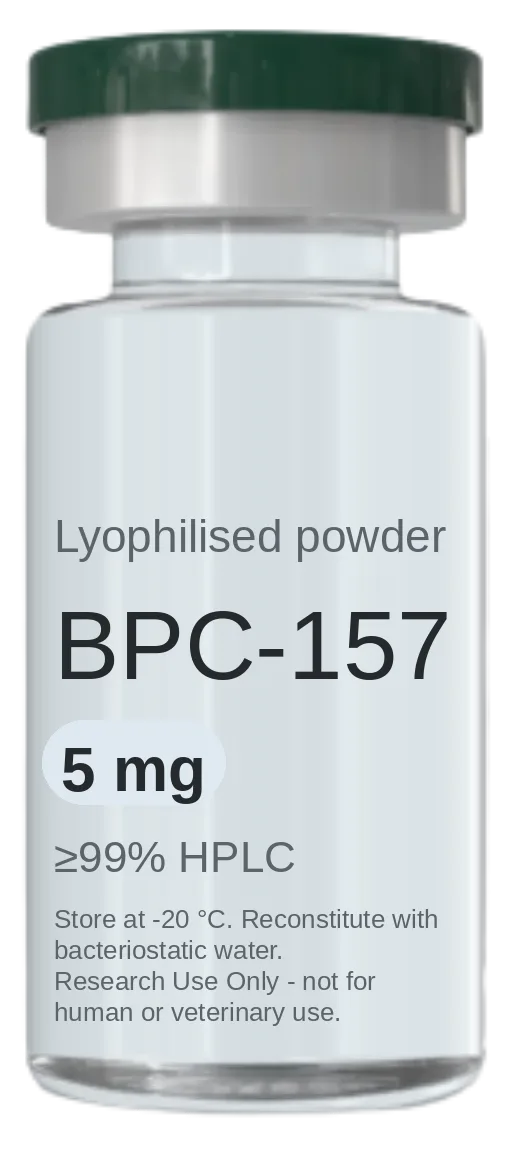
BPC-157 + TB-500
BPC-157 and TB-500 in a single vial — the pairing most studied together in tissue-repair research.
- Purity:
- ≥99% HPLC
- Sizes available:
- 5 mg + 5 mg
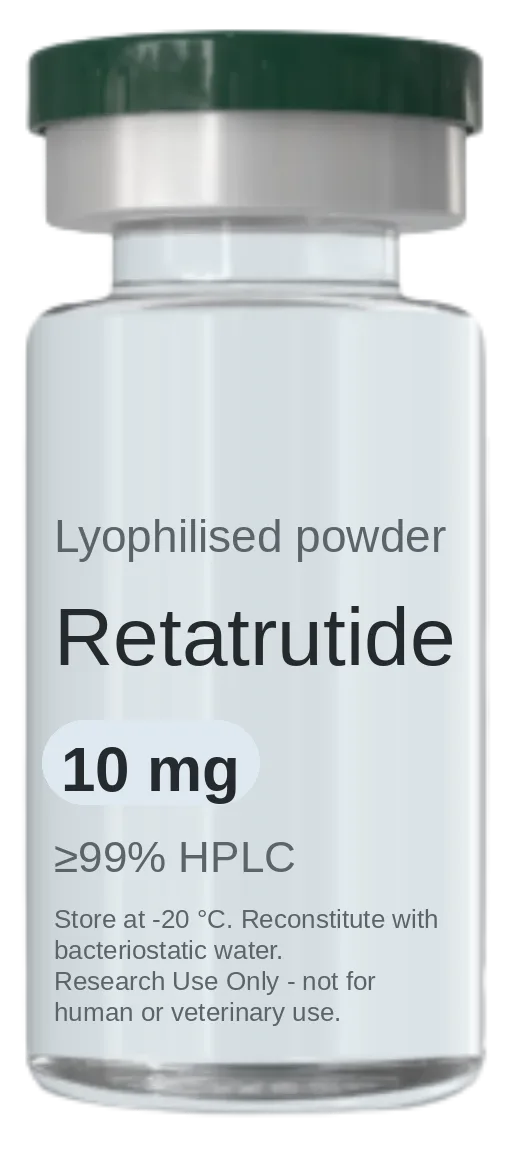
Retatrutide
Triple-agonist metabolic research peptide targeting GLP-1, GIP and glucagon receptors.
- Purity:
- ≥99% HPLC
- Sizes available:
- 10 mg
The consultation
One intake that settles goals, history and contraindications alongside compound, quantity, documentation and route — reviewed by a physician before anything ships.
More notes
-
Can You Ship Peptides as a "Sample"?
Why declaring a paid research peptide shipment as a duty-free commercial sample is invalid in Argentina, and what paperwork works instead.
-
Semax vs LL-37: What's the Difference
Semax is a synthetic heptapeptide; LL-37 is a human cathelicidin. Different origin, structure and research field, side by side.
-
Peptide Package Under Someone Else's Name
What happens if a research peptide shipment reaches Argentina labeled to someone other than the declared importer.